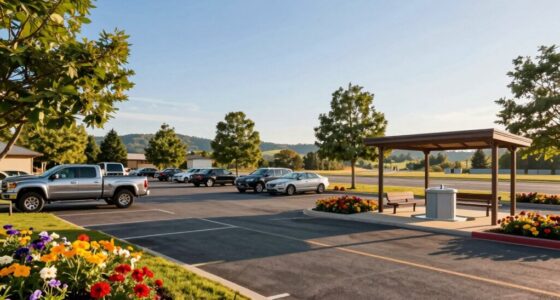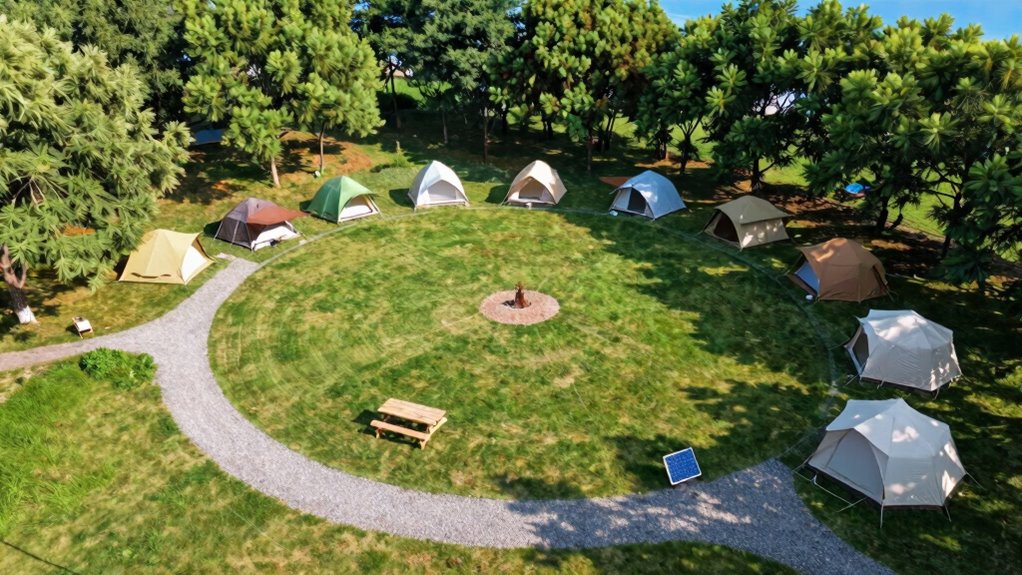

Before arriving, plan your camp layout by choosing higher ground and flat, clear spots away from water sources and potential hazards like overhanging branches or rocks. Position your tent for privacy and comfort, keeping it away from the campfire area and cooking zones. Designate a safe, flat fire pit area surrounded by rocks, ensuring smoke blows away from tents. Thoughtful pre-planning helps create a safe, comfortable, and eco-friendly campsite that’s ready to enjoy. Continue to discover more tips to perfect your setup.

Get audio and creator gear delivered free — and shop member deals
- Fast, free delivery on millions of items
- Access to Prime Big Deal Days deals on October 6–7
- Prime Video, Amazon Music and more included
Key Takeaways
- Scout and select higher, flat ground free of rocks and roots for tent placement.
- Plan tent locations to maximize shade, privacy, and proximity to water and amenities.
- Identify a safe, flat area away from overhanging branches for the fire pit, with clear boundaries.
- Position tents and fire sites to ensure good airflow, smoke direction, and safety from hazards.
- Visualize overall layout to minimize environmental impact and facilitate efficient movement upon arrival.
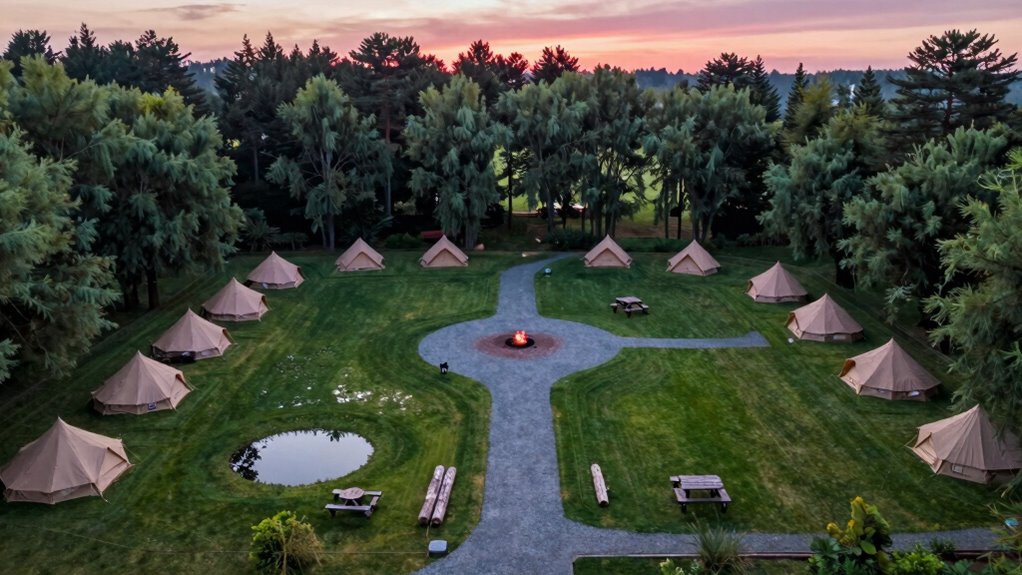
Have you ever wondered how a well-planned camp layout can enhance your outdoor experience? When you take the time to think through your setup before you arrive, you create a more comfortable, efficient, and enjoyable environment. The foundation of a good camp layout starts with understanding how to arrange your tent placement and campfire design. These elements are vital for safety, convenience, and comfort.
Firstly, consider your tent placement. You want to position your tent on higher ground, away from low-lying areas that could flood if it rains. Look for clear, flat ground free of rocks and roots, making sure it’s level enough for a good night’s sleep. Keep your tent away from the campfire site and cooking area to prevent smoke from drifting into your sleeping space. Also, think about proximity to water; you’ll want easy access for drinking and washing but avoid setting up too close to water sources to prevent contamination and protect the environment. Remember, good tent placement also involves considering shade and privacy, especially if you’re sharing a site with others. Position your tent to maximize shade during hot parts of the day and ensure you have some privacy from neighboring campers. Proper tent placement can significantly improve your comfort and safety during your trip, and planning ahead helps reduce environmental impact.
Next, focus on your campfire design. A well-planned campfire spot not only enhances the ambiance but also boosts safety. Choose a flat, open area away from overhanging branches, tents, and brush. Clear a circle of bare soil or gravel, roughly three feet in diameter, to contain the fire and prevent it from spreading. Surround this fire ring with rocks to help contain the flames and ashes. Think about how you’ll access the fire easily for cooking or warmth, but keep it far enough from your tent and other gear to avoid accidents. Consider how the smoke will drift; position the fire so that smoke blows away from tents and common gathering spots. Good fire safety practices are essential to prevent wildfires and ensure everyone’s safety. Additionally, understanding how to use natural elements to minimize environmental impact can make your camping experience more sustainable. By designing your campfire thoughtfully, you minimize risks and maximize the comfort and utility of your campfire experience, especially when considering environmental impact and responsible camping techniques.
Pre-planning your camp layout isn’t just about convenience; it’s about creating a safe, functional space that makes your outdoor adventure more enjoyable. When you map out your tent placement and campfire design ahead of time, you reduce the hassle of rearranging things on arrival. Plus, it helps you respect the environment by minimizing impact and ensuring proper drainage and waste management. With a little foresight, you set yourself up for a seamless, memorable camping trip where every element is in harmony.
compact camping tent for backpacking
As an affiliate, we earn on qualifying purchases.
As an affiliate, we earn on qualifying purchases.
Frequently Asked Questions
What Tools Are Essential for Planning My Camp Layout?
You’ll need basic tools like a measuring tape, graph paper, and a pencil to plan your campground design effectively. A ruler helps with layout versatility, guaranteeing precise measurements, while a compass can assist in creating curved features. Using a smartphone or tablet with mapping apps allows for detailed visualization. These tools help you optimize space, improve campground design, and make sure your layout is both functional and adaptable for different needs.
How Do I Choose the Best Campsite Location?
Choosing the best campsite location is like finding your own piece of Eden. You should prioritize spots away from wildlife encounters, ensuring safety and tranquility. Look for flat terrain with good drainage to minimize environmental impact. Avoid fragile ecosystems and thick vegetation. By selecting a site that respects nature and reduces disturbance, you create a sustainable camp that enhances your experience while protecting the environment.
What Safety Considerations Should I Keep in Mind?
You should prioritize safety by keeping your campsite clear of flammable materials to prevent fire hazards and practicing strict campfire safety. Choose a spot away from wildlife paths to avoid unexpected encounters, and store food securely to deter animals. Be aware of your surroundings, avoid low-lying areas prone to flooding, and always have a first aid kit nearby. Staying vigilant helps guarantee a safe and enjoyable camping experience.
How Do I Accommodate Future Campsite Expansions?
Did you know that 70% of campers prefer sites with space for future expansion? To accommodate future campsite growth, plan flexible layouts that allow for sustainable practices like adding solar panels or composting stations. Keep environmental impact in mind by reserving areas for expansion and minimizing habitat disruption. This foresight guarantees your campsite can grow responsibly, maintaining its natural beauty while meeting evolving needs.
What Are Common Mistakes to Avoid in Camp Layout Planning?
Avoid common mistakes like placing the campfire too close to tents or food storage, which can cause safety hazards. Don’t forget to plan for wildlife safety by keeping food out of reach and away from the fire area. Also, overlook inadequate space for future expansions or amenities. Guarantee proper drainage and avoid cluttered layouts that make movement difficult. Thoughtful planning prevents hazards, promotes safety, and makes your campsite more enjoyable.
As an affiliate, we earn on qualifying purchases.
Conclusion
Planning your camp layout ahead of time can make your outdoor experience more comfortable and enjoyable. By considering factors like safety, accessibility, and resource placement, you set yourself up for success. Did you know that properly organized campsites can reduce setup time by up to 30%? That means more time exploring and relaxing. So, take the time to plan carefully before you arrive — your future self will thank you for a smoother, more enjoyable camping trip.
camping gear for safety and comfort
As an affiliate, we earn on qualifying purchases.
As an affiliate, we earn on qualifying purchases.
outdoor camping lantern with long battery life
As an affiliate, we earn on qualifying purchases.
As an affiliate, we earn on qualifying purchases.
Fall Picks
fall essentials
As an affiliate, we earn on qualifying purchases.