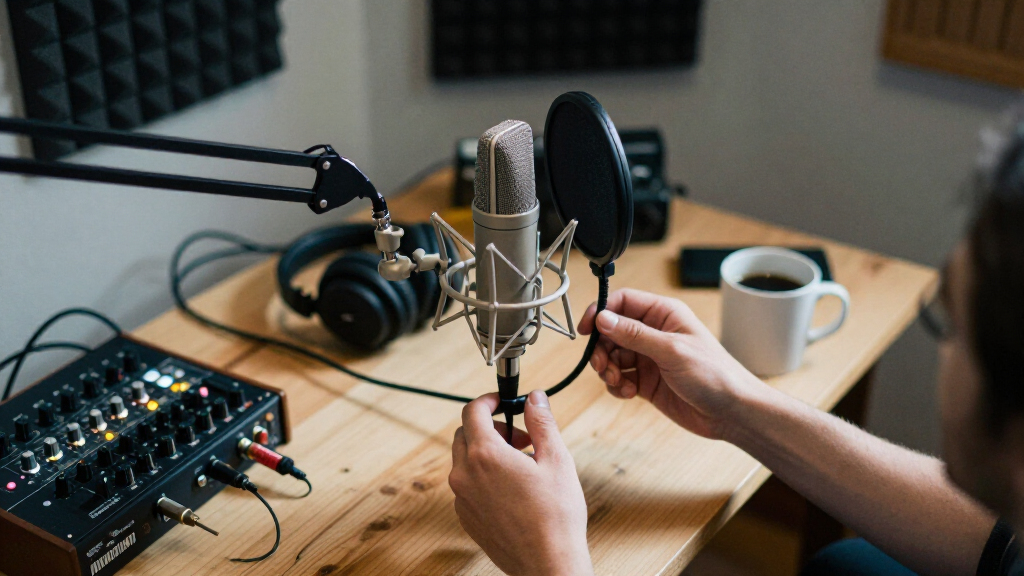

🔍 Read the full analysis: 10 Best Studio Condenser Microphones For Recording In 2026: A Buyer’s Guide on ThorstenMeyerAI.com

Get audio and creator gear delivered free with Prime
- Fast, free delivery on millions of items
- Prime Video, Amazon Music and more included
- Member-only deals all year
TL;DR
A 2026 buyer’s guide from ThorstenMeyerAI.com ranks the RØDE NT1 5th Generation as the most adaptable studio condenser microphone thanks to dual USB-C and XLR connections. The NT1 Signature Series, FIFINE T669, MAONO A04 Gen2, Audio-Technica AT2020 and AKG P120 also rank highly, with the choice hinging on whether buyers want plug-and-play USB convenience or a conventional XLR signal chain.
A newly published 2026 buyer’s guide from ThorstenMeyerAI.com ranks the RØDE NT1 5th Generation as the best overall studio condenser microphone for most home and project studios, citing its unusual ability to record over both USB-C and XLR. The ranking compares ten microphones on studio usefulness, connection options, setup requirements, and fit for different recording situations, and it frames the central buying decision as one between plug-and-play USB convenience and the flexibility of a conventional XLR signal chain.
The guide’s top pick, the RØDE NT1 5th Generation, earns first place because it fits two workflows at once: USB-C supports direct recording into a computer, while XLR keeps an interface-based studio open as a setup grows. The author states this “unusual ability to work as either a USB-C microphone or an XLR studio mic” was the deciding factor in the ranking, weighted more heavily than long accessory lists.
Second place goes to the RØDE NT1 Signature Series, described as a strong choice for a dedicated XLR studio where the buyer already owns or plans to buy an audio interface. The FIFINE T669 and MAONO A04 Gen2 follow as USB kits that make a first recording setup approachable by bundling accessories, though the guide cautions that their all-in-one design leaves less room to shape the signal chain later. The Audio-Technica AT2020 and AKG P120 rank as conventional XLR workhorses for buyers comfortable supplying phantom power, mounting, and monitoring hardware of their own.
Lower-ranked slots in the ten-microphone list are filled by additional desktop and kit-oriented condensers positioned as practical for specific budgets or first setups. The guide advises weighing bundled convenience against the control and expansion options of a conventional studio chain before choosing among them. Across all ten picks, the author argues that room treatment, mic placement, and background noise shape results as much as the microphone itself.
The 10 picks
- 1
 RØDE NT1 5th Generation Studio Condenser Microphone, XLR and USB-C, SilverView on Amazon →
 - 2
 TZ Stellar X2 Large Diaphragm Cardioid Condenser XLR MicrophoneView on Amazon →
 - 3
 RØDE NT1 Signature Series Studio Condenser Microphone, BlackView on Amazon →
 - 4
 Audio-Technica AT2020 Cardioid Condenser XLR Studio MicrophoneView on Amazon →
 - 5
 AKG Pro Audio P120 – Affordable 2/3-Inch Diaphragm Condenser Microphone for C…View on Amazon →
 - 6
 MAONO A04 Gen2 XLR/USB Condenser Microphone Kit for PC Podcast RecordingView on Amazon →
 - 7
 Maono PM320S Condenser PC Microphone with XLR Cable, Boom Arm, Pop FilterView on Amazon →
 - 8
 FIFINE T669 Studio Condenser USB Microphone for Recording PodcastingView on Amazon →
 - 9
 Mackie EM-Series Large-Diaphragm Condenser Microphone (EM-91C)View on Amazon →
 - 10
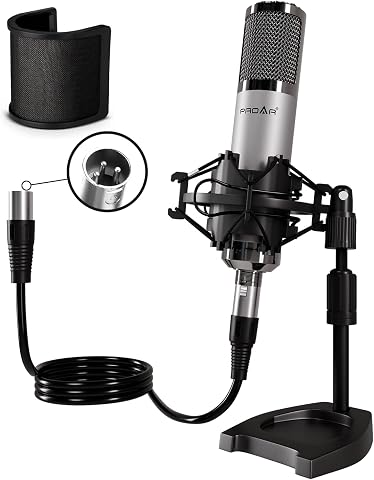 XLR Condenser Microphone with Desktop Stand for Vocals and PodcastingView on Amazon →
1. RØDE NT1 5th Generation — Best Overall
Ranked first for adaptability: USB-C for simple computer recording, XLR for an interface rig. The guide calls it the starting recommendation for most home and project studios because it does not lock a buyer into either path. Buyers should verify which features work over each connection type before purchasing.
2. RØDE NT1 Signature Series — Best Dedicated XLR
Described as the choice for a focused XLR studio. Its single connection format makes sense for buyers who already have, or plan to use, an audio interface with phantom power. The guide positions it as functionally close to the top pick but less flexible for anyone starting without a interface.
3. FIFINE T669 — Best USB Starter Kit
The T669 makes recording more approachable with a USB connection and an included kit of accessories. According to the guide, it reduces setup friction for solo voice recording, though the included desktop stand takes up desk space and can transmit bumps from typing or moving objects.
4. MAONO A04 Gen2 — Best All-in-One USB Bundle
The second USB kit highlighted, the A04 Gen2 includes useful accessories that simplify a first recording setup. The guide notes the same trade-off as the FIFINE: convenience now, less ability to upgrade or shape the signal chain later.
5. Audio-Technica AT2020 — Best Conventional Studio Workflow
The AT2020 favors a traditional XLR workflow, meaning buyers need an interface or mixer with phantom power plus a separate mounting and monitoring solution. The guide treats it as a fit for buyers who want a conventional studio chain rather than a bundled kit.
6. AKG P120 — Best XLR Companion Pick
Ranked alongside the AT2020, the P120 also uses XLR and suits the same interface-based buyer profile. Both models are positioned for users comfortable supplying their own gain stage, shock mounting, and headphone monitoring path.
7–10. Budget Desktop and Kit Options
The guide’s remaining slots go to lower-ranked desktop and kit condensers aimed at tight budgets and first setups. The author describes these as practical in specific cases but advises buyers to weigh their bundled convenience against the control and expansion that a more conventional studio chain provides. Specific model names for these slots were not included in the excerpted source material.
Why the USB-versus-XLR Choice Matters
The ranking matters because the connector decision drives the entire budget and upgrade path of a home studio. USB microphones connect directly to a computer, removing the need for a separate interface and reducing setup friction for solo voice work. XLR microphones require an interface or mixer with a mic preamp, plus phantom power for condenser models — added cost and cabling, but more control over gain, monitoring, and future upgrades.
The guide’s warning is direct: avoid buying XLR solely because it sounds more professional. The author argues the quality of the full recording chain and the room matters more than the connector alone. That framing pushes buyers toward the NT1 5th Generation’s dual-connection approach as a hedge against changing workflows.
The guide also stresses that included stands do not solve every room problem. Desktop kits can get recording started, but mic placement, vibration control, and acoustic treatment still determine whether takes are usable — a point the author says applies regardless of price tier.
How the Ten Microphones Were Ranked
According to ThorstenMeyerAI.com’s methodology, the microphones were compared on how well they serve actual studio recording needs: connection type, likely setup requirements, included accessories, and flexibility across voice, instrument, and home recording workflows. The author states that options which make their intended use clear and fit reliably into a recording chain were weighted more heavily than those with the longest accessory lists.
The resulting order places the RØDE NT1 5th Generation first, the NT1 Signature Series second, USB kits in the middle of the ranking for ease of setup, and XLR models such as the AT2020 and P120 for interface-ready buyers. The author recommends choosing a condenser by working backward from the recording space and signal chain the buyer actually has, noting that a condenser will capture detail including room reflections, computer fans, traffic, and keyboard noise — and that in a noisy space a dynamic microphone can be the better choice despite the usual studio search favoring condensers.
“For most home and project studios, I’d start with the RØDE NT1 5th Generation: it offers both XLR and USB-C connections, so it can fit a simple computer setup or grow into an audio interface rig.”
— ThorstenMeyerAI.com buyer’s guide
Pricing, Testing Data, and Unnamed Picks
The source material excerpt does not include specific prices, frequency-response measurements, or hands-on test results for any of the ranked microphones, so those details remain unconfirmed here. The four lowest-ranked slots in the ten-microphone list are described only as budget desktop and kit options; their specific model names were cut off in the available material. Which features of the RØDE NT1 5th Generation work over USB-C versus XLR is flagged as something buyers should verify but is not itemized in the excerpt. Availability and pricing for 2026 were not stated.
Before You Buy: A Practical Checklist
The guide points buyers toward several next steps. First, listen to your room at the quietest time you can record and note what a sensitive condenser might pick up, since soft furnishings reduce reflections but do not block outside noise or low-frequency rumble. Second, plan mounting and vibration control: a boom arm moves the mic off the work surface, shock mounts reduce stand-borne vibration, and pop filters address plosives — each accessory solves a different problem. Third, check direct monitoring options to avoid distracting latency when recording through software, and check shock-mount compatibility before buying replacements. Finally, identify the weakest part of the existing setup — room, placement, or interface gain — before paying for a higher-tier microphone, since the author notes a beginner may get more value from completing a basic chain than upgrading the mic alone.
Key Questions
Which studio condenser microphone is ranked best for 2026?
According to the ThorstenMeyerAI.com guide, the RØDE NT1 5th Generation ranks first because it supports both USB-C and XLR connections, letting it work in a simple computer setup or a full audio interface rig.
Should I buy a USB or XLR condenser microphone?
USB microphones connect directly to a computer and reduce setup friction for solo voice recording. XLR microphones require an interface or mixer with phantom power but offer more control over gain, monitoring, and future upgrades. The guide advises against choosing XLR purely for its professional image — the full chain and room matter more.
Are bundled microphone kits good enough for home recording?
The guide says kits like the FIFINE T669 and MAONO A04 Gen2 simplify a first setup, but included desktop stands can transmit desk vibration and offer less room to shape an XLR signal chain later. Placement, vibration control, and acoustic treatment still affect usable takes.
Is a condenser microphone the right choice for a noisy room?
Not necessarily. The guide notes condensers capture room reflections, fans, traffic, and keyboard noise, and that a dynamic microphone can be the better choice in a noisy space. Close placement and careful positioning can help if a condenser is still preferred.
Is it better to upgrade the microphone or the rest of the setup?
The guide recommends spending on the weakest part of the setup. A more capable microphone cannot compensate for a noisy room, poor placement, or an interface with unsuitable gain, and beginners may get more value from completing a basic recording chain first.
Source: ThorstenMeyerAI.com
Fall Picks
fall essentials
As an affiliate, we earn on qualifying purchases.