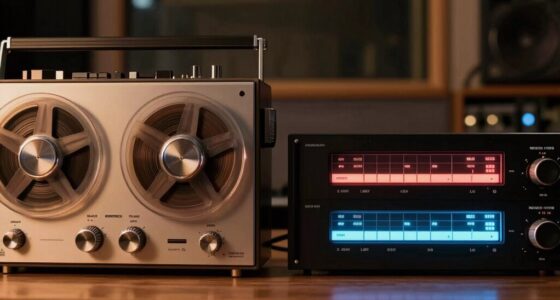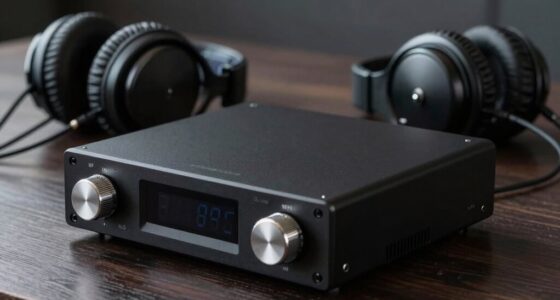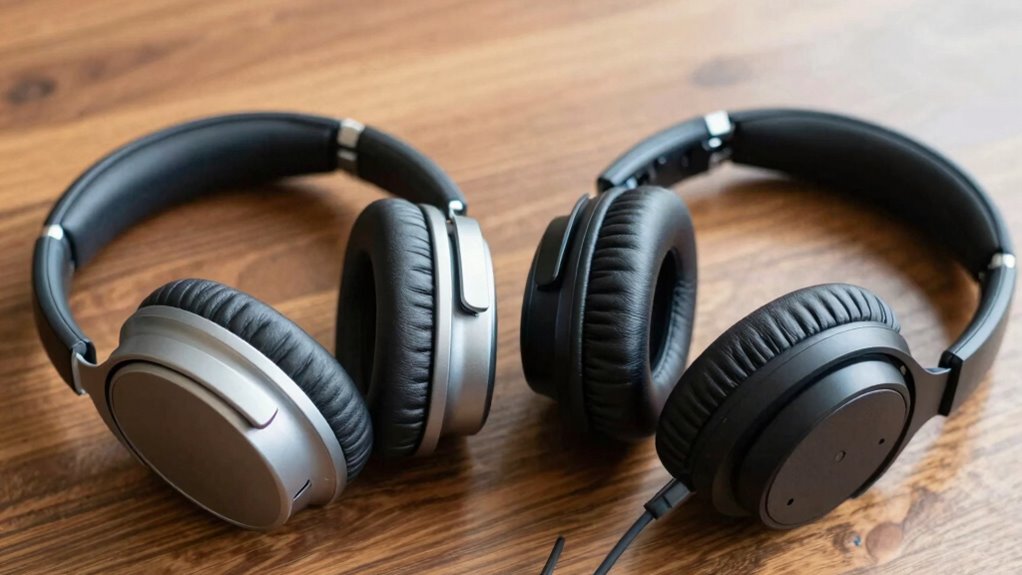

Planar headphones have larger, flat drivers that produce detailed, natural sound and a broad soundstage, but they tend to be heavier and less portable. Dynamic headphones are lighter, with smaller drivers that deliver powerful, punchy bass and lively sound profiles. Your comfort and preferred sound signature influence which suits you better. Understanding these core differences can help you find the right fit. Keep exploring to discover more about how these technologies can match your listening style.

Get audio and creator gear delivered free with Prime
- Fast, free delivery on millions of items
- Prime Video, Amazon Music and more included
- Member-only deals all year
Key Takeaways
- Planar headphones offer detailed, natural sound with broader soundstage, while dynamic headphones deliver more powerful bass and lively sound.
- Planar models are larger and heavier, potentially causing discomfort, whereas dynamic headphones are lighter and more adjustable.
- Driver materials and size impact sound accuracy and durability in both types, with advancements improving longevity.
- Sound signature preferences differ: planar for neutrality and clarity, dynamic for energetic, bass-heavy profiles.
- Choosing depends on comfort, sound preference, and usage, as both have unique advantages for different listening needs.
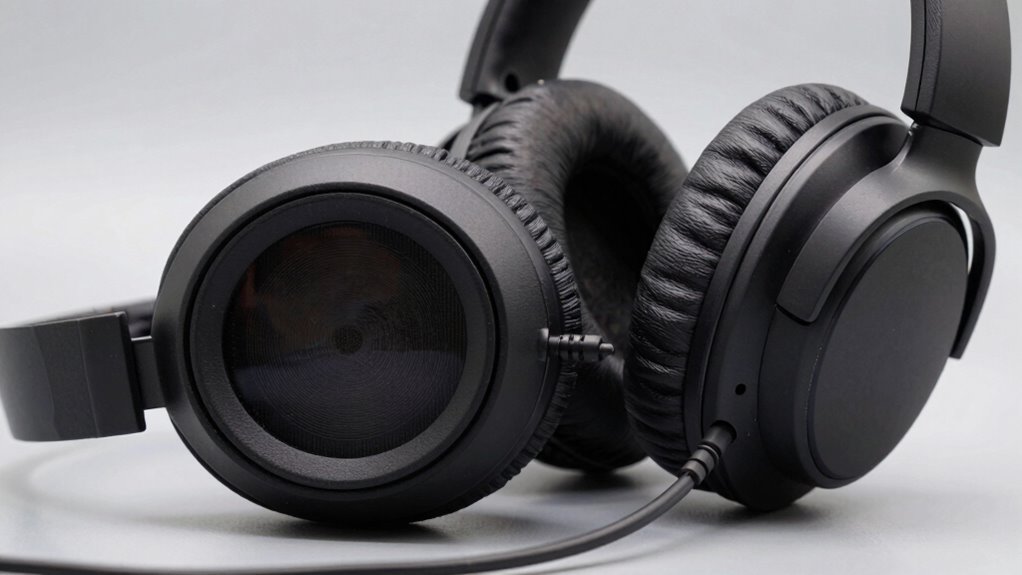
Have you ever wondered how different headphone technologies influence your listening experience? When choosing between planar and dynamic headphones, understanding their core differences can help you make a more informed decision. One of the first considerations is comfort. Planar headphones tend to be larger and heavier because of their flat, thin drivers that require more substantial materials to support their size. If you wear headphones for hours, this extra weight might cause discomfort or fatigue, especially if you’re sensitive to pressure around your head. Dynamic headphones, on the other hand, are generally lighter and more compact, making them easier to wear for extended periods. They often have adjustable headbands and softer ear pads, which can contribute to a more comfortable fit for many users. Still, comfort can vary based on individual head shape and personal preference, so trying both styles is ideal.
Beyond comfort, sound signature differences are significant when comparing these technologies. Planar headphones are renowned for their ability to produce incredibly detailed and accurate sound. Because their drivers are larger and produce a more uniform movement, they tend to deliver a more precise and natural audio reproduction. This means you’ll often notice cleaner bass, smoother mids, and a broader soundstage, giving you a sense of spatial realism that can be quite immersive. Dynamic headphones, by contrast, typically use smaller, traditional drivers that can generate powerful bass with punch and impact. They’re often praised for their lively and energetic sound profiles, which can make music feel more engaging, especially genres like EDM or rock. However, they might not always offer the same level of detail and nuance across all frequencies as planar models do. Additionally, the material used for drivers in driver technology can influence durability and sound quality over time. Interestingly, advancements in driver materials have helped improve the longevity and sonic performance of both types. Furthermore, the choice of driver design can also impact how well each headphone type handles complex or layered audio content.
In terms of sound signature differences, it’s also worth considering how each technology handles different audio ranges. Planar headphones tend to excel in neutrality and clarity, making them popular among audiophiles who seek precision. Dynamic headphones might emphasize certain frequencies, especially bass, creating a more colored or fun listening experience. Whether one prefers the flat, transparent sound of planar drivers or the punchy, colored response of dynamic drivers depends on your listening habits and aesthetic preferences. Ultimately, both have their strengths, but understanding these core differences can help you choose a pair of headphones that aligns better with your needs, whether for critical listening or casual enjoyment.
best planar headphones for detailed sound
As an affiliate, we earn on qualifying purchases.
As an affiliate, we earn on qualifying purchases.
Frequently Asked Questions
Which Headphone Type Is Better for Bass-Heavy Music?
For bass-heavy music, dynamic headphones are better because they deliver more powerful bass with greater sound clarity and punch. They often provide better noise isolation, helping you experience deep bass without external distractions. Planar headphones tend to offer more detailed sound, but dynamic models typically excel in bass response and overall impact, making them ideal if you want those deep, thumping lows for your music.
Are Planar Headphones More Durable Than Dynamic Ones?
When it comes to durability, planar headphones often have an edge, but it’s not set in stone. You’ll find that build quality and material durability vary widely within both types. Planar drivers tend to use sturdy materials in their construction, but some dynamic headphones also boast reinforced components. Ultimately, you need to check the specific model’s craftsmanship rather than rely solely on the headphone type to guarantee longevity.
Do Planar Headphones Require More Power to Operate?
Planar headphones generally require more power to operate because of their larger, more complex drivers, which means you’ll need a more powerful amplifier. This affects power efficiency, making them less energy-efficient than dynamic headphones. You might notice you’ll need a dedicated amplifier or higher wattage output for ideal sound quality. If you’re concerned about battery life or power supply, dynamic headphones could be a better choice due to their lower amplifier requirements.
Can I Use Planar Headphones for Gaming?
Absolutely, you can use planar headphones for gaming, and they often deliver an immersive experience. You’ll notice a wide soundstage comparison and precise details that make gaming more engaging. Keep in mind, noise isolation differences mean they might let in more ambient sounds, so if you prefer quieter gameplay, consider a model with better isolation. Overall, their rich sound quality can truly elevate your gaming sessions, making every moment feel more real.
How Do Headband Designs Differ Between the Two Types?
You’ll notice that planar and dynamic headphones have different headband designs. Planar headphones often feature a sturdy, metal or reinforced material headband for durability and a sleek look, appealing to aesthetics. Dynamic headphones might have a more flexible, cushioned headband made of synthetic leather or foam, prioritizing comfort. Both designs balance durability and appearance, but your choice depends on whether you prefer a robust, stylish feel or lightweight, comfortable wear.
lightweight dynamic headphones with powerful bass
As an affiliate, we earn on qualifying purchases.
As an affiliate, we earn on qualifying purchases.
Conclusion
Ultimately, choosing between planar and dynamic headphones is like picking between a smooth jazz tune and a lively rock song—you’ll find what suits your vibe best. Both have their strengths, so don’t feel pressured to pick the “perfect” one. It’s all about what makes your ears dance and your soul sing. Trust your ears, and remember: the right headphones are the ones that make your music feel like it’s playing just for you.
comfortable over-ear headphones for long listening sessions
As an affiliate, we earn on qualifying purchases.
As an affiliate, we earn on qualifying purchases.
high fidelity headphones for natural sound
As an affiliate, we earn on qualifying purchases.
As an affiliate, we earn on qualifying purchases.
Fall Picks
fall essentials
As an affiliate, we earn on qualifying purchases.