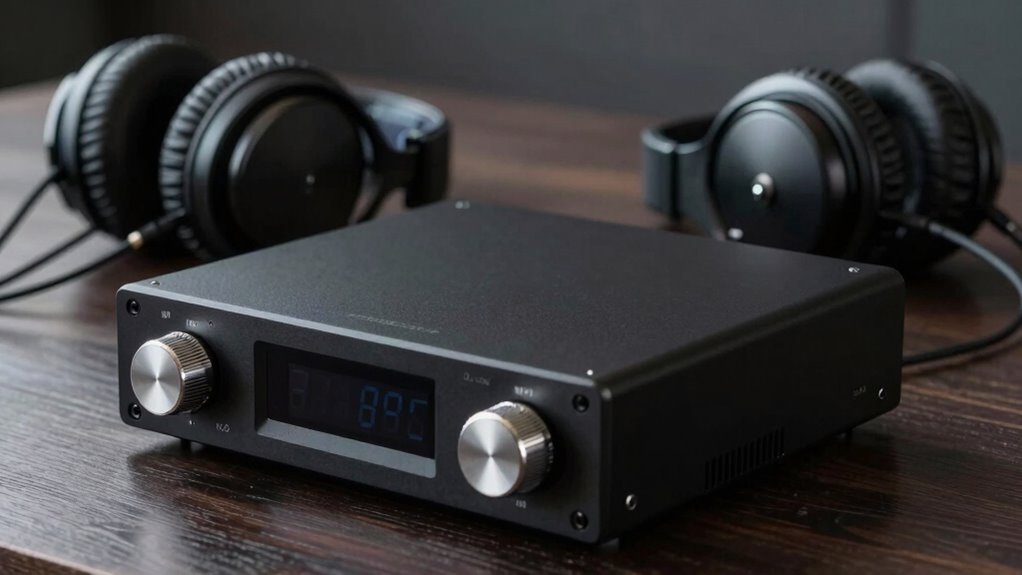

When choosing a headphone amplifier, match its power output to your headphone’s impedance to get clear sound without overbuying. Low-impedance headphones need modest power, while high-impedance models benefit from more powerful amps. Avoid overspending on unnecessary power, which wastes energy and costs, or underpowering, which results in weak volume and poor sound. Considering your listening habits and dynamic peaks helps find the right balance. Keep these points in mind, and you’ll discover how to optimize your setup effectively.
Key Takeaways
- Match amplifier power output to your headphone’s impedance for clear, distortion-free sound without excess energy use.
- Consider your listening habits and dynamic peaks to choose an amplifier with appropriate headroom.
- Avoid overspending on high-power amps if your headphones require less, focusing on efficiency and suitability.
- Ensure the amplifier can handle quick, loud transients to prevent distortion during dynamic audio peaks.
- Balance power, efficiency, and impedance compatibility to achieve optimal sound quality and device longevity.
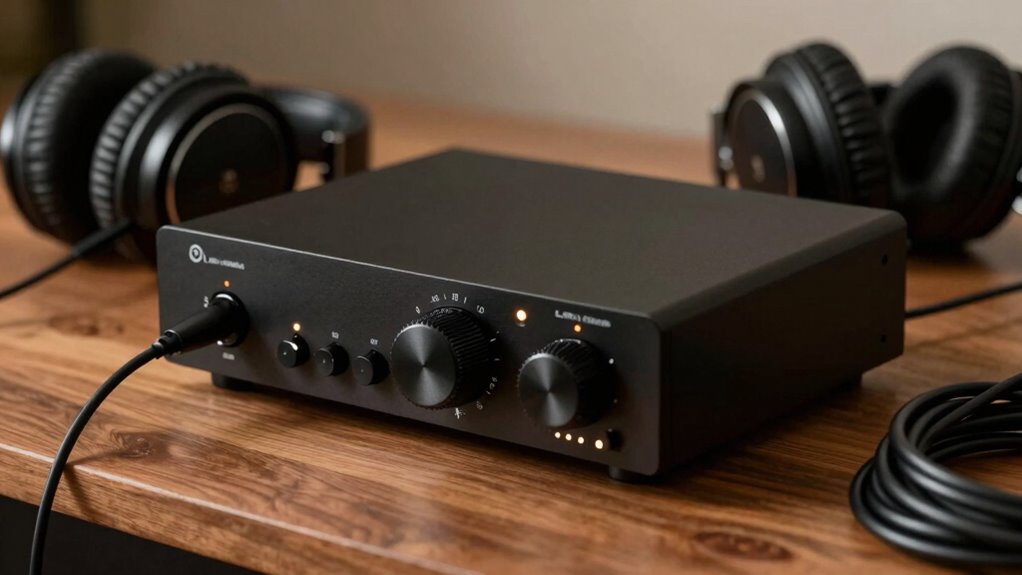
Understanding headphone amplifier power can seem complex, but grasping the basics helps you make better choices for your audio setup. When you’re shopping for an amplifier, one of the key factors to evaluate is how it interacts with your headphones’ audio impedance. Audio impedance measures how much resistance your headphones offer to the electrical current coming from the amplifier. If your headphones have high impedance, they need more power to reach the same volume level as low-impedance headphones. Matching the amplifier’s power output with your headphones’ impedance ensures you get clear, distortion-free sound without overdriving or underpowering them.
It’s tempting to think that more power always equals better sound. But more isn’t necessarily better if it causes distortion or reduces power efficiency. Power efficiency refers to how effectively an amplifier converts electrical energy into sound without wasting power or generating excess heat. An amplifier with high power efficiency provides enough clean power to drive your headphones at desired volume levels without consuming unnecessary energy. This balance prevents you from overspending on an amplifier that’s overly powerful for your needs, saving you money and reducing potential wear on your equipment.
You don’t need a powerhouse for every headphone. If your headphones have low impedance, a modest amplifier will suffice, providing enough power to reach comfortable listening levels without distortion. Conversely, high-impedance headphones benefit from a more powerful amplifier that can deliver the necessary current without strain. Picking the right match ensures you don’t overbuy, which could result in wasted energy, or underbuy, leading to weak sound performance. The goal is to find a sweet spot where your headphones get just enough power to perform at its best, maintaining sound quality and longevity. Additionally, understanding audio impedance can guide you in selecting the most suitable amplifier to match your headphones’ needs. Recognizing how amplifier power interacts with various impedance levels helps you optimize your setup for both performance and efficiency.
Another aspect to keep in mind is the amplifier’s ability to handle dynamic peaks in audio. Even if your headphones don’t demand high power constantly, loud sections of music require an amp capable of delivering quick bursts of energy without clipping. This is where understanding your specific listening habits and the typical audio impedance of your headphones helps you choose a device that’s both efficient and capable of providing clean, detailed sound. Being aware of dynamic peaks ensures your setup can handle the full range of audio without distortion, preserving sound quality during intense moments.
high impedance headphone amplifier
As an affiliate, we earn on qualifying purchases.
As an affiliate, we earn on qualifying purchases.
Frequently Asked Questions
Do I Need a Headphone Amp With More Power Than My Headphones Require?
You don’t need a headphone amp with more power than your headphones require, especially if battery life and portability matter to you. Overpowered amps can drain your battery faster and add unnecessary size or weight. Choose an amp that matches your headphones’ power needs, ensuring good sound without sacrificing portability. This way, you enjoy quality audio while maintaining ideal battery life and easy portability on the go.
How Does Amplifier Distortion Affect Sound Quality at Different Power Levels?
Amplifier distortion affects sound quality by introducing unwanted noise or artifacts, especially as you approach its power limitations. When the amp nears distortion characteristics, you may notice muddiness or loss of clarity. To avoid this, choose an amplifier with sufficient headroom, ensuring it operates well below its power limit. This way, you maintain clean sound, minimizing distortion and preserving the audio’s integrity across different listening levels.
Can a More Powerful Amp Damage My Headphones?
A more powerful amp can damage your headphones if it surpasses their speaker sensitivity, like a flood overwhelming a small boat. But, with noise cancellation, your headphones are shielded from excess volume, reducing risk. Always match your headphones’ power handling specs. Think of the amp as a gentle guardian, not a reckless giant—if it’s too forceful, it can cause damage, especially to delicate drivers.
Is Higher Wattage Always Better for Headphones?
Higher wattage isn’t always better for headphones; it depends on your headphone impedance and listening volume. If your headphones have high impedance, you might need more power to reach loud levels, but excess wattage can cause distortion or damage if you’re not careful. For low-impedance headphones, less power is sufficient, and overpowering can lead to listening fatigue or damage. Always match your amplifier’s power to your headphones’ specifications and your preferred listening volume.
How Do I Match Amplifier Power With Different Headphone Impedances?
Think of matching amplifier power to headphones like tuning a guitar string—if it’s too tight or loose, the sound suffers. Use impedance matching to guarantee your amplifier’s output matches your headphone’s impedance, preventing distortion or underperformance. For volume optimization, start with low volume and increase gradually, listening carefully. This way, you get clear, balanced sound without risking damage or sacrificing audio quality, regardless of impedance differences.
As an affiliate, we earn on qualifying purchases.
Conclusion
Remember, you don’t need the most powerful amp out there to enjoy great sound. It’s tempting to think more power equals better audio, but that’s not always true—especially with efficient headphones. Focus on matching your headphones’ impedance and sensitivity with a suitable amp, and you’ll get satisfying volume and clarity without overspending. So, don’t worry about overbuying; choose what fits your gear and listening habits for the best experience.
As an affiliate, we earn on qualifying purchases.
headphone amplifier with high power output
As an affiliate, we earn on qualifying purchases.
As an affiliate, we earn on qualifying purchases.