
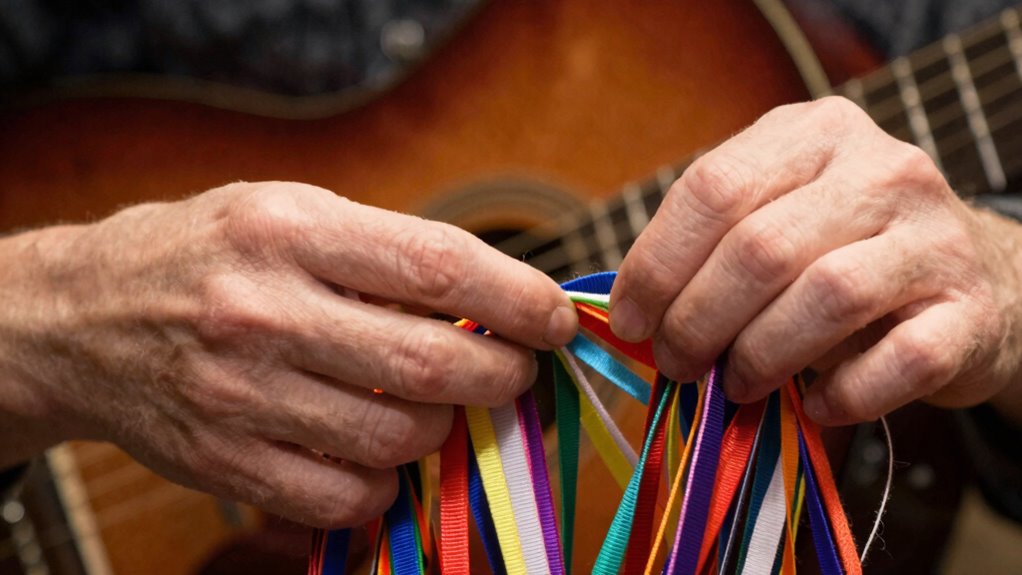

To make improvisation feel less random, establish a consistent jam routine that encourages regular practice and exploration. Focus on responding to fellow musicians, developing your intuition through repeated sessions, and trusting your instincts. Explore different tempos, keys, and styles to build familiarity and confidence. This routine helps your mind and fingers react naturally, turning spontaneous ideas into deliberate expressions. Keep practicing regularly, and you’ll see how your improvisation becomes more fluid and intuitive over time.

Get audio and creator gear delivered free with Prime
- Fast, free delivery on millions of items
- Prime Video, Amazon Music and more included
- Member-only deals all year
Key Takeaways
- Establish a consistent practice routine to build familiarity and confidence in improvisational responses.
- Focus on active listening and reacting to fellow musicians to create a cohesive musical conversation.
- Explore various tempos, keys, and styles regularly to develop versatile improvisational instincts.
- Develop internalized patterns and cues through repeated jam sessions, reducing randomness.
- Cultivate a growth mindset to view improvisation as a skill that improves with consistent, mindful practice.

Improv can often feel like a gamble, with moments of spontaneity overshadowed by uncertainty. You step into a jam session, uncertain of what will come next, and wonder if your ideas will fit or fall flat. That unpredictability can be intimidating, but it doesn’t have to be. By cultivating a consistent jam habit, you develop a deeper sense of musical intuition, which turns spontaneous creativity from a random act into a deliberate expression. The key is to make improvisation a regular part of your practice, so it becomes second nature rather than a leap into the unknown.
Consistently practicing improvisation transforms spontaneous moments into deliberate, confident musical expression.
When you jam regularly, your mind and fingers start to recognize patterns and cues more instinctively. This process builds your musical intuition — an almost subconscious understanding of harmony, rhythm, and phrasing. It’s like your brain begins to anticipate where a melody or rhythm might go next, even before you consciously think about it. As a result, your improvisations feel more natural and less like random bursts of notes. Instead, they flow smoothly, guided by your internal sense of timing and tonality. This consistency creates a foundation where spontaneous creativity can flourish without feeling chaotic.
To build this habit, set aside dedicated time each week for jam sessions. Don’t worry about perfecting a piece or playing flawlessly; focus on exploring and responding in the moment. Play with different tempos, keys, and styles, and challenge yourself to follow the lead of your fellow musicians. Over time, you’ll notice that your ability to react instinctively improves, and your improvisations become more cohesive. It’s not about memorizing licks but about trusting your musical intuition to guide your choices. Developing musical intuition through regular practice is essential for making improvisation feel less like a gamble. Engaging in mindful listening skills during your sessions can further enhance your responsiveness and connection with other players. Incorporating consistent practice routines can help reinforce these skills and make improvisation feel more natural over time. Additionally, embracing a growth mindset can motivate you to view each jam as an opportunity to learn and improve, rather than just a performance.
As your confidence grows, so does your capacity to stay present in the moment. When you’re truly tuned into the group, your spontaneous creativity becomes less about guessing and more about expressing. You start to recognize specific cues from fellow players—like a change in rhythm or a new melodic idea—and respond naturally. This synchronicity makes improvisation feel less like a shot in the dark and more like a shared conversation. The more you jam, the more intuitive your musical instincts become, transforming spontaneous creativity from a risky gamble into a rewarding and fluid experience. Developing a consistent practice routine not only enhances technical skills but also reinforces your ability to trust your instincts during improvisation.
Ultimately, the key lies in consistency. The more you embed improvisation into your routine, the more you train your mind and fingers to trust your musical intuition. That trust liberates a smoother flow, where spontaneity is guided by your inner sense of what sounds right, making improvisation less random and more deliberate.
Popular right now

Dyson Ball Animal 3 Extra Upright Vacuum

Ninja Luxe Café Mini Plus Espresso and Drip Coffee Machine with AutoFroth, Stainless Steel, ES351

Ninja Luxe Café Premier 3-in-1 Espresso Machine, Drip Coffee & Cold Brew
As an affiliate, we earn on qualifying purchases.
Frequently Asked Questions
How Long Should I Practice Improvisation Daily?
You should practice improvisation for about 20 to 30 minutes daily, focusing on consistency and mental focus. Regular practice helps you develop your skills without burnout, making improvisation feel more natural. Keep your sessions engaging and challenge yourself with new ideas to improve faster. Over time, this habit builds confidence, sharpens your instincts, and makes spontaneous playing feel less random and more intuitive.
Can Improvisation Improve My Overall Musical Skills?
Yes, improvisation can definitely improve your overall musical skills. As you practice, you’ll develop better musical intuition, helping you understand harmony and rhythm more instinctively. This boosts your creative confidence, making you more comfortable experimenting and expressing yourself freely. Over time, improvisation trains your ear and technical abilities, enriching your playing across all styles. So, keep jamming—it’s a powerful way to grow as a musician.
What Genres Benefit Most From the Jam Habit?
Like a river flowing effortlessly, the jam habit boosts genres that thrive on musical synergy and genre versatility. Jazz, blues, and funk benefit most, as they rely on spontaneous interactions and adaptable structures. By jamming regularly, you develop a deeper understanding of musical conversations, enhancing your improvisational skills across styles. This habit makes exploring different genres more natural, enriching your overall musicality and fostering creative versatility in any musical setting.
How Do I Overcome Fear of Improvising Publicly?
To overcome performance anxiety and boost creative confidence, start by practicing improvisation in a safe space, like with friends or alone. Gradually expose yourself to public settings, focusing on the joy of making music rather than perfection. Embrace mistakes as learning opportunities. Over time, consistent practice and positive self-talk will help you feel more comfortable, confident, and ready to improvise publicly without fear.
Are There Specific Jams Recommended for Beginners?
Think of a beginner jam as planting a tree—start with simple, sturdy roots. Look for jams labeled “beginner friendly exercises” or “easy jamming techniques,” which provide structured support. These sessions help you build confidence and feel less overwhelmed, making improvisation feel more natural. Participating in such jams allows you to grow at your own pace, transforming uncertainty into a steady, flourishing musical journey.
Conclusion
By embracing a regular jam habit, you’ll find improvisation becoming more intuitive and less unpredictable. Consistency builds familiarity, turning spontaneous ideas into confident expressions. Remember, practice makes perfect, and the more you jam, the more your instincts sharpen. Keep playing, stay patient, and trust the process. Like the saying goes, “Practice makes perfect,” and soon, improvising will feel natural rather than random. Keep at it, and watch your musical confidence grow.