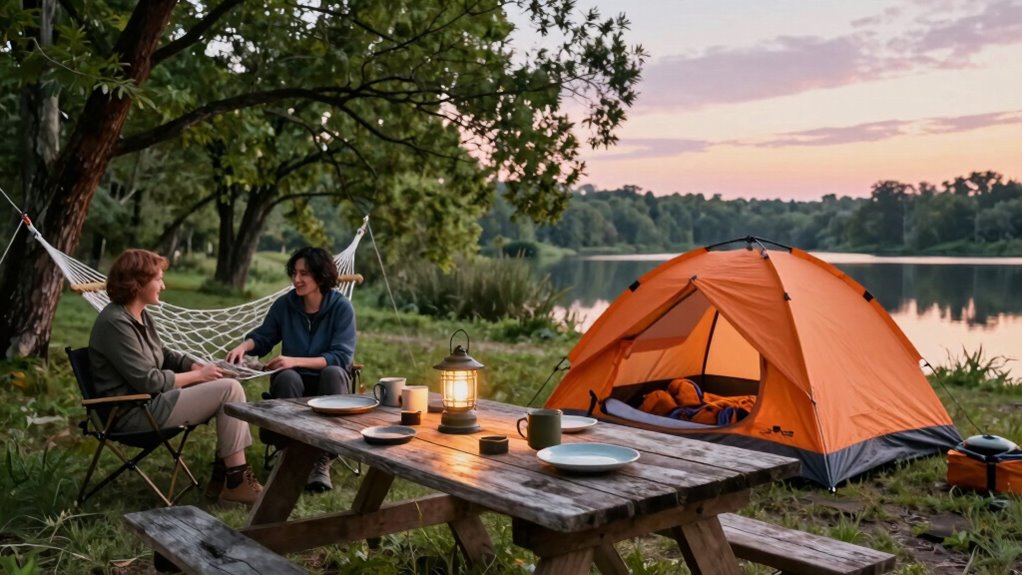

To handle shared camps without constant frustrations, communicate openly about plans, routines, and boundaries from the start. Respect others’ needs, set clear expectations, and address issues calmly and promptly. Regular check-ins help prevent misunderstandings, and practicing eco-friendly camping shows consideration for shared spaces. Keep a positive attitude and focus on solutions when conflicts arise. If you want to discover more strategies, you’ll find useful tips to keep your camping experience enjoyable.

Get audio and creator gear delivered free with Prime
- Fast, free delivery on millions of items
- Prime Video, Amazon Music and more included
- Member-only deals all year
Key Takeaways
- Establish clear communication and boundaries from the start to prevent misunderstandings.
- Address small frustrations promptly and respectfully to avoid escalation.
- Practice active listening and show empathy to understand others’ perspectives.
- Follow shared campsite etiquette and eco-friendly practices to reduce tensions.
- Regularly check in with your group to discuss concerns and adjust expectations as needed.
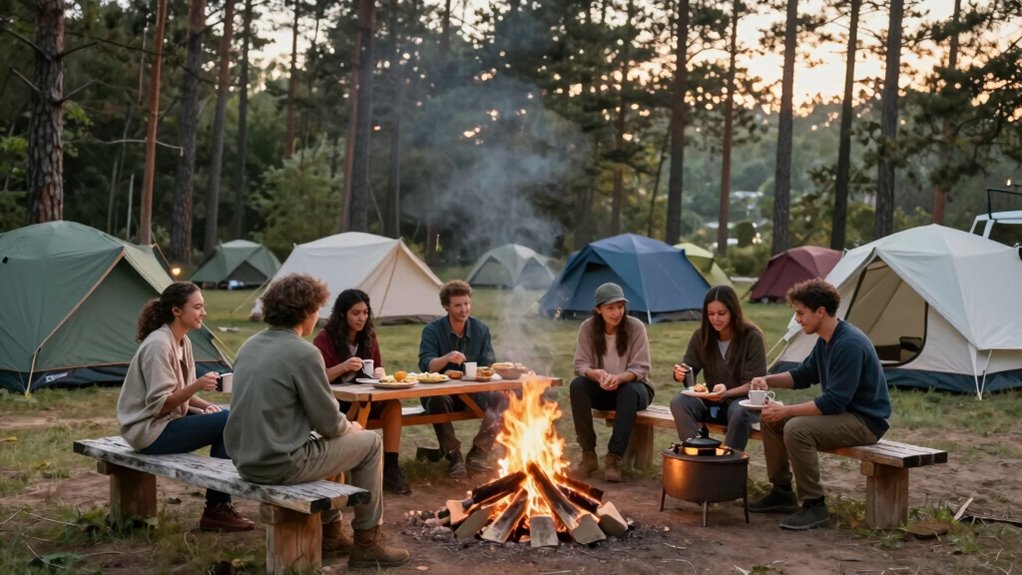
Sharing a campsite can be rewarding, but it often comes with frustrations if expectations aren’t aligned. When you’re camping with others, clear team communication becomes your best tool to prevent misunderstandings. It’s essential to openly discuss plans, daily routines, and responsibilities from the start. Whether it’s who’s bringing the cooking gear or how late everyone plans to stay up, talking about these details upfront helps set the stage for a smooth experience. Don’t assume others know your preferences; instead, voice them clearly. This proactive approach minimizes surprises and keeps everyone on the same page.
Boundary setting plays a critical role in avoiding conflicts in shared spaces. When you establish boundaries early, it helps everyone understand what’s acceptable and what isn’t. For example, if you prefer quiet hours after a certain time or want a designated area for cooking and relaxing, communicate these boundaries politely but firmly. Respect others’ boundaries as well, and don’t hesitate to speak up if someone crosses a line. Setting boundaries isn’t about creating walls but about fostering mutual respect and understanding. When everyone knows each other’s limits, frustrations naturally decrease, and the campsite becomes a more enjoyable environment. Being aware of sustainable camping practices can also help reduce environmental tensions and promote eco-friendly shared spaces. Additionally, understanding campsite etiquette encourages considerate behavior among campers.
Team communication doesn’t end with initial discussions; it requires ongoing effort. Check in with your camping companions regularly to see if any issues have arisen or if adjustments are needed. Developing a habit of effective communication can make a significant difference in maintaining harmony. Approaching these conversations with open-mindedness fosters a more collaborative atmosphere. If a problem does come up—like someone forgetting to clean up or noise levels rising—address it calmly and directly. Maintaining a respectful attitude helps resolve conflicts more effectively and fosters a positive shared experience. Avoid letting small annoyances fester into bigger frustrations. Instead, handle them through honest conversations that reaffirm shared goals of a pleasant camping experience.
camping communication and boundary setting kit
As an affiliate, we earn on qualifying purchases.
As an affiliate, we earn on qualifying purchases.
Frequently Asked Questions
How Do I Establish Clear Boundaries With Campmates?
You should start by communicating openly about camping etiquette and personal space with your campmates. Clearly express your boundaries early on, like designated quiet times or personal areas, and listen to theirs. Respect each other’s needs and be flexible when conflicts arise. By establishing these boundaries upfront, you create a comfortable environment, reducing frustrations and ensuring everyone enjoys the camping experience without feeling overwhelmed or overlooked.
What Are Effective Ways to Communicate Disagreements Calmly?
Imagine your words as a gentle stream, flowing smoothly to reach your campmate’s ears. To communicate disagreements calmly, practice effective listening and offer respectful feedback, like a steady bridge connecting understanding. Keep your tone calm, focus on the issue, not the person, and use “I” statements to express feelings. This approach fosters trust, reduces tension, and encourages open dialogue, making shared camping experiences more peaceful and enjoyable for everyone.
How Can I Ensure Fair Distribution of Chores?
To guarantee fairness in chores, establish a camp chore rotation schedule everyone agrees on. You can create a simple chart or list, rotating responsibilities regularly so no one feels overburdened. Communicate openly about expectations and adjust the schedule if needed. By actively involving everyone in the process, you promote fairness in chores, making sure each person contributes equally and reducing potential frustrations during your shared camp experience.
What Should I Do if Someone Consistently Breaks Camp Rules?
If someone consistently breaks campground etiquette, address it directly but calmly. For example, if they leave trash, politely remind them of the shared responsibility. Use conflict resolution techniques, like listening to their perspective, then explain how their actions impact everyone. Set clear expectations and discuss consequences if rules aren’t followed. This approach fosters respectful communication and helps maintain harmony without escalating tensions.
How to Handle Unexpected Conflicts That Escalate Quickly?
When unexpected conflicts escalate quickly, you need to address group conflict calmly and promptly. Identify emotional triggers behind the tension, and avoid escalating the situation further. Use active listening to understand everyone’s perspective, then mediate with empathy. Setting clear boundaries and encouraging respectful communication can help de-escalate tensions. If needed, take a break to cool down before revisiting the issue, ensuring everyone feels heard and respected.
As an affiliate, we earn on qualifying purchases.
Conclusion
Sharing a camp can be smooth sailing when you communicate openly and set clear boundaries. For example, imagine you and your friends agree on quiet hours after 10 p.m., preventing late-night noise disputes. By establishing expectations upfront, you avoid small frustrations that can spoil the experience. Remember, a little planning and understanding go a long way—turning shared camping into a fun, memorable adventure rather than a source of stress.
shared campsite etiquette guidebook
As an affiliate, we earn on qualifying purchases.
As an affiliate, we earn on qualifying purchases.
camping check-in and conflict resolution tools
As an affiliate, we earn on qualifying purchases.
As an affiliate, we earn on qualifying purchases.
Halloween Picks
halloween
As an affiliate, we earn on qualifying purchases.