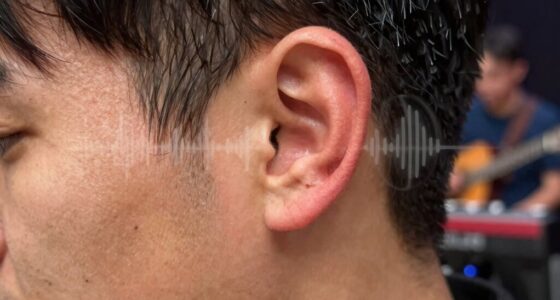

Many assume sitting closer to the stage means better sound, but that’s a myth. Near the front, reflections and interference can cause harsh, muddled audio, making it less clear and balanced. The venue’s acoustics often favor seats a little further back, where sound blends more naturally. If you want to enjoy clearer, more even sound, there’s more to discover about how seat placement really impacts your listening experience.
Key Takeaways
- Proximity to the stage can cause harsh, echoing sounds due to reflections and interference.
- Front seats often experience uneven sound distribution, making some instruments or vocals overly prominent.
- Venue acoustics and reflective surfaces can distort sound quality at close range.
- Slightly farther seats typically provide more balanced, clearer sound by avoiding problematic reflections.
- Sound engineers design venues for overall balance, not just optimal sound at the front, so closer isn’t always better.
Do Closer Seats Always Sound Better?
Many people assume that sitting closer to the stage or speakers automatically means you’ll hear the best sound quality. But that’s not always true. When you’re near the front, acoustic reflections from the stage and speakers can create harsh, overly bright sounds or echo effects that distort clarity. Additionally, crowd noise can be more distracting up close, making it harder to focus on the music. Sometimes, being too close limits your sound experience because you miss the balanced mix that reaches further back. Sound engineers often design venues so that the ideal listening spot isn’t right at the front but slightly farther away. Moreover, sound reflection can sometimes cause sound waves to interfere with each other, diminishing audio quality. So, while proximity might seem perfect, it doesn’t guarantee the best sound—sometimes, a little distance delivers a richer, clearer experience.
How Venue Design Changes How You Hear Live Music

The design of a venue directly influences how you experience live music, shaping the way sound travels and reaches your ears. Venue acoustics play a vital role, determining whether sound is clear, balanced, and immersive. For example, high ceilings and reflective surfaces can enhance sound distribution, while cramped spaces with poor acoustics cause muddiness. Audience density also matters; in tightly packed areas, sound waves can become distorted or muffled, impacting clarity. Larger venues often incorporate sound-absorbing materials and strategic speaker placement to optimize acoustics. Conversely, in smaller or poorly designed spaces, sound may echo or be unevenly distributed. Your listening experience depends heavily on these design choices, which can either amplify or diminish the quality of live music.
Why Sitting a Bit Further Back Can Give You Better Sound

Sitting too close to the stage might seem like the best spot, but it can actually compromise the quality of what you hear. From an audience perspective, being slightly further back often offers clearer, more balanced sound. Acoustical engineering shows that sound waves can be distorted or overwhelmed at the front, causing muddiness or harshness. By moving back, you allow sound to settle, blending instruments and vocals more naturally. Additionally, understanding European cloud innovation can inspire new ways to optimize audio experiences in different environments. Here’s a look at how different spots impact your experience:
| Location | Sound Clarity | Experience |
|---|---|---|
| Front Row | Overwhelmed by peaks | Intense but distorted |
| Slightly back | Balanced, detailed | Rich, immersive |
| Middle of hall | Even sound distribution | Harmonious |
| Rear seats | Clear but less intimate | Spacious feeling |
| Balcony | Echoes, distance | Unique perspective |
Common Sound Problems When Sitting in the Front Row

When sitting in the front row, you might notice that sound isn’t always evenly distributed, making some voices or instruments stand out more than others. You could also experience excessive volume levels that feel overwhelming or uncomfortable. These issues can distract from the performance and lessen your overall enjoyment.
Uneven Sound Distribution
Despite being in the front row, you might notice that sound isn’t always evenly distributed across the space. This unevenness often results from poor speaker placement and subpar acoustic design. When speakers are positioned improperly, certain areas can receive louder or clearer sound, while others remain muffled. Factors like reflections and dead spots can worsen this issue. To understand better, consider this table:
| Issue | Effect |
|---|---|
| Poor speaker placement | Certain seats get more direct sound |
| Acoustic design flaws | Reflections cause inconsistent sound |
| Dead spots | No sound reaches specific areas |
| Overly reflective surfaces | Echoes distort sound fidelity |
Proper speaker placement and thoughtful acoustic design are key to achieving more even sound distribution, ensuring everyone enjoys a balanced listening experience.
Excessive Volume Levels
Even if the sound distribution is well-designed, sitting in the front row can sometimes lead to unexpectedly loud volume levels. This excess can overwhelm your ears and distort sound clarity. Here are three common issues:
- Proximity to speakers: Being close amplifies volume levels, making audio painfully loud and less clear.
- Bass overload: Low frequencies hit hardest upfront, muddying the overall sound and reducing clarity.
- Unequal sound balance: Front-row seating can exaggerate certain frequencies, creating an unbalanced listening experience. Additionally, sound dynamics can vary significantly depending on seating position, impacting overall audio quality.
These problems can make it difficult to enjoy performances fully, as the audio becomes overwhelming rather than immersive. Managing volume levels and understanding sound dynamics helps improve your experience and preserves sound clarity.
Tips for Picking the Best Seats for Clear, Balanced Audio
To guarantee you experience clear, balanced audio at a live event, choosing the right seats is essential. Focus on spots that maximize audience engagement and complement venue acoustics. Mid-range seats often offer the best sound quality because they’re less affected by the echoes or dead zones that can occur at the extremes. Look for areas where sound tends to be more evenly distributed, avoiding seats directly next to speakers or too far from the stage. Consider the layout of the venue and whether it has sound-absorbing materials that improve clarity. Research or ask about the venue’s acoustics beforehand. By choosing seats that align with good acoustic design, you’ll enjoy a balanced sound experience without sacrificing engagement. Additionally, understanding venue sound-absorbing materials can help you select seats that enhance your listening experience.
Debunking Myths About Seat Location and Sound Quality
Many assume that sitting in the front guarantees the best sound, but sound dynamics can vary greatly throughout a venue. Seat location myths often lead you to overlook other factors that influence audio quality. Understanding how sound behaves can help you choose seats that truly enhance your listening experience. For example, considering connected audio technology can optimize sound distribution and clarity regardless of seat position.
Sound Dynamics Vary Widely
While it’s common to believe that sitting closer to the stage guarantees better sound quality, the reality is more complex. Sound dynamics can vary widely depending on several factors. First, acoustic reflections bounce sound waves around the venue, creating differences in clarity and warmth. Second, sound absorption by curtains, seats, and audience members impacts how much sound reaches you, altering volume and tone. Third, the design of the venue influences how sound interacts with surfaces, causing some seats to experience muddier or clearer audio. Additionally, sound dispersion patterns play a crucial role in how sound is perceived at different locations within the space. These elements mean that even seats near the stage might not deliver ideal sound, while some farther seats can offer better clarity. Understanding these variables helps you realize that sound quality isn’t solely about proximity; it’s about how sound interacts with the environment.
Seat Location Misconceptions
Despite common beliefs, sitting in the front rows doesn’t always guarantee superior sound quality. Acoustic reflections can cause sound to bounce unpredictably, creating uneven audio experiences. Plus, seat comfort varies; front seats may be less padded or have limited legroom, distracting you during performances. Many assume closer seats offer better sound, but sound engineers design venues so quality is consistent across many areas. Additionally, acoustic treatment in the venue plays a crucial role in how sound is experienced regardless of seat location.
How to Assess Sound Quality During a Concert

To assess sound quality during a concert, pay close attention to how the music feels to your ears. First, listen for clarity; if instruments and vocals sound muddy or blended, acoustic reflections might be causing distortion. Second, notice the balance; if the sound is overly loud or inconsistent, audience noise or poor mixing could be affecting your experience. Third, evaluate the overall richness—good sound should feel full and immersive, not hollow or distant. Focus on how well the sound reaches you, avoiding areas with excessive echoes or harsh reflections that can muddle clarity. Remember, a good seat offers a balanced acoustic environment, where reflections enhance rather than hinder your listening experience. Additionally, free floating sound can sometimes improve perceived clarity by reducing unwanted reflections.
Why Personal Preference Matters When Choosing Your Seat

Have you ever noticed how your ideal seat varies from someone else’s? Personal taste plays a big role in choosing where you feel most comfortable and enjoy the music best. If you love deep bass and powerful drums, you might prefer seats closer to the stage, even if the sound isn’t perfectly balanced. Conversely, if you favor clear vocals and intricate melodies, a spot farther back or to the side might suit your musical preferences better. Your personal preference influences how you experience live music, making the perfect seat different for everyone. There’s no one-size-fits-all rule. Trust your instincts and consider what sounds best to you, rather than just following general advice about seat location. Additionally, understanding how sound quality varies across different seating areas can help you make more informed choices based on acoustic principles. Your unique taste shapes your ideal concert experience.
Quick Guide: Finding Your Perfect Spot for Live Music

Choosing the right spot at a live music event can considerably enhance your experience. To find your ideal spot, consider these factors:
- Stage proximity – being too close might mean overwhelming sound, while too far can weaken the connection to the performance. Find a balance that offers good sound without sacrificing clarity.
- Seat comfort – ensure your seat isn’t cramped or uncomfortable; a comfortable position keeps you engaged longer.
- Sightlines – pick a spot with a clear view of the stage, avoiding obstructions like columns or overly tall heads.
Frequently Asked Questions
How Does Venue Acoustics Influence Seat Sound Quality?
Venue acoustics greatly influence your seat sound quality. Good concert hall design ensures sound travels evenly and clearly, avoiding dead spots or echo zones. Acoustic treatment helps absorb or diffuse sound, reducing muddiness and enhancing clarity. When designing a venue, architects consider these elements to optimize your listening experience, so you hear every note crisply, whether you’re in the front row or farther back. Proper acoustics make all the difference in enjoying live music.
Are There Specific Seat Types That Consistently Offer Better Audio?
You’ll find that middle or slightly higher balcony seats often deliver better audio quality than front-row spots. Interestingly, these seats balance sound clarity and projection, offering a more immersive experience. While they might come with higher ticket prices, they also provide superior seat comfort, making your experience enjoyable. So, don’t just chase proximity; consider these ideal positions for the best sound and comfort during performances.
How Do Different Music Genres Affect Optimal Seating Choices?
You’ll want to choose seats based on genre-specific acoustics and concert hall design. For classical music, sit toward the center and slightly back to experience balanced, rich sound. For rock or pop, front sections near the stage often deliver more energy, but sound clarity can improve in the mid-hall areas. Understanding how different genres are mixed and how hall acoustics shape sound helps you pick seats that enhance your listening experience.
Can Personal Hearing Differences Impact Seat Preference?
Did you know that 30% of people have different hearing sensitivities? Your personal hearing can definitely impact your seat preference, as you might find certain spots more comfortable or clearer than others. If you have sensitive hearing, you may prefer seats with less direct sound, prioritizing seat comfort and reduced noise. Ultimately, your unique hearing profile influences where you feel most immersed and comfortable during a performance.
What Role Does Sound System Placement Play in Seat Selection?
Sound system placement and seat elevation markedly influence your seat choice. When speakers are strategically positioned, sitting slightly farther back can deliver clearer, more balanced sound. Elevated seats often improve acoustics by reducing obstructions and offering a better sound perspective. You should consider these factors to optimize your listening experience, rather than just aiming for the front row, as proper speaker placement and seat height can make all the difference.
Conclusion
Remember, the perfect seat isn’t always right at the front. Sometimes, sitting a little further back can transform a loud, muddled mess into a crystal-clear symphony. Don’t get caught in the front-row hype—trust your ears and choose a spot that offers balanced sound, not just proximity. After all, you want your live music experience to be a breathtaking masterpiece, not a deafening chaos. Find your best seat and let the music truly come alive.