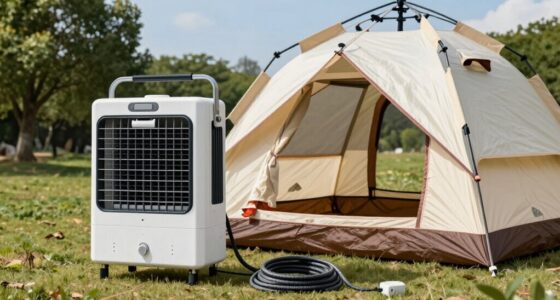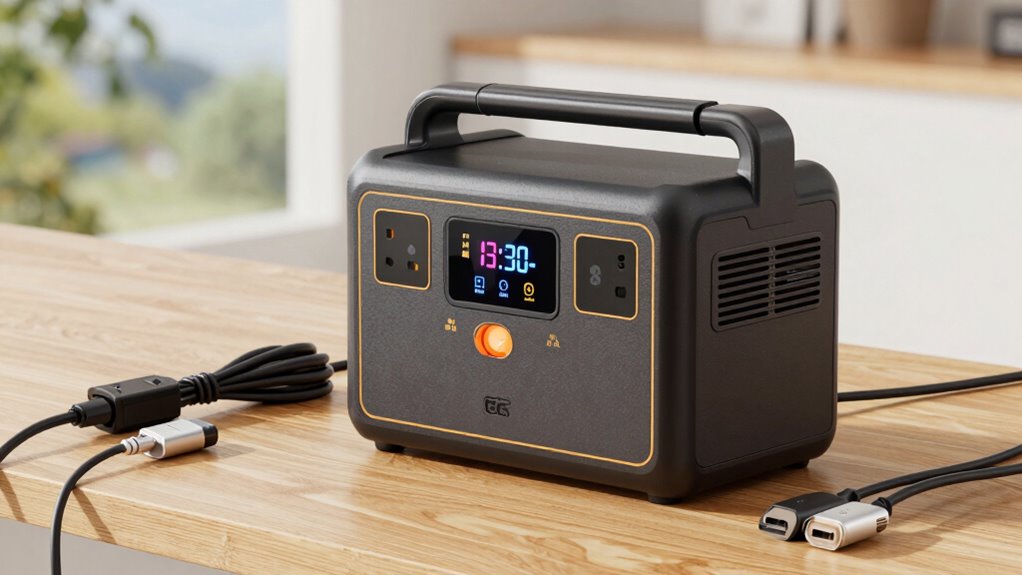

Understanding portable power station specs helps you choose the right device. Watts measure instant power output, while watt-hours indicate total energy capacity—how long your devices can run. Surge power shows how much power the station can deliver briefly for startup surges. Recharge time tells you how fast it replenishes between uses. Once you grasp these differences, you’ll be better equipped to pick a station that meets your needs and keeps you powered when off-grid.
Key Takeaways
- Watt-hours (Wh) measure total energy capacity, indicating how long devices can run on a full charge.
- Power output (Watts) shows instant power delivery capability, essential for device compatibility.
- Surge power (Watts) represents maximum short-term wattage, needed for devices with high startup demands.
- Recharge time varies by method (AC, solar, car), affecting station readiness and continuous usage.
- Multiple charging options ensure off-grid flexibility and reliable power replenishment when needed.
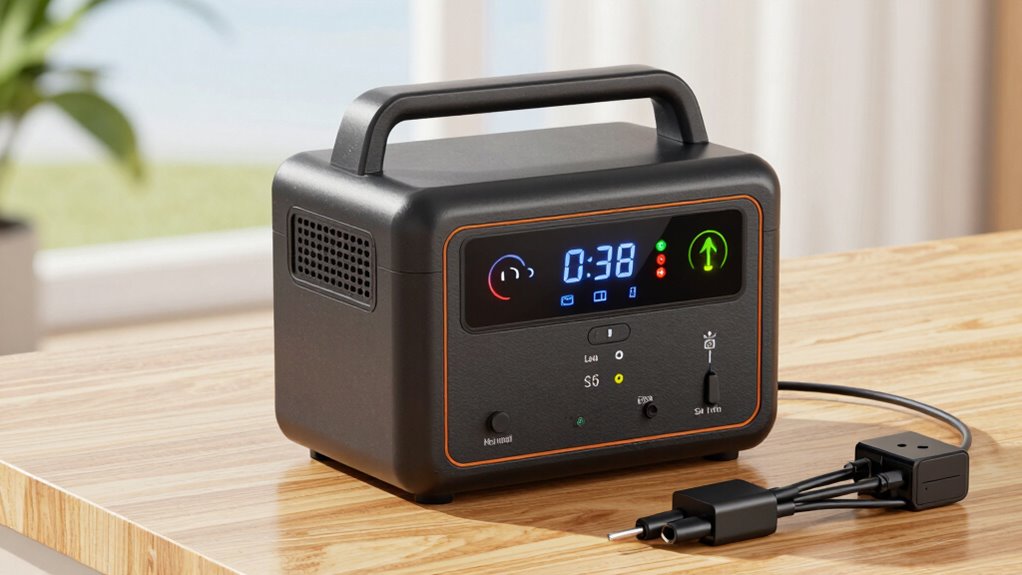
A portable power station is an indispensable device for keeping your gadgets charged during outdoor adventures or emergencies. When choosing one, understanding its specs helps you pick the right model for your needs. Two key specifications to consider are battery capacity and charging options. Battery capacity, usually measured in watt-hours (Wh), tells you how much energy the station can store and deliver over time. A higher capacity means you can charge your devices multiple times or power larger appliances longer. Charging options refer to the different ways you can replenish the station’s battery, such as AC wall outlets, car chargers, or solar panels. Knowing these options guarantees you can keep your power station topped up, especially when you’re off-grid for extended periods.
Understanding watt-hours is vital because it indicates how long your devices can run on a full charge. For example, a power station with 500 Wh can theoretically power a 50-watt device for about 10 hours. This measurement gives you a clearer picture of what your power needs will be and how long your devices can stay operational. Watts, on the other hand, measure the power output at any given instant. When you see surge power ratings, they refer to the maximum wattage the station can handle for a short burst, essential for devices that require a power boost to start up, like refrigerators or power tools. High surge power capacity is especially important for safely running equipment with high startup wattages.
Watt-hours show how long devices run; surge power handles short bursts for demanding appliances.
Surge power is a significant spec because it determines whether your power station can handle your most demanding devices. If your device’s startup wattage exceeds the surge power rating, it won’t turn on or operate safely. Consequently, matching your device’s peak power needs to the surge power capacity of your station avoids problems.
Frequently Asked Questions
How Do I Determine the Right Capacity for My Needs?
To determine the right capacity for your needs, start by listing your essential devices and their power requirements. Check each device’s wattage and estimate how long you’ll use them. Then, consider the battery capacity needed to keep those devices running comfortably without overloading the power station. Make sure the power station’s watt-hours match your total device compatibility needs, ensuring it provides enough energy without excess.
Can Portable Power Stations Run Sensitive Electronics Safely?
Yes, portable power stations can run sensitive electronics safely if you choose one with pure sine wave output, which mimics household power. Check its solar panel compatibility for eco-friendly recharging, and consider the battery chemistry—li-ion or lithium-polymer—for stability and longevity. Always guarantee the station’s surge power matches your device’s start-up needs, and avoid overloading to protect sensitive electronics from power fluctuations.
What Is the Lifespan of a Typical Portable Power Station?
A typical portable power station gracefully serves you for about 3 to 5 years before battery degradation begins to gently reduce its capacity. Proper care can extend this lifespan, and most models come with warranty coverage that offers peace of mind during its prime years. With attentive use and occasional maintenance, you’ll enjoy reliable power for many adventures, making your investment a trusted companion over time.
Are Portable Power Stations Waterproof or Weather-Resistant?
Most portable power stations are not fully waterproof, but many are designed with good weather resistance. Look for models with a high waterproof rating, like IP65 or higher, to guarantee protection against rain and splashes. While they can handle outdoor conditions, you should still avoid submerging them in water. Weather resistance helps keep your device safe during outdoor adventures, but always check the specific specs to match your needs.
How Do Temperature Changes Affect Power Station Performance?
Your power station’s performance can plummet faster than a rollercoaster when temperatures change. Extreme heat or cold impacts thermal regulation, causing efficiency drops and potential damage. High temperatures can overheat components, while cold weather hampers battery chemistry, reducing capacity and runtime. To keep your device working at its best, avoid exposing it to drastic temperature swings, and store it in a temperature-controlled environment whenever possible.
Conclusion
Understanding portable power station specs helps you make smarter choices. Remember, knowledge is power, and the more you know about watts, watt-hours, surge power, and recharge times, the better you’ll be at selecting the right device. Don’t just look at the numbers—consider how they’ll serve your needs. As the saying goes, “A little knowledge goes a long way,” so stay informed and keep your power options ready for any adventure.