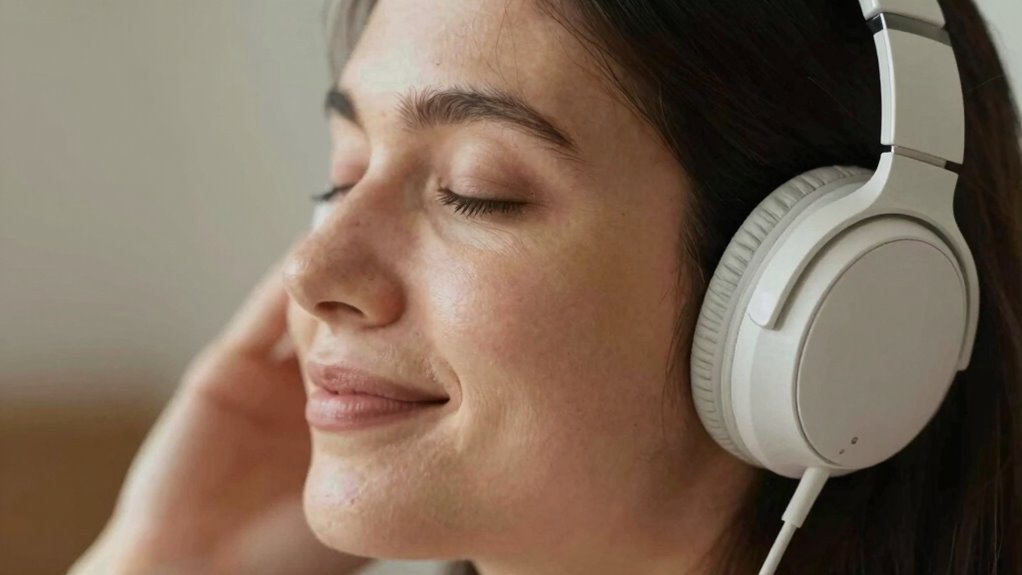
To notice sounds better and faster, develop a mindful listening habit by focusing intentionally on auditory input without distractions. Practice daily exercises like listening with eyes closed and actively paying attention to tones, pauses, and subtle cues. Resist the urge to think ahead or respond while listening. By staying present and engaged, you train your brain to distinguish sounds quickly and accurately. Keep exploring these techniques, and you’ll find your listening skills improve more than you expect.

Get audio and creator gear delivered free with Prime
- Fast, free delivery on millions of items
- Prime Video, Amazon Music and more included
- Member-only deals all year
Key Takeaways
- Practice intentional, focused listening daily to improve sound differentiation and recognition speed.
- Engage in mindfulness during listening to heighten awareness of subtle auditory cues.
- Use exercises like listening with eyes closed to sharpen sensory perception and sound noticing skills.
- Resist multitasking or thinking about responses to maintain full presence and enhance sound detection.
- Regularly observe sounds without judgment to train the brain for quicker and clearer auditory recognition.
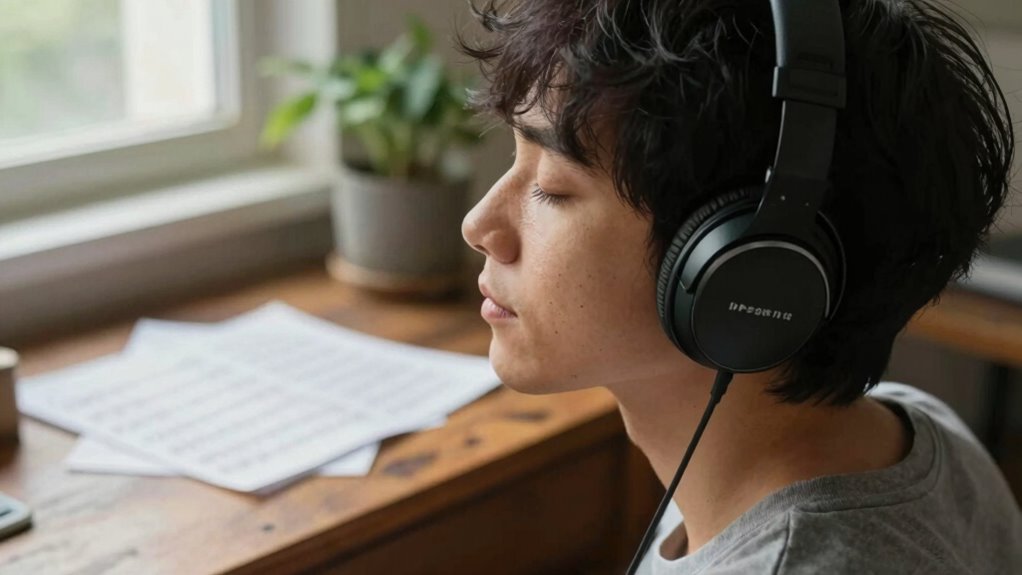
Listening is more than just hearing; it’s a habit that can transform your relationships, boost your understanding, and enhance your personal growth. When you develop this habit, you begin to notice sound more quickly and clearly, enabling you to respond more effectively. The key lies in practicing active engagement and mindful awareness during conversations and sensory experiences. Instead of passively letting sounds wash over you, you consciously focus on them, tuning in to the nuances that might otherwise go unnoticed.
Listening transforms connections by cultivating active focus and mindful awareness, revealing subtle sounds and deeper understanding.
Active engagement means intentionally directing your attention to what you’re hearing. It involves resisting the urge to think about other things or to prepare your response while someone is speaking. Instead, you stay present, listening intently to the words, tone, and even subtle auditory cues like pauses or changes in pitch. This focused attention sharpens your ability to differentiate sounds and pick up on details faster. Over time, this habit helps you develop a more acute sense of sound because your brain becomes better at filtering relevant information from background noise. Cultivating this skill also enhances your ability to filter out irrelevant noise, making your auditory perception more precise. Developing this listening habit can significantly improve your capacity to understand complex conversations and emotional cues, which are crucial for effective communication.
Mindful awareness complements active engagement by encouraging you to be fully present in each listening moment. When you approach listening with mindfulness, you observe sounds without judgment or distraction. You become aware of your environment, noticing how sounds ebb and flow, and acknowledge your reactions without getting caught up in them. This practice trains your brain to process sound more efficiently, making it easier to distinguish important signals from irrelevant noise. As a result, you can identify new sounds or changes in familiar ones more rapidly, enhancing your overall auditory perception. Incorporating mindfulness techniques into your listening practice can further develop your ability to notice subtle auditory cues and improve your concentration.
Building this listening habit takes intentional effort. Start by dedicating a few minutes each day to focused listening exercises. Close your eyes and listen to the sounds around you, noting the differences and similarities. As you do this, remind yourself to stay actively engaged and maintain mindful awareness. Incorporating auditory perception exercises can further strengthen your ability to notice subtle sounds and changes. Over time, you’ll notice a shift—sounds become clearer, and your ability to notice subtle auditory cues improves. This heightened awareness not only benefits your hearing but also enriches your interactions, as you’ll better understand non-verbal cues and emotional undertones in conversations. Practicing patience and consistency is key to integrating this habit into your daily life.
Ultimately, cultivating a listening habit rooted in active engagement and mindful awareness transforms your sensory experience. It allows you to notice better sounds faster, sharpening your perception and deepening your connection to your environment. This simple yet powerful practice can open your ears to a richer, more detailed world and help you respond more thoughtfully in everyday situations.
mindful listening training device
As an affiliate, we earn on qualifying purchases.
As an affiliate, we earn on qualifying purchases.
Frequently Asked Questions
How Long Should I Practice This Listening Habit Each Day?
You should practice this listening habit for about 10 to 15 minutes daily. Consistent practice improves sound clarity and sharpens your listening skills quickly. Incorporate meditation techniques to stay focused and calm during each session. As you build this habit, you’ll notice better sound perception faster, enhancing your overall listening experience. Remember, regular, mindful attention is key to developing sharper auditory skills and enjoying clearer sound.
Can This Habit Improve My Hearing Health Over Time?
Yes, practicing this habit can improve your hearing health over time. By becoming more aware of sound, you’ll likely develop better sound sensitivity, making it easier to notice important auditory cues. It also encourages you to practice hearing protection in noisy environments, reducing the risk of hearing damage. Over time, this habit supports healthier ears, sharpens your hearing, and helps prevent issues related to sound sensitivity and noise-induced hearing loss.
Is This Method Suitable for All Types of Sound?
Yes, this method suits most types of sound, enhancing your auditory flexibility and sound discrimination skills. By actively practicing, you train your ears to adapt to different frequencies and intensities, making it easier to notice subtle differences in various environments. However, very loud or harsh sounds might require caution. Overall, consistent practice improves your ability to distinguish and appreciate a wide range of sounds, benefiting your hearing perception.
What Common Mistakes Should I Avoid When Practicing?
Don’t fall into the trap of overconfidence pitfalls or misleading assumptions when practicing listening. You might think you’re catching every detail, but that could lead to missing subtle sounds. Avoid rushing, as it’s easy to overlook important nuances. Instead, stay patient, focus on small sound details, and challenge your perception regularly. This way, you’ll sharpen your skills without letting overconfidence skew your progress, like a sailor steering into unseen rocks.
How Quickly Can I Expect to Notice Improvements?
You can start noticing improvements in auditory perception and sound sensitivity within a few days of consistent practice. Regularly focusing on listening habits trains your brain to process sounds more efficiently, so you’ll become more attuned to subtle cues quickly. While progress varies for each person, many experience noticeable enhancements in their ability to distinguish sounds and improve overall listening skills in just a week or two.
noise-canceling headphones for focused listening
As an affiliate, we earn on qualifying purchases.
As an affiliate, we earn on qualifying purchases.
Conclusion
By cultivating the habit of mindful listening, you train your ears to notice subtle sounds more quickly. This isn’t just about hearing better—it’s about actively engaging with your environment and sharpening your perception. Trust that with consistent practice, your ability to detect nuances will improve naturally. So, embrace attentive listening as part of your routine. Over time, you’ll experience a richer, more detailed soundscape, making every listening moment more enjoyable and insightful.
As an affiliate, we earn on qualifying purchases.
sound differentiation training headphones
As an affiliate, we earn on qualifying purchases.
As an affiliate, we earn on qualifying purchases.
Halloween Picks
halloween
As an affiliate, we earn on qualifying purchases.