
Balanced audio improves sound clarity by reducing interference and noise that can distort music or voices. It uses two signal wires carrying the same audio signal but with opposite polarity, which cancels out external noise when combined. This setup helps your audio stay clean, sharp, and free from hums or static, especially in busy environments. To get the best sound quality and understand how it all works, keep going—there’s more to explore.

Get audio and creator gear delivered free — and shop member deals
- Fast, free delivery on millions of items
- Access to Prime Big Deal Days deals on October 6–7
- Prime Video, Amazon Music and more included
Key Takeaways
- Balanced audio uses three conductors: two signal wires and a ground, to reduce noise and interference.
- It cancels out external noise by transmitting identical signals on both hot and cold wires, improving sound clarity.
- Balanced connections are ideal for professional setups, live sound, and environments with high electronic interference.
- Proper shielding and grounding in balanced cables further enhance noise rejection and audio quality.
- Using balanced audio ensures cleaner, more accurate sound with less background noise and signal degradation.
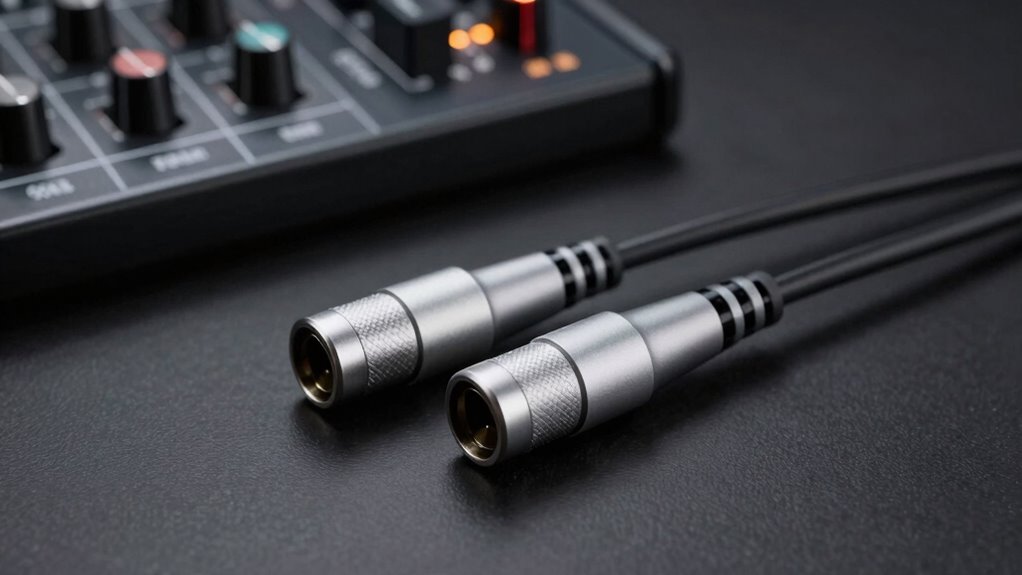
Have you ever wondered why professional audio equipment produces clearer sound than regular consumer devices? The secret often lies in the quality of the connections and the technology used to transmit audio signals. One key factor is the way the cables are designed, especially their cable shielding. Good cable shielding is essential because it prevents interference from external sources like electromagnetic noise or radio signals that can distort your sound. When signals are shielded properly, they stay pure and clear, which is vital for high-quality audio. This shielding works by encasing the internal conductors with conductive or metal layers that block unwanted noise. As a result, you experience less audio interference and a cleaner sound overall. Properly grounded shielding can further enhance noise rejection, especially in complex audio setups. This is particularly important when you’re working in environments with lots of electronic devices, such as studios or live venues, where noise reduction becomes a priority. Understanding cable shielding can help you make smarter choices when selecting audio cables to improve your sound quality. Additionally, recognizing the importance of noise rejection techniques can further enhance your audio setup’s performance. Recognizing the role of interference mitigation can help you better understand how to optimize your audio environment for the best possible sound.
As an affiliate, we earn on qualifying purchases.
Frequently Asked Questions
Does Balanced Audio Work With All Types of Headphones?
Balanced audio doesn’t work with all types of headphones. You’ll need headphones with balanced connectors to fully benefit from improved audio quality enhancement. If your headphones have standard unbalanced jacks, you won’t see much difference. To upgrade your listening experience, check your headphone compatibility first. When paired with the right headphones, balanced audio can deliver clearer sound, less noise, and a richer listening experience.
How Does Balanced Audio Affect Audio Latency?
Balanced audio can slightly reduce audio latency because it maintains better audio signal integrity, especially over longer cable runs. This improved signal stability means your sound stays clearer and more synchronized. However, the impact on latency is minimal and depends on your equipment’s compatibility. If your gear supports balanced connections, you’ll likely experience smoother, more reliable audio, but the main benefit remains in sound quality rather than noticeable latency reduction.
Can I Convert Unbalanced to Balanced Audio Easily?
You can convert unbalanced to balanced audio easily using a device called a DI box or a dedicated transformer. Make sure the cable compatibility matches, as not all cables work with every converter. Additionally, check the power requirements, since some active converters need power sources to operate properly. With the right equipment, you’ll improve sound quality and reduce noise, making your audio setup much clearer and more professional.
Is Balanced Audio More Resistant to Interference?
Ever notice how balanced audio often sounds clearer? That’s because it’s more resistant to interference, especially grounding issues, which can cause hums or buzzes. By using two signal wires and a shield, balanced setups considerably reduce interference, ensuring cleaner sound. So, if you want better audio quality and fewer disturbances, switching to balanced audio helps, making your listening experience much more reliable and enjoyable.
Do I Need Special Equipment for Balanced Audio?
Yes, you need special equipment for balanced audio. You’ll want compatible cables, like XLR or TRS connectors, to ensure proper signal transfer. Your equipment must also support balanced connections, including interfaces and amplifiers. Check cable compatibility and power requirements to avoid issues. While some gear can adapt, using dedicated balanced gear guarantees maximum interference resistance and sound quality. Investing in the right equipment makes a noticeable difference.
professional balanced audio interface
As an affiliate, we earn on qualifying purchases.
As an affiliate, we earn on qualifying purchases.
Conclusion
Imagine your audio signals as a calm river flowing smoothly through a landscape, free from the chaos of unwanted noise. By embracing balanced audio, you’re fundamentally building a sturdy bridge that keeps your sound clear and true, even amidst stormy interference. It’s like having a clear, pristine lake reflecting every note perfectly, so your music and voices come through crisp, vibrant, and full of life. With balanced audio, you’re turning your sound experience into a peaceful, immersive oasis.
As an affiliate, we earn on qualifying purchases.
As an affiliate, we earn on qualifying purchases.
Fall Picks
fall essentials
As an affiliate, we earn on qualifying purchases.