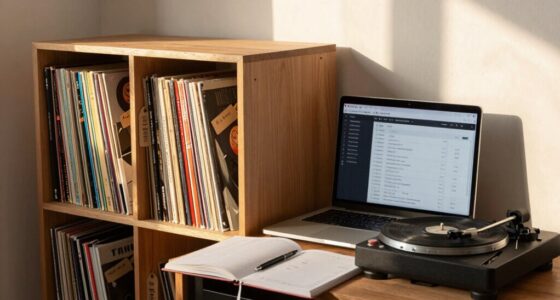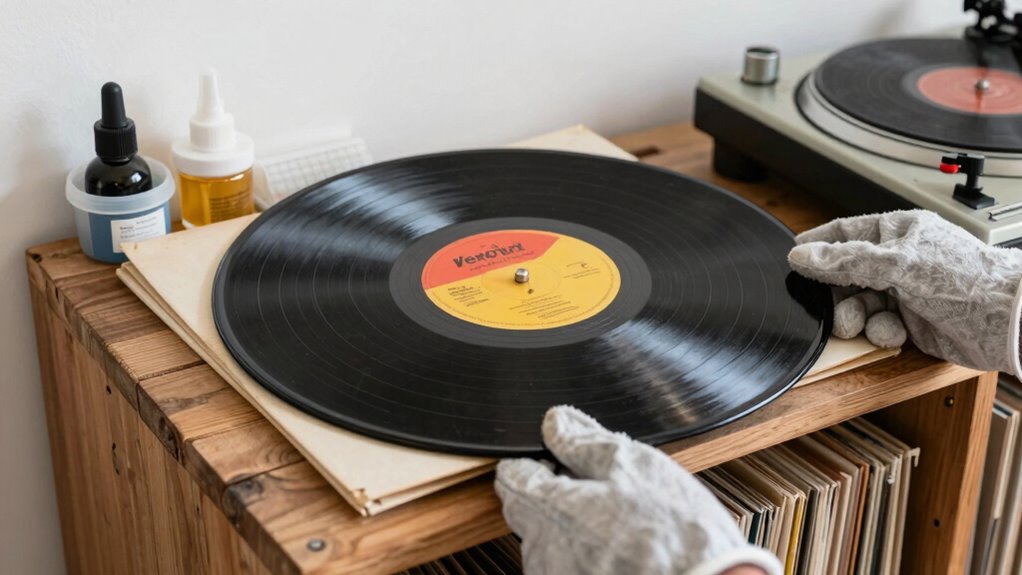

When handling used records, always pick them up by the edges to avoid fingerprinting the grooves. Inspect the surface for dust, dirt, or damage, and clean them gently with a vacuum or microfiber cloth before bringing them inside. Store them upright in protective sleeves to prevent warping and keep them in a clean, dust-free environment. Proper handling and storage make a big difference; keep going to learn more ways to protect your collection effectively.

Get audio and creator gear delivered free — and shop member deals
- Fast, free delivery on millions of items
- Access to Prime Big Deal Days deals on October 6–7
- Prime Video, Amazon Music and more included
Key Takeaways
- Always clean used records with a dedicated brush or cleaning solution before playing or storing.
- Handle records by the edges to prevent transferring oils and dirt from your fingers.
- Store used records upright in anti-static sleeves and in a dust-free environment.
- Avoid exposing records to direct sunlight, heat, or fluctuating temperatures.
- Regularly inspect and clean storage areas to prevent dust buildup and static charge.
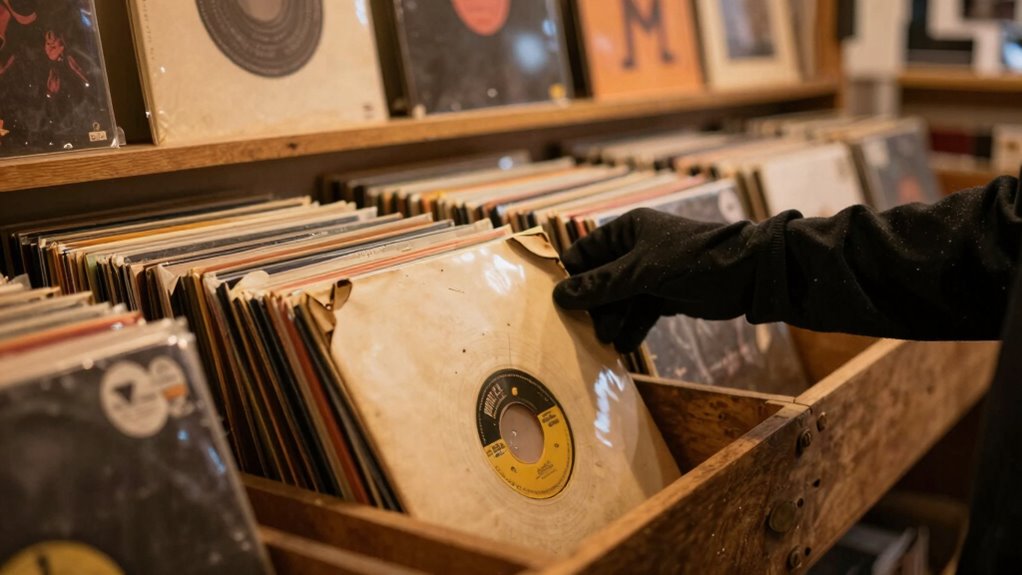
Buying used records can be a great way to build your collection affordably, but it’s important to handle them carefully to avoid bringing home problems like scratches, warps, or dirt that can ruin your listening experience. The first step is to prioritize record cleaning. Even if a record looks clean on the surface, dirt and dust can hide in the grooves, causing pops, skips, or muffled sound. Before playing a used record, gently clean it with a dedicated record cleaning brush or a microfiber cloth to remove surface dust. For a deeper clean, consider using a record cleaning solution or a record washing machine. Applying a careful, even coat of cleaning fluid and gently wiping with a soft, lint-free cloth can considerably improve sound quality. Avoid harsh scrubbing, which can damage the grooves. After cleaning, make sure the record is completely dry before playing or storing, as residual moisture can lead to warping over time. Proper cleaning techniques are essential to maintaining the integrity of your records and ensuring optimal sound quality. Additionally, storing records in a clean, dust-free environment helps prevent dirt buildup that can affect playback. Maintaining a dust-free environment can also help reduce static buildup, which attracts more dust and debris to your records.
Storing records in the correct environment also helps prevent damage caused by temperature variations, which can lead to warping or other issues over time. Storage solutions are equally critical in maintaining the quality of your used records. Poor storage can lead to warping, warps, or ring marks that distort sound. Always store records in a vertical position, like books on a shelf, to prevent warping caused by pressure or uneven weight distribution. Keep them away from direct sunlight and heat sources, which can cause warping and degrade the vinyl. Use inner sleeves made of anti-static or rice paper material to protect the record’s surface and prevent static buildup that attracts dust. Outside of the inner sleeve, store records in sturdy, acid-free outer sleeves to prevent scratches and dust accumulation. When stacking records, ensure they aren’t too tightly packed, as this can cause warping or difficulty removing a single record without disturbing others. Using dedicated shelves or storage units designed specifically for vinyl records helps maintain their shape and condition over time. Proper handling and storage are also vital to prevent static electricity, which can attract dust and cause minor damage over time.
Handling used records with care from cleaning to storage not only preserves their sound quality but also extends their lifespan. Regular record cleaning removes dirt before each play, reducing wear on both the record and your stylus. Implementing proper storage solutions keeps your collection organized and protected against environmental damage. By taking these simple steps, you’ll enjoy better sound quality and guarantee your records remain in excellent condition for years to come. Properly maintained used records are a smart investment that offers rich listening experiences without the frustration of unnecessary damage.
used vinyl record cleaning brush
As an affiliate, we earn on qualifying purchases.
As an affiliate, we earn on qualifying purchases.
Frequently Asked Questions
How Can I Identify if a Used Record Is Damaged?
To identify if a used record is damaged, start by examining its overall condition through record grading. Look for visible scratches, warps, or cracks that could affect sound quality. Feel for any warping or unevenness. Use your fingers to check for deep scratches. If needed, consider vinyl restoration tools or services to improve sound. A well-graded, carefully inspected record minimizes the risk of bringing home problems.
What Cleaning Methods Are Safe for Old Vinyl Records?
Did you know that improper cleaning can damage up to 25% of vintage records? For safe record preservation, use gentle cleaning solutions like a mix of distilled water and a drop of isopropyl alcohol. Avoid harsh chemicals or abrasive cloths. Use a soft microfiber cloth to lightly wipe the surface, always moving in the direction of the grooves. This method keeps your records clean without risking damage.
How Do I Prevent Mold and Mildew on Used Records?
To prevent mold and mildew on used records, keep them in a cool, dry place with good airflow. Always store records vertically and avoid humidity, which can cause cover wear and record label damage. Regularly inspect your collection for signs of moisture or mold, and clean them with a soft, damp cloth if needed. Proper handling and storage are key to maintaining your records’ sound quality and physical condition.
Are There Specific Storage Conditions for Used Records?
Yes, there are specific storage conditions for used records. Keep them upright in a cool, dry, and dark environment to prevent warping and mold. Use proper record sleeve preservation techniques—like acid-free inner sleeves—and make sure your vinyl storage tips include avoiding direct sunlight and extreme temperatures. Maintain consistent humidity levels and handle records with clean hands to protect them from dirt and damage, keeping your collection in top shape.
How Can I Tell if a Used Record Has Been Cleaned Properly?
As a record collector, you might wonder if a used record has been cleaned properly. To verify, hold the record under a bright light; a clean record should look shiny and free of dust or fingerprints. Gently run your finger along the grooves—if it feels smooth and free of debris, it’s likely well-cleaned. Proper cleaning preserves the vintage sound, ensuring your listening experience remains clear and authentic.
anti-static record storage sleeves
As an affiliate, we earn on qualifying purchases.
As an affiliate, we earn on qualifying purchases.
Conclusion
By banishing bulky baggage and braving basic barriers, you’ll build a better balance with used records. Keep keen knowledge, stay selective, and steer clear of sneaky surprises. With wise warnings and careful choices, you’ll prevent problems from piling up. Remember, responsible handling helps harmonize your hobby with household happiness. Embrace the effort, eliminate excess, and enjoy your collection without creating chaos—because well-managed records make for worry-free listening and wonderful memories.
record cleaning solution for vinyl
As an affiliate, we earn on qualifying purchases.
As an affiliate, we earn on qualifying purchases.
As an affiliate, we earn on qualifying purchases.
Halloween Picks
halloween
As an affiliate, we earn on qualifying purchases.