

To practice like a musician who truly wants to improve, stay focused and fully present during each session. Set clear, achievable goals and break down complex pieces into manageable parts. Use techniques like slow practice and recording to analyze your progress. Maintain a routine, use a metronome, and take mindful breaks to stay energized. By applying these strategies, you’ll develop a purposeful practice habit that accelerates your growth—keep exploring to learn more.
Key Takeaways
- Set specific, challenging goals for each practice session to maintain focus and direction.
- Practice with full presence, paying close attention to technique, tone, and timing.
- Break complex pieces into manageable sections and analyze each thoroughly.
- Use a metronome and deliberate correction techniques to enhance accuracy and consistency.
- Establish a regular routine with mindful breaks to sustain motivation and mental clarity.
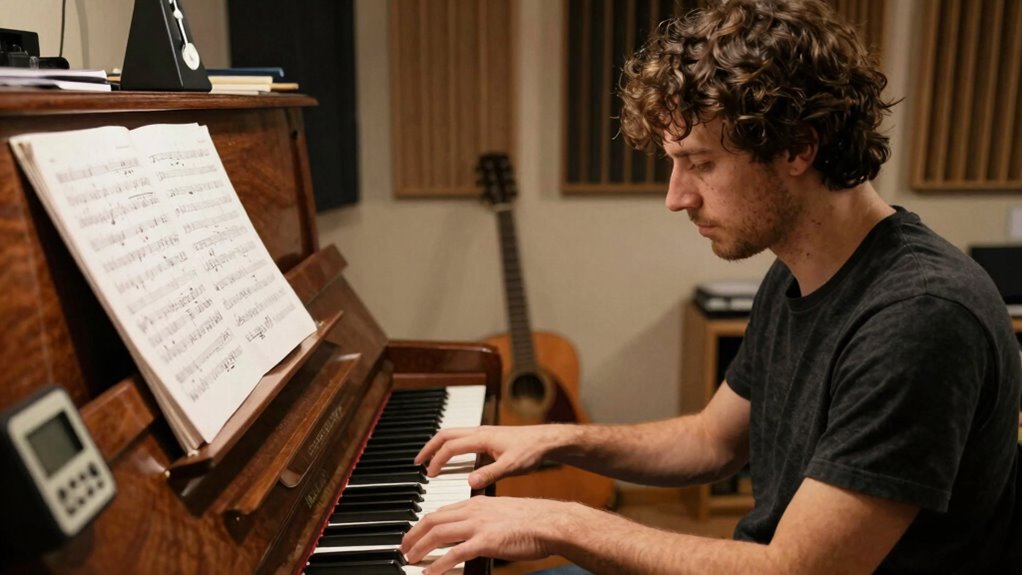
Improving as a musician isn’t just about putting in hours; it’s about how you practice. Your mental focus plays a vital role in making those hours count. When you sit down to practice, it’s easy to fall into a routine of mindless repetition, but that won’t lead to real growth. Instead, you need to be fully present, paying close attention to your technique, tone, and timing. This mental focus helps you identify mistakes early and keeps your mind engaged, turning practice sessions into productive learning experiences. Without it, you risk practicing habits that reinforce errors rather than fix them. Developing a focused mindset is essential for transforming practice from a routine into a powerful tool for improvement. Paying attention to intrinsic motivation can also help sustain your dedication during challenging practice sessions.
Goal setting is another essential component of effective practice. You can’t improve if you don’t have clear objectives guiding your efforts. Start each session with specific, achievable goals—whether it’s mastering a particular passage, improving your sight-reading, or increasing your speed. These goals give your practice purpose and direction, preventing you from wasting time on activities that don’t push your skills forward. Keep your goals realistic but challenging enough to motivate you. As you accomplish each one, you’ll build confidence and see tangible progress, reinforcing your commitment.
To make your practice more effective, break down complex pieces into manageable sections. Focus your mental energy on mastering one part at a time, rather than trying to play everything perfectly from the start. During each session, maintain your mental focus by actively listening to your sound and critically evaluating your performance. Use a metronome to keep your timing sharp, and record yourself periodically to track improvements over time. When you notice mistakes, don’t ignore them; instead, slow down and analyze what’s going wrong. This deliberate approach ensures that your practicing becomes an active process of correction and refinement. Incorporating mindful practice techniques can enhance your ability to stay present and attentive during each session. Additionally, understanding the importance of mental focus helps you develop strategies to stay motivated and avoid distractions, leading to more consistent progress. Establishing a practice routine that includes mindful breaks can also boost your mental clarity and prevent burnout, making your sessions more productive.
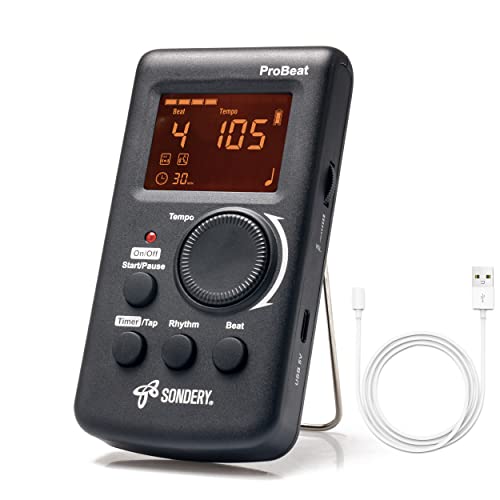
Sondery Digital Metronome Rechargeable Vocal Counting for Piano Guitar Drum
- Easy Beat and Tempo Setting: Buttons, knobs, and color screen
- Vocal Counting and Sound Options: Vocal cues, 3 digital sounds, speaker
- Visual and Audio Tempo Indicators: LED light and headphone jack
As an affiliate, we earn on qualifying purchases.
As an affiliate, we earn on qualifying purchases.
Frequently Asked Questions
How Long Should I Practice Each Day for Optimal Improvement?
You should practice consistently for at least 30 to 60 minutes daily to see steady progress. Focus on quality over quantity, balancing skill diversity to target different areas of your playing. Break your sessions into focused segments, including warm-ups, technical exercises, and repertoire. Regular, deliberate practice helps reinforce skills and prevents burnout, ensuring continuous improvement. Remember, consistency and varied practice are key to becoming a better musician.
What Mental Techniques Help Maintain Focus During Practice?
Think of your focus as a delicate flame that needs tending. To keep it burning bright, use mindfulness techniques to stay present, avoiding distractions. Visualization exercises help you mentally rehearse, reinforcing your skills and boosting confidence. Take deep breaths, reset your mind when it wanders, and remind yourself of your goals. These mental techniques create a steady rhythm, ensuring your focus remains sharp and your practice sessions productive.
How Can I Stay Motivated During Long Practice Sessions?
To stay motivated during long practice sessions, incorporate mindful breaks to refresh your focus and prevent burnout. Use visualization techniques to imagine yourself mastering difficult passages, boosting your confidence and drive. Break your session into manageable chunks, celebrate small progress, and remind yourself of your musical goals. This approach keeps your mind engaged and motivated, making practice enjoyable and productive, even during the most extended sessions.
What Tools or Apps Can Enhance My Practice Routine?
Think of your practice routine as a well-tuned engine—tools and apps keep it running smoothly. Use metronome apps like Pro Metronome, tuner apps such as Cleartune, and recording apps like GarageBand to refine your skills. Maintain your instrument regularly, and create a dedicated, distraction-free practice environment. These tools and upkeep help you stay focused, motivated, and continuously improving, transforming your practice sessions into powerful engines of progress.
How Do I Track My Progress Effectively Over Time?
To track your progress effectively, focus on practice consistency and goal setting. Keep a practice journal or use apps to log daily sessions, noting what you worked on and improvements. Set clear, measurable goals, then review your entries regularly to see your growth over time. This habit helps you stay motivated, identify areas needing more attention, and celebrate achievements, ensuring continuous improvement in your musical journey.
audio recording device for practice sessions
As an affiliate, we earn on qualifying purchases.
As an affiliate, we earn on qualifying purchases.
Conclusion
By practicing intentionally and consistently, you’ll see real progress over time. Did you know that musicians who focus on deliberate practice improve twice as fast as those who just go through the motions? So, stay committed, set specific goals, and embrace challenges. Your dedication will pay off, transforming your skills faster than you ever imagined. Keep pushing forward—your improvement is just a practice session away!
As an affiliate, we earn on qualifying purchases.
As an affiliate, we earn on qualifying purchases.