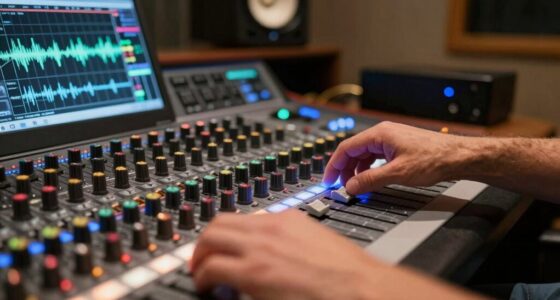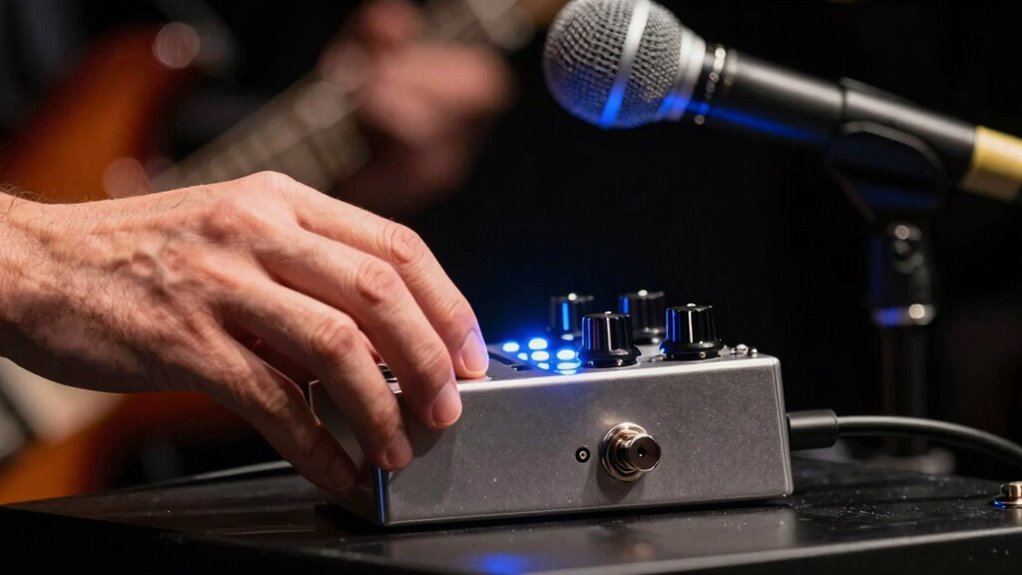

Before buying a harmony pedal, make sure it matches your vocal range and song key for natural-sounding harmonies. Look for easy-to-use controls, quick calibration options, and reliable build quality for live performances. Consider how it integrates with your setup, including connectivity options. Some pedals include pitch correction or preset changes, which help keep your sound consistent. Keep these factors in mind to choose the best fit—stay tuned to discover more tips to enhance your vocal setup.

Get audio and creator gear delivered free with Prime
- Fast, free delivery on millions of items
- Prime Video, Amazon Music and more included
- Member-only deals all year
Key Takeaways
- Understand whether the pedal offers harmony generation, pitch correction, or both, to match your vocal style.
- Ensure proper calibration options are available for accurate, natural-sounding harmonies.
- Check connectivity options and ease of use for quick adjustments during live performances.
- Consider build quality and durability for reliable performance in various settings.
- Explore preset and interval customization features for versatile, dynamic vocal effects.
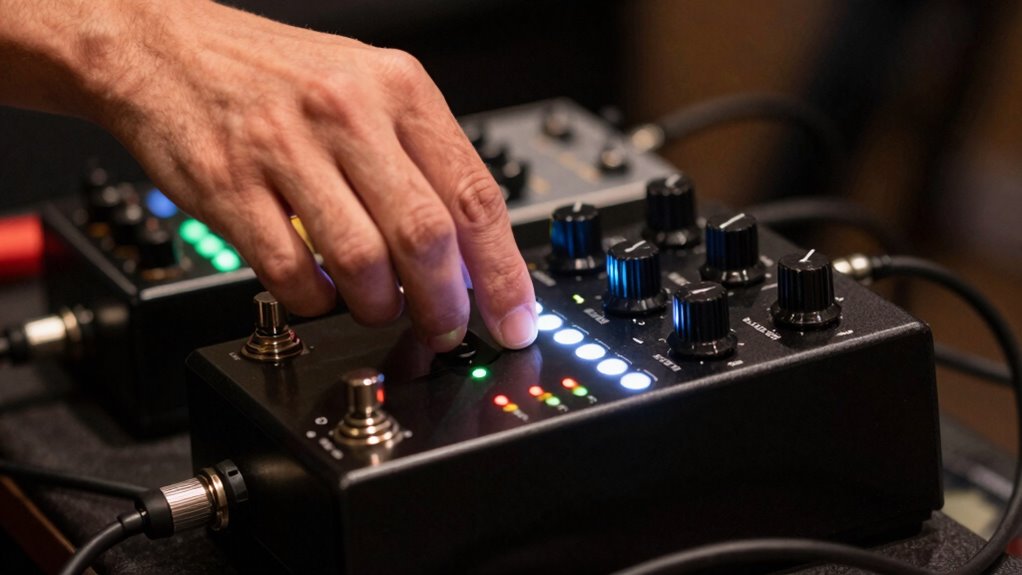
If you’re looking to expand your vocal performances, harmony pedals can be a game-changer. They add depth and richness to your sound, allowing you to create harmonies that were once only possible with a full band or backup singers. Before making a purchase, it’s imperative to understand how these pedals work and what features to prioritize. One of the key elements to contemplate is pitch correction. While some harmony pedals include pitch correction features to help you stay in tune, others focus solely on harmony generation. If you’re confident in your pitch but want to add automatic tuning effects, look for a pedal with adjustable pitch correction settings. This way, you can avoid unnatural sounds or unintended detuning that could distract from your performance. Understanding the cultural traditions behind certain sounds or techniques can also inspire your use of harmony effects and help you achieve more authentic performances. Another critical aspect is pedal calibration. Harmony pedals need to be precisely calibrated to match your vocal range and the key of your song. Proper calibration ensures that the harmonies generated are musically accurate and blend seamlessly with your voice. If a pedal isn’t calibrated correctly, the harmonies may sound off or clash with your melody, undermining the intended effect. Many pedals allow manual calibration, so you should be comfortable setting these parameters or be willing to learn. Some advanced models also offer automatic calibration features, which can save time and provide more consistent results. Understanding the technical aspects of calibration can make a significant difference in your overall sound. Developing a good ear training can also help you recognize when the harmonies are fitting well or need adjustment, ultimately improving your performances. Whatever the case, understanding how to calibrate your pedal is indispensable to getting the most natural sound out of your setup. It’s also worth pondering the pedal’s versatility and ease of use. Look for one with user-friendly controls and clear labeling. If you often perform live, quick adjustments are indispensable. Some pedals let you change harmony intervals or switch between different preset configurations on the fly, which can be invaluable during performances. Additionally, check the pedal’s connectivity options, ensuring it integrates smoothly with your existing setup, whether you’re using a guitar amp, PA system, or recording interface. Lastly, consider the build quality and reliability. Harmony pedals are often used in live settings, so you want a sturdy, well-built unit that can withstand transportation and regular use. Reading reviews and testing the pedal in-store, if possible, can help you determine its durability and ease of operation. By understanding these core aspects—pitch correction, pedal calibration, ease of use, and build quality—you’ll be better equipped to choose a harmony pedal that enhances your vocal performances and fits your needs perfectly.
vocal harmony pedal with pitch correction
As an affiliate, we earn on qualifying purchases.
As an affiliate, we earn on qualifying purchases.
Frequently Asked Questions
Can Harmony Pedals Be Used With Acoustic Vocals?
Yes, harmony pedals can be used with acoustic vocals, providing you with versatile vocal effects. These pedals are designed to blend seamlessly with your voice, adding rich harmonies that enhance your sound. Thanks to their pedal versatility, you can easily adjust settings to match different styles, whether you’re performing solo or with a band. Just make certain the pedal’s input and output are compatible with your acoustic setup for the best results.
How Do I Connect a Harmony Pedal to My Setup?
You can connect a harmony pedal easily by placing it after your microphone and before your amplifier or audio interface. Make sure to use the correct pedal placement to optimize tone adjustment—generally, in the signal chain, it’s best placed after your effects and before amplification. Use a balanced XLR or ¼-inch cable, and tweak the tone controls on the pedal to match your vocal style, ensuring seamless harmony integration.
Are Harmony Pedals Compatible With All Microphones?
Harmony pedals aren’t compatible with all microphones, especially passive ones like dynamic mics, because they often require a certain level of preamp or phantom power. If you’re using a condenser microphone, compatibility is usually better, but you should check the pedal’s specifications. Remember, pedal compatibility impacts your vocal effect quality, so confirm your microphone type and pedal are suitable for maximum sound. Always verify with the manufacturer for specific compatibility details.
How Do I Program Custom Harmony Settings?
To program custom harmony settings, start by accessing your pedal’s menu, then select voice modulation options. Adjust parameters like pitch intervals, scale modes, and harmony voices to fit your sound. Use the parameter customization features to fine-tune each harmony voice, ensuring it complements your vocals naturally. Save your settings to recall them easily during performances. Practice switching between presets to become comfortable with your personalized harmony configurations.
What Are the Best Power Options for Harmony Pedals?
When selecting power options for your harmony pedal, prioritize those offering consistent, reliable energy, ensuring pedal durability and smooth operation. Opt for a power supply compatible with your device’s voltage and current requirements—preferably, a dedicated, isolated power supply to prevent noise and interference. Avoid cheap adapters, as they may cause instability. Investing in quality power options keeps your pedal performing at its best, giving you seamless harmony creation on stage or in the studio.
automatic calibration vocal harmony pedal
As an affiliate, we earn on qualifying purchases.
As an affiliate, we earn on qualifying purchases.
Conclusion
So, before you immerse yourself in the world of harmony pedals, remember they’re not magic wands that turn you into a chorus of angels overnight. Think of them as that quirky friend who’s great fun but might steal your spotlight at karaoke. With a little patience and some practice, you’ll be blending harmonies like a pro—just don’t forget to keep your ears open, or you might end up sounding like a choir of confused cats. Happy singing!
easy-to-use vocal harmony effects pedal
As an affiliate, we earn on qualifying purchases.
As an affiliate, we earn on qualifying purchases.
live performance vocal harmony pedal
As an affiliate, we earn on qualifying purchases.
As an affiliate, we earn on qualifying purchases.
Fall Picks
fall essentials
As an affiliate, we earn on qualifying purchases.