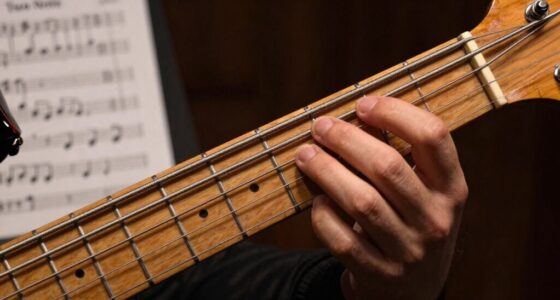

To work on dynamics with your band simply, focus on clear instrument tuning, smart stage placement, and using visual cues for communication. Keep musicians close enough for subtle signals and encourage relaxed, organic interactions. This approach helps everyone respond naturally, making dynamic shifts feel effortless. By streamlining these elements, you create a more cohesive sound and effortless flow during performances. Continuously applying these tips will help you gain access to smoother, more expressive performances, and there’s even more to discover if you keep exploring.

Get audio and creator gear delivered free with Prime
- Fast, free delivery on millions of items
- Prime Video, Amazon Music and more included
- Member-only deals all year
Key Takeaways
- Use visual cues like nods and eye contact to signal dynamic changes naturally.
- Focus on small sections during rehearsals to practice dynamic contrasts effectively.
- Maintain consistent instrument tuning and setup for smoother dynamic transitions.
- Encourage subtle, non-verbal communication to coordinate volume and expression effortlessly.
- Develop organic flow by integrating visual signals into the band’s overall performance rhythm.
Have you ever wondered how to make working on dynamics with a band feel less complicated? The key is simplifying your approach and focusing on a few essential elements. One of the most important is ensuring your instrument tuning is spot-on before rehearsals or gigs. When your instruments are perfectly tuned, everyone can focus on playing with the right emotional intensity without constantly correcting pitch issues. Proper tuning also helps maintain clarity in the mix, making it easier to listen and respond to each other’s dynamics. It’s worth taking the time to double-check tuning with a tuner or by ear, especially after transporting gear or during soundchecks. Once your instruments sound good individually, the whole band will sound more cohesive, making it easier to work on dynamic shifts. Consistent tuning supports instrument calibration, which is crucial for cohesive performances.
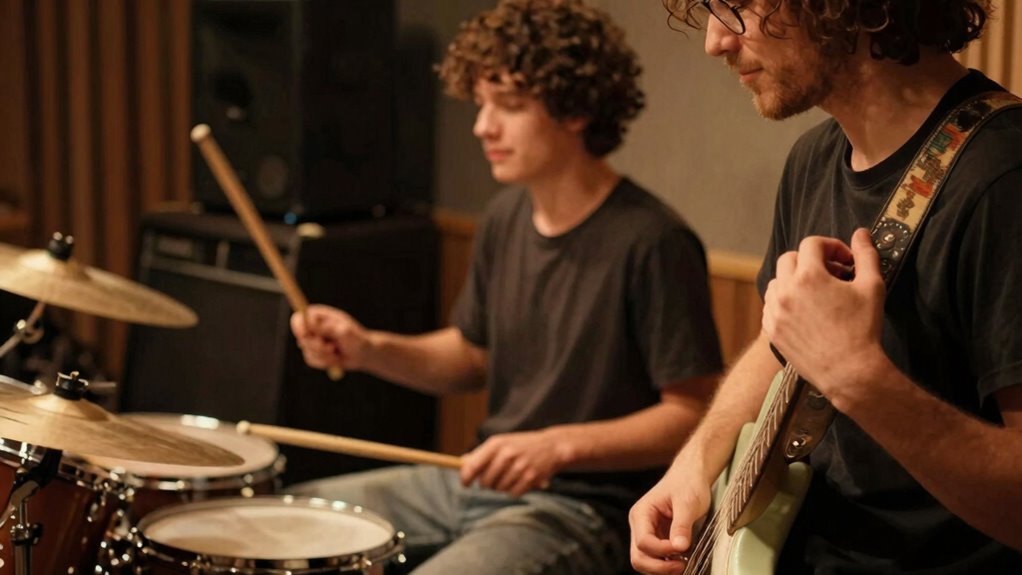
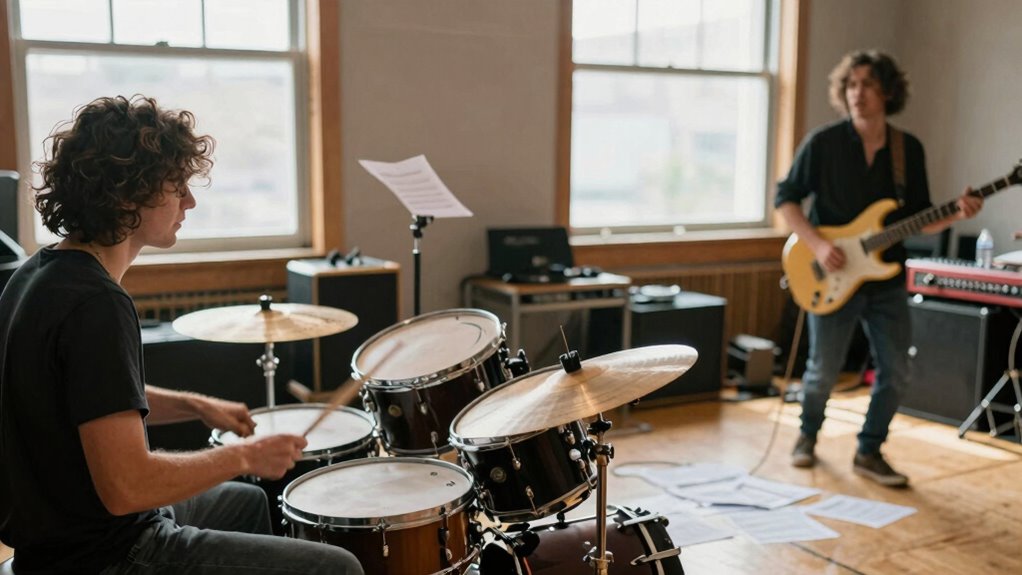
Next, consider your stage setup. How you arrange your band on stage impacts communication and the ability to control dynamics. Positioning musicians close enough so you can see each other’s cues facilitates subtle adjustments in volume and intensity. For example, a drummer and bassist should be near enough to exchange visual signals, helping lock in the groove and manage dynamic changes smoothly. Keep your amplification and monitors balanced so everyone can hear themselves clearly without having to strain or overcompensate. When the stage setup promotes clear communication, the band naturally responds better to dynamic cues, making your rehearsals more productive and your live performances more expressive. Additionally, placing instruments in a way that minimizes sound bleed can help musicians better focus on their cues and dynamic transitions.
Once your instruments are in tune and your stage setup encourages interaction, focus on your rehearsals. Work on small sections, emphasizing dynamic contrasts—playing softly then loudly—so everyone gets comfortable with the transitions. Instead of overanalyzing every note, listen to how your parts fit together and adjust your volume and intensity accordingly. Encourage band members to give each other subtle visual cues, like nods or eye contact, to cue dynamic shifts. This creates a more organic flow, reducing the need for constant verbal direction. When everyone is attuned to each other’s cues and understands how to control their volume and expression, working on dynamics becomes a natural, integrated part of your performance, not a challenge. Developing this visual communication further enhances the band’s responsiveness and overall cohesiveness during live shows.
digital tuner for guitar and bass
As an affiliate, we earn on qualifying purchases.
As an affiliate, we earn on qualifying purchases.
Frequently Asked Questions
How Do I Start Practicing Dynamics With My Band?
Start by choosing a simple song and focus on musical phrasing, emphasizing where you want to create contrast. Encourage your bandmates to listen actively and respond to emotional expression in each other’s playing. Practice gradually increasing and decreasing volume, paying attention to how dynamics enhance the song’s feel. Regularly discuss emotional intentions behind dynamics, so everyone understands the message, making your performances more expressive and cohesive.
What Are Common Mistakes When Working on Dynamics?
A common mistake is neglecting musical expression by staying too uniform in volume, which can diminish emotional intensity. You might also focus too much on technical precision, losing the natural flow of dynamics. Remember, dynamics serve the music’s emotional story—don’t be afraid to vary volume intentionally. Overdoing it can sound exaggerated, so aim for balance. Practicing with a conscious awareness of emotional intensity helps you connect more deeply with your band and audience.
How Can I Improve My Band’s Overall Dynamic Range?
Think of your band as a storyteller, weaving a tapestry of musical expression and emotional impact through dynamic range. To improve, encourage everyone to listen actively and respond to each other’s cues, emphasizing contrast between loud and soft sections. Practice gradually building and releasing tension, and record your sessions to identify areas for improvement. With intentional focus, you’ll discover a richer, more compelling performance that resonates deeply with your audience.
Are There Specific Exercises to Enhance Dynamic Control?
Yes, you can enhance your dynamic control with specific exercises. Practice expressive phrasing by gradually increasing and decreasing volume, focusing on smooth shifts. Use volume balancing exercises within the band, where each member listens and adjusts to create a cohesive sound. Record and analyze your performances to identify areas for improvement. These exercises help develop your ear, strengthen control, and make your dynamics more expressive and balanced during performances.
How Do Dynamics Influence the Band’s Overall Feel and Performance?
Dynamics shape your band’s musical expression and emotional impact, making performances more compelling. When you control volume and intensity, you guide the audience’s feelings and highlight key moments. Your ability to vary dynamics adds depth and contrast, creating a more engaging and memorable experience. By intentionally shaping dynamics, you help your band convey emotion effectively, elevating the overall feel and making each performance resonate more deeply with listeners.
stage monitor speakers for band rehearsals
As an affiliate, we earn on qualifying purchases.
As an affiliate, we earn on qualifying purchases.
Conclusion
By focusing on simple, consistent communication and listening closely to each other, you and your band can effortlessly master dynamics. For example, imagine a band performing live where everyone responds intuitively to quieter sections, creating an emotional impact. When you prioritize clarity and trust, dynamics become natural rather than forced. Keep it straightforward, stay attentive, and your band will effortlessly convey emotion—making every performance memorable for both you and your audience.
visual cue signaling tools for musicians
As an affiliate, we earn on qualifying purchases.
As an affiliate, we earn on qualifying purchases.
instrument stage stands for band setup
As an affiliate, we earn on qualifying purchases.
As an affiliate, we earn on qualifying purchases.
Fall Picks
fall essentials
As an affiliate, we earn on qualifying purchases.