


To get loud and soft together, focus on active listening and rhythm coordination, ensuring everyone stays in sync with the beat. Adjust volume and attack smoothly during dynamic changes while maintaining the groove. Practice regularly to develop a shared sense of timing and responsiveness, which helps you respond naturally to cues and each other’s energy levels. Keep honing these skills, and you’ll master seamless progressions that bring your band’s performance to life.

Get audio and creator gear delivered free with Prime
- Fast, free delivery on millions of items
- Prime Video, Amazon Music and more included
- Member-only deals all year
Key Takeaways
- Develop synchronized rhythm coordination to establish a steady beat for cohesive dynamic shifts.
- Practice active listening to respond instantly to volume and intensity cues from band members.
- Use controlled techniques like gradual crescendo and decrescendo for smooth loud-soft transitions.
- Engage in ear training to improve blending and balance among individual parts during dynamic changes.
- Foster shared musical understanding through regular rehearsals focused on cue awareness and responsiveness.
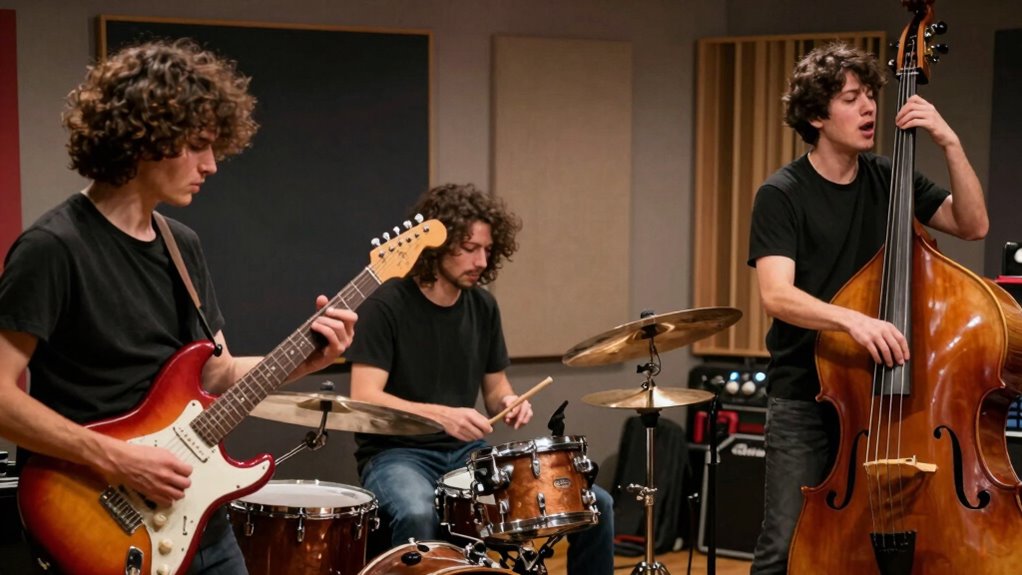
Have you ever wondered what truly makes a band click? It’s not just about individual talent; it’s about how well everyone works together to create a cohesive sound. One of the most critical elements in achieving this is mastering rhythm coordination and harmony blending. When you and your bandmates lock in on the rhythm, it forms the foundation that keeps everything steady, whether you’re playing softly or loudly. Good rhythm coordination means everyone hits their beats precisely, so the groove stays tight. It’s about listening carefully to each other and adjusting your timing so that no one drifts off or clashes. This synchronization allows the band to switch seamlessly between dynamic levels, making quieter passages feel intimate and loud sections powerful. Harmony blending takes this a step further—it’s about merging individual parts into a unified sound that complements the overall vibe. When your melodies and harmonies blend smoothly, it creates a lush, balanced texture that’s pleasing to the ear. Achieving this isn’t just about playing your notes correctly; it’s about listening actively, responding to what others are doing, and adjusting your playing accordingly. You might find yourself softening your attack to match a gentle vocal line or boosting your volume slightly to elevate a climactic moment. The key is to stay in tune with each other’s energy and intentions, fostering a sense of musical unity. As you develop your rhythm coordination, you’ll notice how it becomes easier to switch between dynamics without losing the groove. It’s about feeling the pulse together, whether it’s a subtle brush of the drums or a thunderous chorus. Regular practice helps reinforce this connection, so you all become more aware of each other’s cues and tendencies. Another important aspect is understanding band dynamics, which involves how volume, intensity, and emotional expression are managed throughout a performance. Harmony blending, meanwhile, benefits from ear training and listening exercises. When everyone’s ears are attuned to how their parts fit within the whole, you can create a seamless, resonant sound that elevates your performance. Remember, it’s not just about technical proficiency; it’s about emotional communication through your instruments and voices. When rhythm coordination and harmony blending come together, your band can effortlessly transition from whisper-soft ballads to roaring anthems, all while maintaining tight cohesion. This is what makes a band truly click—when every member contributes to a shared understanding of dynamics, and everyone listens and responds actively. The result is a performance that feels natural, powerful, and engaging, captivating your audience at every level of volume.
Popular right now

Bose QuietComfort Headphones (2nd Gen), Wireless Noise-Cancelling Over-Ear Headphones, Eucalyptus Green

TCL 85 Designer Series QD-Mini LED TV (Model 85A400U) with Google Smart TV

Shark Navigator Robot Vacuum with Self-Empty Base, Dark Grey (RV2120AE)
As an affiliate, we earn on qualifying purchases.
Frequently Asked Questions
How Do I Handle Conflicts Over Volume Levels During Rehearsals?
To handle conflicts over volume levels, you should promote open communication and encourage everyone to share their perspectives. Focus on finding a volume compromise that balances loud and soft sections, respecting rehearsal etiquette. If disagreements arise, take a brief break to cool down and revisit the issue with a calm attitude. Remember, cooperation and mutual respect help create a productive environment where all members feel heard and valued.
What Are Effective Ways to Communicate Dynamic Changes in a Live Setting?
Think of yourself as a conductor like Beethoven, guiding the orchestra with clear cues. Use visual cues like nods or hand signals, and verbal signals such as call-outs, to communicate dynamic changes instantly. Be consistent with these signals, so everyone knows what to expect. This way, you keep the band synchronized, ensuring loud and soft moments blend seamlessly, creating a mesmerizing performance everyone will remember.
How Can New Band Members Adapt to Existing Dynamic Balances?
You can adapt to existing dynamic balances by actively listening to the band’s vibe and focusing on instrument blending. Pay attention to how others play softly or loudly, and match your volume accordingly. Communicate quietly with bandmates when needed, and observe how the group maintains vibe consistency. With practice, you’ll naturally find your place within the dynamic range, helping the band sound cohesive and balanced at all times.
What Role Does Stage Positioning Play in Managing Sound Dynamics?
Stage positioning is vital for managing sound dynamics because it helps balance volume and visibility. By strategically placing band members in the stage space, you can create visual cues that guide both the audience and fellow musicians. For example, positioning softer instruments closer to the center encourages subtle playing, while louder instruments at the edges reinforce energy and presence, ensuring everyone stays in sync and the sound remains balanced.
How Do I Train My Band to Listen and Respond to Each Other’s Dynamics?
Imagine your band as a living puzzle, each piece fitting through musical empathy and visual cues. To train your band, encourage active listening during rehearsals, emphasizing how each member’s dynamics influence the whole. Use visual cues like eye contact and body language to signal shifts in volume or intensity. Practice dynamic exercises, fostering awareness so everyone responds instinctively, creating a seamless flow where loud and soft blend effortlessly.
Conclusion
Now that you understand the secrets behind blending loud and soft moments, the real challenge begins. Will you master the delicate balance that keeps your audience hooked? Every note, every pause, holds the power to surprise or soothe. The key is in your hands—are you ready to push boundaries and create moments that resonate long after the last chord? The stage is set. What’s your next move?







![Nancy 10/13/26 [Nancy]](https://deadsetlive.com/wp-content/uploads/2026/10/nancy-10-13-26-nancy-featured-260x140.jpg)