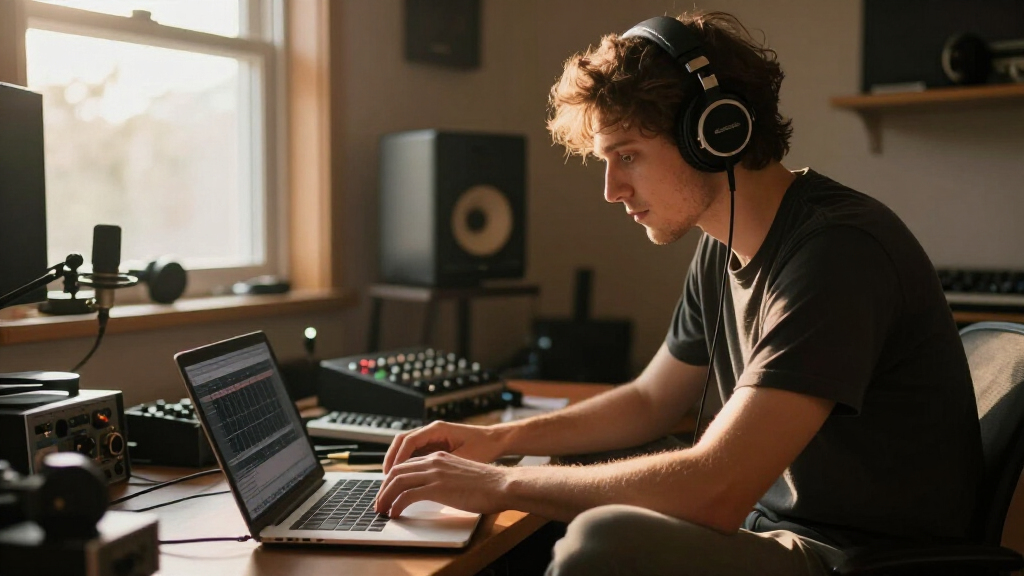
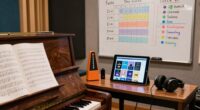
The right studio headphones for creators balance honest sound, comfort through long editing sessions, and durability that survives daily use. My top pick overall is the Audio-Technica ATH-M50x, which combines accurate monitoring with the build quality and versatility to handle mixing, editing, and casual listening. Close behind, the Beyerdynamic DT 770 Pro (80 Ohm) stands out for its exceptional comfort and low-end clarity, while the Audio-Technica ATH-M40x delivers nearly the same accuracy at a friendlier price. The main tradeoff in this category is closed-back isolation versus open-back soundstage — closed designs suit vocal recording and shared spaces, while open designs like the DT 990 Pro reveal more spatial detail but leak sound. Budget matters too: under $70 you can still get workable accuracy, but you give up comfort and refinement. Keep reading for the full breakdown of all ten models and which one fits your workflow.
Complete the kit


Key Takeaways
- The ATH-M50x won best overall because it is the only pick in this lineup that performs well across every creator task — mixing, tracking, editing, and travel — without a glaring weakness, while every cheaper option sacrifices at least one of accuracy, comfort, or build.
- Closed-back models dominate this list (8 of 10) because creators usually record and edit in untreated rooms; the AKG K240 Studio and Beyerdynamic DT 990 Pro are the only semi-open/open options, and both are better as second mixing headphones than as all-around tools.
- At the budget end, the TASCAM TH-02 and ATH-M20x are usable but the price gap to the ATH-M30x is small enough that the M30x is the smarter entry point — the ranking rewards the cheapest model that doesn’t need replacing as your skills grow.
- Impedance is the hidden decision-maker: the 250-ohm DT 990 Pro needs an audio interface or headphone amp to sound right from a laptop, while the 80-ohm DT 770 Pro and everything else here run fine from phones and interfaces directly.
- The Sony MDR7506 and Sennheiser HD 280 Pro remain on the list because they solve specific problems — the MDR7506’s bright detail for vocal editing and the HD 280 Pro’s class-leading isolation for tracking — rather than competing with the M50x on all-around performance.
| Audio-Technica ATH-M40x Professional Studio Monitor Headphones, Black |  | Best Overall | Driver Size: 40mm with rare earth magnets | Design: Circumaural, closed-back | Earcups: Swivel 90 degrees | VIEW LATEST PRICE | See Our Full Breakdown |
| Sony MDR7506 Professional Large Diaphragm Headphones |  | Best Value Classic | Driver Size: 40mm | Magnet Type: Neodymium | Frequency Response: 10 Hz – 20 kHz | VIEW LATEST PRICE | See Our Full Breakdown |
| Sennheiser HD 280 Pro Headphones, Black |  | Best for Tracking and Isolation | Type: Closed-back, over-ear | Noise Attenuation: Up to 32 dB | Cable Length: 9.8 feet, coiled | VIEW LATEST PRICE | See Our Full Breakdown |
| AKG K240 Studio Semi-Open Studio Headphones | 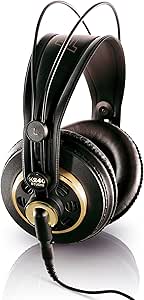 | Best for Mixing Comfort | Transducer Size: 30mm XXL | Design: Semi-open, over-ear | Headband: Self-adjusting | VIEW LATEST PRICE | See Our Full Breakdown |
| Audio-Technica ATH-M30x Professional Studio Monitor Headphones, Black |  | Best Budget Starter Pair | Driver Size: 40mm | Design: Circumaural, closed-back | Cable: Single-side exit | VIEW LATEST PRICE | See Our Full Breakdown |
| Audio-Technica ATH-M50X Professional Studio Monitor Headphones, Black |  | Best Overall | Driver Size: 45 mm | Design: Circumaural, closed-back | Earcup Swivel: 90 degrees | VIEW LATEST PRICE | See Our Full Breakdown |
| Beyerdynamic DT 990 Pro (250 Ohm) Open-Back Studio Headphones, Black |  | Best for Mixing and Mastering | Impedance: 250 Ohm | Design: Open-back | Color: Black | VIEW LATEST PRICE | See Our Full Breakdown |
| Beyerdynamic DT 770 PRO 80 Ohm Over-Ear Studio Headphones |  | Best for Recording and Tracking | Impedance: 80 Ohm | Design: Over-ear, closed-back | Color: Gray | VIEW LATEST PRICE | See Our Full Breakdown |
| TASCAM TH-02 Professional Studio Monitor Headphones, Black |  | Best Budget Pick | Design: Over-ear, closed-back | Foldable: Yes | Headphone Type: Wired | VIEW LATEST PRICE | See Our Full Breakdown |
| Audio-Technica ATH-M20x Professional Studio Monitor Headphones, White |  | Best Starter Isolation Under Budget | Driver Size: 40 mm | Magnet Type: Rare earth | Voice Coil: Copper-clad aluminum | VIEW LATEST PRICE | See Our Full Breakdown |
| studio headphones for creator | Design | Color | Driver Size |
|---|---|---|---|
| Audio-Technica ATH-M40x Profes | Circumaural, closed-back | Black | 40mm with rare earth magnets |
| Sony MDR7506 Professional Larg | Closed-back, foldable | — | 40mm |
| Sennheiser HD 280 Pro Headphon | Collapsible | Black | — |
| AKG K240 Studio Semi-Open Stud | Semi-open, over-ear | — | — |
| Audio-Technica ATH-M30x Profes | Circumaural, closed-back | Black | 40mm |
| Audio-Technica ATH-M50X Profes | Circumaural, closed-back | Black | 45 mm |
| Beyerdynamic DT 990 Pro | Open-back | Black | — |
| Beyerdynamic DT 770 PRO 80 Ohm | Over-ear, closed-back | Gray | — |
| TASCAM TH-02 Professional Stud | Over-ear, closed-back | Black | — |
| Audio-Technica ATH-M20x Profes | Circumaural, closed-back | White | 40 mm |
More Details on Our Top Picks
Audio-Technica ATH-M40x Professional Studio Monitor Headphones, Black
The ATH-M40x hits the sweet spot most creators actually need: a flat, honest tuning that doesn’t flatter your mix, at a price well below the flagship ATH-M50x. Where the M50x adds a boosted low end that can mislead bass decisions, the M40x stays closer to neutral, which matters if your tracks will be played on earbuds and car speakers rather than studio monitors. The detachable cables are the feature that separates it from the Sony MDR7506 in this lineup — a damaged cord no longer means replacing the headphones. Swiveling earcups make one-ear DJ-style monitoring genuinely practical during tracking sessions.
The tradeoff: they’re bulky, wired-only, and the stock ear pads run firm. Compared with the Sennheiser HD 280 Pro, isolation is good but not quite as aggressive.
Pros:- Detachable cables make damage a cheap fix instead of a replacement
- Neutral tuning ideal for mixing decisions
- 90-degree swiveling earcups suit one-ear monitoring
- Strong passive isolation for loud tracking rooms
Cons:- Stock ear pads feel firm during marathon sessions
- No wireless option and bulky for portable use
Best for: Home studio producers and podcasters who need accurate, reference-style monitoring with repairable parts
Not ideal for: Mobile creators and anyone wanting wireless — there’s no Bluetooth and the size makes commuting awkward
- Driver Size:40mm with rare earth magnets
- Design:Circumaural, closed-back
- Earcups:Swivel 90 degrees
- Cables:Detachable
- Connectivity:Wired
- Color:Black
Our verdict“If you want one wired pair that balances accuracy, durability, and price, this is the most sensible pick in the roundup.”
Sony MDR7506 Professional Large Diaphragm Headphones
Decades after launch, the MDR7506 remains the industry default, and the price explains why. It costs less than the ATH-M40x while delivering a detailed, slightly bright signature that exposes harshness in vocals and cymbals — exactly what editors and voiceover engineers listen for. The 9.8-foot cord plus a gold-plated 1/4-inch adapter means it plugs straight into an audio interface with no extra purchases.
Be aware of what the low price buys: the non-detachable cord is the big one. If the cable frays, the headphones are effectively done, whereas the M40x lets you swap in a replacement. The vinyl pads also get sticky and cracked with age. For a stationary editing bay, those are acceptable compromises; for daily field use, they aren’t.
Pros:- Bright, detailed tuning exposes flaws in dialogue and edits
- Undercuts most rivals on price
- Long 9.8-foot cord with 1/4-inch adapter included
- Folds flat with a soft case for transport
Cons:- Non-detachable cord means cable damage ends the product’s life
- Vinyl ear pads degrade over years of use
Best for: Video editors, voiceover artists, and budget-conscious creators who need a proven reference sound
Not ideal for: Anyone rough on gear — the fixed cord and aging ear pads shorten lifespan with heavy mobile use
- Driver Size:40mm
- Magnet Type:Neodymium
- Frequency Response:10 Hz – 20 kHz
- Cord Length:9.8 feet
- Connector:Gold-plated plug with 1/4-inch adapter
- Design:Closed-back, foldable
- Included Accessories:Soft case, 1/4-inch adapter
Our verdict“The cheapest credible studio monitoring option here — buy it if your budget is tight and your workspace is stationary.”
Sennheiser HD 280 Pro Headphones, Black
What sets the HD 280 Pro apart is raw attenuation: up to 32 dB of passive isolation, more than any other closed-back model in this roundup, including the ATH-M40x. That matters most when recording — a vocalist tracking over a loud headphone mix, or a drummer who needs click and cue without bleed into the mic. The replaceable ear pads also give it a longer service life than the Sony MDR7506, whose pads and cord are both fixed.
The tuning leans controlled and slightly dry rather than exciting, so it’s a tracking tool first and a listening pleasure second. The clamp force that powers that isolation can also feel tight across long mixing sessions, and the 9.8-foot coiled cable adds drag if you move around.
Pros:- Up to 32 dB noise attenuation leads this lineup
- Replaceable ear pads extend usable lifespan
- Lightweight and comfortable for tracking sessions
- Collapsible with a long coiled cable
Cons:- Tight clamp pressure bothers some heads over hours
- Coiled cable adds pull when moving around
Best for: Recording musicians and podcasters who need maximum bleed prevention during vocal or drum tracking
Not ideal for: Long, relaxed listening sessions — the tight clamp and dry tuning get fatiguing
- Type:Closed-back, over-ear
- Noise Attenuation:Up to 32 dB
- Cable Length:9.8 feet, coiled
- Connectivity:Wired
- Design:Collapsible
- Ear Pads:Replaceable
- Color:Black
Our verdict“Choose this when keeping sound in and room noise out is the priority — skip it for casual, comfort-first listening.”
AKG K240 Studio Semi-Open Studio Headphones
The K240 Studio takes the opposite approach from the Sennheiser HD 280 Pro: its semi-open design lets sound breathe, giving mixes a more open, natural stage that closed-back models can’t match at this price. That spaciousness is why it suits the mixing desk rather than the tracking booth. The self-adjusting headband is genuinely comfortable — among the best in this roundup for all-day wear — and both 1/8-inch and 1/4-inch connections are covered out of the box.
The same openness is the dealbreaker elsewhere: sound leaks both ways, so it fails as a tracking headphone and is a poor office or café choice. Bass depth also runs lighter than the closed ATH-M40x, which some producers will find limiting when judging low-end balance.
Pros:- Open, natural soundstage closed-backs can’t match at this price
- Self-adjusting headband excels for all-day sessions
- Includes both 1/8-inch and 1/4-inch adapters
- Proven durable build for studio use
Cons:- Sound leakage makes it unusable for tracking
- Lighter bass response complicates low-end mixing decisions
Best for: Producers and engineers mixing in a quiet, private room who prioritize comfort and an open soundstage
Not ideal for: Anyone recording vocals or working near others — the semi-open design leaks sound in and out
- Transducer Size:30mm XXL
- Design:Semi-open, over-ear
- Headband:Self-adjusting
- Cable Length:9.9 feet
- Connectivity:1/8-inch connector with 1/4-inch adapter
- Intended Use:Recording, mixing, mastering
Our verdict“A mixing-desk specialist — buy it for quiet-room comfort and openness, not for isolation.”
Audio-Technica ATH-M30x Professional Studio Monitor Headphones, Black
Sitting below the ATH-M40x in Audio-Technica’s line, the M30x keeps the family’s midrange clarity and circumaural isolation while trimming the price. For a creator buying their first pair, it delivers a usable, honest-enough sound for podcast editing and rough mixes — noticeably more focused in the mids than cheaper all-rounders like the TASCAM TH-02. The single-side cable exit and folding design make it the most grab-and-go option of the three M-series models here.
The cuts are real, though. There’s no detachable cable — that convenience starts at the M40x — and the low end runs thin, so anyone mixing bass-heavy electronic music will be guessing. Comfort during long sessions also trails the AKG K240 Studio. Treat it as an entry point you’ll eventually outgrow, not a lifetime reference.
Pros:- Lowest-cost entry into Audio-Technica’s monitor line
- Clear midrange suits podcast and vocal editing
- Folds flat and packs easily for a mobile kit
- Single-side cable exit reduces tangling
Cons:- Non-detachable cable limits repairability
- Bass response runs thin for low-end-heavy genres
Best for: Beginner podcasters and first-time producers who want studio-style sound without the M40x price
Not ideal for: Bass-driven producers or long-session mixers — thin low end and firmer padding hold both back
- Driver Size:40mm
- Design:Circumaural, closed-back
- Cable:Single-side exit
- Portability:Collapsible
- Connectivity:Wired
- Color:Black
Our verdict“A sensible first studio headphone that earns its spot on price — upgrade to the M40x once mixing gets serious.”
Audio-Technica ATH-M50X Professional Studio Monitor Headphones, Black
The ATH-M50X earns the top spot because it solves the everyday problems creators actually face. The 45mm drivers deliver a tuning that flatters without lying — deep, controlled bass and clear mids that translate reliably to car stereos and earbuds. Compared with the ATH-M40x, the M50X adds a bit more low-end weight and, more practically, a detachable cable, which is the difference between a broken headphone and a $15 replacement after a drop. The 90-degree swiveling earcups make one-ear DJ-style cueing easy, something neither the DT 770 PRO nor the TH-02 handle as gracefully. The tradeoff: this is a bulky, closed-back workhorse with a V-shaped character that purists mixing delicate acoustic material may find less neutral than the DT 990 Pro.
Pros:- Detachable cable extends lifespan dramatically
- Strong passive isolation for tracking in untreated rooms
- 45mm drivers produce punchy, detailed sound without an amp
- Swiveling earcups suit one-ear monitoring workflows
Cons:- Slightly elevated bass can skew mixing decisions
- Bulky frame and non-fold-flat design limit portability compared to cheaper rivals
Best for: Creators who want one headphone for tracking, editing, and casual listening without needing a separate amp
Not ideal for: Purist mix engineers who want a perfectly flat response — the bass emphasis can mislead low-end balance decisions
- Driver Size:45 mm
- Design:Circumaural, closed-back
- Earcup Swivel:90 degrees
- Cable:Detachable
- Material:Professional grade earpads and headband
- Color:Black
Our verdict“If you can only buy one pair of studio headphones this year, this is the safest all-around bet.”
Beyerdynamic DT 990 Pro (250 Ohm) Open-Back Studio Headphones, Black
This is the pick for creators whose priority is judging a finished mix rather than recording one. The open-back design produces a wide, natural stereo image that closed models like the ATH-M50X simply cannot replicate — panning decisions and reverb tails sit in space the way they do on monitor speakers. The 250-ohm impedance is the defining tradeoff: paired with a proper audio interface or headphone amp, the DT 990 Pro sounds refined; plugged straight into a phone or laptop jack, it will sound thin and quiet. Velour pads keep long mastering sessions comfortable, unlike the firmer fit of the ATH-M20x. Sound leakage cuts both ways — fine in a solo mix room, unusable for tracking vocals or working in shared spaces, which is why the DT 770 exists.
Pros:- Wide, speaker-like stereo image for mix decisions
- Velour ear pads stay comfortable through long sessions
- German build quality with a spring-steel headband that survives abuse
Cons:- 250-ohm impedance demands an interface or headphone amp
- Open-back design leaks sound and provides zero isolation
Best for: Home studio mix engineers with an audio interface who mix in a quiet, private room
Not ideal for: Anyone recording vocals or monitoring in shared spaces — open-back cups leak sound in both directions
- Impedance:250 Ohm
- Design:Open-back
- Color:Black
- Cable:3m coiled
- Includes:1/4-inch adapter
- Made in:Germany
Our verdict“The most honest-sounding option here for mixing — as long as you own an amp and a quiet room.”
Beyerdynamic DT 770 PRO 80 Ohm Over-Ear Studio Headphones
Think of the DT 770 PRO 80 Ohm as the DT 990’s recording-room sibling: same German build and comfort, but closed-back isolation that keeps click tracks and backing cues out of your vocal mic. The 80-ohm version is deliberately easier to drive than the 250-ohm DT 990, so it reaches healthy volume from most audio interfaces without a dedicated amp — though it still outperforms when given more power. Compared with the ATH-M50X, the DT 770 offers softer, plusher comfort for multi-hour tracking sessions, while the M50X counters with a detachable cable; the DT 770’s fixed 3m cord is my main practical complaint. Its slightly scooped, treble-forward character is pleasant for monitoring takes but less trustworthy as a sole mixing reference.
Pros:- Strong passive isolation keeps bleed out of recordings
- 80-ohm impedance drives easily from most interfaces
- Replaceable velour pads make long-term ownership cheap
Cons:- Non-detachable cable means a damaged cord is a repair job
- Colored tuning makes it a weaker sole mixing reference
Best for: Vocalists, podcasters, and producers tracking with mics in the same room as the headphones
Not ideal for: Anyone wanting a single neutral mixing reference — the tuned response colors balance judgments
- Impedance:80 Ohm
- Design:Over-ear, closed-back
- Color:Gray
- Cable:3m straight cable
- Adapter:1/4-inch adapter
- Ear Pads:Replaceable velour
- Made in:Germany
Our verdict“The tracking companion most home studios should pair alongside an open-back mixing headphone.”
TASCAM TH-02 Professional Studio Monitor Headphones, Black
Not every creator needs a $150-plus headphone, and the TASCAM TH-02 proves it. For the price of a pizza night, you get a closed-back monitor sound with surprisingly rich bass and a foldable frame that slips into a backpack — something the bulkier DT 770 PRO and ATH-M50X were never designed to do. It runs happily from a phone or laptop with no amp, using the included adapters. The honest comparison: against the ATH-M20x, the TH-02 is more comfortable and cheaper, but its tuning is warmer and less revealing, which means fine detail in dense mixes gets glossed over. Build is plastic-forward, so it will not survive years of studio abuse the way a Beyerdynamic will. For sketching ideas, editing on the go, or equipping a classroom, those tradeoffs barely matter.
Pros:- Extremely low price with genuinely usable studio tuning
- Foldable, lightweight design made for transport
- Works directly from phones and laptops with included adapters
Cons:- Plastic construction won’t endure professional wear and tear
- Warm tuning masks mixing flaws that flatterless headphones reveal
Best for: Beginners, students, and mobile creators who need usable studio sound for minimal money
Not ideal for: Anyone doing critical mixing — the forgiving, bass-forward sound hides problems rather than exposing them
- Design:Over-ear, closed-back
- Foldable:Yes
- Headphone Type:Wired
- Included Adapter:1/4 inch (6.3 mm)
- Additional Adapter:1/8 inch (3.5 mm) to 1/4 inch
- Color:Black
Our verdict“The smart first headphone — buy it, learn on it, upgrade when your ears demand more.”
Audio-Technica ATH-M20x Professional Studio Monitor Headphones, White
The ATH-M20x sits in a useful middle ground: more revealing and better built than the TASCAM TH-02, while costing far less than its siblings, the ATH-M40x and ATH-M50X. Its 40mm drivers with rare-earth magnets and copper-clad aluminum voice coils translate into a tighter, more extended low end than the TH-02 manages, and the circumaural fit provides honest isolation for tracking or editing in noisy environments. The single-side cable exit is a small ergonomic win over dual-entry designs, reducing tangles during editing sessions. Where it falls short of the pricier M-series: no detachable cable, no folding hinges, and stiffer pads that start to pinch past the two-hour mark. It also lacks the sculpted detail of the HD 280 Pro for fine mix work. As a first serious monitor headphone, though, the balance of price and performance is hard to argue with.
Pros:- Solid passive isolation for the price bracket
- Tight low-frequency response from 40mm rare-earth drivers
- More durable build than typical budget headphones
Cons:- Fixed cable and no folding mechanism limit portability
- Pads run firm, taxing comfort on long sessions
Best for: Emerging producers and podcasters upgrading from consumer headphones on a tight budget
Not ideal for: Long-session editors — the firm padding becomes uncomfortable after extended wear
- Driver Size:40 mm
- Magnet Type:Rare earth
- Voice Coil:Copper-clad aluminum
- Design:Circumaural, closed-back
- Cable Exit:Single-side
- Color:White
Our verdict“A sensible entry point into real studio monitoring if comfort and a detachable cable aren’t dealbreakers.”
How We Picked
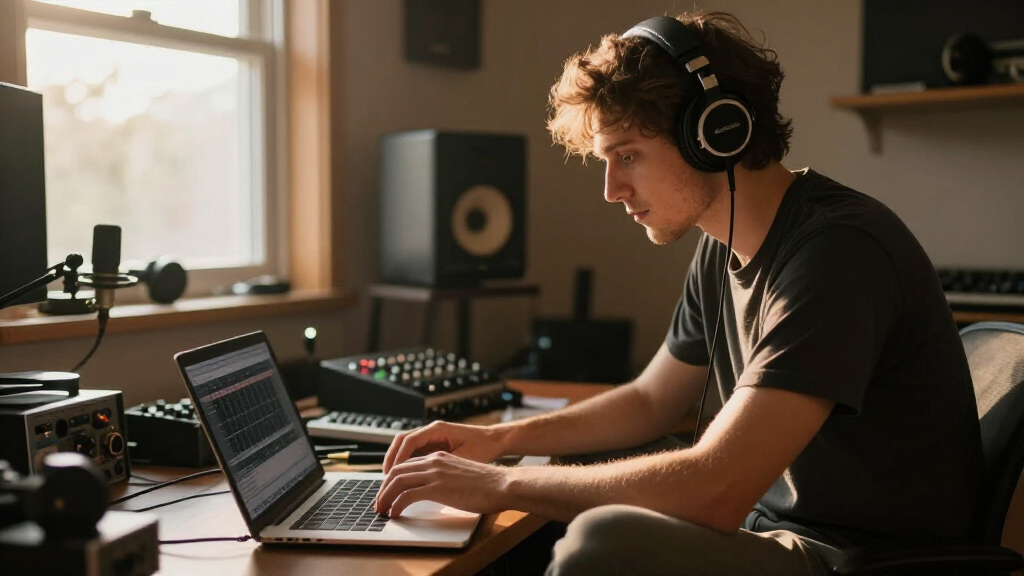
I evaluated each model through the lens of a working creator: someone who records, edits, and mixes, often in a home studio without acoustic treatment. Sonic honesty came first — headphones that flatter bass or scoop mids move mixes in the wrong direction and were penalized. Comfort over long sessions was weighted heavily, because a three-hour edit session exposes cheap pads and clamping pressure faster than any spec sheet. I also judged isolation (critical for tracking vocals without bleed), build and replaceability (detachable cables and replaceable pads extend lifespan), and value at the actual street price rather than the launch price.
The ranking logic follows versatility: models that handle multiple stages of production rank above one-trick specialists, even excellent ones. That’s why the ATH-M50x leads and the ATH-M20x sits near the bottom despite being perfectly serviceable. Where a headphone excels at a specific job — like the HD 280 Pro’s isolation or the DT 990 Pro’s open-back soundstage — I kept it ranked for that role, because many buyers need a specialist rather than a generalist.
| studio headphones for creator | Design | Color |
|---|---|---|
| Audio-Technica ATH-M40x Profes | Circumaural, closed-back | Black |
| Sony MDR7506 Professional Larg | Closed-back, foldable | — |
| Sennheiser HD 280 Pro Headphon | Collapsible | Black |
| AKG K240 Studio Semi-Open Stud | Semi-open, over-ear | — |
| Audio-Technica ATH-M30x Profes | Circumaural, closed-back | Black |
| Audio-Technica ATH-M50X Profes | Circumaural, closed-back | Black |
| Beyerdynamic DT 990 Pro | Open-back | Black |
| Beyerdynamic DT 770 PRO 80 Ohm | Over-ear, closed-back | Gray |
| TASCAM TH-02 Professional Stud | Over-ear, closed-back | Black |
| Audio-Technica ATH-M20x Profes | Circumaural, closed-back | White |
Factors to Consider When Choosing Studio Headphones For Creators
Before settling on a specific model, it helps to understand the forces that actually shape how studio headphones perform in a creator’s workspace. These are the factors that separate a smart purchase from a regrettable one, and none of them show up clearly on a spec sheet alone.
Closed-Back vs. Open-Back: Match the Design to Your Room
The single biggest decision is enclosure type, and it depends on where you work. Closed-back headphones isolate you from the room and keep your monitoring out of your microphone, which is why they’re the default for creators who record vocals, podcasts, or instruments at the same desk they mix on. Open-back designs throw a wider, more natural soundstage that makes judging reverb and panning easier, but they leak audio both ways — unusable while tracking and distracting in a shared household. A common mistake is buying an open-back pair as a first and only studio headphone, then discovering it can’t serve recording duty. If you can only own one pair, closed-back wins; if you’ll eventually own two, an open-back pair like the DT 990 Pro becomes a strong second purchase for mix checking.
Impedance and What You’re Plugging Into
Impedance determines whether your headphones will actually get loud and clean from your gear. Low-impedance models (under 60 ohms) run at full volume from phones, laptops, and interface headphone jacks — which covers most of this list. High-impedance models like the 250-ohm DT 990 Pro need an interface with a strong headphone output or a dedicated amp; plugged straight into a laptop they sound thin and quiet, and buyers frequently mistake this for bad sound quality when it’s really a power mismatch. Before buying, check your interface’s headphone output strength honestly, not just its marketing. Paying premium money for headphones your chain can’t drive is one of the most common and avoidable mistakes in this category.
Flat Response Is a Tool, Not a Flaw
Many first-time buyers audition studio headphones expecting the boosted bass and sparkling highs of consumer models, then feel disappointed by how “boring” neutral monitoring sounds. That neutrality is the entire point: flat-response headphones expose problems — muddy low mids, harsh sibilance, unbalanced levels — that consumer headphones mask. If your mixes translate well on flattering headphones, it’s usually luck, not skill. That said, some studio models are slightly brighter (the MDR7506) or bass-forward (the DT 770 Pro), and knowing a headphone’s tilt helps you compensate while mixing. Learn your pair’s character by cross-checking mixes on speakers, earbuds, and a car stereo before publishing.
Comfort and Long-Hour Ergonomics
Spec sheets rarely mention clamp force, pad material, or weight distribution, yet these decide whether you’ll still be wearing a pair happily at hour four. Velour pads breathe better during long sessions but isolate less; pleather pads seal better for tracking but get warm and eventually flake. Clamp that feels snug in a store can become a headache trigger over a full editing day, and heavy headphones with thin headbands create pressure points. Also check replaceable pads and cables — these are the first two parts to fail on any headphone, and models with user-replaceable parts effectively cost less per year of ownership. Beyerdynamic’s replaceable-everything approach is a big reason its models hold value despite higher prices.
Where Your Money Actually Goes
Between roughly $30 and $170 — the span of this list — price buys three things in order: build quality, comfort, then accuracy refinements. The jump from $30 to $70 mostly gets you sturdier hinges and better pads. The jump from $70 to $120 buys flatter response and detachable cables. Above $150, gains become incremental and specialized. A sensible strategy for beginners is to buy the cheapest headphone that won’t need replacing within a year and put the savings into acoustic treatment, an interface, or a good microphone — upgrades that improve your output more than a marginal headphone improvement will. Experienced producers with treated monitoring can justify premium picks, but a $170 headphone won’t fix a $0 room.
Frequently Asked Questions
Can I mix properly on headphones instead of studio monitors?
Yes, with discipline — and for many creators it’s the only realistic option since untreated rooms often make cheap monitors misleading. Headphones remove room reflections from the equation, which is genuinely helpful, but they exaggerate stereo width and low-end detail differently than speakers, so mixes made only on headphones can translate unpredictably. The workaround is cross-referencing: check every mix on earbuds, a car stereo, and phone speakers before calling it finished. If you use a closed-back pair like the ATH-M50x or DT 770 Pro for mixing, learn its low-end character by listening to reference tracks you know well on multiple systems. Producers who do this consistently release solid mixes without ever owning monitors.
Do I need a headphone amp for the 250-ohm DT 990 Pro?
Almost certainly, unless your audio interface has an unusually strong headphone output. At 250 ohms, the DT 990 Pro draws noticeably more power than typical consumer headphones, and running it from a laptop or phone jack produces quiet, thin, lifeless sound — a complaint that shows up constantly in buyer reviews and has nothing to do with the headphone’s quality. Most budget interfaces will drive it acceptably but not at its best; a dedicated amp in the $100–150 range lets it perform fully. If you don’t want to think about amplification at all, the 80-ohm DT 770 Pro delivers much of the same character and runs happily from anything. Choosing between them is really choosing whether you’re willing to build a small amp into your setup.
Why do the ATH-M50x and M40x sound different, and is the price gap worth it?
The M40x is tuned closer to genuinely flat, while the M50x has a modest low-end lift and slightly more energetic presence, which is why it doubles as an enjoyable everyday headphone. For pure mixing neutrality on a budget, the M40x is arguably the more honest tool. The extra money for the M50x buys broader versatility: bigger ear cups, more comfortable long-session fit, 90-degree rotating earcups for one-ear monitoring, and a more premium feel that survives travel and daily bag abuse. If your headphones live on a stand next to your desk and only do mixing, the M40x is the smarter spend. If they also commute, travel, and handle editing plus listening, the M50x justifies its price.
Are cheap studio headphones under $50 actually usable for serious work?
Usable, yes — with clear expectations. Models like the TASCAM TH-02 and ATH-M20x reproduce frequency balance well enough for editing podcasts, checking levels, and rough mixes, which is why they persist in professional studios as tracking spares. What you give up is comfort and longevity: stiffer pads, tighter or flimsier hinges, non-detachable cables that turn a single breakage into a total loss. A practical middle path is the ATH-M30x, which costs only a little more than the cheapest options but feels built to last a few years of daily use. For a creator just validating whether they’ll stick with production, starting cheap is rational — just plan to upgrade once your ear develops and the limitations become audible to you.
Should my recording headphones match my mixing headphones?
They don’t need to match, but they need to serve different jobs well, and that’s why many creators eventually own two pairs. For tracking, isolation matters most — the Sennheiser HD 280 Pro excels here because it keeps click tracks and backing audio out of your microphone, something open-back models fail at completely. For mixing and editing, comfort and a soundstage you know intimately matter more than isolation, which is where an M50x, DT 770 Pro, or even a semi-open K240 earns its place. If you buy one all-rounder first, get a closed-back model, then add a second specialized pair later. The mistake to avoid is buying two headphones of the same type when your workflow spans both recording and mixing.
Conclusion
The right choice here depends less on which headphone is “best” and more on which weakness you can live with. For most creators, the Audio-Technica ATH-M50x is the best overall pick — accurate enough for mixing, isolating enough for tracking, comfortable enough for editing marathons, and built to survive travel. The ATH-M40x is the best value, delivering most of that accuracy for anyone whose headphones will stay at a desk. The Beyerdynamic DT 770 Pro (80 Ohm) is the best premium choice for long-session comfort and low-end detail without amp complications, while the DT 990 Pro suits mix-focused producers who already have solid amplification and don’t track vocals.
For beginners, the ATH-M30x hits the sweet spot of price and durability, with the TASCAM TH-02 as a bare-minimum option for testing commitment to the hobby. Specialists have their picks too: the HD 280 Pro for isolation-heavy tracking, the MDR7506 for vocal editing and detail work, and the K240 Studio for a semi-open soundstage on a budget. Whatever you choose, learn your pair’s character by referencing finished tracks on it constantly — a well-known $70 headphone will outperform a stranger’s $170 one every time.