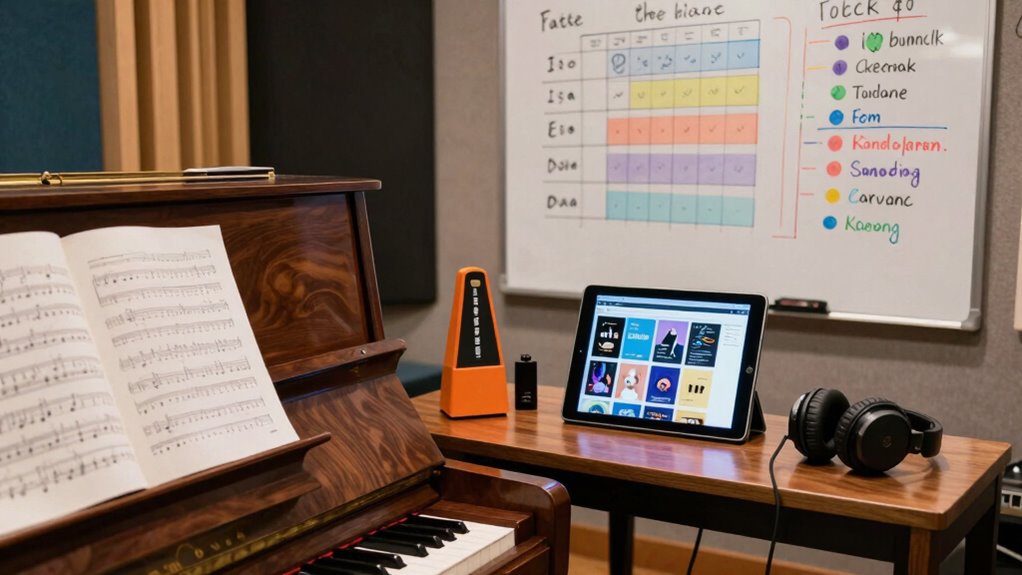

To stop playing the same things forever, adopt a diverse, structured practice system. Focus on switching up your exercises, exploring different styles, and practicing improvisation in various keys or modes. Rotate new material frequently and revisit old pieces with fresh ideas. Record your progress and seek feedback to stay motivated and aware of growth. By keeping your practice varied and intentional, you’ll continuously challenge yourself and open new skills—if you stick with it, you’ll discover even more effective strategies.

Get audio and creator gear delivered free with Prime
- Fast, free delivery on millions of items
- Prime Video, Amazon Music and more included
- Member-only deals all year
Key Takeaways
- Incorporate diverse exercises and repertoire to prevent familiarity and stimulate new musical ideas.
- Set specific, varied practice goals focusing on different styles, techniques, and improvisation.
- Rotate and modify existing pieces to challenge adaptability and deepen understanding.
- Record and review performances to identify progress and avoid repetitive habits.
- Engage with musical interaction and improvisation to expand creativity and break stagnation.

If you’ve ever found yourself stuck practicing the same pieces over and over without progress, you’re not alone. Many musicians hit a plateau, feeling like they’re spinning their wheels while their skills stagnate. The key to breaking free from this cycle lies in adopting a practice system that fosters musical diversity and encourages improvisation techniques. Instead of endlessly repeating familiar pieces, you need a method that challenges your adaptability and keeps your mind engaged. This approach not only prevents boredom but also accelerates your growth by exposing you to new ideas and techniques.
Start by setting specific goals for each practice session. Instead of aiming to perfect one piece, allocate time to explore different musical styles, scales, and improvisation techniques. For example, dedicate part of your session to improvising within a particular key or mode. This variety keeps your practice fresh and builds your ability to think creatively on the spot. Incorporating improvisation techniques into your routine pushes you beyond rote memorization, forcing you to actively make musical decisions rather than passively play. It broadens your musical vocabulary and enhances your spontaneous playing, which is vital for live performances and personal expression.
A smart practice system also involves rotating through different exercises and repertoire. If you tend to focus on the same set of pieces, introduce new material periodically or revisit old pieces with a different perspective. Change the key, alter the rhythm, or add embellishments. This variation prevents your muscles and mind from becoming too accustomed to a single way of playing, making your progress more dynamic. When you intentionally diversify your practice, you develop a more all-encompassing skill set, making it easier to adapt to new musical challenges. Additionally, understanding how different musical concepts interact can deepen your overall musical knowledge and versatility. Incorporating musical diversity into your routine ensures continuous growth and prevents stagnation. Recognizing the importance of musical interaction can further enhance your improvisational skills and overall musicianship.
In addition, recording your improvisations and listening back is invaluable. It helps you identify areas for improvement and recognize your growth over time. This feedback loop keeps your practice purposeful and focused on continuous development. Remember, the goal isn’t perfection but progress, and a practice system that integrates musical diversity and improvisation techniques ensures you stay motivated and curious. The more you challenge yourself with varied musical ideas, the less likely you’ll fall into the trap of playing the same things forever. Instead, you’ll cultivate a flexible, creative approach to your playing that keeps evolving, pushing your musical boundaries further with each session.
As an affiliate, we earn on qualifying purchases.
Frequently Asked Questions
How Long Should I Practice Each New Piece?
You should aim for consistent practice sessions of about 20 to 30 minutes on each new piece. Focus on goal setting to track progress and stay motivated. As you improve, gradually increase practice time, but avoid overdoing it to prevent frustration. Consistent, focused practice helps you master new pieces without burnout, ensuring steady progress and enjoyment. Balance intensity with rest for ideal results.
Can This System Work for All Musical Genres?
Yes, this system can work across all musical genres because it encourages genre versatility and practice adaptation. By tailoring your practice sessions to each genre’s unique demands, you keep your skills fresh and avoid stagnation. Whether you’re into classical, jazz, rock, or folk, adjusting your practice methods guarantees continuous growth. This flexible approach helps you stay motivated, develop versatility, and master diverse styles without getting stuck on the same material.
What Tools or Apps Can Help Implement This Practice System?
Think of your practice as a compass guiding your musical journey. Tools like tuning apps guarantee your instrument’s pitch is spot-on, while metronome apps with adjustable settings keep your timing sharp. Apps like Fender Tune or Cleartune help with tuning, and Metronome Plus or Pro Metronome set the perfect rhythm. These tools help you explore new skills, prevent stagnation, and keep your practice dynamic and engaging, no matter your genre.
How Do I Stay Motivated Using This System?
You stay motivated by adopting mindset strategies that keep you focused on growth, not just perfection. Set clear, achievable goals for each practice session, and celebrate small wins to boost your confidence. Regularly remind yourself of your progress and why you started. Incorporate variety into your routine to prevent boredom, and keep your goals flexible so you stay inspired, adaptable, and committed to continuous improvement.
What if I Get Bored With New Material Quickly?
If you get bored quickly, it’s normal to experience musical fatigue. To combat this, incorporate practice variety—switch between different pieces or techniques regularly. This keeps your mind engaged and prevents burnout. Remember, variety stimulates your creativity and maintains your motivation. Don’t hesitate to introduce new challenges or revisit old favorites with fresh perspectives. By mixing things up, you’ll stay inspired and make consistent progress without feeling stuck or bored.
As an affiliate, we earn on qualifying purchases.
Conclusion
Remember, Rome wasn’t built in a day, and mastery takes time. Your practice system isn’t about perfection overnight but consistent progress. By challenging yourself with new exercises and embracing discomfort, you’ll grow beyond your current limits. Keep in mind that perseverance turns small steps into giant leaps. Stay committed, be patient, and trust the process—eventually, you’ll find yourself playing with confidence and versatility you once thought impossible.
musical scales and modes practice set
As an affiliate, we earn on qualifying purchases.
As an affiliate, we earn on qualifying purchases.
As an affiliate, we earn on qualifying purchases.
Columbus Day / Indigenous Peoples' Day Picks
long weekend sales
As an affiliate, we earn on qualifying purchases.