To avoid a food coma before your headliner, focus on eating smaller, balanced meals with lean protein, fiber, and healthy fats, and avoid heavy carbs that cause blood sugar dips. Time your meals properly—avoid large portions close to your event—and stay well-hydrated. Eating slowly helps your body recognize fullness and prevents overeating. Managing these habits can keep you energized, and if you keep going, you’ll discover more tips to stay alert all day.
Key Takeaways
- Eat smaller, balanced meals with lean proteins, fiber, and healthy fats to prevent blood sugar spikes.
- Avoid heavy, carbohydrate-rich foods right before your event for sustained energy.
- Time your meals to allow digestion before the headliner, avoiding large meals immediately prior.
- Stay well-hydrated and ensure good indoor air quality to support overall alertness.
- Practice mindful, slow eating to recognize fullness and prevent overeating that leads to sluggishness.
After a big meal, it’s common to feel sluggish and sleepy, often called a “food coma.” Fortunately, you can prevent this by making simple adjustments to what and how you eat. One of the most effective strategies is paying attention to meal timing. Eating at regular intervals helps your body process food more efficiently, preventing the overload that leads to sluggishness. Instead of waiting until you’re ravenous and then consuming a large amount of food all at once, aim for smaller, more frequent meals throughout the day. This keeps your blood sugar levels stable, reducing the risk of a sudden energy crash afterward. Additionally, timing your meals to avoid heavy eating right before important activities can make a big difference. If you know you’ll be needing alertness, consider having a lighter meal or snack beforehand, so you avoid overwhelming your digestive system.
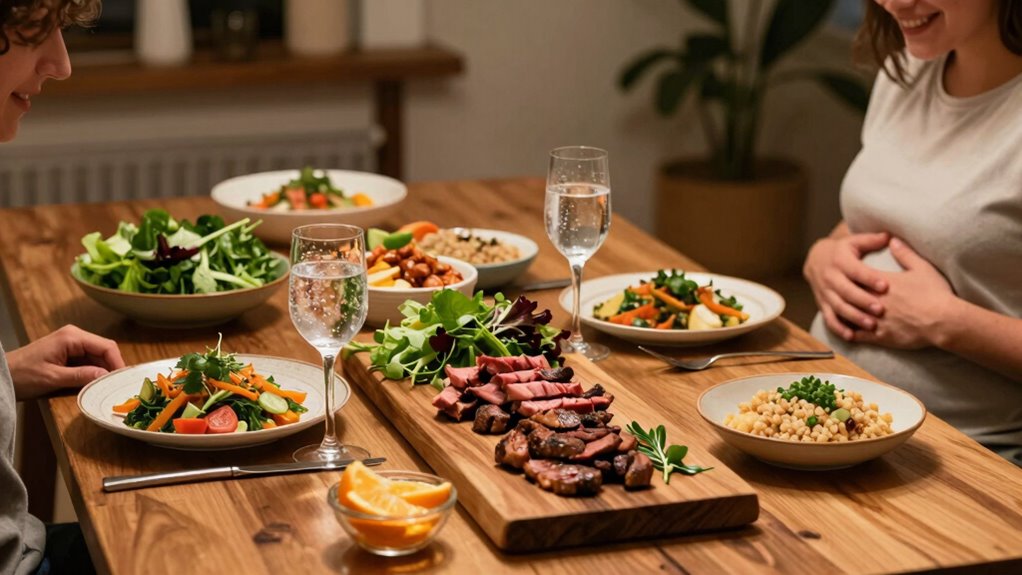
Portion control is another key factor in avoiding a food coma. Large portions, especially of carbohydrate-rich foods, can cause your blood sugar to spike and then quickly drop, leaving you feeling drained. To manage this, serve yourself smaller portions and listen to your body’s hunger cues. Using smaller plates can help trick your mind into feeling satisfied with less food. Focus on balanced meals that include lean proteins, fiber-rich vegetables, and healthy fats, which digest more slowly and provide sustained energy. When you avoid overeating, your digestive system isn’t overwhelmed, and your energy levels stay more steady. It’s also wise to slow down during meals, giving your brain time to register fullness and preventing you from eating past that point. Being aware of filtration and airflow systems in your home can also contribute to overall well-being, as good indoor air quality supports better digestion and energy levels.
Combining good meal timing with portion control creates a powerful approach to sidestepping the post-meal slump. When you eat smaller amounts more frequently and avoid piling your plate with excessive food, your body can handle digestion more smoothly. This prevents the heavy, sluggish feeling that often accompanies large, carb-heavy meals. Remember to stay hydrated too, as dehydration can contribute to fatigue and make you feel more sluggish after eating. By making these adjustments, you’ll find it easier to stay alert and energized, even after enjoying a hearty meal. Over time, these habits become second nature, helping you enjoy your meals without the unwanted side effect of a “food coma.”
Frequently Asked Questions
Can Certain Foods Cause More Drowsiness Than Others?
Certain foods can cause more drowsiness than others, especially if their food quality is low or if you eat at the wrong meal timing. Foods high in carbs, sugar, or unhealthy fats tend to make you feel sleepy afterward. To stay alert, choose balanced meals with protein and fiber, and eat at appropriate times. This helps prevent that sluggish, food coma feeling before the headliner.
Does Eating Slowly Help Prevent Food Coma?
Eating slowly acts like a gentle river, guiding digestion smoothly and preventing overload. When you take your time, you’re better able to practice portion control and space out your meal timing, which helps avoid that sluggish food coma. By savoring each bite, you give your body a chance to signal fullness, making it easier to prevent overeating and maintain energy for the main event. Slow eating truly keeps your energy flowing.
Are There Specific Drinks That Can Reduce Drowsiness?
Yes, certain beverage choices can help reduce drowsiness. Opt for stimulant drinks like coffee or green tea, which contain caffeine to boost your alertness. Stay away from sugary or carb-heavy drinks that might cause a crash later. Also, consider drinking cold water or herbal teas to stay hydrated and alert. Combining these beverage choices with light activity keeps you energized and prevents that sluggish feeling before the headliner.
How Does Hydration Impact Post-Meal Sleepiness?
Imagine you’re at a party, feeling sluggish after your meal. Proper hydration impacts post-meal sleepiness by maintaining your hydration levels and preventing dehydration that can worsen fatigue. Drinking water before and after eating helps regulate your blood sugar and digestion, reducing drowsiness. Increasing your water intake can keep you alert longer, so you enjoy the event without feeling overly sleepy. Staying hydrated is key to avoiding that post-meal slump.
Is It Better to Skip Dessert to Avoid Feeling Sleepy?
Skipping dessert can help you avoid feeling sleepy, especially if you opt for healthy snacks and practice portion control. Instead of rich sweets, choose fresh fruit or yogurt to satisfy your cravings without overloading your digestive system. This way, you stay energized and alert for the headliner performance. Remember, moderation is key—small portions of dessert can also satisfy your sweet tooth without making you too sleepy.
Conclusion
Now that you know how to steer clear of that sluggish food coma, you can enjoy your event without feeling weighed down. Think of your energy as a bright torch, not a flickering candle drowning in a sea of carbs. By choosing lighter meals, staying hydrated, and pacing yourself, you’ll keep your vigor shining through the headliner’s set. So, take control of your feast and let your energy soar, bright and unstoppable like a star in the night sky.