
The ‘Pocket System’ helps prevent losing small items by establishing consistent habits of storing essentials in designated, easily accessible spots like pockets, drawers, or pouches. By creating visual cues such as labels or color-coding, you quickly identify and retrieve your belongings. Decluttering regularly and developing routines make it second nature to put things back in their place. Keep everything organized, and you’ll waste less time searching—discover more tips to master this simple but effective method.
Key Takeaways
- Designate specific pockets, drawers, or containers for small items to create an organized storage system.
- Establish consistent routines of immediately placing essentials in designated spots after use.
- Use labels or color-coding to quickly identify and retrieve different small belongings.
- Regularly declutter and review storage areas to prevent buildup of unnecessary items.
- Adapt the pocket system across various environments to ensure small items are always within reach and less likely to be lost.
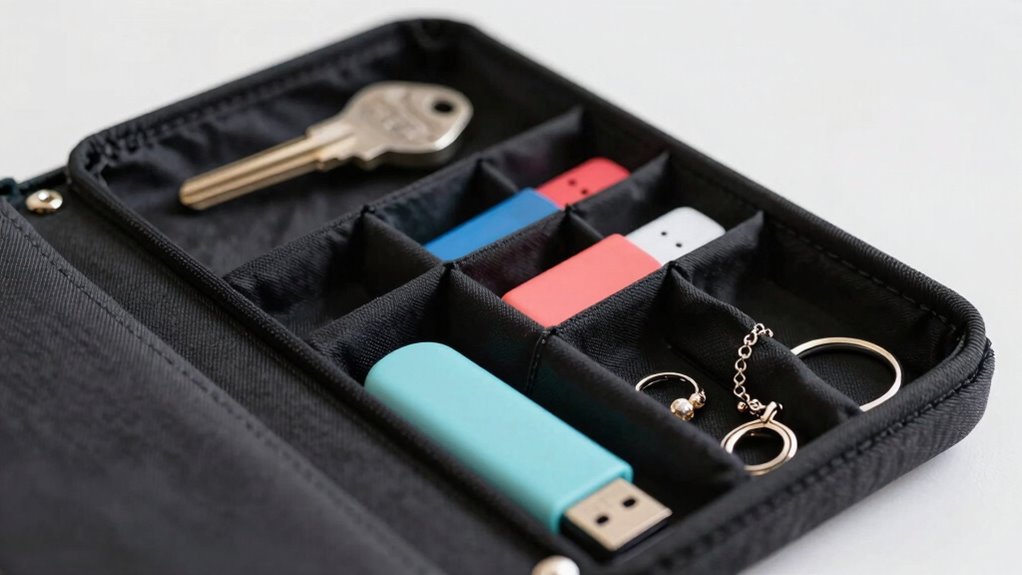
Ever find yourself wasting time searching for small items like keys, USB drives, or jewelry? If so, you’re not alone. Small items tend to vanish just when you need them most, leading to frustration and wasted minutes. The key to solving this problem lies in developing solid organization habits and employing effective decluttering techniques. One simple yet powerful method is the “Pocket System,” which helps you keep track of your small essentials and minimizes clutter around your home or workspace. Incorporating smart organizational tools can further enhance your system’s efficiency and adaptability.
Struggling to find small items? Try the simple, effective Pocket System to stay organized and clutter-free.
The first step is to establish consistent organization habits. Decide on designated pockets or containers for your small items—like a specific drawer, tray, or small pouch. When you come home or arrive at your workspace, make it a routine to immediately place your keys, USB drives, or jewelry in these spots. This habit means you’re actively training your brain to associate certain places with your essentials, reducing the chance of misplacing them. Over time, this consistent placement becomes second nature, turning a chaotic search into a quick, targeted grab.
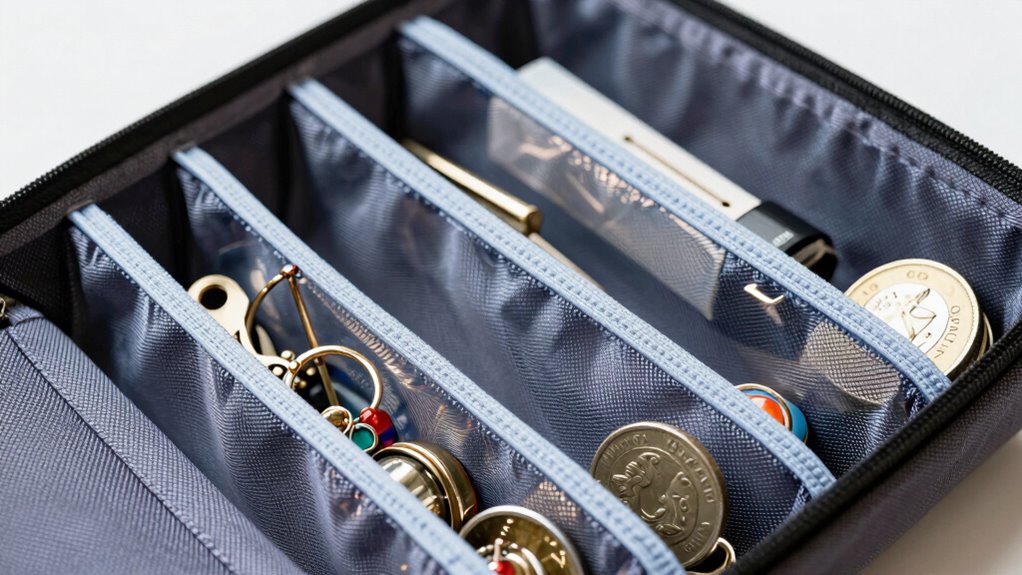
Decluttering techniques work hand-in-hand with organization habits. Clear out any excess or unused items that clutter your usual spots. If your jewelry box is overflowing or your desk drawer is stuffed with unrelated items, you’re less likely to find what you need quickly. Keep only the essentials in your designated pockets or containers. If you’re prone to losing small items, consider using small zippered pouches or compartmentalized cases. These act as mini-organizers within your larger space, making it easier to locate items at a glance.
Implementing the pocket system also involves creating visual cues. Use labels or color-coded bins to differentiate between types of items. For example, assign a specific color for keys, another for tech gadgets like USB drives, and another for jewelry. This visual organization speeds up retrieval and reinforces your organization habits. Additionally, regularly review and declutter these pockets—discard broken or unused items, and reorganize as needed. This ongoing process keeps your system efficient and prevents buildup of unnecessary clutter.
The beauty of the pocket system is that it’s flexible and easy to adapt to your routine. Whether you’re at home, in the office, or on the go, establishing these habits and decluttering techniques ensures your small items are always within reach and easy to find. Over time, the anxiety of losing something diminishes, replaced by confidence in your organized system. It’s a simple shift that transforms your daily routine, making your environment more orderly and freeing you from endless searches for misplaced essentials. With just a bit of discipline and the right setup, you can finally stop wasting time and start focusing on what really matters.
Frequently Asked Questions
Can the Pocket System Be Customized for Different Items?
Yes, you can customize the pocket system for different items. It offers personalization options that let you choose specific compartments tailored to your needs. You can allocate item-specific compartments for keys, coins, or earbuds, making organization simpler. By adjusting these compartments, you guarantee each item has a designated space, reducing clutter and preventing loss. This customization helps you stay organized and ensures your system adapts to your changing storage needs.
How Durable Are the Containers Used in the Pocket System?
Think of the containers as the sturdy backbone of your organization system. They’re made from high-quality, durable materials designed for long-lasting container longevity. You won’t have to worry about cracks or wear and tear easily, even with daily use. These containers stand up to the hustle and bustle of life, ensuring your small items stay safe and secure. Their durability makes your pocket system both reliable and a smart investment.
Is the Pocket System Suitable for Children?
Yes, the pocket system is suitable for children, but you should guarantee child safety and check for age appropriateness. The containers are generally safe and durable, designed to withstand active kids. However, small parts might pose a choking hazard for very young children, so supervise use and choose age-appropriate sizes. Overall, it helps kids stay organized while keeping safety in mind.
Can the Pocket System Be Integrated With Digital Reminders?
Absolutely, you can integrate the pocket system with digital reminders. Imagine your favorite reminder apps syncing seamlessly with your pockets, alerting you just when you need it most. This smart integration keeps your small essentials in check, never letting them slip away. By combining physical pockets with digital alerts, you create a powerful system that keeps everything organized and within reach—making forgetfulness a thing of the past.
What Is the Best Location to Place the Pocket System?
You should place the pocket system in high-traffic, easily accessible areas like near your front door or inside your closet. This location makes it simple to put small items away and find them quickly, enhancing your storage solutions. Use organizational tips like labeling pockets or grouping similar items together to keep things tidy. Positioning it strategically helps prevent losing small essentials and keeps your space clutter-free.
Conclusion
Think of the pocket system like your personal treasure chest, keeping your small valuables safe and within reach. Just as pirates guard their gold, you guard your essentials from disappearing into the abyss of clutter. With this simple system, you’ll never lose that tiny earring or key again. It’s your trusty map through the chaos, guiding you straight to your hidden treasures. Keep it up, and your small stuff will always stay within your grasp, ready to serve you.