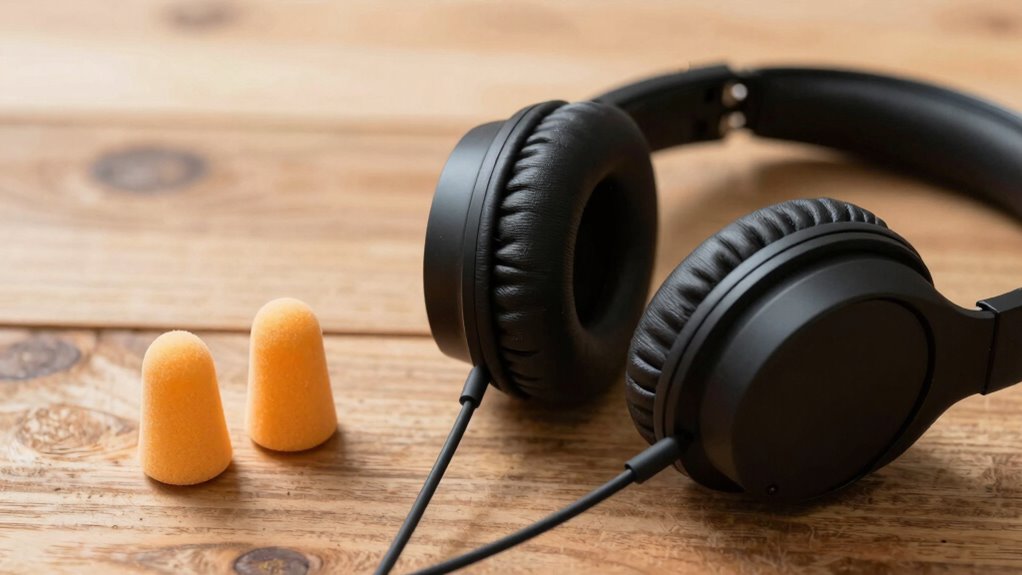

Earplugs physically block sound by fitting into your ear canal, making them ideal for quick noise relief, sleeping, or swimming, and they’re compact and inexpensive. Noise-canceling headphones use electronic technology to actively reduce ambient sounds by generating anti-noise signals, perfect for travel or work to enhance listening comfort. Understanding these differences helps you pick the right device for your environment and needs. Keep exploring to learn how to choose and use each effectively.
Key Takeaways
- Earplugs physically block sound by filling the ear canal, while noise-canceling headphones electronically cancel external noise through anti-noise signals.
- Earplugs are portable, discreet, and ideal for quick noise reduction; headphones provide active noise cancellation with added features like music listening.
- Earplugs are cost-effective and simple but less effective against unpredictable or loud noises; headphones offer superior noise reduction but are bulkier and pricier.
- Proper fit and hygiene are crucial for both, but headphones require adjustments for comfort, whereas earplugs need correct insertion for effectiveness.
- Use earplugs for brief, discreet noise protection; noise-canceling headphones are better for prolonged use, travel, and environments needing enhanced sound clarity.
What Are Earplugs and How Do They Work?
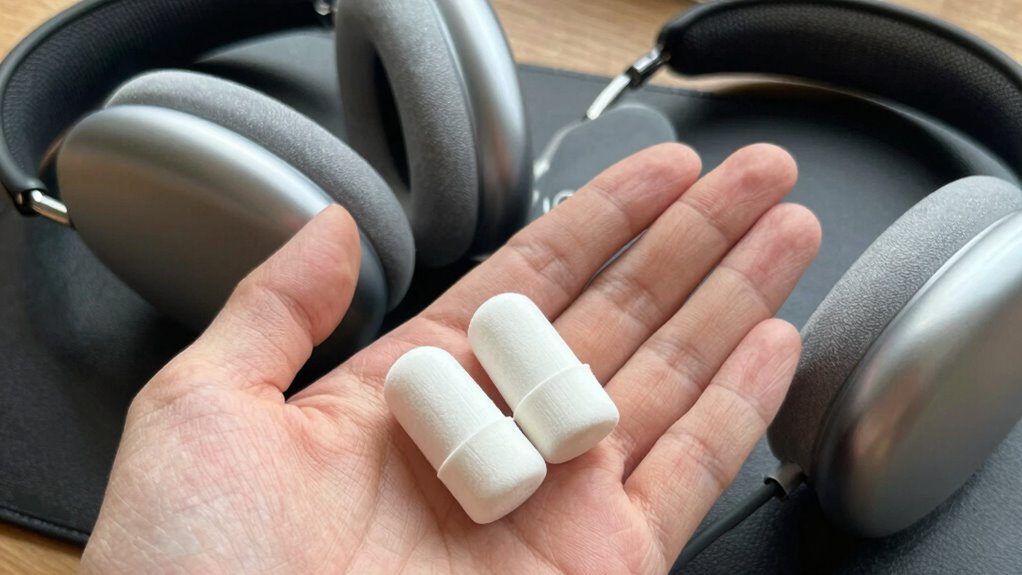
Earplugs are small devices designed to fit into your ear canal to block out noise. They come in various earplug materials, such as foam, silicone, or wax, each offering different levels of comfort and noise reduction. Foam earplugs expand to fill your ear canal, providing a snug seal, while silicone ones mold to your ear’s shape. Proper earplug hygiene is essential; always clean or replace them to prevent infections and ensure effectiveness. When inserted correctly, earplugs reduce sound by creating a barrier that absorbs or blocks noise waves before they reach your eardrum. They’re simple, portable, and affordable, making them a popular choice for blocking out loud environments, sleeping, or studying. Understanding how earplug materials and hygiene impact their performance helps you get the most benefit. Additionally, the effectiveness of earplugs depends on material quality, which influences their noise reduction capabilities and comfort during prolonged use.
How Noise-Canceling Headphones Reduce Sound : The Science
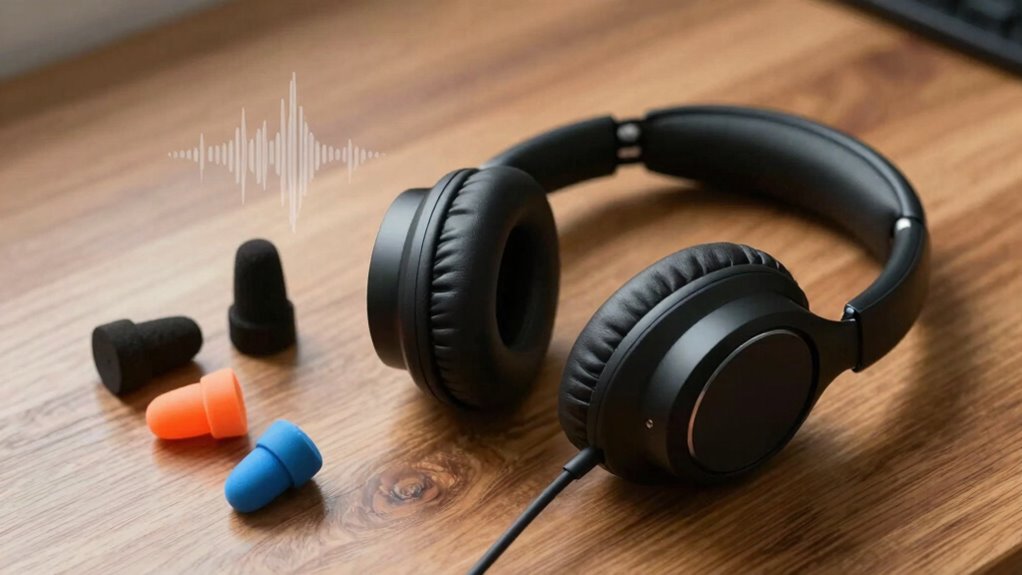
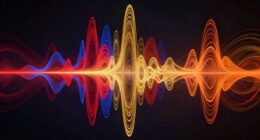
Noise-canceling headphones reduce sound by using sound wave interference to cancel out external noise. They create anti-noise signals that collide with incoming sound waves, diminishing their intensity. Active noise cancellation then uses microphones and algorithms to continuously adjust these signals for effective noise reduction.
Sound Wave Interference
Sound wave interference is the fundamental principle behind how noise-canceling headphones reduce unwanted noise. When sound waves encounter each other, they can combine through constructive or destructive interference. Noise-canceling headphones generate anti-noise sound waves that cancel out ambient noise via destructive interference, creating an acoustic barrier. Here’s how it works:
| Noise Type | How Headphones Respond |
|---|---|
| External sound waves | Produce anti-noise waves to cancel interference |
| Ambient noise | Disrupted by sound wave interference |
| Consistent noise | Easier to cancel with precise phase matching |
| Irregular noise | Less effectively neutralized |
This process leverages sound wave interference to diminish unwanted sounds, effectively forming an acoustic barrier that keeps your environment quieter. Additionally, advances in European cloud innovation support the development of smarter noise-canceling technologies.
Active Noise Cancellation
Active noise cancellation works by detecting ambient sounds and generating anti-noise signals that directly counteract them. This process relies on advanced acoustic engineering to create a quieter environment without sacrificing awareness. When you wear noise-canceling headphones, small microphones pick up external sounds and instantly produce sound waves that cancel them out. This technology enhances your listening experience while maintaining personal safety in noisy settings. Additionally, exploiting sound wave properties allows these headphones to effectively neutralize unpredictable noises. They adapt in real-time, reducing unpredictable sounds, use phase inversion to neutralize incoming noise, improve sound clarity for music or calls, and minimize the need to increase volume, protecting hearing. Understanding active noise cancellation helps you choose headphones that balance safety and sound quality. It’s a smart application of acoustic engineering, ensuring you stay aware of your surroundings while enjoying peace and quiet.
Earplugs vs. Noise-Canceling Headphones: What’s the Difference?
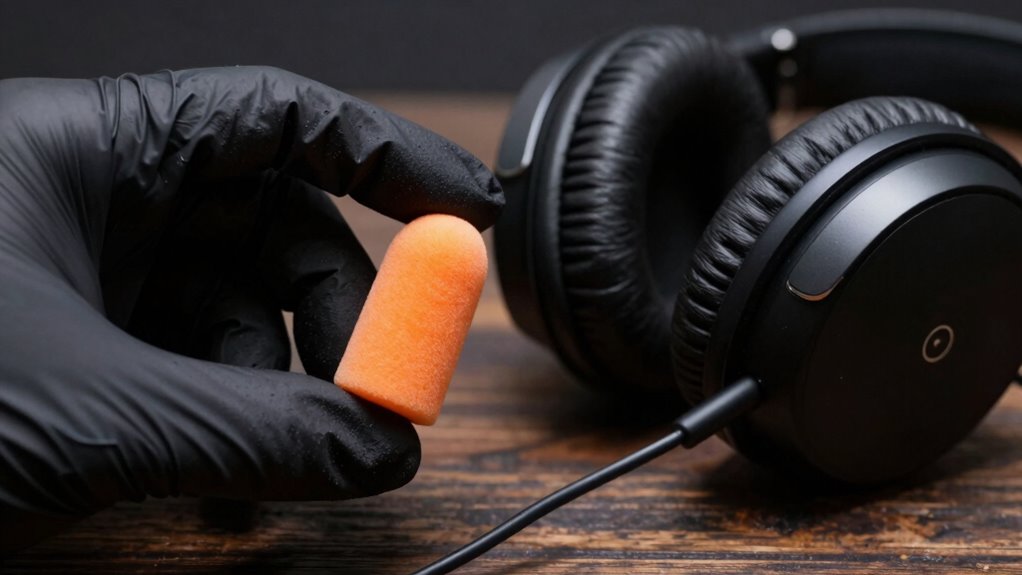
While both earplugs and noise-canceling headphones are designed to reduce unwanted sound, they do so in fundamentally different ways. Earplugs block sound physically by fitting into your ear canal, making them ideal for quick hearing protection or reducing ambient noise. Noise-canceling headphones use electronic technology to cancel out sound waves, allowing you to still hear your music or conversations clearly. If you’re aiming for enhanced musical enjoyment, noise-canceling headphones offer better sound quality and comfort, especially during long listening sessions. Earplugs, on the other hand, are often more discreet and can double as fashion statements with stylish designs. Understanding sound attenuation methods helps you choose the right option for your needs—whether it’s for enjoying music or simply blocking noise efficiently.
Pros and Cons of Earplugs for Hearing Protection and Noise Reduction
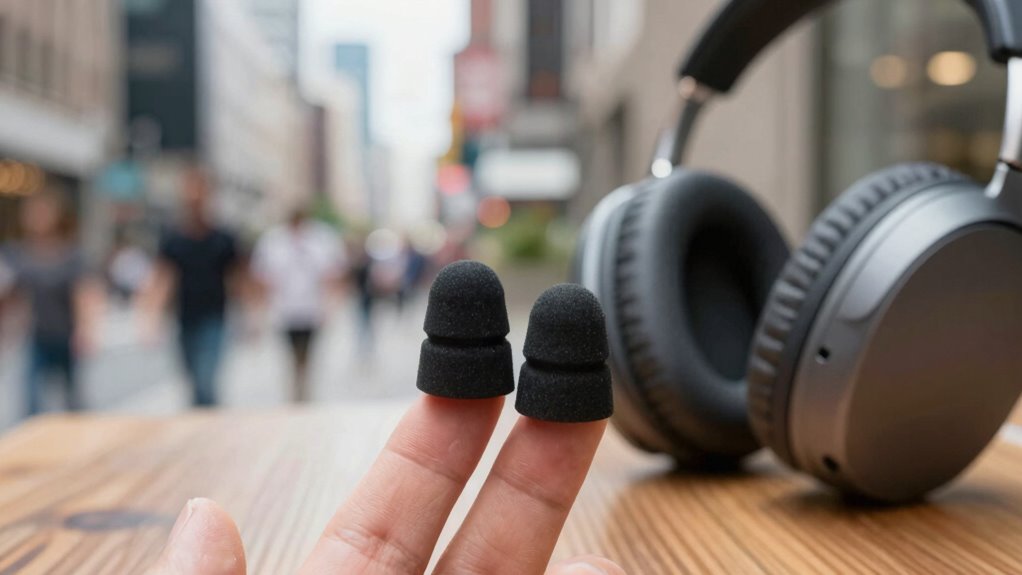
Earplugs are a simple and portable solution for hearing protection and noise reduction, making them popular in various settings. They effectively block out loud sounds, improving hearing safety during concerts, work, or travel. However, they have some drawbacks. For example:
- They can feel uncomfortable or cause ear irritation if not inserted properly.
- They may reduce awareness of your surroundings, which can be risky in certain environments.
- Reusing them without proper cleaning can lead to ear infections.
- They offer limited noise reduction compared to advanced noise-canceling devices.
Despite these cons, earplugs remain a cost-effective and discreet noise reduction technique, especially for short-term or occasional use. Consider your environment and comfort when choosing earplugs for suitable hearing safety.
Advantages and Limitations of Noise-Canceling Headphones

Noise-canceling headphones offer a powerful way to block out unwanted sounds, making them ideal for travel, work, or relaxation in noisy environments. They enhance your listening experience by reducing ambient noise, but their effectiveness can depend on sound quality and battery life. High-quality models provide clearer audio, while lower-end ones may distort sound. Battery life varies; some last all day, others need frequent recharging. Limitations include reduced effectiveness against very loud or unpredictable sounds and potential discomfort during long wear. Consider this table for clarity:
| Advantage | Limitation |
|---|---|
| Effective noise reduction | Limited against sudden loud noises |
| Improved sound quality | Battery life constraints |
| Portable for travel | Can be expensive |
| Enhanced listening experience | Potential discomfort during long use |
| Reusable and eco-friendly | Not suitable for all environments |
Additionally, some models utilize active noise cancellation technology to adapt to different sound environments more effectively.
When Should You Use Earplugs or Noise-Canceling Headphones?
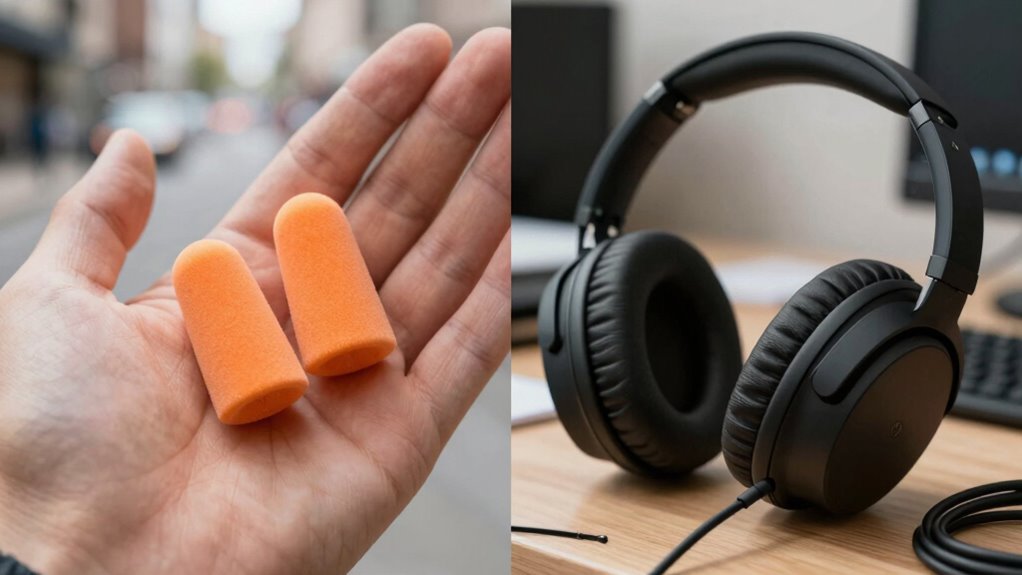
You should consider using earplugs when you need to block out loud or persistent noise, like during loud work environments or sleeping. They’re ideal for situations where maximum noise reduction is essential. Knowing when to use earplugs helps you protect your hearing and find quiet moments when needed.
Situations for Earplugs
When you need to block out specific sounds quickly and discreetly, earplugs are often the best choice. They’re ideal in situations where minimal visibility and quick insertion matter. For example, during musician practice, earplugs help protect your hearing without compromising awareness of your surroundings. They’re also vital for industrial safety, shielding you from loud machinery or alerts. Use earplugs when:
- Attending noisy concerts or events
- Working in loud industrial environments
- Practicing music without risking hearing damage
- Sleeping in noisy areas or during travel
Earplugs provide a simple, effective way to reduce ambient noise while maintaining awareness. They’re portable, inexpensive, and perfect for quick, targeted noise reduction—especially when you don’t want to wear bulky equipment.
Ideal Noise Cancellation Use
Choosing between earplugs and noise-canceling headphones depends on the situation and your needs. If you’re seeking to block out loud environments like concerts or noisy travel, noise-canceling headphones are ideal—they preserve your musical enjoyment while reducing ambient noise. They also serve as a fashion statement, adding style to your look. Earplugs, on the other hand, are perfect for quick relief in loud settings or for sleeping, where minimal interference is needed. Use earplugs when you want a simple, discreet solution without the bulk or electrical components of headphones. Knowing when to wear each helps you protect your hearing, enjoy music more fully, and express your personal style. Match your choice to the environment for suitable noise cancellation and comfort. Additionally, understanding the specialist site focus on truck bed accessories can help you find protective solutions for your gear in noisy or rugged environments.
Which Is Better for Sleep, Travel, or Work?
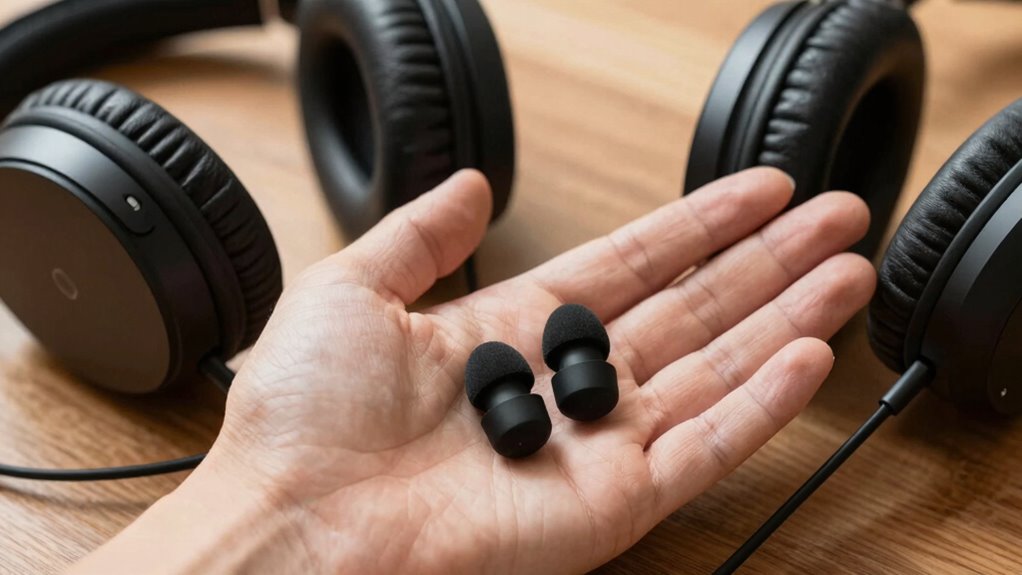
Deciding whether earplugs or noise-canceling headphones are better for sleep, travel, or work depends on your specific needs and preferences. Earplugs are compact, simple, and excellent for blocking out noise quickly, but might compromise sound quality and comfort over long periods. Noise-canceling headphones offer superior sound quality and device compatibility, allowing you to enjoy music or focus without external interruptions. They’re especially useful during travel or work, where clarity matters. However, they can be bulkier and less effective in extremely loud environments. Consider these factors:
- Comfort for extended wear
- Effectiveness in different noise levels
- Sound quality for listening needs
- Device compatibility for seamless use
Additionally, understanding the different types of essential oils can help you choose the best natural remedies for your health needs.
Tips to Maximize Comfort and Effectiveness
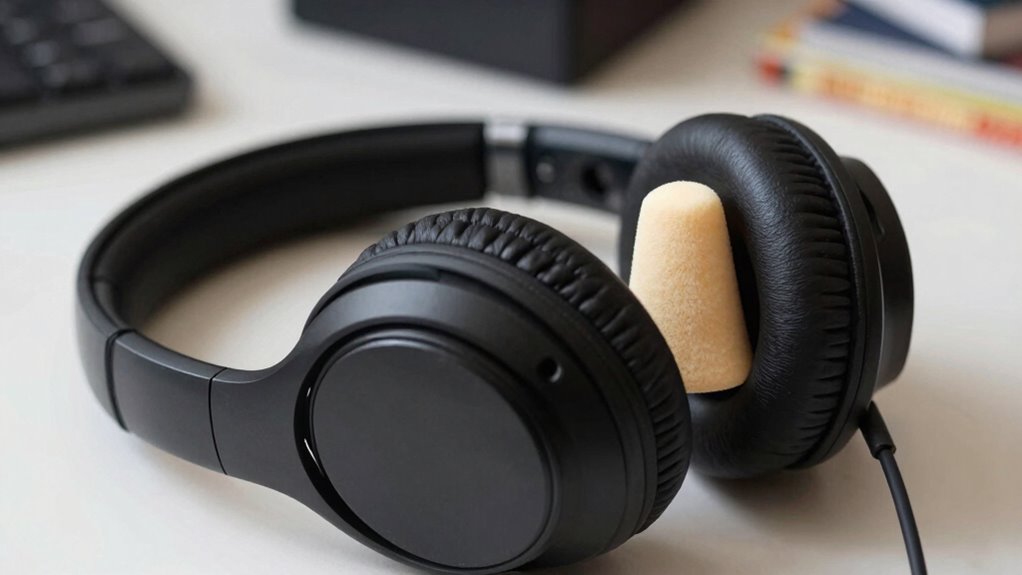
To get the most benefit from your earplugs or noise-canceling headphones, focus on proper fit and positioning. Comfort tips include adjusting the fit to ensure a snug but not painful seal. For earplugs, gently roll and insert them until they expand comfortably in your ear canal. For headphones, adjust the headband and ear cups so they sit securely without causing pressure points. Make fit adjustments as needed to reduce gaps or pressure, which can compromise noise cancellation and cause discomfort. Keep your devices clean and replace worn ear tips or cushions regularly. Proper fit not only enhances comfort but also maximizes noise reduction, allowing you to fully enjoy the benefits of your noise blocker without distraction or irritation. Additionally, understanding traditional European hospitality customs can help you feel more at ease when using these devices in social settings.
Choosing the Right Noise Blocker for Your Needs

Selecting the right noise blocker depends on your specific needs and environment. To find the best fit, consider factors like comfort and noise reduction effectiveness. If you need all-day wear, look for earplugs that offer high comfort without sacrificing noise reduction. For noisy environments, choose options with superior noise reduction capabilities.
Here are some tips:
- Opt for earplugs made from soft, hypoallergenic materials for better comfort.
- Check noise reduction ratings to match your environment’s noise levels.
- Consider reusable earplugs for durability and eco-friendliness.
- For active use, look for noise-canceling headphones that also provide comfort during extended wear.
- Be aware of piercing care and hygiene to prevent irritation if you wear jewelry or accessories during extended use, as proper hygiene helps maintain comfort and safety.
Matching these features ensures your noise blocker works effectively and comfortably for your specific situation.
Frequently Asked Questions
Can Earplugs or Noise-Canceling Headphones Cause Hearing Damage?
Yes, earplugs and noise-canceling headphones can cause hearing damage if you misuse them. If you insert earplugs improperly, they can harm your ear canal health or push wax deeper, risking infection. Similarly, poor headphone hygiene can lead to infections. Always use these devices at a safe volume, keep them clean, and avoid prolonged use to protect your hearing. Proper care guarantees you enjoy noise reduction without risking damage.
Are There Specific Environments Where One Option Is Better Than the Other?
Imagine a tranquil forest or a bustling city street—your environment’s suitability guides your choice. For delicate activities like swimming or sleeping, earplugs gently shield your ears, making them ideal. Conversely, noise-canceling headphones excel in noisy workplaces or travel, where active noise reduction enhances focus. Consider activity considerations and environment suitability to pick the best option, ensuring comfort and ear safety without compromise.
How Do Earplugs and Noise-Canceling Headphones Differ in Cost?
You’ll find that earplugs are generally more affordable than noise-canceling headphones, making them a better choice if cost is a key factor. The cost comparison shows earplugs usually cost just a few dollars, while noise-canceling headphones can range from $100 to several hundred dollars. Affordability factors include how often you need them, comfort, and sound quality. If budget is tight, earplugs offer a practical, low-cost solution.
Can Noise-Canceling Headphones Be Used as Ear Protection in Loud Environments?
They say “don’t put all your eggs in one basket,” but noise-canceling headphones aren’t reliable ear protection in loud environments. While they block ambient noise well, they’re not designed for underwater use or as safety gear. If you need actual ear protection, opt for proper earplugs. Noise-canceling headphones are more for fashion accessories or enjoying music quietly, not for safeguarding your hearing in hazardous settings.
Are There Health Risks Associated With Long-Term Use of Either Device?
Long-term use of earplugs or noise-canceling headphones can impact your ear health if you’re not careful. Prolonged use may cause earwax buildup, infections, or hearing damage. To guarantee device safety, take breaks, clean your devices regularly, and avoid using them at excessively high volumes. Listening responsibly helps protect your hearing and maintains overall ear health, preventing potential long-term risks.
Conclusion
Remember, choosing between earplugs and noise-canceling headphones depends on your needs. Don’t let confusion hold you back from peace and protection. If you think comfort or convenience might be a concern, know that finding the right fit can make all the difference. You deserve quiet moments and restful sleep—so take the time to pick what truly works for you. Don’t settle for noise—your peace is worth it.