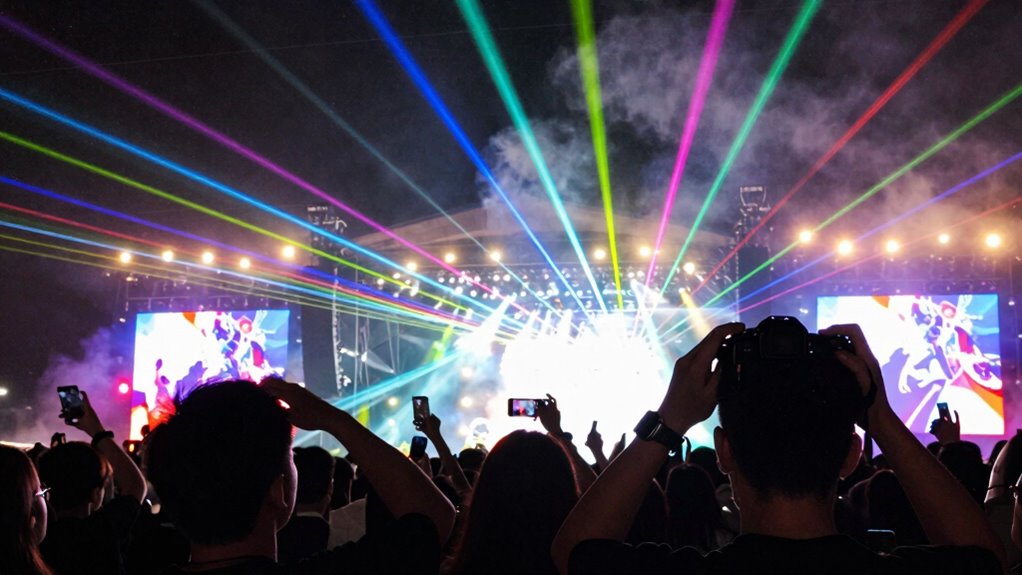
Understanding safe exposure time is vital for protecting your hearing at concerts. Loud music can damage your ears over time, especially beyond certain decibel levels—like 100 dB, where exposure should be limited to around 15 minutes. Using ear protection and taking breaks helps reduce risks. If you keep listening without precautions, you might suffer long-term hearing issues. Keep going to learn how to enjoy concerts while safeguarding your hearing health effectively.
Key Takeaways
- At 100 decibels, the safe exposure limit is roughly 15 minutes; higher volumes drastically reduce safe listening time.
- Using ear protection like specialized earplugs helps reduce sound intensity and extends safe exposure duration.
- Taking regular breaks every 30-60 minutes allows your ears to recover and minimizes hearing damage risk.
- Monitoring sound levels with smartphone apps can help you stay within safe exposure times during concerts.
- Long-term hearing health depends on consistent protection and awareness of sound levels and exposure durations.
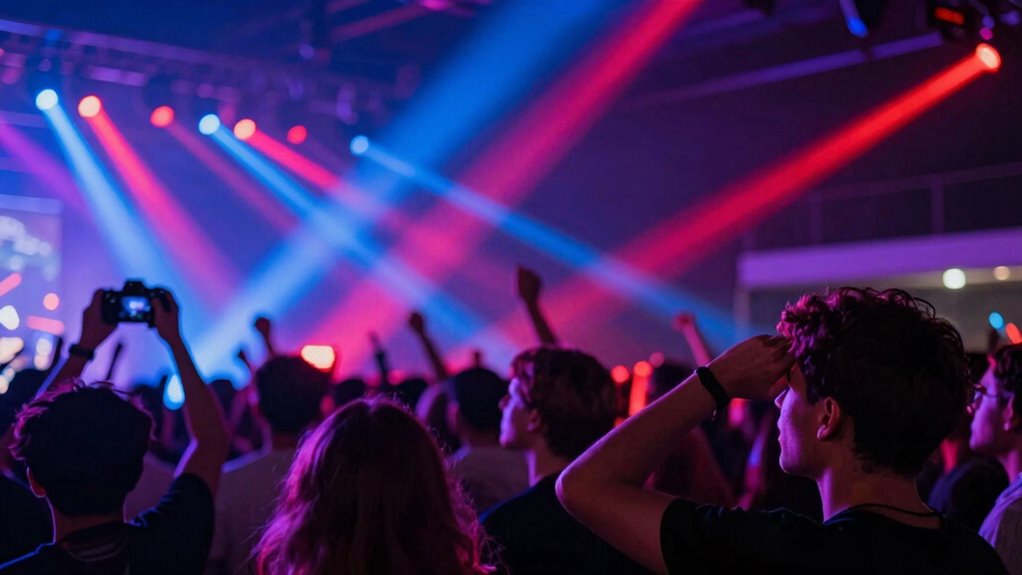
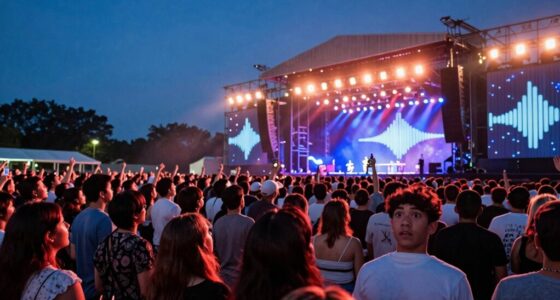
Attending concerts can be exciting, but exposure to loud music for extended periods can damage your hearing. The key to enjoying your favorite bands without risking long-term harm is understanding the concept of safe exposure time. When you’re immersed in a sea of sound, it’s easy to overlook how loud the environment is and how much your ears are absorbing. That’s why wearing ear protection, such as earplugs designed for concerts, can be a game-changer. These devices help reduce sound intensity without distorting music, allowing you to experience the concert safely. Without proper ear protection, you’re at risk of acoustic damage, which can lead to temporary ringing or even permanent hearing loss.
Your ears are sensitive organs that respond to sound waves, and prolonged exposure to high decibel levels accelerates the risk of acoustic damage. The louder the music, the shorter the safe exposure time becomes. For instance, at around 100 decibels, your ears can only tolerate about 15 minutes of continuous exposure before potential harm occurs. As the volume increases, this safe window shrinks dramatically. It’s essential to be aware of this relationship and plan ahead. If you’re unsure about the decibel level, try to stay in areas where the music isn’t overpowering, and consider using smartphone apps that measure noise levels at concerts. By doing so, you can better gauge how long you should stay in a particular spot before taking a break or putting in ear protection.
Taking regular breaks from the loud environment also helps protect your hearing. Step outside or find a quieter area to give your ears a rest every 30 to 60 minutes. This pause allows your ears to recover from the high noise levels and reduces the risk of acoustic trauma. Remember, the damage isn’t always immediate; it accumulates over time with repeated exposure. Even if you feel fine after a concert, the noise exposure could have caused subtle harm that might manifest later as difficulty hearing or persistent ringing. That’s why setting limits on how long you stay in loud environments and consistently using ear protection are essential steps to preserve your hearing health.
In essence, understanding the safe exposure time at concerts and actively protecting your ears can make all the difference. It enables you to enjoy live music without sacrificing your long-term hearing health. Be mindful of the volume, take breaks, and invest in quality ear protection—your ears will thank you in the years to come. Knowing that sound levels vary and influence safe exposure time can help you make informed decisions during live events.
Frequently Asked Questions
How Is Safe Exposure Time Calculated for Different Music Genres?
You determine safe exposure time by considering sound intensity and exposure duration. Higher sound intensity shortens the safe exposure time, while lower levels allow longer listening. Different music genres produce varying sound intensities, so you should adjust your exposure duration accordingly. Use sound level measurements to guide you—if the volume is very high, limit your time to protect your hearing. Always prioritize ear safety, regardless of the genre.
Can Ear Protection Extend Safe Exposure Durations Effectively?
Did you know that wearing ear protection can double your safe exposure limit? Yes, ear protection effectively reduces sound levels, allowing you to enjoy longer concert durations without risking hearing damage. By lowering the decibel levels hitting your ears, ear protection extends your safe exposure time considerably, helping you stay within safe exposure limits. So, always use ear plugs or muffs at loud events to protect your hearing and enjoy the music safely.
Does Age Affect Safe Exposure Time at Loud Events?
Yes, age affects your safe exposure time at loud events. Younger people typically have youth auditory resilience, allowing longer exposure without damage. As you age, age-related hearing loss can reduce your ear’s ability to tolerate loud sounds, decreasing safe exposure durations. To protect your hearing, it’s essential to be mindful of these changes and limit exposure accordingly, regardless of your age, to prevent long-term hearing damage.
Are There Long-Term Health Risks Even Within Safe Exposure Limits?
Even within safe exposure limits, you can experience long-term health risks like hearing fatigue and temporary threshold shift, which 60% of concertgoers report after loud events. These issues may seem minor initially but can lead to permanent hearing damage over time. So, it’s vital to protect your ears, take breaks, and use earplugs, even if you think you’re within the safe sound level. Your hearing is worth it.
How Do Individual Hearing Sensitivities Influence Safe Exposure Recommendations?
Your personal hearing thresholds and genetic hearing factors markedly influence safe exposure recommendations. If you have heightened sensitivities or genetic predispositions, you might need to limit your exposure time or use extra hearing protection. Recognizing these individual differences helps you better protect your ears, ensuring you don’t inadvertently risk long-term damage. Always listen to your body’s signals and adjust your hearing safety measures accordingly, especially in loud environments like concerts.
Conclusion
Knowing the safe exposure time helps you enjoy concerts without risking hearing damage. While some say you can push limits if you’re careful, research shows even short exposures can harm your ears over time. So, trust the science—limit your time near loudspeakers and wear ear protection. Protect your hearing now, and you’ll thank yourself later. After all, enjoying live music shouldn’t come at the cost of your long-term hearing health.