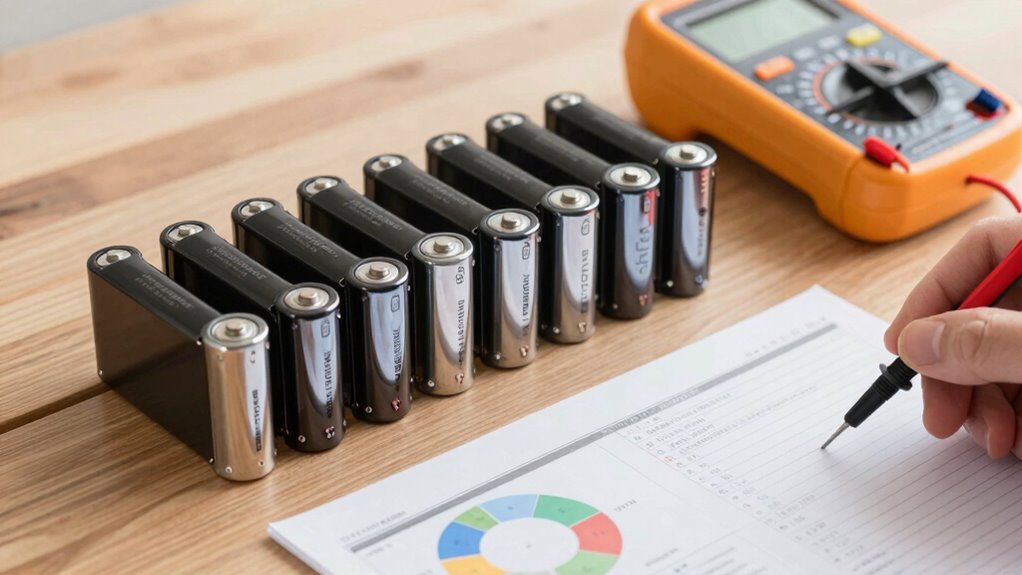

To pick the right high-capacity rechargeable battery pack for AC power, assess your actual energy needs and usage patterns to avoid overbuying. Consider the battery’s lifespan and cycle count, opting for quality cells that offer longer durability. Manage charging habits to prolong life, keeping levels between 20% and 80%, and weigh the size and cost against your power requirements. Continuing will reveal how to find the best balance for lasting performance and savings.
Key Takeaways
- Assess your actual energy needs and usage frequency to select an appropriately sized battery pack.
- Consider battery cycle life and choose higher-quality cells for better durability and long-term value.
- Match capacity to your power consumption to avoid overbuying and unnecessary size or expense.
- Maintain proper charge levels and follow manufacturer guidelines to maximize battery lifespan.
- Balance capacity, size, and cost to find a practical solution that meets your needs without excess.
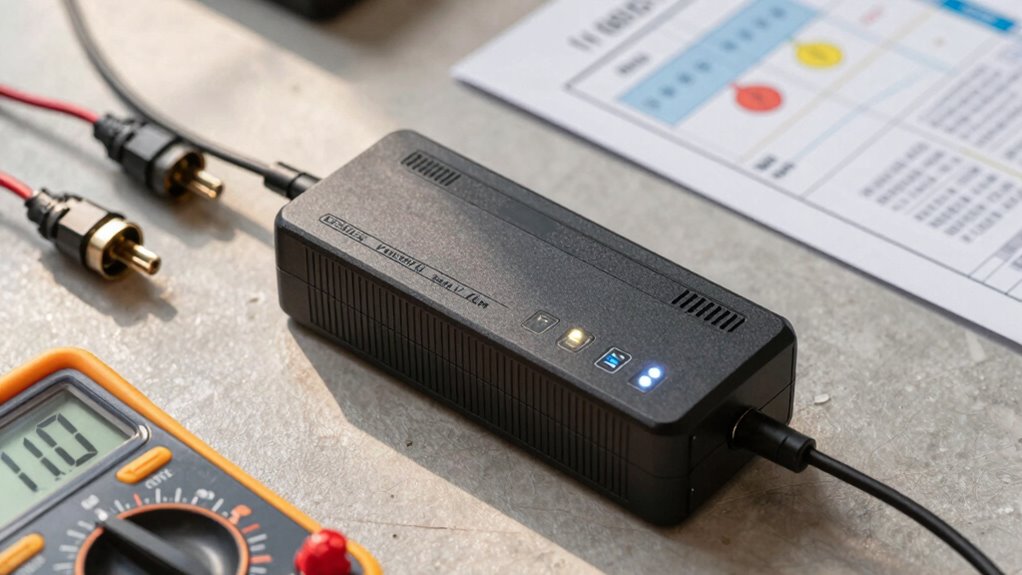
When selecting a high-capacity rechargeable battery pack, it is essential to understand your specific energy needs and usage patterns. This helps guarantee you choose a pack that provides enough power without unnecessary excess, saving you money and reducing waste. One of the most important factors to evaluate is the battery lifespan, which directly relates to how many charging cycles the pack can endure before its capacity diminishes considerably. Typically, higher-quality batteries are rated for a greater number of cycles, meaning they will last longer and maintain their efficiency over time. If you plan to use your battery pack frequently, investing in one with a higher cycle count can be more cost-effective in the long run.
Understanding charging cycles is fundamental because they impact both the longevity and performance of your battery pack. Each time you fully charge and discharge the battery, it completes a cycle. Most batteries are rated for a certain number of cycles—say, 300 to 1,000—after which their capacity starts to decline noticeably. To maximize your battery’s lifespan, you should aim to keep the charge levels within an ideal range, avoiding frequent deep discharges or overcharging. For example, keeping the battery between 20% and 80% charge can greatly extend its useful life. When selecting a pack, check the manufacturer’s specifications for the number of cycles it supports and consider how your typical usage aligns with these limits.
You also need to think about how often you’ll need to recharge your battery pack. If your usage involves quick, repeated discharges, look for a pack with a high cycle count and fast-charging capabilities. Conversely, if you only occasionally need backup power, a less robust battery might suffice—saving you money while still meeting your needs. Additionally, consider the quality of the battery’s internal cells; high-quality cells tend to have better cycle stability and longer overall lifespan. While they may cost more upfront, they often offer better performance and durability over time, meaning you won’t have to replace or upgrade as frequently. Moreover, selecting a battery with appropriate materials and proper construction can further enhance its resistance to degradation.
Finally, balance your capacity needs with practical considerations like size, weight, and price. A larger capacity battery may seem appealing, but it could be overkill for your application and lead to unnecessary expense. By understanding your energy consumption patterns and how many charging cycles you can expect, you can select a battery pack that strikes the right balance between capacity, longevity, and cost, guaranteeing reliable power without overbuying.
high capacity rechargeable battery pack for AC power
As an affiliate, we earn on qualifying purchases.
As an affiliate, we earn on qualifying purchases.
Frequently Asked Questions
How Long Does a High-Capacity Battery Last on a Full Charge?
A high-capacity battery typically lasts between 4 to 12 hours on a full charge, depending on its capacity and power retention. You’ll notice that larger packs with higher watt-hour ratings tend to last longer, but battery lifespan can decrease over time with frequent use. To maximize runtime, choose a pack suited to your power needs, and remember that proper maintenance helps preserve its power retention, extending overall usage.
Can I Use a High-Capacity Battery for All Electronic Devices?
Think of your battery as a universal key, but not every lock (device) fits it perfectly. While high-capacity batteries offer more power, their compatibility depends on the device’s power needs and battery capacity. You can use them for many electronics, but always verify device compatibility first. Using the right battery ensures your gadgets run smoothly without risking overload or damage, keeping everything humming along happily.
What Safety Features Should I Look for in a Battery Pack?
You should look for safety features like battery insulation, which prevents electrical shocks, and overload protection, stopping the pack from overheating or damaging your devices. Guarantee the battery pack has built-in safeguards to automatically shut off during faults or overloads. These features keep you safe and prolong the battery’s lifespan, giving you peace of mind when powering your electronic devices. Always choose a pack with reliable safety mechanisms.
Is It Better to Buy a Larger or Smaller Capacity Battery?
You should choose a battery size that matches your energy needs, rather than always opting for a larger capacity. A smaller battery with high energy density can be more efficient and portable, while a larger one offers longer run times. Consider your usage patterns, and don’t overbuy—select a pack that balances capacity with practicality. This guarantees you get reliable power without unnecessary bulk or expense.
How Do Temperature Changes Affect Battery Performance?
Sure, temperature swings turn your battery into a drama queen. Thermal effects can make your battery lose capacity or even shut down prematurely, ruining your day. To keep it cool (literally), good temperature regulation is key—avoid extreme heat or cold. When it’s chilly, your battery’s performance drops faster than your motivation on a Monday. In hot weather, it risks overheating and damaging itself. Stay in the comfort zone for peak performance!
long cycle life portable battery pack
As an affiliate, we earn on qualifying purchases.
As an affiliate, we earn on qualifying purchases.
Conclusion
So, next time you’re tempted to buy the biggest, baddest battery pack out there, remember: more isn’t always better. Overestimating your needs might just turn your “powerful” pack into an expensive paperweight. It’s a classic case of “go big or go home,” but sometimes, going small and smart actually keeps you powered longer and saves your wallet. After all, who knew that less could actually be more—when it comes to batteries?
fast charging high capacity power bank
As an affiliate, we earn on qualifying purchases.
As an affiliate, we earn on qualifying purchases.
battery pack with 20-80% charge management
As an affiliate, we earn on qualifying purchases.
As an affiliate, we earn on qualifying purchases.