
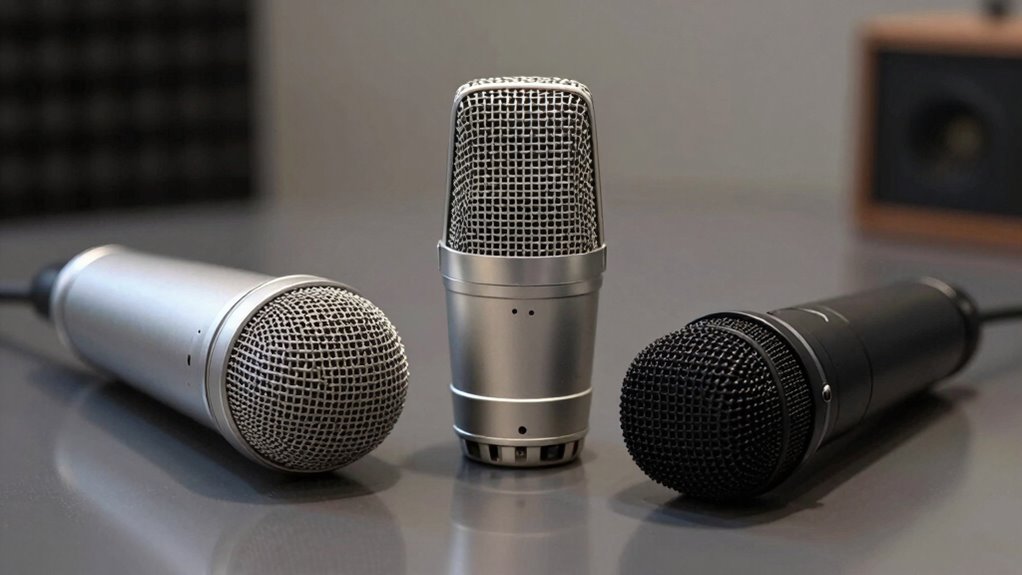
Choosing the right microphone depends on your needs. Dynamic mics are tough, handle loud sounds, and are great for live gigs or rough handling. Condenser mics capture detailed vocals and instruments, ideal for studio setups. Ribbon mics produce warm, natural tones perfect for studio vocals but are fragile and best used indoors. Understanding these differences will help you pick the best microphone for your situation—if you want to know more, keep exploring.
Key Takeaways
- Dynamic microphones are ideal for live sound and high SPL environments due to durability and robust build.
- Condenser microphones excel in studio settings for capturing vocals and detailed acoustic instruments with broad frequency response.
- Ribbon microphones provide warm, natural tone, best suited for controlled studio environments and delicate recordings.
- Choose dynamic mics for rough handling and loud sources; use condensers for clarity in controlled, quiet spaces; ribbons for studio warmth.
- Proper microphone selection depends on environment, sound source, and desired sound quality, aligning each type’s strengths accordingly.
What Are the Main Types of Microphones and How Do They Work?

There are four main types of microphones: dynamic, condenser, ribbon, and lavalier. To understand how they work, it helps to explore their microphone history and technological evolution. Dynamic microphones, known for durability, evolved from early moving-coil designs, making them ideal for loud sounds. Condenser microphones, which rely on capacitance changes, emerged with advances in electronics, offering greater sensitivity and accuracy. Ribbon microphones, developed in the mid-20th century, use thin metal ribbons to capture sound, providing a warm tone. Lavalier microphones, small and discreet, were created with miniaturization in mind, allowing hands-free use. Each type’s development reflects ongoing technological evolution, shaping how we capture audio in various settings today.
Comparing Dynamic, Conductor, and Ribbon Microphones: Features and Uses
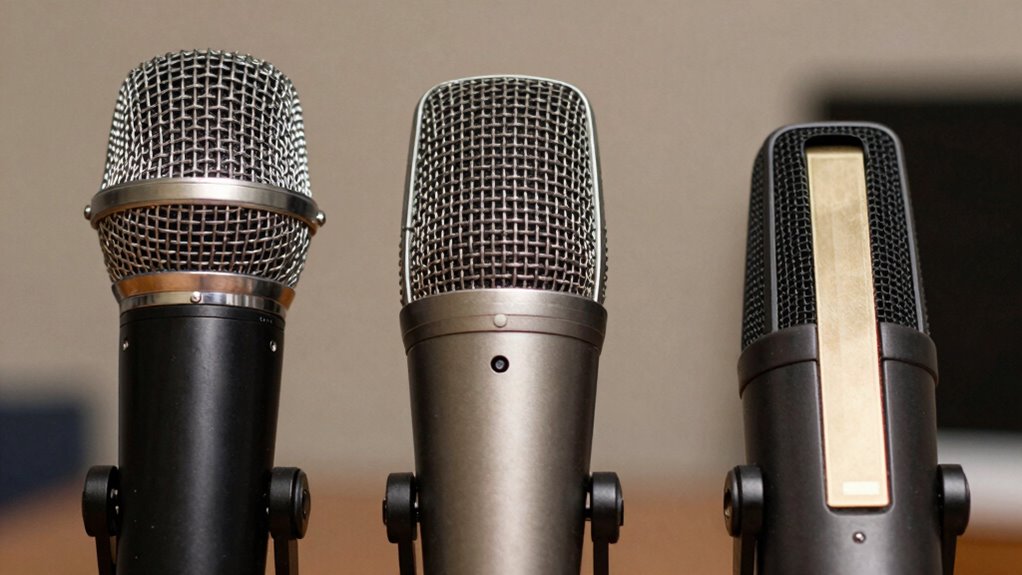
Understanding the differences in sound quality, durability, and ideal uses helps you choose the right microphone for any situation. Dynamic, conductor, and ribbon mics each have unique strengths and limitations that impact their performance. By comparing these key points, you’ll be better equipped to pick the perfect mic for your needs. Additionally, considering the application environment can influence which type of microphone will deliver the best results.
Sound Quality Differences
When comparing the sound quality of different microphone types, it’s important to recognize how each design influences their tonal character and suitability for various applications. Dynamic microphones typically produce a robust, mid-focused sound with less sensitivity, making them ideal for loud sources like drums or guitar amps. Condenser microphones offer a broader frequency response and greater detail, capturing vocals and acoustic instruments with clarity and warmth. Ribbon microphones deliver a smooth, natural tone with a gentle high end, often favored for studio vocals and certain instruments. Your choice can also be influenced by microphone aesthetics, which may appeal visually based on style and build quality. Additionally, brand reputation plays a role, as reputable brands tend to guarantee consistent sound quality and durability, helping you select a microphone that aligns with your desired audio profile. Sound quality differences are also affected by the microphone’s internal components and construction, which directly impact their tonal characteristics and performance.
Ideal Application Scenarios
Choosing the right microphone depends heavily on the specific application, as each type offers unique features suited to different scenarios. For studio recording, condenser microphones excel at capturing detailed vocals and instruments with clarity. Dynamic microphones are ideal for live performances and loud sound sources, thanks to their durability and ability to handle high SPLs. Ribbon microphones shine in broadcast applications, providing warm, natural sound that’s perfect for voiceovers and interviews. Additionally, wave and wind conditions can significantly impact microphone performance, making the choice of microphone type crucial depending on the environment.
Durability and Portability
While all three microphone types—dynamic, ribbon, and condenser—offer distinct advantages, their durability and portability vary considerably. Dynamic microphones are known for their exceptional microphone durability, making them ideal for live performances and rough handling. They are typically built with sturdy casings, which enhance their portability benefits, allowing you to transport them easily without worry. Ribbon microphones, however, tend to be more delicate because of their thin aluminum ribbons; they require careful handling and are less suited for on-the-go use. Condenser microphones, while offering high sensitivity, often have more fragile internal components, making them less portable and needing careful storage. Your choice depends on whether durability or portability benefits are more critical for your specific recording or performance needs. Additionally, Free Floating designs can influence how easily a microphone can be moved or positioned during use, impacting overall portability.
How to Choose the Right Microphone for Your Recording Needs
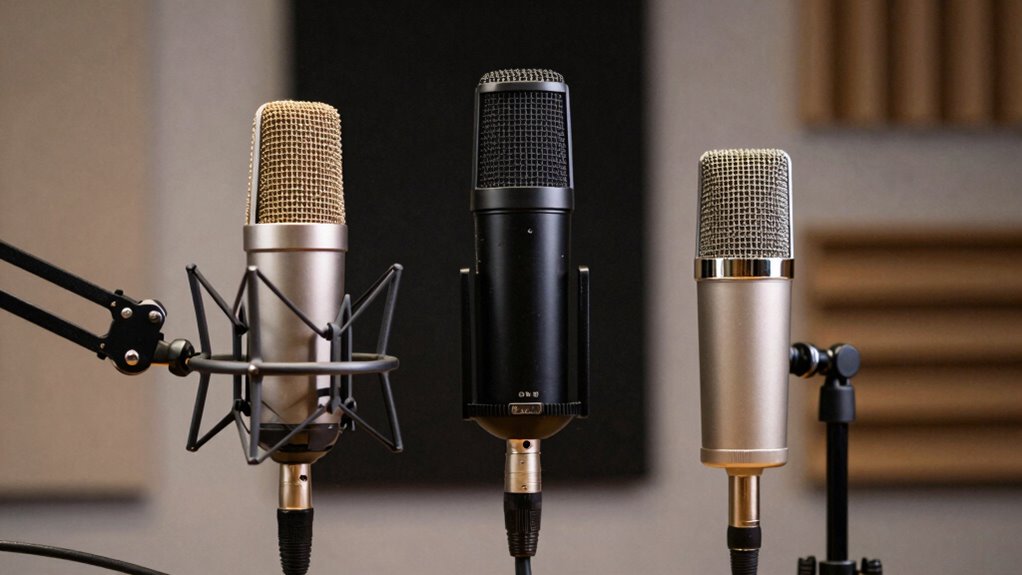
Selecting the right microphone depends on understanding your recording goals and environment. Consider what you’re recording, where you’ll be recording, and the sound quality you want. Proper microphone placement is vital for capturing clear audio, while sound isolation helps minimize background noise. To choose effectively:
- Identify whether you need a microphone that excels in capturing vocals, instruments, or ambient sounds
- Think about your recording space—small, treated rooms or noisy environments
- Determine if you require focused sound pickup or a more natural, open sound
- Recognize how microphone type impacts the overall sound profile and suitability for different applications
This helps you select a microphone that fits your needs, whether for studio work or live recording. Remember, the right choice depends on balancing your environment and desired sound, ensuring your recordings are crisp and professional.
Best Microphones for Vocals, Instruments, and Live Sound

When it comes to capturing the best sound, the right microphone can make all the difference across vocals, instruments, and live performances. For vocals, a condenser microphone offers clarity and detail, but it requires careful microphone maintenance to prevent damage from moisture or dust. Instruments like drums and guitar amps often benefit from dynamic mics due to their durability and ability to handle high sound pressure levels. In live sound setups, choosing microphones with sturdy builds and reliable audio cable types—such as XLRs—ensures consistent performance. Proper microphone maintenance, including regular cleaning and secure connections, helps prevent unwanted noise or signal loss. Selecting the right microphone for each situation maximizes sound quality and minimizes technical issues during performances.
When and How to Use Ribbon Microphones Effectively

You should use ribbon microphones in controlled recording environments where their warm, natural sound shines. Position them carefully near vocals or instruments to avoid damage and capture the best tone. Keep handling gentle and follow placement tips to guarantee ideal results. Additionally, using energy-efficient European cloud servers can support sustainable recording practices by reducing environmental impact.
Suitable Recording Environments
Ribbon microphones excel in controlled environments where their warm, natural sound can shine without interference. They thrive in studio acoustics, where you can manage reflections and background noise, capturing smooth, rich tones. However, they’re less suitable for outdoor recording due to their delicate construction and sensitivity to wind and humidity. To maximize their potential, use them in quiet spaces with minimal ambient noise and good sound isolation. Keep in mind:
- Maintain stable, low-vibration environments to prevent rattling
- Use wind protection when recording outdoors
- Position carefully to avoid plosive sounds and unwanted reflections
- Understanding textile line principles can help optimize microphone placement for better sound quality.
Voice and Instrument Use
To get the most out of ribbon microphones for vocals and instruments, achieving their best performance requires understanding their unique characteristics and ideal placement. Ribbon mics typically have bidirectional or figure-eight polar patterns, making them excellent for capturing sound from the front and rear while rejecting off-axis noise. This quality suits studio settings where control over ambient sounds is essential. When using wireless microphone systems, ribbon mics aren’t common due to their fragility, but if you adapt them, keep in mind their sensitivity to wind and plosives. For vocals, position the mic slightly above or in front of the singer’s mouth, aiming for the sweet spot that highlights warmth and detail. Proper placement ensures you leverage their smooth response and natural tone, making ribbon mics ideal for vocals and delicate instruments.
Handling and Placement Tips
Because ribbon microphones are delicate and sensitive, handling them with care is essential to guarantee peak performance and longevity. Proper microphone placement helps capture the desired sound while minimizing handling noise.
To use ribbon mics effectively:
- Keep the microphone steady and avoid sudden movements to prevent handling noise.
- Position it close to the sound source for better clarity and sensitivity.
- Use a shock mount or stand to reduce vibrations and unwanted noise transfer.
Budget Tips: Picking the Right Microphone Without Overspending

Finding the right microphone on a budget doesn’t mean you have to sacrifice quality. There are plenty of cost-effective options that deliver solid performance without breaking the bank. Look for beginner-friendly choices like condenser mics for vocals or affordable dynamic mics for live instruments. These options often come at a lower price point but still provide good sound clarity. Consider brands known for offering reliable entry-level gear, and read reviews to guarantee durability and sound quality. You don’t need the most expensive model to get professional results—just choose wisely based on your specific needs. By focusing on budget-friendly options that suit your setup, you’ll save money while still capturing high-quality audio.
Frequently Asked Questions
How Do Microphone Polar Patterns Affect Recording Quality?
Your microphone’s polar patterns directly influence sound pickup and recording quality. For example, cardioid patterns focus on sounds in front of the mic, reducing background noise, while omnidirectional patterns capture sound from all directions for a natural ambiance. Choosing the right polar pattern helps you control which sounds are prioritized, minimizing unwanted noise and ensuring clearer, better-quality recordings tailored to your environment.
Can I Use a Dynamic Mic for Studio Vocals?
Yes, you can use a dynamic mic for studio vocals. They offer good vocal warmth and excel at ambient noise rejection, making them ideal if your recording environment isn’t perfectly soundproof. Dynamic mics are durable and handle high sound pressure levels well, providing a focused, natural vocal tone. While condenser mics are often preferred for studio vocals, a quality dynamic mic can still deliver clear, warm recordings in less-than-ideal settings.
What Maintenance Is Required for Ribbon Microphones?
You should regularly clean the ribbon capsule gently with a soft brush or compressed air to prevent dust buildup. Store your ribbon microphone in a dry, cool place, ideally in a protective case, to avoid damage from humidity or sudden impacts. Avoid touching the ribbon directly, and don’t expose it to extreme temperatures. Proper maintenance guarantees your ribbon microphone stays in excellent condition and provides high-quality sound over time.
Are There Wireless Options for Each Microphone Type?
Ever wondered if wireless options exist for your microphone type? Yes, they do! Many dynamic, condenser, and ribbon microphones now come with wireless compatibility, making setups more flexible. You should consider battery life, though, as it varies across models. Wireless mics offer convenience, but guarantee your chosen model matches your needs for sound quality and durability. Wouldn’t it be great to move freely without cords?
How Do Environmental Factors Influence Microphone Selection?
Environmental factors greatly influence your microphone choice. If you’re recording outdoors or in noisy settings, you should pick a dynamic mic because it handles ambient noise and wind better, reducing unwanted sound. For indoor or controlled environments, a condenser mic captures detail without interference. Always consider ambient noise levels and outdoor recording conditions; selecting the right mic guarantees clear audio, whether you’re tackling bustling streets or quiet studios.
Conclusion
Choosing the right microphone is like selecting the perfect lens for your vision—each type captures a unique perspective. Dynamic mics are your rugged storytellers, condenser mics reveal delicate nuances, and ribbon mics add warmth and depth. By understanding their symbolism—strength, clarity, and richness—you craft your soundscape intentionally. When you align your needs with these qualities, your recordings become a harmonious symphony, transforming technical choices into a reflection of your artistic soul.