
To keep your home studio efficient, use dedicated power conditioners to prevent surges, and organize cables with Velcro straps or sleeves to reduce interference and wear. Label outlets and cables for easy troubleshooting, and separate power from audio lines to maintain sound quality. Incorporate backup options like UPS units to protect your gear during outages. Proper setup enhances safety, reliability, and sound clarity — learn more to optimize your studio environment further.

Get audio and creator gear delivered free — and shop member deals
- Fast, free delivery on millions of items
- Access to Prime Big Deal Days deals on October 6–7
- Prime Video, Amazon Music and more included
Key Takeaways
- Use dedicated power conditioners and surge protectors to ensure clean, stable power for studio equipment.
- Organize cables with ties or sleeves, keeping power, audio, and data cables separate to prevent interference.
- Label all cables and outlets for quick troubleshooting and efficient setup.
- Implement backup solutions like uninterruptible power supplies (UPS) to protect against power outages.
- Maintain a tidy, organized rack setup to improve safety, workflow, and equipment longevity.
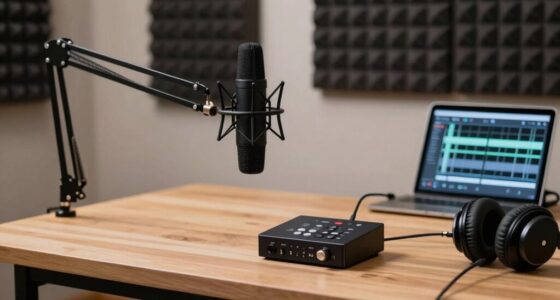
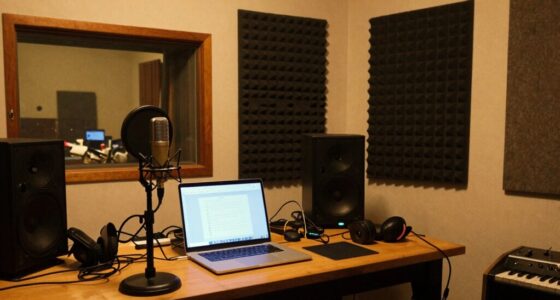
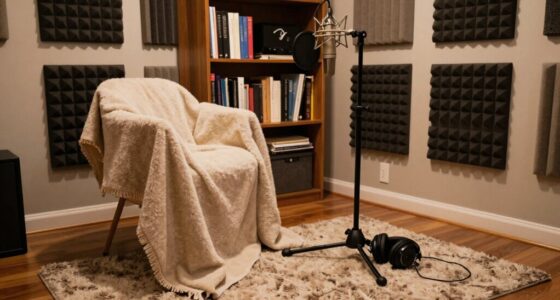
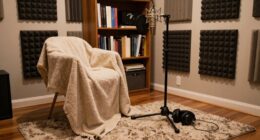
Setting up a home studio involves more than just choosing the right gear; effective rack power, cable management, and backup solutions are indispensable for a smooth and professional workflow. When it comes to creating a high-quality sound environment, soundproofing techniques and acoustic treatment play critical roles. Soundproofing helps block external noise from entering your space, guaranteeing your recordings are clean and free from unwanted interruptions. Acoustic treatment, on the other hand, focuses on controlling the sound within your room—reducing echoes, minimizing standing waves, and enhancing clarity. Combining these techniques creates an ideal listening and recording environment, making it easier to make accurate mixes and recordings. Properly addressing room acoustics is crucial for achieving optimal sound quality and ensuring your setup performs at its best.
Effective studio setup requires soundproofing, acoustic treatment, and organized power and cable management for optimal recording quality.
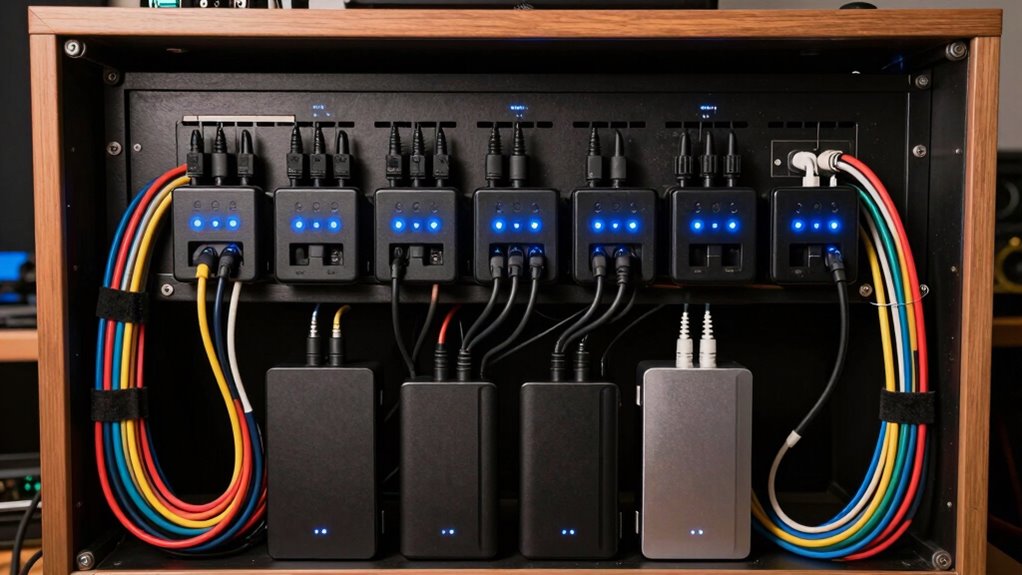
Proper rack power setup is essential to keep your equipment running reliably and safely. Using a dedicated power conditioner or surge protector helps prevent power surges and electrical noise, which can cause equipment malfunctions or degrade audio quality. Rack-mounted power strips with individual outlets allow you to organize your gear efficiently, minimizing the risk of accidental unplugging or electrical issues. It’s a good idea to label your cables and outlets so you can quickly troubleshoot or make adjustments as your setup evolves. This not only protects your equipment but also contributes to an organized, professional workspace. Additionally, understanding power distribution can help optimize your setup for safety and efficiency. Incorporating power management solutions can further enhance your system’s stability by reducing potential power fluctuations.
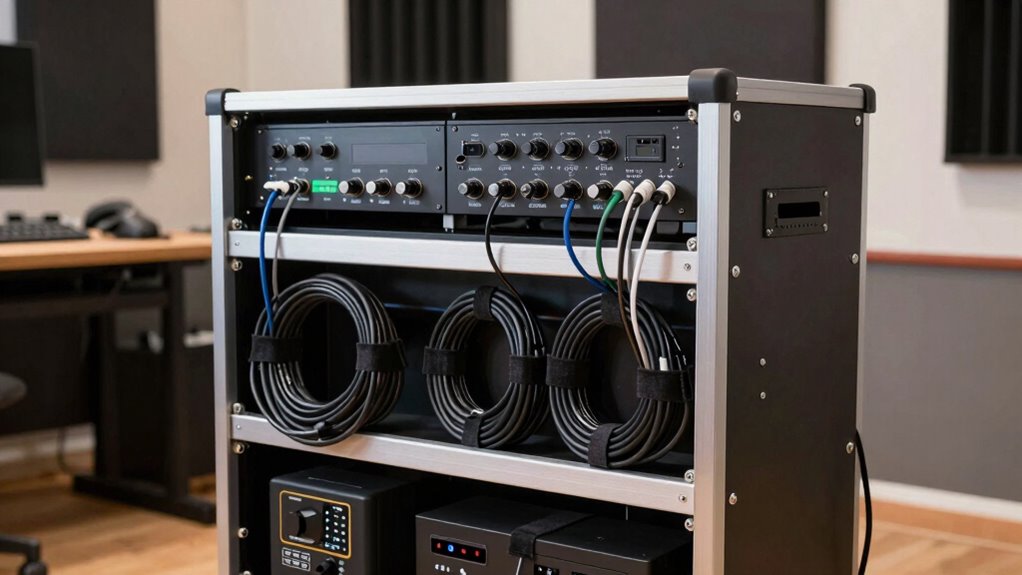
Cable management is often overlooked but is indispensable for maintaining a clutter-free environment and ensuring safety. Use cable ties, Velcro straps, or cable sleeves to bundle cords neatly along racks or walls. Keep power cables separate from audio and data cables to prevent electromagnetic interference, which can introduce noise into your recordings. Proper cable management reduces wear and tear on your cables and connectors, extending their lifespan. It also makes it easier to identify and replace faulty cables, saving you time during setup and troubleshooting. A well-organized cabling system can significantly improve your workflow and reduce setup time.
rack power conditioner for studio
As an affiliate, we earn on qualifying purchases.
As an affiliate, we earn on qualifying purchases.
Frequently Asked Questions
How Do I Prevent Electrical Noise From Affecting My Audio Equipment?
To prevent electrical noise from affecting your audio equipment, start by eliminating ground loops, which cause humming sounds, and guarantee all devices share a common ground. Use EMI shielding around cables and equipment to block electromagnetic interference. Keep power cables separate from audio cables, and consider using power conditioners or isolation transformers. Regularly check connections, and avoid running cables near fluorescent lights or other sources of EMI to maintain clean audio signals.
What Are the Best Materials for Durable Cable Management?
You should choose durable materials like high-quality cable ties and cable sleeves to guarantee lasting cable management. Some cable ties are made from UV-resistant, heavy-duty plastic, preventing cracking over time. Cable sleeves, often made from nylon or braided fabric, protect cables from abrasion and tangling. These materials are strong, flexible, and reliable, helping you organize your studio efficiently while withstanding daily wear and tear.
How Often Should I Back up My Home Studio Data?
You should back up your home studio data regularly—ideally, at least once a week or after any significant project completion. Prioritize data redundancy by using multiple backup methods, such as external drives and cloud storage. Cloud storage offers easy, off-site backups, protecting your work from hardware failures or accidents. Consistency is key, so set a schedule to guarantee your data remains safe and up-to-date.
Can I Use a Regular Surge Protector for Studio Equipment?
You shouldn’t use a regular surge protector for studio equipment. Imagine a musician plugging their expensive microphone and audio interface into a cheap surge protector, risking damage from power surges or electrical noise. Instead, opt for a surge protector with power filtering. It protects your gear from voltage spikes and reduces electrical noise, ensuring clean sound quality and preventing costly repairs. Reliable power management keeps your studio running smoothly.
What’s the Ideal Airflow Setup for Rack-Mounted Gear?
To optimize airflow for your rack-mounted gear, you should implement effective ventilation strategies like installing vent panels or fans at the top and bottom of your rack. Proper airflow ensures heat dissipation, preventing overheating. Keep cables organized to avoid airflow blockages, and consider adding blanking panels to fill unused spaces. These steps greatly enhance ventilation strategies, promoting consistent airflow optimization and prolonging the lifespan of your equipment.
cable management sleeves for audio cables
As an affiliate, we earn on qualifying purchases.
As an affiliate, we earn on qualifying purchases.
Conclusion
As you organize your home studio, it’s no coincidence that everything falls into place—your gear, cables, and power setup working seamlessly. When you prioritize rack power, tidy cabling, and reliable backups, your creative flow stays uninterrupted. Just like discovering that perfect spot for your favorite instrument, these essentials create a foundation where ideas can flourish effortlessly. With everything in sync, you’ll find your studio becoming the inspiring space you always envisioned.
uninterruptible power supply for home studio
As an affiliate, we earn on qualifying purchases.
As an affiliate, we earn on qualifying purchases.
rack mounted power strips with individual outlets
As an affiliate, we earn on qualifying purchases.
As an affiliate, we earn on qualifying purchases.
Halloween Picks
halloween
As an affiliate, we earn on qualifying purchases.