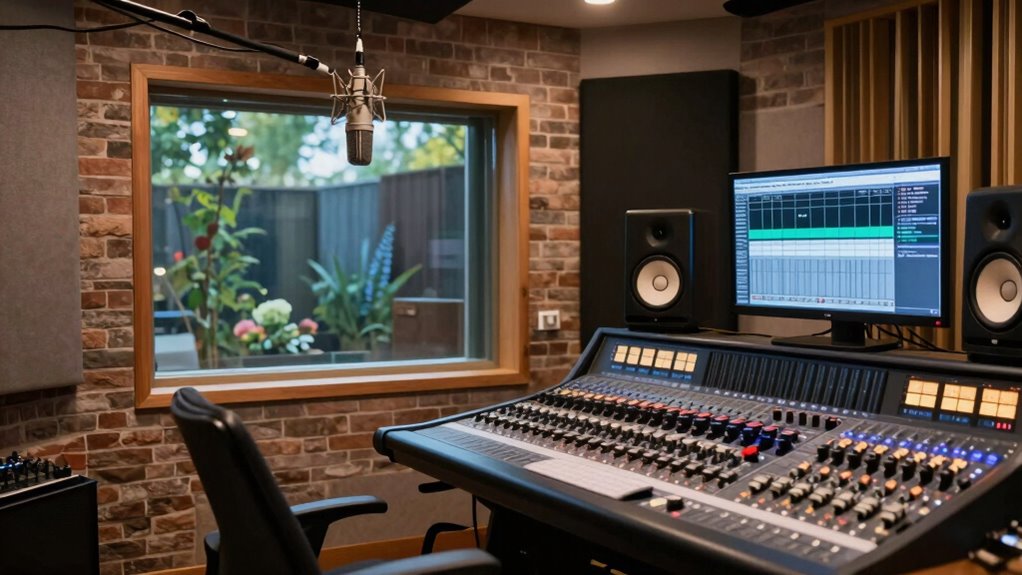

When choosing between room reverb and plugin reverb, consider whether you want an authentic, natural sound or maximum control. Room reverb captures real space acoustics, offering organic depth perfect for live or organic recordings. Plugin reverb gives you precise adjustments, ideal for studio work where you want tailored effects. Your choice depends on your project’s needs — if you keep exploring, you’ll discover how to match the right reverb for each situation.

Get audio and creator gear delivered free with Prime
- Fast, free delivery on millions of items
- Prime Video, Amazon Music and more included
- Member-only deals all year
Key Takeaways
- Choose room reverb for authentic, natural ambiance and real space acoustics, ideal for capturing genuine atmosphere.
- Opt for plugin reverb when precise control and customization of parameters are necessary in studio or live settings.
- Use natural room reverb to add organic depth in live performances and recordings with minimal post-processing.
- Select plugin reverb for flexibility, quick adjustments, and simulating various environments during mixing.
- Consider space constraints and desired control level to determine whether natural room or digital plugin reverb best fits your project.
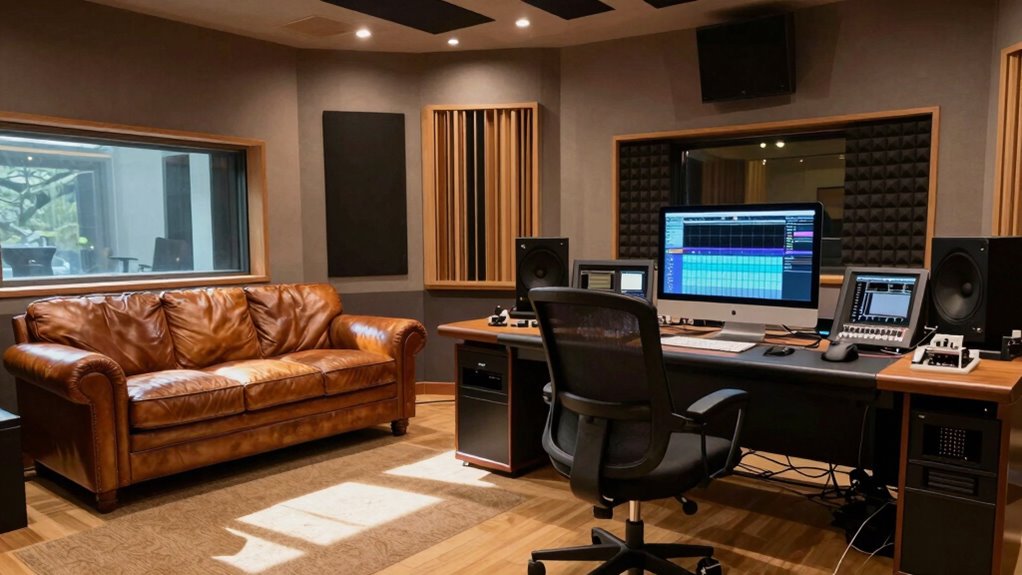
When it comes to adding reverberation to your recordings, you have two main options: capturing the natural sound of a real room or using a digital reverb plugin. Each method offers unique advantages, especially when considering applications like live sound or studio mixing. If your goal is to produce a natural, authentic ambiance, recording in a well-chosen space can be an excellent choice. Live sound engineers often rely on room reverb because it provides a sense of space that’s difficult to replicate digitally. When performing live, capturing the actual acoustics of the venue helps preserve the live atmosphere for the audience, making the sound feel more immersive and genuine. During studio mixing, some producers prefer using room reverb to add depth and character to individual tracks, especially vocals or drums, giving the production a more organic feel. The natural reverberations from a real space can be difficult to precisely control but, with proper microphone placement and a good understanding of the room’s acoustics, you can achieve a rich, lively sound that enhances your mix. Additionally, understanding the room’s acoustic properties allows you to optimize how the reverb interacts with your recordings for the best results.
Conversely, digital reverb plugins give you unmatched flexibility and control. They’re invaluable during studio mixing, where precise adjustments are often necessary to fit a track perfectly into the overall mix. Using plugins, you can easily tweak parameters like decay time, pre-delay, and damping, tailoring the reverb to match your desired sonic aesthetic. For live sound setups, plugins are also beneficial, especially when working with sound systems that require quick adjustments. They allow you to simulate various room sizes and acoustic environments without physically changing your space. This flexibility means you can experiment with different reverb styles to find one that complements your mix or live performance, all while maintaining consistency across multiple shows or recordings.
Choosing between room reverb and plugin reverb depends on your specific needs, workflow, and the sound you want to achieve. If authenticity and natural ambiance are your top priorities, capturing room reverb during live sound or recording sessions might be the way to go. However, if you need precise control, quick adjustments, or a variety of effects, digital plugins are more practical and versatile. Both approaches have their place; understanding their strengths helps you decide which fits best with your project, whether you’re working on live sound setups that demand real-space authenticity or studio mixes that benefit from detailed, customizable effects.
As an affiliate, we earn on qualifying purchases.
Frequently Asked Questions
Can Room Reverb Be Recorded Directly Into a Track?
Yes, you can record room reverb directly into a track by capturing the live ambiance and natural decay of the space. To do this, position a microphone in the room while performing or recording, ensuring it picks up the subtle reflections and decay naturally occurring. This method creates an authentic reverb effect that’s embedded in the original recording, making your track sound more spacious and immersive.
How Do I Match Plugin Reverb to a Specific Room Sound?
To match plugin reverb to a specific room sound, start by analyzing the room acoustics and capturing its impulse response. Use a convolution reverb plugin that allows you to load this impulse response, which replicates the room’s unique characteristics. Adjust parameters like decay and early reflections to fine-tune the reverb, ensuring it closely resembles the original space. This approach creates a realistic, seamless blend with the room’s natural sound.
Is It Better to Use a Real Room or Plugin for Vocals?
Using a real room for vocals can provide natural ambiance and authentic sound, especially if it has good acoustic treatment. However, plugins offer flexibility, consistency, and easy adjustments to match your desired space. If you want a specific acoustic environment without the hassle of treatment, plugins are a practical choice. Ultimately, choose based on your needs for realism, control, and the quality of your recording space.
How Does Room Size Affect Reverb Characteristics?
Room size markedly influences reverb characteristics by altering room acoustics. Larger rooms create longer reverb tails and a sense of spaciousness, while smaller spaces produce shorter, more intimate reverb. The size influence affects how reflections blend, impacting clarity and mood. When choosing a space, consider your desired reverb effect; bigger rooms add lushness, whereas smaller rooms offer tighter, more controlled reverb for your vocals.
Can Combining Room and Plugin Reverb Improve a Mix?
Layering reverb with both room and plugin reverb can truly enhance your mix. Creative blending allows you to add depth, space, and dimension, making your sounds more immersive. By combining natural room reverb with tailored plugin effects, you create a rich, dynamic environment that suits your track’s mood. Don’t be afraid to experiment—this approach gives you control, flexibility, and a more polished, professional sound.
As an affiliate, we earn on qualifying purchases.
Conclusion
When choosing between room reverb and plugin reverb, remember that over 60% of professional producers prefer using plugins for their flexibility and control. However, nothing beats the natural warmth of a real room for authentic sound. Ultimately, your choice depends on your project’s needs and your creative vision. Experiment with both to discover what best suits your space and style—you might find that combining them creates the perfect ambiance for your mix.
As an affiliate, we earn on qualifying purchases.
acoustic treatment for recording rooms
As an affiliate, we earn on qualifying purchases.
As an affiliate, we earn on qualifying purchases.
Fall Picks
fall essentials
As an affiliate, we earn on qualifying purchases.