
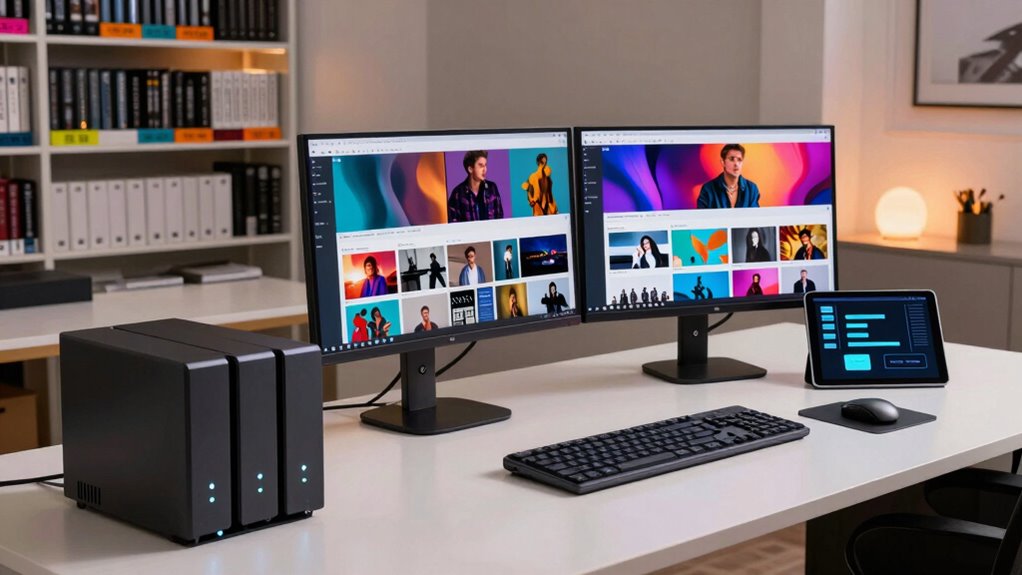

To manage your growing media library effectively, you should implement a robust storage and backup plan. Use cloud synchronization for real-time backups and quick access across devices. Combine this with multiple backup layers, like external drives and off-site storage, for added security. Automate your backups to save time and reduce errors. Regularly test your recovery process to guarantee files are safe. Keep evolving your system as your library expands—there’s more to learn if you keep exploring.

Get audio and creator gear delivered free with Prime
- Fast, free delivery on millions of items
- Prime Video, Amazon Music and more included
- Member-only deals all year
Key Takeaways
- Implement scalable cloud storage solutions combined with local backups to accommodate increasing media files efficiently.
- Use multiple backup layers, including external drives and cloud synchronization, for enhanced data redundancy.
- Automate backups with scheduled syncing to ensure consistent, up-to-date media protection.
- Regularly verify backup integrity through testing restores to prevent data loss.
- Plan for future storage needs to avoid costly migrations and support long-term media growth.
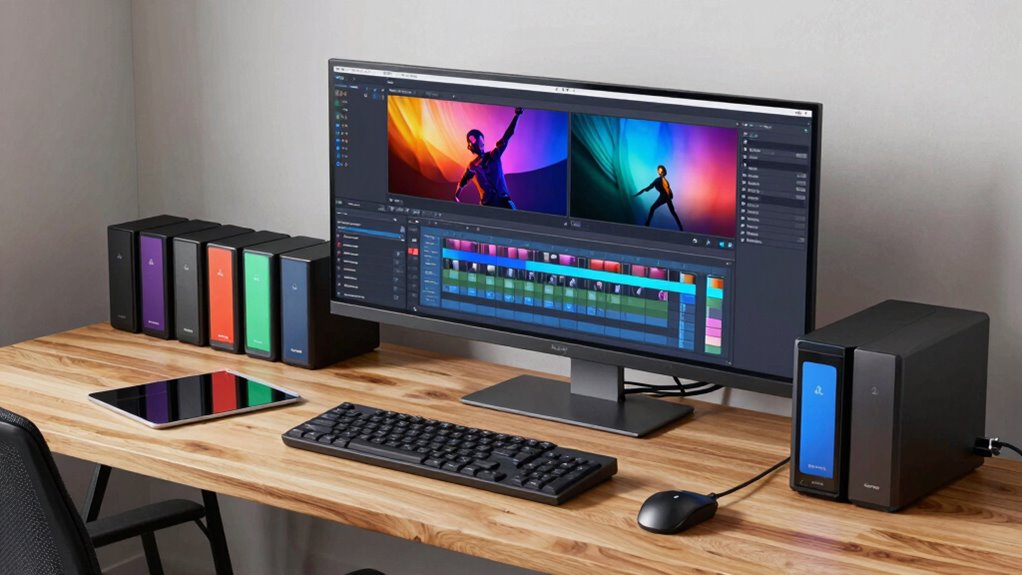
As your media library expands, effective storage and backup planning become essential to safeguard your creative work and guarantee seamless access. You rely on your files daily, whether it’s images, videos, or audio projects, so guaranteeing they’re stored securely and accessible at all times is crucial. Cloud synchronization is a vital component of this strategy. By syncing your files to a cloud service, you create a real-time backup that automatically updates whenever you make changes. This not only prevents data loss but also enables you to access your work from multiple devices effortlessly. Choose a reliable cloud provider that offers enough storage capacity and fast upload/download speeds to match your workflow. This way, you avoid the hassle of manual backups and minimize the risk of losing recent edits during hardware failures or accidental deletions. Implementing a cloud-based backup system ensures your files are protected even if your physical devices encounter issues.
Redundancy strategies are equally important as your media library grows. Instead of relying on a single storage solution, you should implement multiple backup layers. For example, you could keep your primary files on an external hard drive and create periodic backups to a cloud service. Additionally, consider maintaining a secondary backup on a different physical device or in a different location. This approach ensures that if one storage medium fails—such as a corrupted drive or a stolen device—you still have access to your files elsewhere. Furthermore, regularly testing your backups by restoring a few files helps confirm that your redundancy strategies work effectively. Remember, the goal isn’t just to store your media but to be able to recover it quickly when needed. Incorporating backup verification techniques can help ensure your data remains recoverable over time.
As your library continues to grow, setting clear organizational systems will streamline your storage and backup processes. Use consistent naming conventions, folder hierarchies, and tagging to keep track of your files. Automate backups whenever possible—most cloud services provide options for scheduled backups or syncing. This automation reduces the chance of forgetting to back up recent work and ensures your media remains protected without extra effort. Also, consider the long-term sustainability of your storage setup. As media files tend to be large, investing in scalable storage solutions now will save you from costly migrations later. Combining cloud synchronization with robust redundancy strategies creates a resilient infrastructure that adapts to your evolving needs, safeguarding your creative output and giving you peace of mind.
external hard drives for media backup
As an affiliate, we earn on qualifying purchases.
As an affiliate, we earn on qualifying purchases.
Frequently Asked Questions
How Often Should I Review My Storage and Backup Plans?
You should review your storage and backup plans at least quarterly. Regular check-ins guarantee your cloud integration remains seamless, and your automation strategies stay effective. As your media library grows, updates might be needed to optimize space and security. Staying proactive helps prevent data loss and keeps your workflow smooth. Set reminders to evaluate your plans regularly, and adapt as your needs evolve to maintain reliable backups and efficient storage.
What Are the Best Tools for Managing Large Media Libraries?
Think of managing your media library like tending a thriving garden. You’ll want tools that streamline this process. For this, consider software with cloud synchronization to keep everything accessible and secure, plus metadata tagging to organize your media efficiently. Programs like Adobe Bridge or ACDSee offer these features, making it easier to find what you need quickly. These tools help you nurture your creative collection and keep it flourishing.
How Can I Ensure Data Security in My Backups?
To guarantee data security in your backups, you should use strong encryption protocols to protect your files both during transfer and storage. Additionally, choose cloud services with robust cloud security measures, including multi-factor authentication and regular security audits. Keep your encryption keys secure and updated, and regularly review your security settings. These steps help prevent unauthorized access and keep your growing media library safe from threats.
What Are Cost-Effective Options for Expanding Storage?
To expand your storage cost-effectively, consider cloud integration, which offers scalable options without hefty upfront costs. Look for hardware with durability, like robust external drives or network-attached storage (NAS), to guarantee longevity. Combining cloud solutions with durable hardware gives you flexibility and resilience, saving money over time. Regularly evaluate your storage needs to avoid overpaying, and leverage free or tiered plans offered by cloud providers for initial or ongoing savings.
How Do I Organize Media Files for Easy Access and Retrieval?
Think of organizing your media files like building a well-structured library. Use a clear folder hierarchy to divide files into categories and projects. Add metadata tagging to each file for quick searches later on. This way, you can easily access and retrieve your media without digging through chaos. Keep your system consistent, rename files clearly, and update tags regularly to stay organized as your collection grows.
cloud storage services for creators
As an affiliate, we earn on qualifying purchases.
As an affiliate, we earn on qualifying purchases.
Conclusion
As your media library blossoms like a vibrant garden, your storage and backup plan becomes the sturdy trellis supporting your creative vines. By staying proactive and organized, you’ll guarantee your precious memories and projects are protected from the storms of data loss. Think of your system as a fortress, guarding your artistic treasures against chaos. With careful planning, your media empire will flourish, allowing your creativity to grow wild and free without fear.
automatic backup software for media files
As an affiliate, we earn on qualifying purchases.
As an affiliate, we earn on qualifying purchases.
As an affiliate, we earn on qualifying purchases.
Halloween Picks
halloween
As an affiliate, we earn on qualifying purchases.