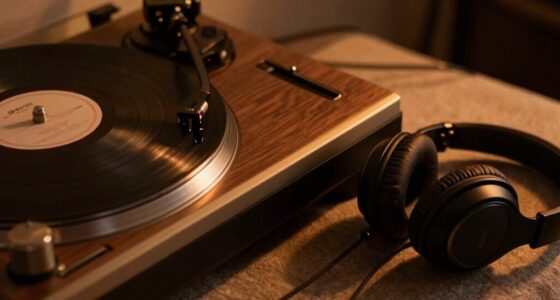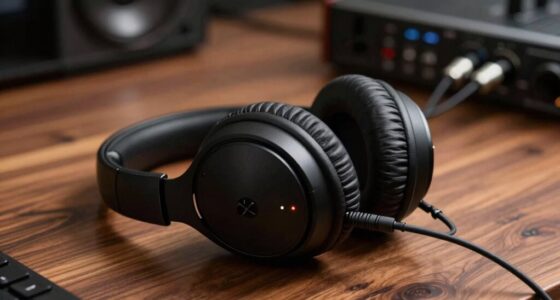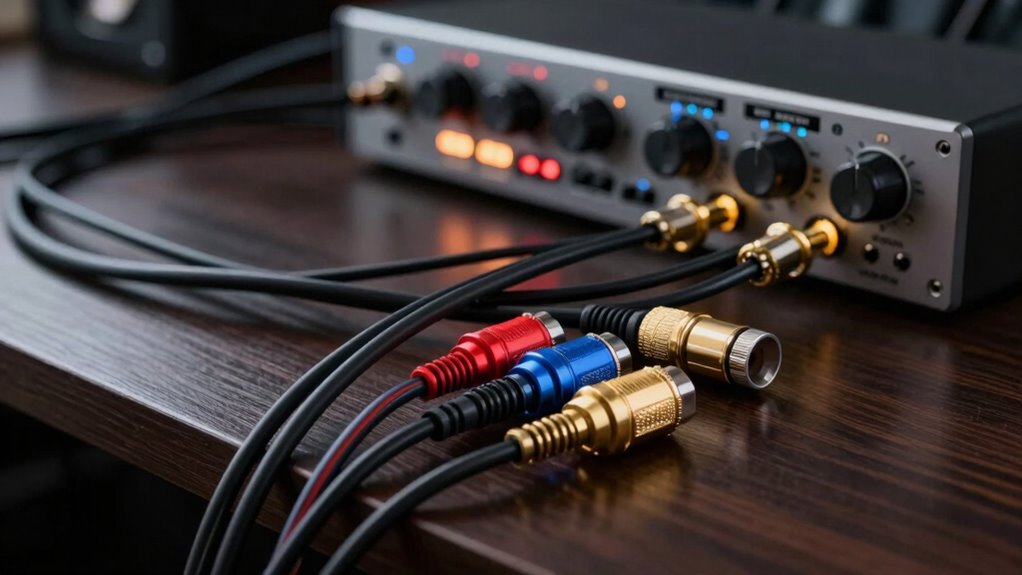
Many claims about audio cables are exaggerated. In reality, factors like your equipment setup, room acoustics, and proper grounding matter far more than expensive cables. While good shielding and quality materials help, poor connections or interference can have a bigger impact. Avoid focusing solely on cable brand or cost. If you want to improve sound, paying attention to system and environment matters more—stay tuned to learn what truly makes a difference.
Key Takeaways
- High-quality cables can improve sound only if interference, shielding, or connectivity issues are present; otherwise, their impact is minimal.
- Proper equipment setup and room acoustics have a greater influence on sound quality than expensive cables.
- The material and construction of cables matter more in noisy environments or long runs than in typical setups.
- Psychological perceptions of better sound from expensive cables often lack scientific backing; real improvements are subtle.
- Proper grounding, shielding, and maintenance are more critical for sound clarity than simply upgrading cable brands or aesthetics.
Do Cables Really Impact Sound Quality?
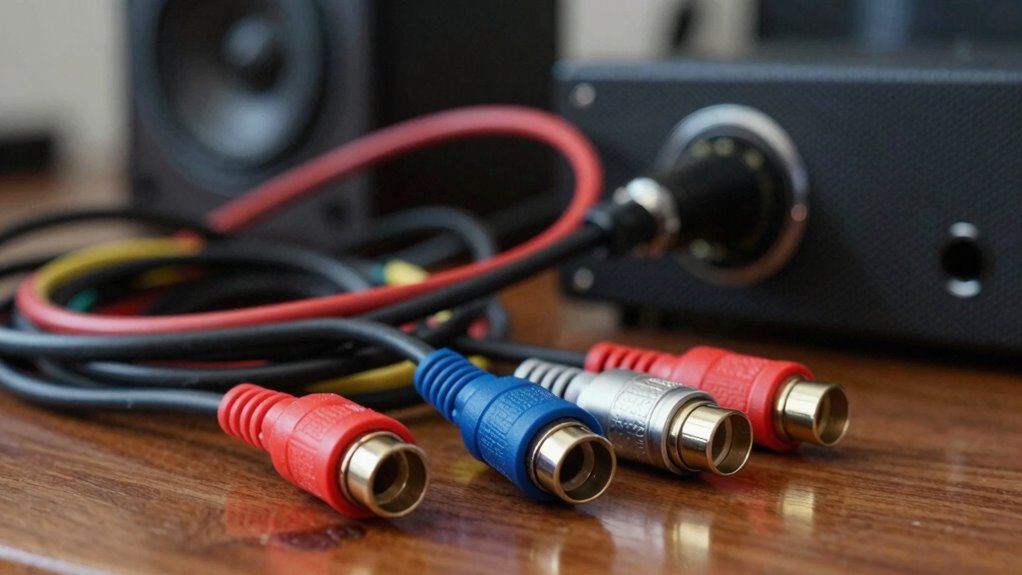
Many people believe that upgrading cables can substantially improve sound quality, but the truth is more nuanced. While shielding concerns are often emphasized, they usually have minimal impact unless you experience specific interference issues. Most audio signals are well managed with standard shielding, so upgrading won’t necessarily lead to better sound. Some enthusiasts argue that cable color perception—how the cable’s appearance influences their expectations—can affect perceived quality, but this is more about psychology than actual performance. The idea that a more expensive cable automatically produces superior sound isn’t supported by scientific evidence. Instead, focusing on proper equipment setup and maintenance offers more tangible improvements than obsessing over cable aesthetics or minor shielding differences. Additionally, Youngster Choice highlights how individual perceptions can influence opinions on audio equipment.
What Factors Actually Affect Audio Performance?
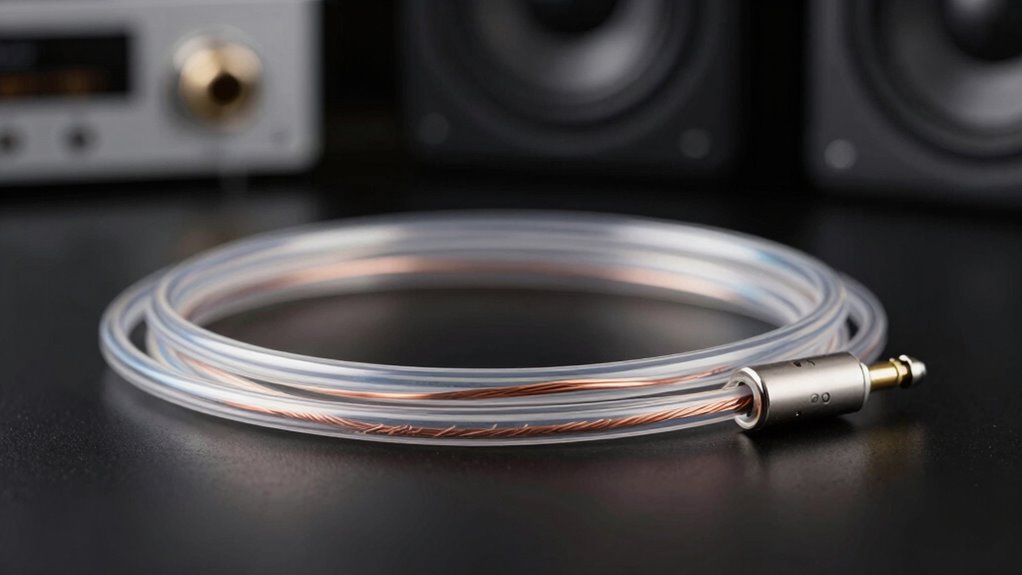
Several factors influence audio performance more profoundly than cable quality alone. First, electrical interference from nearby devices can introduce noise, degrading sound clarity. Second, poor shielding in cables makes them vulnerable to electromagnetic interference, affecting signal integrity. Third, connector corrosion over time can create poor contacts, leading to signal loss or distortion. Fourth, improper grounding can cause hum or buzz, disrupting audio purity. These issues directly impact sound quality, often more than cable material or length. By minimizing electrical interference, ensuring connectors stay clean, and maintaining proper grounding, you can considerably improve your audio experience. Focusing on these elements helps you achieve cleaner, clearer sound without obsessing over cable myths.
How Do Cable Materials and Construction Influence Sound?
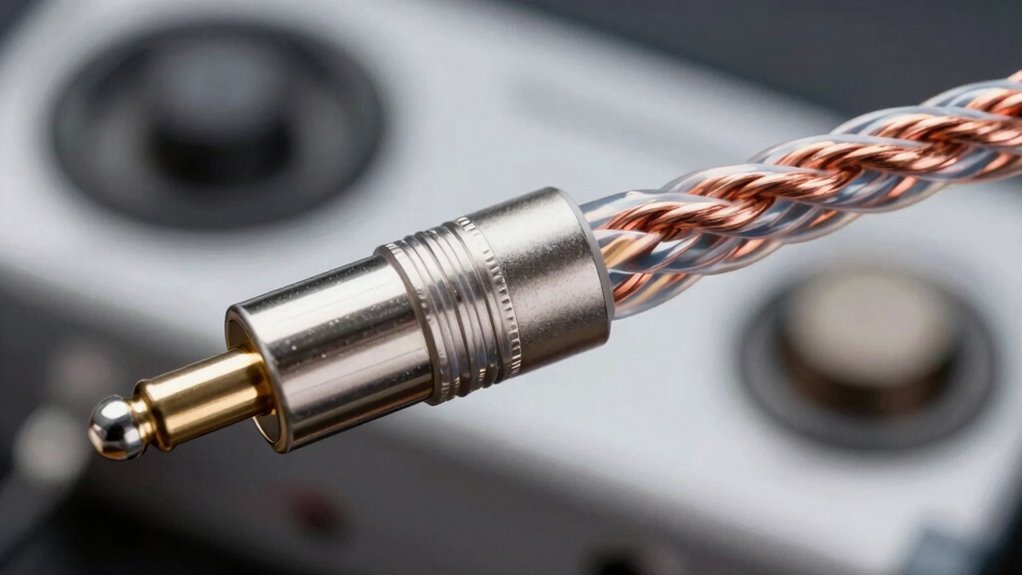
While addressing external factors like interference is important, the materials and construction of your cables also influence sound quality. Shielding effectiveness is vital; better shielding reduces electromagnetic interference, resulting in clearer audio. High-quality shielding prevents noise from external sources from affecting your signal. Conductor purity matters too—cables made with pure conductors, like oxygen-free copper, offer less resistance and more accurate sound reproduction. The construction of the cable, including insulation and connector quality, impacts signal integrity and durability. Well-constructed cables minimize signal loss and reduce distortion, ensuring your audio remains true to the original. Additionally, load calculations during setup can help ensure your cable choices match your system’s power needs, maintaining optimal sound quality. In short, choosing cables with effective shielding and high-purity conductors can enhance sound clarity, but these factors are just part of the overall picture.
Are High-End Cables Worth the Cost?
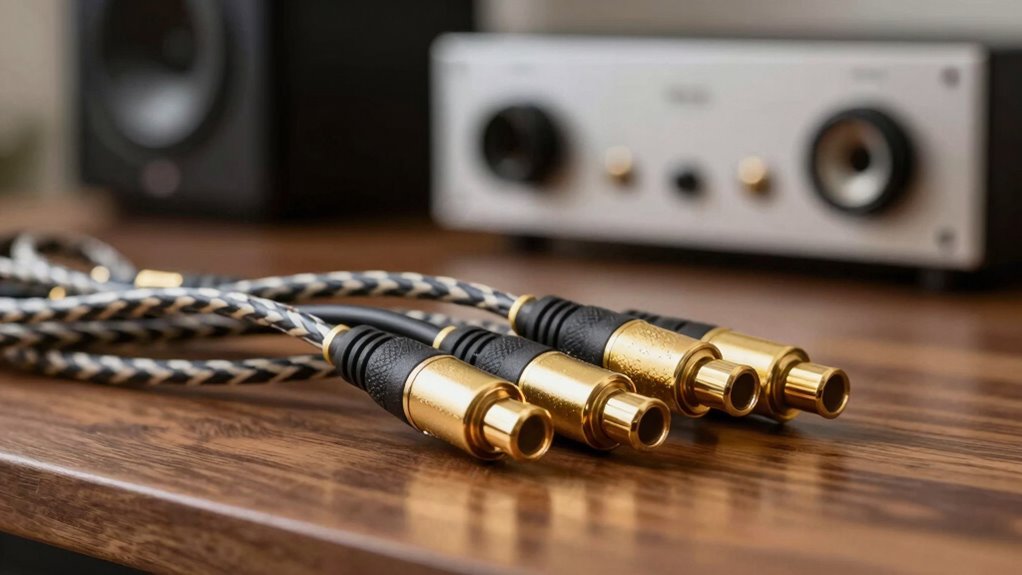
You might wonder if high-end cables really improve audio quality enough to justify their price. While they often feature better materials and construction, the actual sound differences can be subtle. This prompts the question: is the cost worth the potential benefit, or are you paying for brand name and perceived value? Additionally, some argue that audio fidelity improvements from premium cables are minimal compared to other components in a sound system.
Audio Quality Differences
Many audiophiles wonder if high-end cables truly make a noticeable difference in sound quality. The truth is, improvements often depend on factors like wire gauge and shielding effectiveness. Here’s what can influence your listening experience:
- Thicker wire gauge reduces resistance, potentially improving clarity.
- Enhanced shielding minimizes interference, leading to cleaner sound.
- Higher-quality materials may deliver a more consistent signal.
- Proper construction ensures minimal signal loss over distance.
- Color accuracy also plays a role in preserving audio fidelity by ensuring true-to-source sound reproduction.
While some differences are subtle, high-end cables can help preserve audio fidelity, especially in complex setups. However, the actual impact varies depending on your equipment and environment. The key is understanding whether these enhancements align with your specific needs. If your system is already optimized, investing in expensive cables might offer diminishing returns.
Cost vs. Benefit
Deciding whether high-end cables are worth their cost depends on your specific setup and listening priorities. A thorough cost analysis helps determine if the potential benefits justify the expense. While premium cables often boast aesthetic appeal, this doesn’t necessarily translate to sound improvements. Consider the table below:
| Investment Level | Potential Benefit |
|---|---|
| Low | Minimal or negligible impact |
| Moderate | Slight improvements possible |
| High | Possible noticeable difference |
If your system is already finely tuned, upgrading to expensive cables may yield limited returns. Conversely, if aesthetics matter to you and your setup is versatile, the visual appeal of high-end cables might justify the cost. Ultimately, weigh the price against tangible benefits for your specific needs. Additionally, understanding the concept of Free Floating can help you optimize your space and equipment placement for better sound quality.
Material and Construction
The materials and construction of high-end cables often differ markedly from standard options, with claims of superior conductivity and durability. You might notice that premium cables feature better cable aesthetics, with sleek finishes and intricate designs that suggest quality. Consider these aspects:
- Use of high-purity conductors, like oxygen-free copper or silver, for better signal transmission.
- Advanced insulation materials that reduce interference and noise.
- Reinforced shielding to protect against electromagnetic interference.
- Attention to connectors and build quality, enhancing durability and aesthetics.
- The importance of energy-efficient materials which can impact overall performance and sustainability.
While branding influence can create a perception of value, it’s essential to evaluate whether these material improvements translate into noticeable sound differences. High-end cables often emphasize aesthetics and branding, but the core material benefits are what truly matter.
How Do Length and Connectors Change Audio Quality?
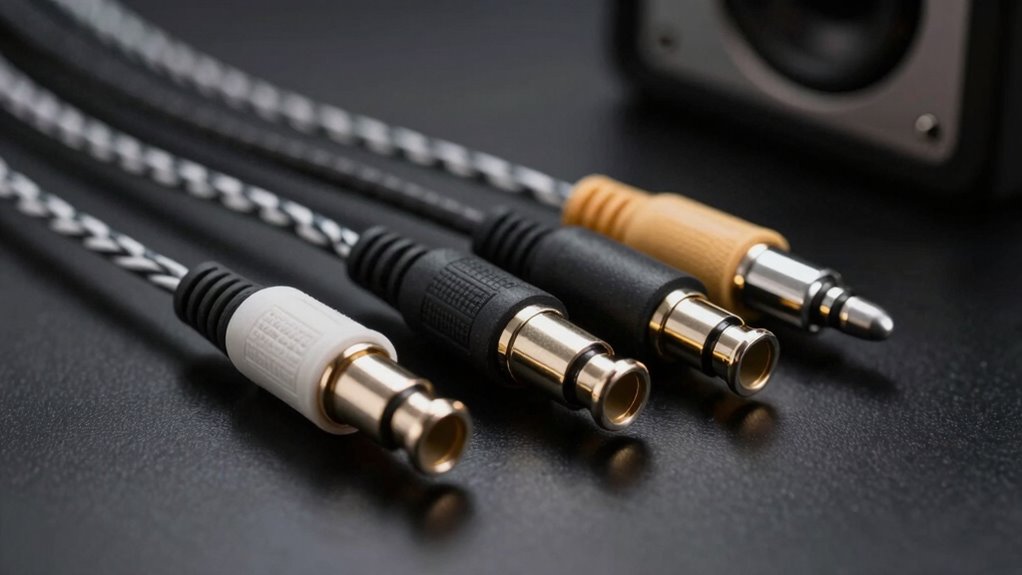
Longer audio cables can introduce subtle signal degradation, especially if they aren’t designed to handle the increased length. As the cable lengthens, resistance and capacitance can slightly weaken the signal, but high-quality cable shielding helps reduce interference and maintain clarity. The choice of connector types also impacts audio quality; robust connectors ensure a solid, low-resistance connection, minimizing signal loss. For example, balanced connectors like XLR or TRS can better reject noise over longer runs compared to RCA plugs. Keep in mind that well-shielded cables and appropriate connector types help preserve sound integrity, even as length increases. Additionally, understanding the electrical properties of cables can help optimize performance for different setups. In most typical setups, cable length and connector quality influence sound minimally, provided the cables are properly designed and well-maintained.
When Are Specialized Cables Necessary? Real-World Examples
Have you ever wondered when standard cables just aren’t enough? In real-world situations, specialized cables can be necessary, but often, audiophile misconceptions and marketing hype create confusion. Consider these examples:
- You need a shielded cable for extremely noisy environments to prevent interference.
- High-current cables are essential for power amps with high wattage demands.
- Longer runs, over 20 feet, might benefit from thicker gauge cables to minimize signal loss.
- Connecting equipment with different impedance levels may require tailored cables for optimal performance.
- Understanding the importance of security zone info can help determine when high-quality cables are truly needed versus when basic options suffice.
Most of these cases aren’t driven by sound quality improvements but by practical needs. Recognize when specialized cables address real issues versus when marketing hype is at play.
How to Choose Cables That Make a Difference in Your Setup
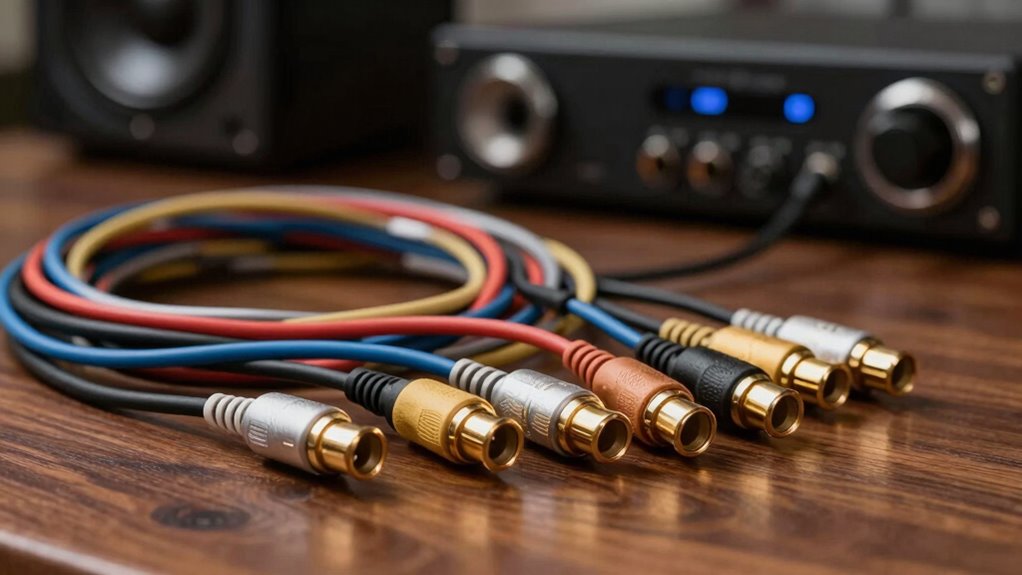
Choosing the right cables starts with checking compatibility and quality to guarantee reliable performance. Pay attention to cable length and placement, as these factors can impact signal strength and clarity. When you prioritize these points, you’ll notice a real difference in your setup’s overall experience. Additionally, selecting cables that are designed specifically for your equipment can prevent signal degradation and ensure longevity proper cable selection.
Compatibility and Quality
Selecting the right cables for your setup is essential because incompatible or low-quality cables can cause performance issues or damage your devices. To guarantee quality and compatibility, consider:
- Matching connectors to your equipment to prevent signal interference.
- Choosing cables with durable connectors to withstand frequent use.
- Opting for shields that minimize signal interference for clearer sound.
- Checking specifications to ensure the cable supports your device’s bandwidth and power needs.
Cable Length and Placement
Ever wondered how the length and placement of your cables can impact your setup’s performance? Longer cables can introduce signal loss if they lack proper shielding effectiveness, which can degrade sound quality. Keep cables as short as possible to minimize interference and maintain clarity. Proper placement is equally important; avoid running cables near power sources or other electronics that can cause electromagnetic interference. Secure connectors firmly, as connector durability plays a key role in maintaining a consistent connection over time. Ensure cables are arranged neatly to prevent accidental damage or strain, which can compromise shielding effectiveness and connector integrity. Additionally, understanding cable shielding helps you choose cables that resist external noise and preserve audio fidelity. By choosing the right length and thoughtfully placing your cables, you optimize sound quality and ensure your system performs reliably.
Common Mistakes to Avoid When Upgrading Audio Cables
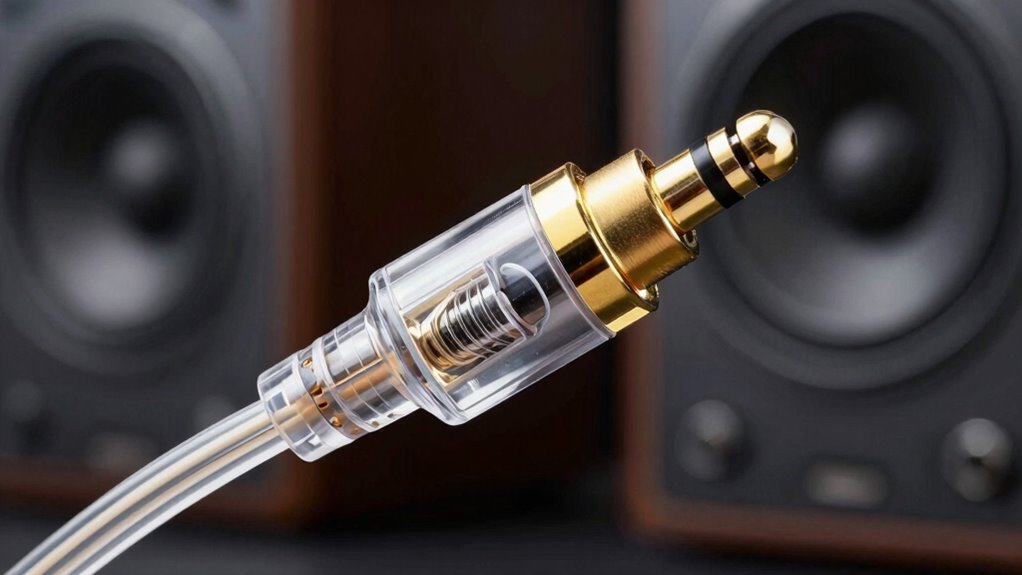
Upgrading audio cables can seem straightforward, but many people make common mistakes that compromise the quality of their sound system. First, choosing cables based solely on aesthetics can lead to ignoring signal interference risks, which directly affects sound clarity. Second, neglecting proper shielding increases susceptibility to interference, causing unwanted noise. Third, using overly long cables when shorter ones suffice can degrade signal quality. Fourth, skipping thorough research might lead to incompatible or low-quality cables that don’t deliver the expected improvements. Avoid these pitfalls by prioritizing function over appearance, ensuring good shielding, selecting appropriate lengths, and understanding cable specifications. Staying mindful of these mistakes helps you get the best sound without unnecessary spending or frustration.
What Matters Most for Great Sound: Beyond the Cables
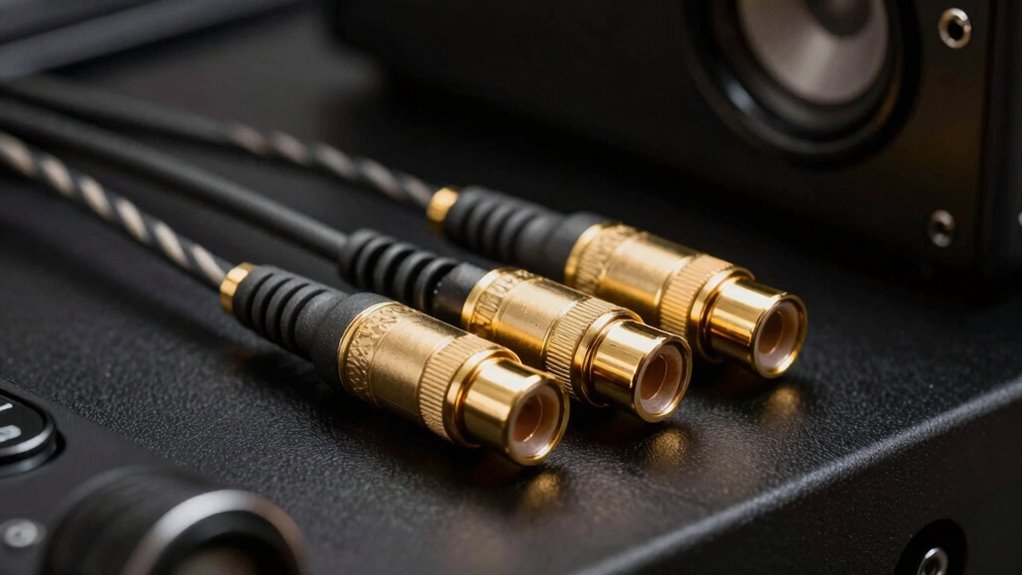
While choosing the right cables is important, focusing solely on them won’t guarantee great sound. Your speaker placement plays a vital role, affecting how sound interacts with your space. Properly positioning speakers ensures clearer, more balanced audio, making a bigger difference than upgrading cables. Room acoustics also matter—hard surfaces can cause echoes, while soft furnishings absorb unwanted reflections. Treating your room with bass traps, panels, and rugs can dramatically improve sound quality. Remember, even the best cables won’t compensate for poor room setup. Focus on optimizing speaker placement and managing acoustics first. Once your room sounds good, your cables can then enhance the experience without being the sole focus. Great sound depends on the whole environment, not just the wires.
Frequently Asked Questions
Can Cable Upgrades Improve Overall Audio System Performance Significantly?
Upgrading cables can improve your audio system’s performance, especially if you focus on cable material and connector quality. Better materials like oxygen-free copper or silver can reduce signal loss, while high-quality connectors ensure a secure, reliable connection. However, don’t expect drastic changes unless your current cables are poor. Investing in well-made cables might reveal subtle improvements, but for significant upgrades, consider overall system quality first.
Do Different Audio Formats Require Specific Types of Cables?
Different audio formats don’t usually require specific cables, but digital compatibility matters. For digital signals like HDMI or optical, verify your cables support the format’s bandwidth and features. Also, pay attention to cable length considerations; longer cables can introduce signal degradation, so choose the shortest cable possible for peak performance. Overall, focus on quality and compatibility rather than worrying about format-specific cables, unless your setup involves specialized digital connections.
How Does Cable Shielding Affect Noise and Interference?
Cable shielding considerably impacts noise and interference by reducing electromagnetic interference (EMI). When shielding is effective, it blocks external signals that can cause noise, ensuring cleaner sound. You should look for cables with high shielding effectiveness, such as braided or foil shields, to minimize interference. Proper shielding helps maintain audio clarity, especially in environments with lots of electronic devices, making your sound experience clearer and more reliable.
Are There Visual Indicators of a High-Quality Audio Cable?
Imagine you’re shopping for an audio cable and notice the visual cues like thick insulation and sturdy connectors. These signs reflect construction quality, indicating a high-quality audio cable. While appearances matter, they’re just indicators; the actual sound quality depends on the materials inside. So, trust your eyes to spot well-made cables, but remember, excellent construction is key to durability and consistent audio performance.
Does Cable Brand Reputation Influence Sound Quality?
Your cable brand’s reputation can influence your perception of sound quality, but it doesn’t actually change the audio itself. Many companies rely on marketing hype and brand perception to boost sales, making you think their cables sound better. Instead of focusing on brand, prioritize the actual build quality and specifications. Your ears and listening experience matter more than the brand name, so don’t be swayed solely by reputation.
Conclusion
You might hear that fancy cables instantly improve sound, but the truth is, most don’t make a noticeable difference. Focus on solid connections, quality equipment, and proper setup instead. Sometimes, upgrading cables can help if your current ones are faulty or too long, but don’t fall for the hype. Trust your ears, keep things simple, and remember that great sound comes down to overall system balance, not just the cables.