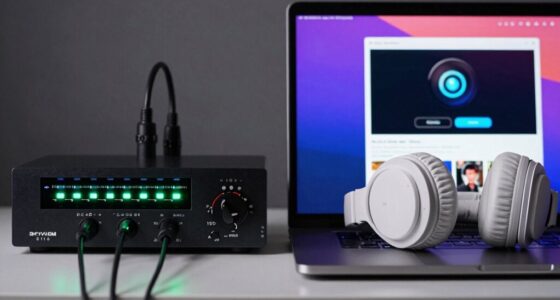

To fix muddy live sound, start by identifying problematic frequencies around 200-400Hz where muddiness often occurs. Use your mixer’s EQ to make gentle cuts with a narrow Q setting, focusing on reducing overlapping sounds and balancing bass and midrange. Be careful not to overdo it—maintaining the natural tone is key. With some quick tweaks, you can clear up your mix without losing the vibe. Keep going to learn more powerful tips.
Key Takeaways
- Identify and cut problematic frequencies, especially in the 200-400Hz range, to reduce muddiness without affecting overall tone.
- Use narrow Q settings on your EQ to target specific resonance peaks and avoid dulling natural sound.
- Focus on balancing midrange frequencies to clarify vocals and instruments while preserving warmth.
- Make small, incremental adjustments during the performance to prevent over-equalization and maintain natural sound.
- Practice adjusting EQ settings beforehand to respond quickly and effectively during live shows.

MAONO Podcast Equipment Bundle: Audio Interface mixer with Dual XLR Input for Podcast Streaming - MaonoCaster E2 Gen2
Upgraded Podcast Equipment Bundle: Elevate your podcasting, streaming, and studio recording with the E2 Gen2 podcast equipment bundle....
As an affiliate, we earn on qualifying purchases.
What Causes Muddy Audio in Live Sound Settings

Muddy audio in live sound settings often happens when different sound sources clash or aren’t properly balanced. Your acoustic environment plays a big role in this issue, as the room’s shape, size, and surface materials affect sound reflection and absorption. Improper speaker placement can intensify muddiness by causing sound waves to overlap or cancel each other out. If speakers are too close or positioned incorrectly, certain frequencies become overly prominent or get lost, leading to a cluttered sound. Additionally, when sound sources are not aligned with the room’s acoustics, it’s harder to achieve clarity. You need to contemplate both your environment and how you position your speakers to avoid these pitfalls and keep your live mix crisp and balanced. Considering projector technology can help you understand how visual components might influence your overall audio-visual setup for a clearer experience.

MAONO USB Audio Interface for PC: Interface with XLR Input 24-bit/192kHz Routing Software LOOPBACK ASIO Driver for Recording Music, Home-Studio, Guitar, Podcast, Streaming, DAW(PS22 Lite Black)
Capture every detail of your sound: Imagine the perfect take, every note and beat, captured as if by...
As an affiliate, we earn on qualifying purchases.
How EQ Shapes Your Live Music Experience

Equalization (EQ) is a powerful tool that shapes your live music experience by adjusting the balance of different frequencies. When you tweak EQ settings, you can reduce frequency masking, where certain sounds hide others, creating a clearer mix. Proper EQ helps maintain a balanced tonal profile, ensuring vocals, instruments, and drums each stand out without overpowering one another. By emphasizing or cutting specific frequency ranges, you control how listeners perceive the overall sound, making the music feel more natural and engaging. This process allows you to highlight the nuances of performances, minimize muddiness, and enhance clarity. Thoughtful EQ use also involves understanding spectral balance to achieve a cohesive sound. Ultimately, thoughtful EQ use transforms a cluttered, muddy mix into a vibrant, balanced live sound that keeps your audience fully immersed.

BOMGE mini 2 Channel USB Audio Interface for Recording, Streaming and Podcasting, with XLR/48V Phantom Power,Studio Quality Audio Interface for Guitarist, Vocalist, Podcaster or Producer
USB Audio Interface: Podcast, Record, Live Stream, This Portable Audio Interface Covers it All – USB sound card...
As an affiliate, we earn on qualifying purchases.
How to Identify Frequencies That Make Sound Muddy

When your live sound feels congested or unclear, it’s often due to overlapping frequencies that create a muddy mix. To identify these problem areas, listen carefully for resonance peaks—sharp, exaggerated sounds that stick out and color the overall tone. These peaks indicate frequencies that are overly emphasized, contributing to muddiness. Frequency masking occurs when multiple sounds compete in the same frequency range, making it hard to distinguish individual instruments or vocals. Use your ears to pinpoint where sounds clash or become indistinct, often around the midrange (200-800 Hz). Recognizing these clues is essential for sound optimization, allowing you to target specific muddy frequencies, reducing resonance peaks and minimizing frequency masking, which clears up the mix without sacrificing the natural warmth of your live sound.
Focusrite Scarlett 2i2 4th Gen USB Audio Interface for Recording, Songwriting, Streaming and Podcasting — High-Fidelity, Studio Quality Recording, and All the Software You Need to Record
The new generation of the artist's interface: Connect your mic to Scarlett's 4th Gen mic pres. Plug in...
As an affiliate, we earn on qualifying purchases.
Simple Tips to Clear Up Muddy Live Sound Using EQ

To clear up muddy live sound with EQ, start by identifying the problematic frequencies that are causing congestion. Often, muddy sound results from frequency masking, where multiple instruments compete in the same tonal range. To fix this, gently cut or attenuate these overlapping frequencies to improve clarity. Focus on restoring a balanced tonal balance, ensuring each element has its own space. For example, reducing some low-mid frequencies around 200-400Hz can help separate bass and kick drum muddiness. Use narrow Q settings to target specific problem areas without affecting the overall sound. This approach cleans up the mix, improves clarity, and preserves the natural tone of your instruments, making your live sound more defined and enjoyable for the audience. Additionally, understanding sound frequency ranges can help you pinpoint the specific areas that need adjustment for optimal clarity.
How to Use Your Mixer or App to Adjust EQ on the Fly

Using your mixer or app to adjust EQ on the fly lets you respond quickly to changing live sound conditions. When a guitar tone sounds too harsh or muddy, you can cut high frequencies or boost lows to balance it out instantly. Similarly, if vocals lose clarity amid the mix, tweak the midrange or reduce problematic frequencies in real time. Keep an eye on your mixer’s EQ controls, and make small adjustments rather than large swings. Many apps allow you to create quick presets or scenes, so you can switch settings seamlessly during the performance. This agility helps maintain a clear, balanced sound, ensuring your guitar tone stays warm and your vocals remain crisp. Being able to adjust EQ remotely enhances your flexibility during live shows. Practice these adjustments beforehand to react smoothly during the show.
When to Stop Over-EQing and Keep the Music Natural
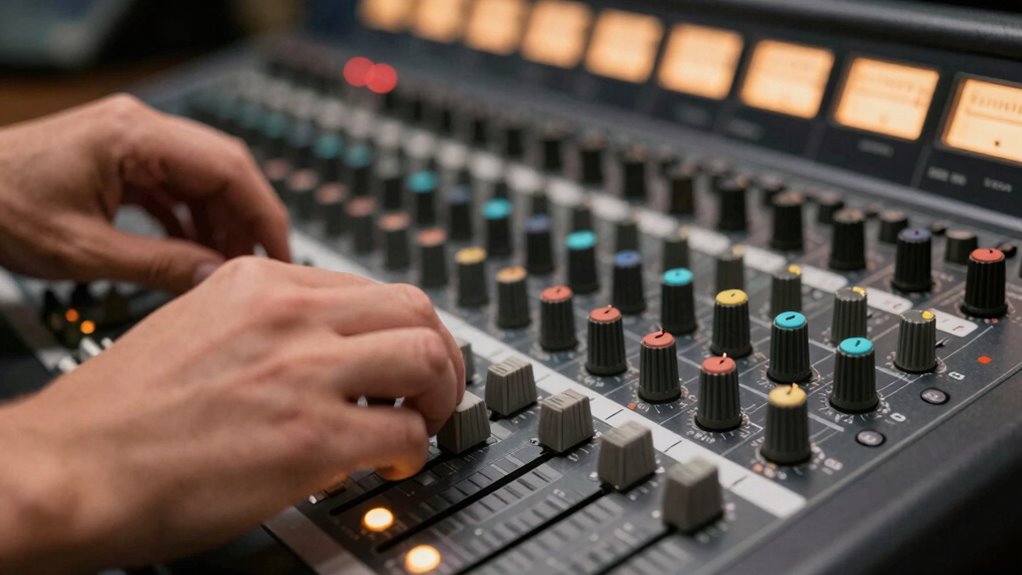
It’s easy to get carried away with EQ adjustments, but knowing when to stop is crucial for maintaining a natural sound. Over-EQing can strip away musical authenticity, making the performance feel hollow or artificial. To keep the audience experience genuine, listen carefully as you make changes, and pause frequently to assess how the music flows. If your adjustments start to overly emphasize certain frequencies or remove the warmth and body of the sound, it’s a sign to stop. Remember, subtle enhancements often have a bigger impact than drastic cuts or boosts. Trust your ears, and aim for a balanced, transparent sound that preserves the character of the music. When in doubt, dial back and prioritize the overall feel over perfect technical adjustments. Understanding your equipment’s limits can help prevent over-processing and keep the sound natural.
Troubleshooting Live Sound: Quick Fixes for Better Clarity

When live sound isn’t as clear as you’d like, quick fixes can make a noticeable difference in audience experience. To improve sound clarity, focus on feedback control and sound balance. First, identify and reduce feedback by slightly lowering the gain or using a notch filter on problem frequencies. Second, adjust the volume levels of individual instruments and microphones to ensure a balanced mix, preventing any element from overpowering others. Third, check your placement—move microphones away from speakers and each other to minimize feedback risk. These simple steps quickly enhance clarity without overhauling your entire setup. Staying attentive to feedback control and maintaining proper sound balance are key to delivering a clean, professional live sound.
Extra Tips to Improve Live Music Clarity Without Killing the Vibe

Even small adjustments can substantially boost live music clarity without disrupting the vibe. Focus on maintaining a balanced dynamic range; avoid pushing levels too high, which can cause muddiness or distortion. Use subtle EQ tweaks to clarify vocals and instruments while preserving the energy of the performance. Feedback control is vital—position microphones carefully and set appropriate gain levels to prevent squeals without dulling the sound. Consider employing a feedback suppressor or notch filter to target problem frequencies precisely. Keep the overall sound lively and engaging by avoiding over-processing, which can kill the vibe. Remember, gentle, strategic adjustments improve clarity without sacrificing the atmosphere, helping everyone enjoy the music without feeling overwhelmed or disconnected.
Frequently Asked Questions
How Do Different Room Acoustics Influence Muddy Sound Issues?
Room acoustics profoundly influence muddy sound issues by affecting reflections and overall clarity. When reflections bounce around, they cause overlapping frequencies, making the sound muddy. You can fix this by using acoustic treatment like panels or bass traps to absorb excess reflections. This reduces muddiness and clears up your mix, allowing individual instruments and vocals to shine without needing drastic EQ adjustments. Proper room treatment is essential for a cleaner, more defined sound.
Can Specific Instruments or Vocals Cause More Muddiness Than Others?
Certain instruments and vocals can cause more muddiness because of their overlapping frequencies and vocal masking. For example, bass and kick drum often clash around 80-100Hz, creating a muddy sound. Vocals can also get masked by instruments like guitars or keyboards if their midrange frequencies overlap. You can fix this by cutting or attenuating specific frequency ranges, making each element clearer without sacrificing overall balance.
What Are Common Mistakes to Avoid When EQING Live Sound?
When EQing live sound, avoid common mistakes like overprocessing and causing frequency masking. Don’t cut too much or boost excessively, as this can thin out your mix or create harshness. Be mindful of overlapping frequencies between instruments and vocals; this can lead to muddiness. Always listen critically, make subtle adjustments, and step back periodically to guarantee you’re enhancing clarity without sacrificing natural tone or creating new problems.
How Do I Balance EQ Adjustments With Maintaining Natural Tone?
To balance EQ adjustments while maintaining natural tone, focus on avoiding frequency masking that can muddy your sound. Make subtle boosts or cuts, especially in midrange frequencies, to preserve tonal neutrality. Trust your ears, and listen critically as you tweak, ensuring you don’t overdo it. Remember, less is often more; preserving the natural character of your instruments and vocals keeps your sound balanced and true to the original tone.
Are There Digital Tools That Assist in Quick Live Sound EQ Fixes?
Think of digital tools as your trusty sidekicks in the live sound world. Auto EQ tools automatically tune your system, quickly fixing muddy frequencies without losing your natural tone. Real-time analyzers act like a radar, showing you problem spots instantly. These tools help you make fast, accurate adjustments, so you can focus on the music and keep the vibe alive—no more guesswork or muddy mixes.
Conclusion
Did you know that improper EQ can reduce clarity by up to 50% in live settings? By understanding how to identify and fix muddy frequencies, you can dramatically improve your sound without sacrificing the vibe. Remember, a little EQ goes a long way—avoid overdoing it to keep your music natural and engaging. With these quick tips, you’ll be able to deliver crystal-clear live performances that truly resonate with your audience.