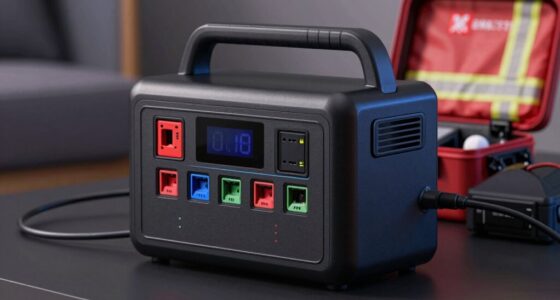
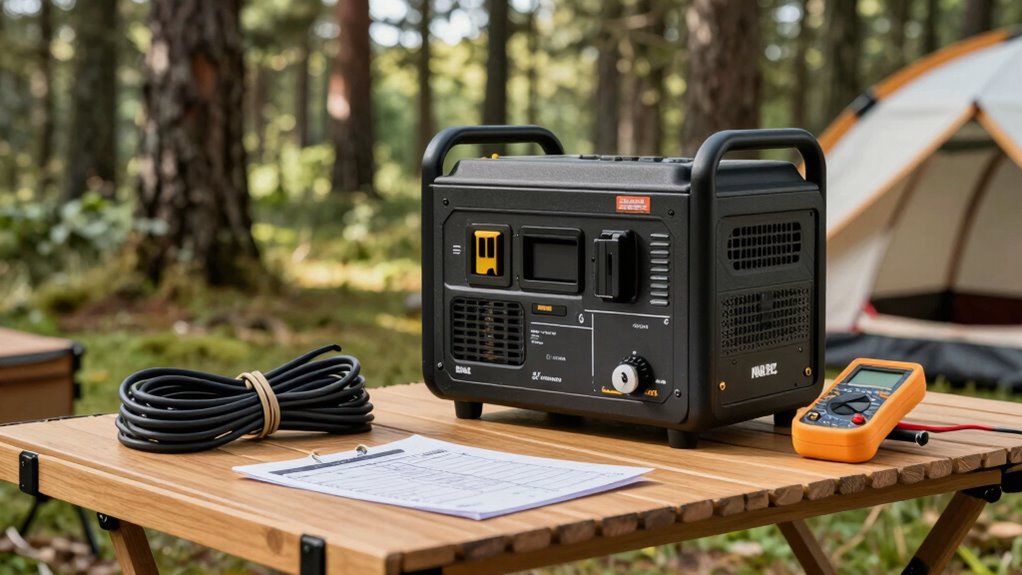

To avoid common mistakes when setting up your portable inverter generator for camping, make certain you follow safety guidelines like placing it on a flat, dry surface at least 10-15 feet away from tents and living areas. Always operate it outdoors in well-ventilated spaces, check wattage and load capacity, and securely connect devices with grounded outlets. Proper startup procedures and monitoring are essential to prevent overloads and damage. Keep these tips in mind to run your generator smoothly—more helpful insights await if you continue exploring.

Get audio and creator gear delivered free with Prime
- Fast, free delivery on millions of items
- Prime Video, Amazon Music and more included
- Member-only deals all year
Key Takeaways
- Verify manufacturer instructions and perform thorough pre-start inspections to detect leaks, damage, or loose connections.
- Always operate the generator outdoors on a stable, level surface, maintaining at least 10-15 feet from tents and living areas.
- Check wattage capacity, prioritize essential devices, and avoid overloading to prevent damage or safety hazards.
- Follow proper starting procedures, secure all connections, and ensure proper ventilation to prevent carbon monoxide buildup.
- Regularly monitor the generator during use for overheating, unusual noises, or mechanical issues to ensure safe operation.
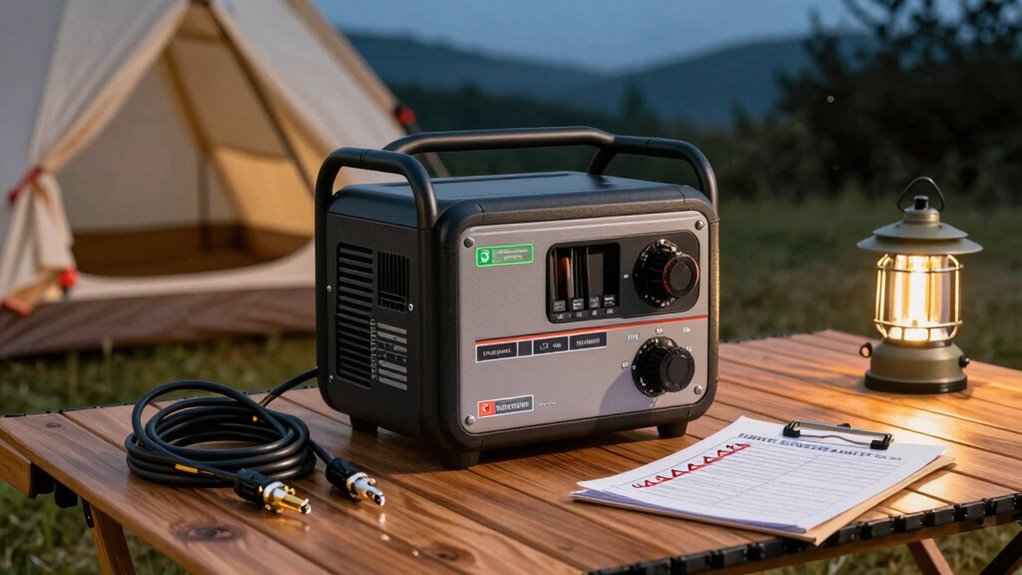
Setting up your portable inverter generator correctly is vital for a safe and efficient camping experience. Proper setup ensures you stay safe while preventing potential damage to your equipment. One of the most important aspects is understanding generator safety. Before starting, always read the manufacturer’s instructions carefully. Check for any leaks, damage, or loose connections that could cause hazards. Ensure the generator is on a dry, flat surface, away from tents, awnings, or other flammable materials. Ventilation is critical—never operate your generator indoors or in enclosed spaces, as exhaust fumes can be deadly. Always position your generator outdoors, at least 10-15 feet away from your camping area, with the exhaust directed away from your tents and living spaces. This setup minimizes the risk of carbon monoxide poisoning, which is a serious safety concern.
Power management is another vital factor to consider during setup. Many portable inverter generators come with various outlets, so plan your power use accordingly. Avoid overloading the generator; check its wattage capacity against your total power needs. Prioritize essential devices and appliances, and turn off or unplug non-essential items to prevent overloads. Using a power strip with surge protection can help manage multiple devices safely. Make sure your appliances are compatible with the generator’s output—some sensitive electronics might need additional protection, like surge protectors or UPS units. Properly managing your power load not only safeguards your equipment but also prolongs the lifespan of your generator. Additionally, understanding generator safety guidelines helps ensure safe operation and reduces risks during your camping trip.
When connecting devices, always use grounded outlets and avoid connecting appliances directly to extension cords that aren’t rated for outdoor use or aren’t grounded properly. Double-check that all connections are secure before starting your generator to prevent electrical mishaps. Once your generator is in place, start it following the manufacturer’s instructions, typically by setting the fuel valve, turning the choke on if needed, and pulling the starter cord. Keep a close eye on the gauges and listen for unusual noises, which could indicate issues. During operation, monitor your power usage to prevent overloads and ensure your generator isn’t running at maximum capacity for extended periods, which can cause overheating and damage.
portable inverter generator for camping
As an affiliate, we earn on qualifying purchases.
As an affiliate, we earn on qualifying purchases.
Frequently Asked Questions
How Do I Ensure My Generator Complies With Camping Site Regulations?
To make certain your generator complies with camping site regulations, check the noise levels and keep them within limits, especially during quiet hours. Opt for a generator with good fuel efficiency to reduce emissions and avoid unnecessary disturbance. Always read the campsite’s rules beforehand, and position your generator away from tents and communal areas. Use mufflers if needed, and regularly maintain your generator to keep noise and emissions minimal.
What Are the Best Safety Practices for Generator Operation?
To operate your generator safely, always handle fuel with care, storing it in approved containers away from heat sources, and refueling only when the generator is off and cooled down. Control noise levels by placing the generator on a stable surface, using noise-reducing enclosures if possible. Keep a safe distance from tents and other camping gear to prevent accidents, and follow manufacturer instructions for proper operation.
How Can I Extend My Inverter Generator’s Lifespan?
To extend your inverter generator’s lifespan, you should prioritize regular maintenance, proper fuel efficiency, and noise reduction. Keep your generator clean and well-oiled, run it with the recommended fuel, and avoid overloading it. Store it in a cool, dry place, and run it periodically to prevent internal parts from seizing. By following these steps, you’ll guarantee your generator stays reliable, efficient, and quieter for years to come.
What Maintenance Should I Perform Before and After Camping?
Before camping, you should check your generator’s fuel types and make sure it’s filled with the correct fuel, using fresh fuel if possible. After camping, run the generator for a few minutes to burn off any residual fuel, then store it in a cool, dry place. Follow storage tips like draining the fuel if storing for an extended period and keeping it covered to protect from dirt and moisture.
How Do I Troubleshoot Common Inverter Generator Problems?
Think of your inverter generator as a well-tuned symphony; if it’s off-key, trouble follows. To troubleshoot, check for fuel leaks or poor fuel quality affecting efficiency. Inspect spark plugs and air filters to guarantee smooth operation, which helps with noise reduction. Ensure the generator’s connections are secure and reset circuit breakers if needed. Regular maintenance keeps it humming, preventing issues from turning your camping trip into a noisy ordeal.
As an affiliate, we earn on qualifying purchases.
Conclusion
By following this setup checklist, you’ll guarantee a safe and smooth camping experience with your inverter generator. Double-check connections, fuel levels, and safety precautions before firing it up. Avoid common mistakes, and you’ll enjoy reliable power without surprises. After all, isn’t the goal to relax and have fun? Preparing properly means you can focus on the adventure ahead, not troubleshooting. So, are you ready to camp confidently with your well-prepared generator?
generator surge protector power strip
As an affiliate, we earn on qualifying purchases.
As an affiliate, we earn on qualifying purchases.
grounded outdoor extension cords
As an affiliate, we earn on qualifying purchases.
As an affiliate, we earn on qualifying purchases.
Halloween Picks
halloween
As an affiliate, we earn on qualifying purchases.