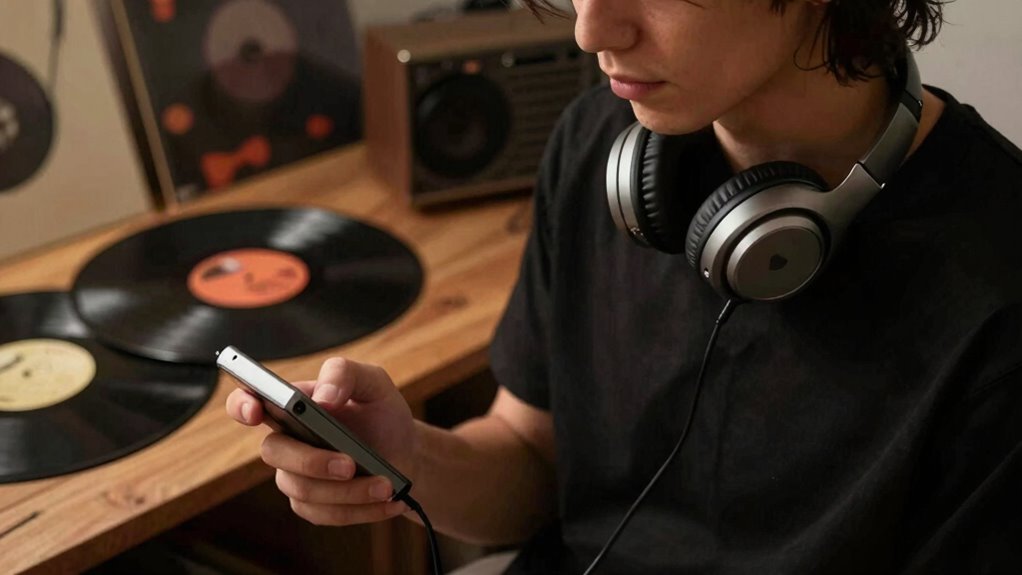
To discover your own sound preferences, intentionally explore different genres like jazz, classical, or electronic to challenge your ears. Pay close attention to what melodies, textures, and rhythms resonate with you, noticing your physical and emotional reactions. Practice mindful listening to deepen your awareness of what appeals most and trust your instincts. Regularly reflect on your reactions to refine your taste. Keep experimenting and curating playlists that truly reflect your unique musical identity—more insights await if you continue.

Get audio and creator gear delivered free with Prime
- Fast, free delivery on millions of items
- Prime Video, Amazon Music and more included
- Member-only deals all year
Key Takeaways
- Actively explore diverse genres to identify what genuinely resonates with your auditory senses.
- Pay close attention to specific sound elements and textures that evoke emotional responses.
- Practice mindful listening to observe bodily and emotional reactions to different sounds.
- Regularly reflect on your preferences and refine your taste through self-awareness.
- Stay curious and continue experimenting to allow your unique sound identity to evolve naturally.
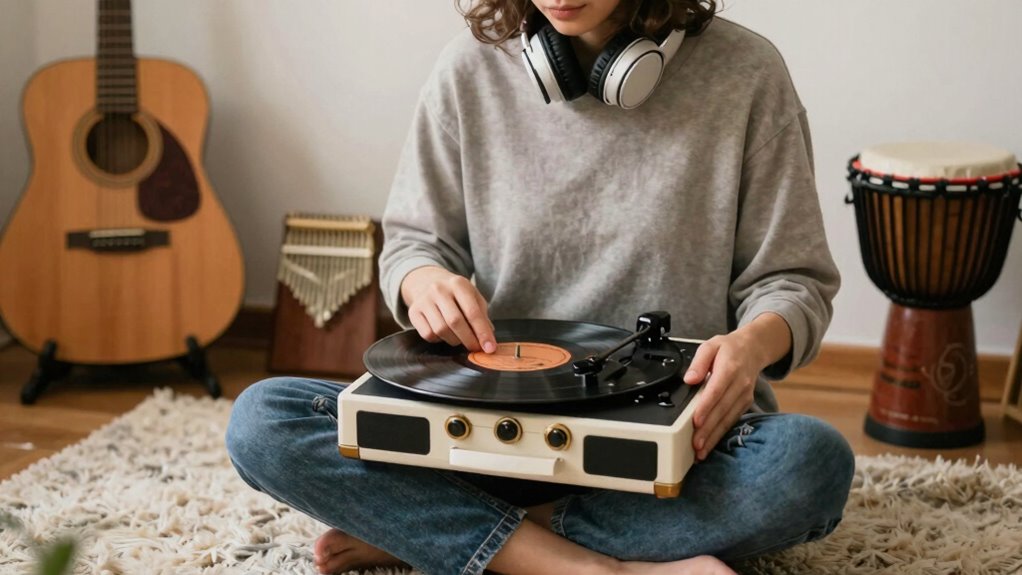
Discovering your sound preferences can seem overwhelming at first, but it’s a rewarding process that helps you better understand what truly resonates with you. The journey begins with open-minded musical experimentation. Don’t be afraid to explore genres outside your usual comfort zone—try jazz, electronic, classical, or indie. Each new style challenges your auditory senses and offers fresh perspectives on sound. As you listen, pay attention to how different rhythms, melodies, and textures make you feel. This active engagement sharpens your sensory perception, allowing you to notice subtle nuances that might otherwise go unnoticed. Over time, these experiences help you develop a more intuitive sense of what you prefer, rather than simply copying what others enjoy.
When you experiment with various sounds, you’re training your ears to differentiate between elements that evoke emotional responses and those that don’t. For example, you might find yourself drawn to the warmth of a soulful guitar riff or the intricate layers in a complex electronic track. By actively analyzing what resonates with you, you’re learning to trust your own listening instincts instead of relying on popular trends or recommendations. This process is about tuning into your inner preferences, which often get overshadowed by external influences. Remember, there’s no right or wrong in this exploration—your unique sensory perception shapes your musical identity. Developing an awareness of auditory perception can further enhance your ability to recognize what truly appeals to you. Exploring different sounds also helps you become more aware of sensory perception, sharpening your overall listening skills and emotional awareness. Additionally, paying attention to how your body reacts physically can deepen your understanding of your preferences. Engaging in mindful listening sessions can also reveal how certain frequencies or sounds influence your mood and energy levels.
It’s also helpful to reflect on your reactions after each listening session. Ask yourself questions like: What parts of the music stood out the most? Did it evoke a certain mood or memory? How did the sound make your body feel—relaxed, energized, contemplative? These reflections deepen your understanding of your preferences and guide future exploration. You might discover that you prefer the textured layers of a lo-fi beat over the high-energy punch of pop music, or that ambient sounds help you focus better. Cultivating this self-awareness through regular reflection can significantly refine your ability to identify what suits your taste best. Trusting your sensory perception means listening with intention and curiosity, rather than passively absorbing sounds. It’s about cultivating an authentic relationship with music that stems from your personal experiences and emotional responses.
As you continue this process, remember that learning your sound preferences isn’t a destination but an ongoing journey. Your tastes will evolve, and new genres or artists may suddenly click with you. Stay curious and keep experimenting. Over time, you’ll develop a clear sense of what truly moves you, enabling you to curate playlists and find music that genuinely reflects your identity. Ultimately, the goal is to listen to music that feels authentic—music that speaks to your soul, not just what’s trending or what others expect. Trust in your sensory perception and enjoy discovering your unique sound. Recognizing the importance of personal sensory development can further empower you to make more mindful listening choices. This ongoing process reminds us that developing musical discernment is a vital part of nurturing an authentic musical identity.
high-fidelity headphones for mindful listening
As an affiliate, we earn on qualifying purchases.
As an affiliate, we earn on qualifying purchases.
Frequently Asked Questions
How Long Does It Take to Identify My True Sound Preferences?
It typically takes a few months of personal exploration to identify your true sound preferences. During this time, you experiment with different styles, techniques, and genres, allowing your artistic authenticity to emerge. Be patient and open-minded, as this process helps you understand what resonates with you. The more you listen, create, and reflect, the clearer your unique sound becomes, guiding you toward genuine self-expression.
Can Hearing Health Affect My Ability to Develop Sound Preferences?
Yes, your hearing health can impact your ability to develop sound preferences. If you have issues with ear health, such as hearing loss or damage, it can distort your auditory perception, making it harder to discern and appreciate different sounds. Sustaining good ear health guarantees your auditory perception remains sharp, allowing you to explore and identify what truly appeals to you. Regular check-ups can help preserve your hearing and support your personal sound preferences.
Should I Consider Genre or Production Style When Discovering My Preferences?
You should consider both genre exploration and production techniques when discovering your preferences. Try listening to different genres to identify what resonates with you, and pay attention to how production techniques shape each sound. Experiment with various styles and recording methods to see what feels authentic. This hands-on approach helps you develop a unique taste, rather than just copying others, leading to a genuine understanding of your musical preferences.
How Often Should I Revisit and Reassess My Sound Choices?
You should revisit and reassess your sound choices regularly, like tending a garden that blooms anew with each season. Personal experimentation acts as your compass, guiding you through evolving tastes. External influences are like gusts of wind—helpful but not defining. By checking in every few months, you keep your sound landscape fresh and authentic, ensuring your preferences grow naturally rather than being overshadowed by outside noise.
Is It Necessary to Have Professional Equipment to Find My Sound?
You don’t need professional equipment to find your sound. Focus on the quality of your equipment and your listening environment instead. Good-quality headphones or speakers help you hear details clearly, while a quiet, controlled environment minimizes distractions. Reassess your setup periodically to confirm it still matches your evolving preferences. Ultimately, your personal taste guides your sound choices more than expensive gear, so trust your ears above all.
sound therapy noise-canceling earphones
As an affiliate, we earn on qualifying purchases.
As an affiliate, we earn on qualifying purchases.
Conclusion
As you explore your sound preferences, you’ll notice surprises—like discovering a favorite song you never thought you’d enjoy. Coincidentally, your unique taste begins to shape naturally, almost without effort. Trust those moments; they reveal what truly resonates with you. Over time, you’ll find your sound preferences becoming clearer, guiding you to music that feels authentic. Embrace this journey—sometimes, the best discoveries happen when you least expect them.
music genre exploration playlist
As an affiliate, we earn on qualifying purchases.
As an affiliate, we earn on qualifying purchases.
audio spectrum analyzer for music
As an affiliate, we earn on qualifying purchases.
As an affiliate, we earn on qualifying purchases.
Halloween Picks
halloween
As an affiliate, we earn on qualifying purchases.