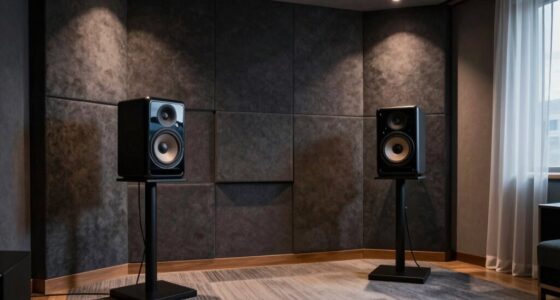


Turning up the volume doesn’t add detail; it just amplifies imperfections and distortion, masking subtle nuance. As you increase loudness, softer sounds and delicate nuances get buried, reducing clarity and making the overall sound dull or muddy. It can also cause fatigue and discomfort over time. If you want clearer, more dynamic audio, there are better ways to improve sound quality without simply pushing the volume higher. Keep exploring to discover how to get the best sound possible.
Key Takeaways
- Increasing volume amplifies compression artifacts and distortion, not the audio’s inherent detail.
- Turning up the volume can mask subtle nuances, reducing overall clarity.
- Excess loudness causes frequency masking, hiding softer sounds and delicate details.
- Higher volume levels lead to listener fatigue without improving sound quality.
- Proper mixing, EQ, and quality equipment better enhance detail than simply increasing volume.
Why Turning Up the Volume Won’t Make Your Sound Better
Turning up the volume might seem like the easiest way to boost your sound, but it often doesn’t improve quality. Instead, it can introduce compression artifacts, which distort audio signals and diminish clarity. These artifacts happen when loudness levels are increased beyond what the audio system can handle smoothly, leading to a muddy or harsh sound. As a result, your ears may experience listener fatigue faster, making listening uncomfortable over time. Cranking the volume doesn’t add detail or nuance; it just amplifies imperfections. Instead of relying on loudness, focus on proper audio mixing and quality sources. This approach preserves the integrity of the sound and avoids the pitfalls of excessive volume, allowing you to enjoy music or audio without the fatigue or distortion caused by unnecessary volume increases.
How Increasing Loudness Can Reduce Clarity and Nuance

When you increase loudness beyond a certain point, it can actually drown out the subtle details and delicate nuances that make a piece of audio engaging. This happens because higher volume levels reduce the effective dynamic range, making soft sounds less distinguishable. Additionally, excessive loudness causes frequency masking, where louder sounds overpower quieter ones, blurring important distinctions. As a result, you lose the sense of space, softness, and intricate layers that give music and dialogue depth.
- Important details become indistinct or lost
- Soft instruments or vocals get buried under louder sounds
- The overall clarity diminishes, making it harder to pick out individual elements
- Nuances like breath or subtle tonal shifts fade away, flattening the listening experience
The Real Effects of Loudness on Your Listening Experience
Loudness directly shapes how you perceive audio, influencing not just volume but the emotional impact and clarity of the sounds around you. When you turn up the volume excessively, you may feel more immersed initially, but it doesn’t improve perceived quality. Instead, loudness can mask subtle details, making music or dialogue sound less natural. Over time, listening at high levels can cause listener fatigue, leaving you feeling drained and less attentive. Constant loudness also risks distorting audio cues that help you differentiate instruments or voices, reducing overall enjoyment. Ultimately, cranking the volume doesn’t enhance your listening experience; it often diminishes clarity and leaves you more exhausted. Adjusting audio thoughtfully preserves detail and keeps your ears comfortable, ensuring a richer, more satisfying experience. Additionally, controlling loudness levels can prevent distortion caused by high dynamic range, maintaining clarity across different sound intensities.
How to Get Clear, Dynamic Sound Without Cranking the Volume

Achieving clear, dynamic sound without increasing the volume involves using the right audio settings and equipment. Focus on maximizing your system’s dynamic range and maintaining a proper frequency balance. Proper EQ adjustments help reveal details hidden in quieter passages, making the sound more lively without loudness. Use quality speakers or headphones that reproduce a wide frequency spectrum, ensuring bass, mids, and treble are balanced. Additionally, consider the following:
- Adjust your equalizer to enhance clarity without over-amplifying
- Use a high-quality DAC for better sound resolution
- Enable room correction features to optimize acoustics
- Select an amplifier with sufficient headroom for dynamic peaks
- Be mindful of your audio environment to prevent sound distortion and maintain clarity
These steps help you enjoy a lively, detailed sound that’s free from the distortions caused by cranking the volume.
Avoid These Common Loudness Mistakes to Keep Your Sound Sharp
Many enthusiasts make the mistake of boosting their volume or EQ settings too much in an attempt to make their sound more lively. This often leads to exaggerated perceived loudness, which masks detail and reduces clarity. Overdoing it can also cause distortion effects, degrading your audio quality instead of enhancing it. Instead, focus on subtle adjustments that preserve the natural dynamics of your sound. Use proper gain staging and avoid pushing levels into the red, which can cause unwanted distortion. Remember, louder isn’t always better. Sharp, well-defined audio comes from clarity and balance, not excessive volume boosts. By avoiding these common loudness mistakes, you’ll keep your sound crisp, detailed, and engaging without sacrificing quality or risking distortion effects.
Frequently Asked Questions
How Does Loudness Affect Listener Fatigue During Long Sessions?
Loudness can increase listener fatigue during long sessions because it raises perceived effort and reduces listening comfort. When sound levels are high, your ears work harder to process audio, leading to quicker fatigue. Keeping volume in check allows you to enjoy extended listening without strain, maintaining comfort and focus. Lowering loudness helps preserve your energy and enjoyment, preventing fatigue from diminishing your overall experience.
Can Proper Mixing Techniques Reduce the Need for Loudness Adjustments?
Did you know that proper mixing can cut loudness adjustments by up to 30%? Yes, by focusing on gain staging and frequency balancing early, you guarantee your mix sounds clear and balanced at lower volumes. This reduces the need to turn up the volume later, preserving detail and preventing listener fatigue. Good techniques give your track clarity and punch without relying on loudness, making for a more dynamic, engaging listening experience.
What Role Does Dynamic Range Play in Perceived Sound Quality?
Dynamic range greatly influences perceived sound quality by allowing moments of quiet and loud to coexist, creating dynamic variability that makes your audio more engaging. When you preserve this range, you maintain high audio fidelity, ensuring clarity and detail are preserved. Over-compression reduces this variability, making your mix sound flat and less lively. So, maintaining proper dynamic range enhances the emotional impact and overall quality of your sound.
How Do Different Audio Formats Impact Loudness and Clarity?
Different audio formats impact loudness and clarity through compression artifacts and format conversion. Lossy formats, like MP3, often introduce compression artifacts that reduce detail and create a muddier sound, especially at higher volumes. Lossless formats preserve clarity, but format conversion can sometimes degrade quality if not done properly. To guarantee the best sound, choose high-quality formats and avoid unnecessary conversions that might compromise your audio’s detail and loudness.
Are There Tools to Measure and Control Loudness Effectively?
Yes, you can measure and control loudness effectively using loudness meters and gain automation. Loudness meters provide real-time feedback on your audio levels, helping you maintain consistent volume. Gain automation lets you adjust levels precisely throughout your track, avoiding the trap of simply turning things up. Together, these tools make certain your mix sounds balanced and clear without compromising detail or dynamics.
Conclusion
You might think turning up the volume will make your music more exciting, but it often just muddles the details and reduces clarity. Don’t fall into the loudness trap—peaceful, dynamic sound is achievable without maxing out the volume. Imagine enjoying rich, nuanced music that feels alive and clear, even at moderate levels. Once you understand this, you’ll realize that better sound doesn’t mean louder—it’s about balance and quality, not volume.