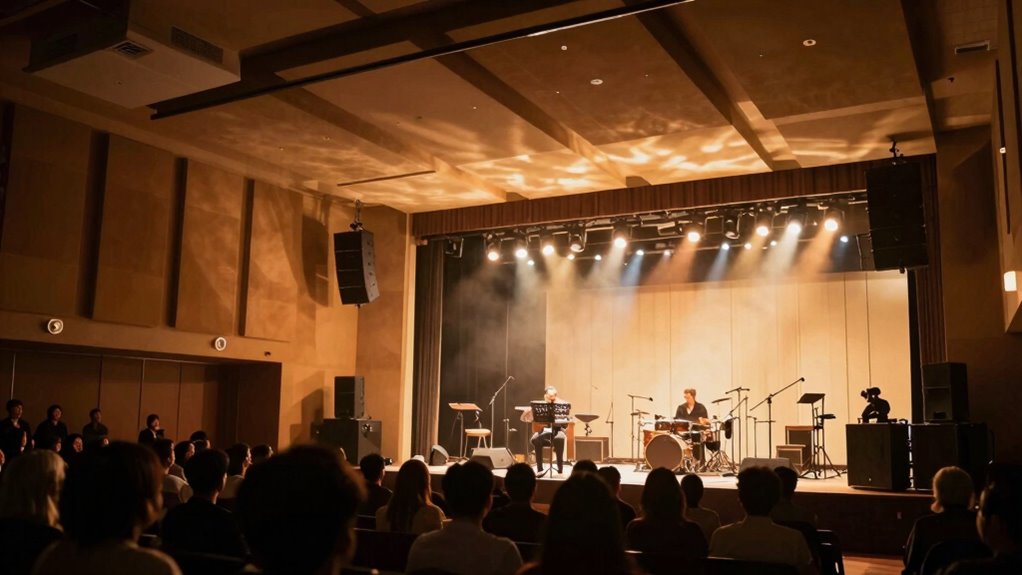

Live recordings often sound more spacious and lively because of natural reverb, carefully planned instrument placement, and the venue’s acoustics. These elements create a sense of air and depth that makes the music feel expansive, as reflections bounce off surfaces and interact with audience sounds. The room’s size, surfaces, and microphone techniques also play a role in capturing this atmosphere. If you want to understand how these factors come together, keep exploring how space influences sound.
Key Takeaways
- Natural reverberations from venue surfaces create a sense of spaciousness and “air” in live recordings.
- Thoughtful instrument placement enhances depth and spatial awareness, contributing to a lively sound.
- Audience noise and applause add spontaneous echoes, enriching the natural reverb effect.
- Larger venues with reflective surfaces produce more reverb, intensifying the sense of space.
- Microphone techniques capturing natural reflections help preserve the expansive, airy atmosphere.
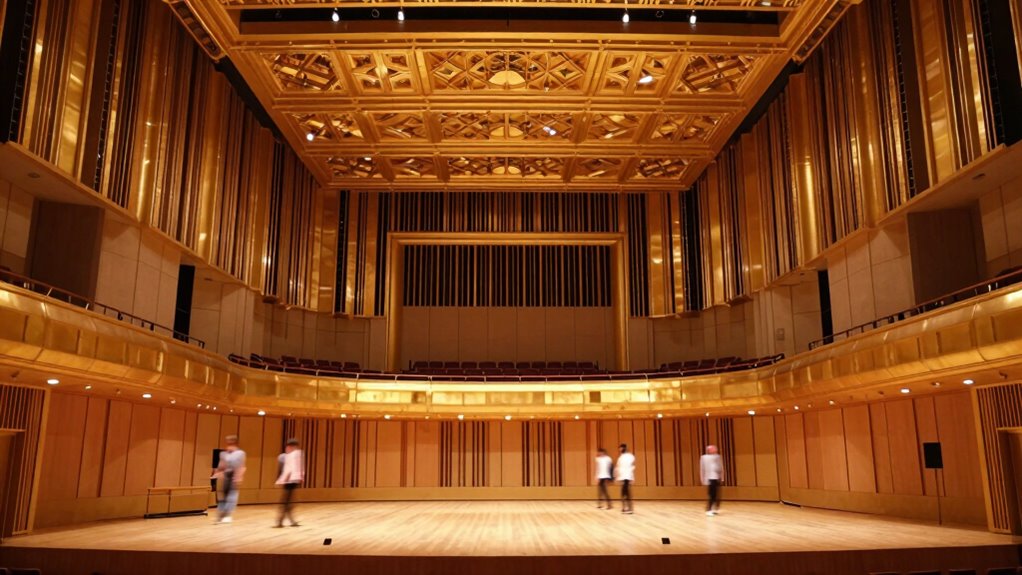
Reverb and space play a essential role in shaping the atmosphere and clarity of live recordings. When you listen to a live performance, you notice how the sound feels expansive and lively, unlike a studio recording. This sense of “air” comes from the natural reverberations bouncing off the venue’s surfaces and the way sound interacts within that space. This effect is enhanced by the venue’s contrast ratio, which influences how deep and vivid the reverberations appear. As a performer or sound engineer, understanding how instrument placement influences this effect is critical. When instruments are positioned thoughtfully on stage, the sound waves travel differently, creating distinct reflections that add depth and dimension to the recording. For example, placing drums and bass closer to the center can anchor the sound, while guitars or vocals positioned farther away can contribute to a sense of space. This deliberate arrangement allows the audience’s experience to feel more immersive, as if they’re right there in the room.
Thoughtful instrument placement enhances live sound, creating depth, space, and an immersive experience.
Audience interaction also profoundly impacts the reverb and space in a live recording. When performers feed off the crowd’s energy, it often results in spontaneous echoes and reverberations that aren’t present in studio settings. The cheers, applause, and even the ambient noise of the crowd contribute to the overall atmosphere, adding layers of natural reverb that enhance the “air” around each instrument. As a listener, you can sense how these interactions create a lively, dynamic soundscape. When a band engages with the audience, it encourages performers to play more freely, which can lead to variations in instrument placement and playing style, further influencing the spatial qualities of the recording.
In live settings, the spatial characteristics are also affected by the venue’s acoustics. Larger halls with reflective surfaces tend to produce more reverb, giving the recording a spacious feel. Smaller, more intimate venues might have less reverberation but still generate enough space through clever microphone placement and sound reinforcement techniques. As a listener, you’ll notice that the “air” in live recordings isn’t just about the room’s size but how the sound is captured and mixed. Good microphone placement captures the natural reflections, while strategic mixing can emphasize or reduce reverb, shaping the final atmosphere.
Ultimately, the sense of space and air in live recordings results from a combination of instrument placement, audience interaction, and venue acoustics. When these elements come together intentionally, they create a vibrant, immersive sound that transports you right into the live experience. Understanding how these factors influence reverb and space helps you appreciate why live recordings often feel more alive, expansive, and filled with “air” than their studio counterparts.

BOMGE mini 2 Channel USB Audio Interface for Recording, Streaming and Podcasting, with XLR/48V Phantom Power,Studio Quality Audio Interface for Guitarist, Vocalist, Podcaster or Producer
USB Audio Interface: Podcast, Record, Live Stream, This Portable Audio Interface Covers it All – USB sound card...
As an affiliate, we earn on qualifying purchases.
Frequently Asked Questions
How Does Microphone Placement Affect Perceived Space in Live Recordings?
You can considerably influence perceived space in live recordings through microphone placement. When you position microphones farther from the source, it enhances stereo imaging and creates a sense of depth, making the space feel larger. Conversely, close mic’ing with minimal distance reduces ambient sound, resulting in a more intimate feel. Adjusting microphone proximity and angle helps you craft the desired balance of air and space, shaping the overall atmosphere of your recording.
What Role Does Audience Noise Play in Creating ‘Air’ in Recordings?
Audience noise acts like a gentle breeze, filling the recording with warmth and life. Audience ambiance and crowd clapping create a sense of space, adding a natural reverb that surrounds the music. This lively background noise enhances the feeling of air, making the recording more immersive. It’s as if the energy of the crowd lifts the sound, giving your ears a vivid sense of depth and openness.
Can Digital Reverb Mimic the Natural Space of Live Performances Accurately?
Digital reverb can closely mimic the natural space of live performances, but it often falls short of capturing all nuances. You can tweak parameters to create a sense of air and depth, making it feel more authentic. However, because digital reverb lacks the complex reflections of a real environment, it may not fully replicate the organic feel of natural space. Still, skilled adjustments can make it convincingly immersive.
How Do Different Venue Materials Influence Reverb and Acoustic Space?
Imagine the venue walls and acoustic panels as the canvas of sound, shaping its journey. Hard, reflective walls, like marble or brick, bounce sound waves, creating a lively reverb that fills the space. Soft materials, like acoustic panels, absorb excess sound, reducing reverb and making the space feel intimate. Your perception of space hinges on these materials, dictating how lively or dry the acoustic environment becomes.
What Recording Techniques Best Capture the Ambience of a Live Concert?
To best capture the ambience of a live concert, you should focus on using room dimensions and mic techniques. Place mics strategically, like spaced pairs or ambient mics, to pick up the natural reverb and space. Keep the mics at a distance from the stage, allowing the room’s acoustics and dimensions to add depth. This approach preserves the live atmosphere, making listeners feel immersed in the concert’s true ambience.

CIXUN 2x2 USB-C Audio Interface for PC/Mac Recording, 24-bit/192kHz, Dual TS/XLR Inputs, +48V Phantom Power, Studio/Podcast/Streaming (Matte Black)
Plug-and-Play USB Audio Interface for PC and Mac No drivers, no complicated software—just plug in via USB and...
As an affiliate, we earn on qualifying purchases.
Conclusion
So, next time you listen to a live recording, notice the spaciousness surrounding the music—like a vast canyon echoing with every note. That “air” comes from the natural reverb and space captured during performance, making you feel as if you’re right there in the room. Embrace this sense of openness, because it’s what makes live recordings so rich and immersive, turning each listen into a journey through a vibrant, sonic landscape.

Focusrite Scarlett Solo 4th Gen USB Audio Interface, for the Guitarist, Vocalist, or Producer — High-Fidelity, Studio Quality Recording, and All the Software You Need to Record
The new generation of the songwriter's interface: Plug in your mic and guitar and let Scarlett Solo 4th...
As an affiliate, we earn on qualifying purchases.

MAONO USB Audio Interface for PC: Interface with XLR Input 24-bit/192kHz Routing Software LOOPBACK ASIO Driver for Recording Music, Home-Studio, Guitar, Podcast, Streaming, DAW(PS22 Lite Black)
Capture every detail of your sound: Imagine the perfect take, every note and beat, captured as if by...
As an affiliate, we earn on qualifying purchases.