
To size a festival shelter setup, start by estimating your expected guests, staff, and performers, and add a 10-15% buffer for unexpected attendees. Consider activities like food stalls, stages, and seating, and allocate extra space to avoid crowding at peak times. Guarantee the shelter provides enough height for movement and equipment. Good layout and flow help manage foot traffic and safety. Keep in mind environmental factors for a well-balanced, functional shelter—learn how to refine your plan further.

Get audio and creator gear delivered free with Prime
- Fast, free delivery on millions of items
- Prime Video, Amazon Music and more included
- Member-only deals all year
Key Takeaways
- Estimate peak attendance, including staff and performers, then add a 10-15% buffer for last-minute changes.
- Consider activity zones like food stalls and stages, ensuring ample space to prevent crowding.
- Match shelter height and width to provide rain protection, adequate headroom, and facilitate equipment movement.
- Incorporate sustainable materials and eco-friendly design practices to minimize environmental impact.
- Design pathways and entry/exit points to promote smooth foot traffic flow and prevent bottlenecks.
Planning the right size for your festival shelter is crucial to guarantee comfort, safety, and functionality. When you’re setting up a shelter, you need to consider how many people will use it and what activities will take place underneath. The size directly impacts rain protection, ensuring that everyone stays dry during unexpected showers, and crowd management, helping prevent congestion and chaos. If the shelter is too small, attendees might feel cramped, increasing the risk of accidents and diminishing their experience. Conversely, an oversized shelter can become costly, difficult to set up, and inefficient to manage, especially if it attracts less traffic than expected.
Start by estimating your expected attendance. Think about the number of guests, staff, and performers who will need shelter at any given time. It’s wise to add a buffer—about 10-15%—to accommodate unexpected guests or last-minute additions. Once you have a rough estimate, consider the activities planned. For example, if you’ll have food stalls, seating areas, or stages, allocate additional space for these zones. This ensures that the shelter doesn’t become crowded and that crowd management remains manageable, even during peak times.
Rain protection is a major reason for sizing your shelter carefully. A well-sized structure keeps water from seeping in and prevents puddles from forming inside, which could cause safety hazards or damage equipment. To maximize rain protection, choose a shelter with enough headroom to allow air circulation and prevent water from pooling on the roof. The height of the shelter should also account for easy movement of taller equipment or lighting fixtures. Additionally, considering biodiversity and sustainability in your shelter design can help minimize environmental impact and promote eco-friendly practices.
When planning the footprint of your shelter, consider the flow of foot traffic. You want to design pathways that guide people smoothly and reduce bottlenecks. Proper crowd management involves not only having enough space but also structuring entry and exit points to prevent overcrowding. Use barriers or signage if needed, and position high-traffic zones in areas that won’t obstruct emergency exits or essential pathways.
As an affiliate, we earn on qualifying purchases.
Frequently Asked Questions
How Do Weather Conditions Affect Shelter Size Decisions?
Weather conditions considerably influence your shelter size decisions. If rain protection is a priority, opt for a larger shelter to prevent water from spilling inside and to accommodate everyone comfortably. Wind resistance also matters; a bigger shelter with sturdy materials can better withstand gusts. Consider these factors carefully so your shelter offers reliable protection, keeps everyone comfortable, and remains durable during adverse weather.
What Safety Margins Should I Include in My Calculations?
Imagine your shelter as a sturdy ship braving unpredictable seas. You should add safety margins of about 10-20%, accounting for material durability, so it withstands weather surprises. Keep occupant comfort in mind by overestimating space needs slightly—more room means happier guests and fewer risks. This buffer guarantees your shelter remains resilient against gusts and heavy rain, creating a safe haven no matter what the weather throws your way.
How Often Should I Reassess Shelter Needs?
You should reevaluate your shelter needs regularly, especially after major events or changes in storage optimization strategies. Keep an eye on material durability, as wear and tear can affect safety and effectiveness. Reassessing every few months ensures your shelter remains suitable, addressing any issues early. Regular evaluations allow you to optimize storage, improve safety margins, and adapt to evolving festival requirements efficiently.
Can Modular Shelters Be Expanded Easily?
Yes, modular shelters can be expanded easily thanks to their modular flexibility. You just need to plan for expansion during initial setup, considering future growth. This involves strategic expansion planning, like leaving space for additional units or designing connections that simplify adding more sections later. With thoughtful planning, you can quickly adapt your shelter to changing needs, making it a cost-effective and versatile solution for growing festival requirements.
What Are Common Sizing Mistakes to Avoid?
Avoid sizing mistakes like underestimating your crowd, which can turn your shelter into a squeeze box. Make sure you consider material durability to withstand weather, and choose reliable vendors for quality components. Don’t overlook the importance of leaving extra space for movement and equipment. Proper planning keeps your festival safe and comfortable, preventing last-minute surprises. Think of it as planting seeds—bigger spaces grow happier, more successful events.
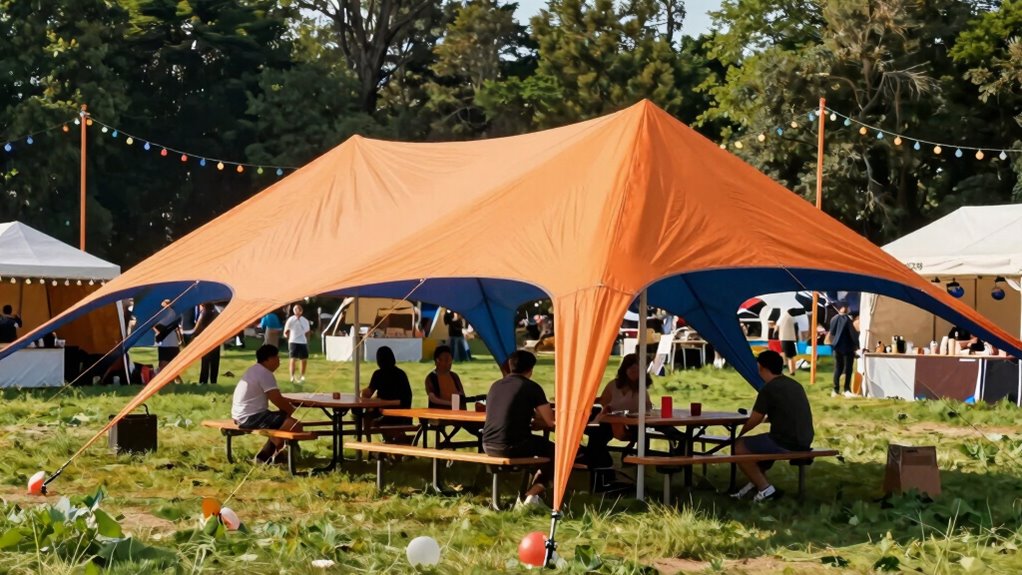
large event tent with rain protection
As an affiliate, we earn on qualifying purchases.
As an affiliate, we earn on qualifying purchases.
Conclusion
Think of your festival shelter as a sturdy tree standing tall amidst a busy grove. By carefully sizing and planning your setup, you create a shelter that offers shade and protection, no matter how lively or crowded the festival becomes. When you get it right, your space becomes a welcoming canopy, inviting everyone to gather underneath, safe and dry. With thoughtful sizing, your festival will flourish like a thriving forest—vibrant, secure, and ready for the season ahead.
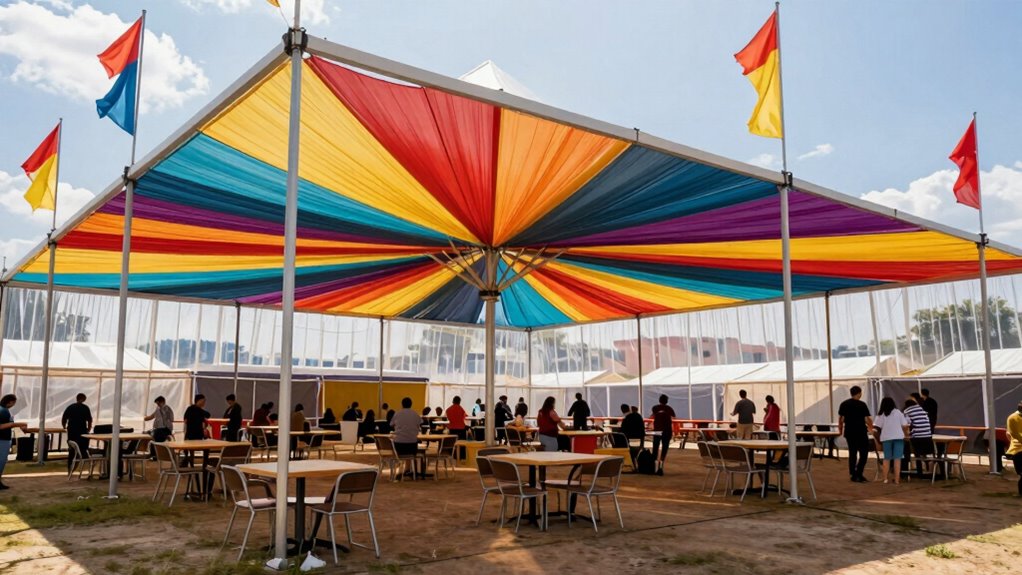
pop-up event shelter with high headroom
As an affiliate, we earn on qualifying purchases.
As an affiliate, we earn on qualifying purchases.
As an affiliate, we earn on qualifying purchases.
Fall Picks
fall essentials
As an affiliate, we earn on qualifying purchases.