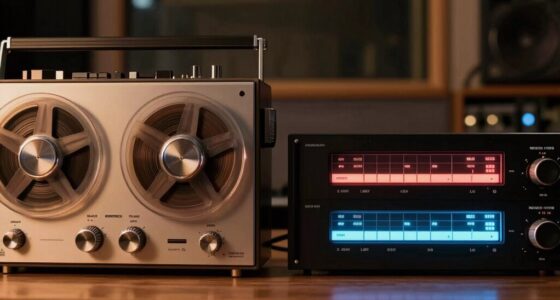


Live recordings sound different from studio albums because they capture the raw energy, spontaneous improvisations, and environmental influences of a performance. Audience noise, venue acoustics, and performer reactions add unique elements that can’t be perfectly controlled, making each live performance one-of-a-kind. The equipment used and the lack of extensive post-production also contribute to their authenticity. To understand how all these factors blend together, keep exploring what makes live music so special.
Key Takeaways
- Live recordings capture spontaneous improvisations and imperfections, creating a more authentic and emotionally resonant sound.
- Audience reactions and venue acoustics add natural ambient noise and reverberation, distinguishing live from studio recordings.
- The raw energy and unpredictability of live performances result in a less polished, more dynamic audio experience.
- Technical limitations and equipment constraints in live settings influence sound quality and clarity differently than controlled studio environments.
- The absence of extensive editing and post-production in live recordings preserves the organic, unfiltered essence of the performance.
What Makes Live Recordings Unique?

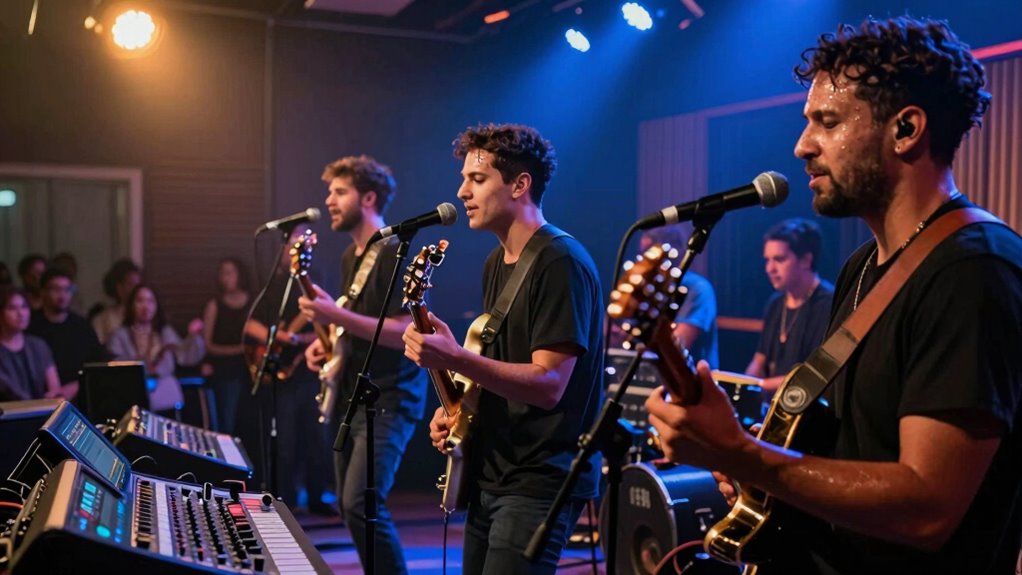
Live recordings stand out because they capture the raw energy and spontaneity of a performance, offering you a sense of being right there in the moment. The audience energy plays a vital role, as their reactions and enthusiasm influence the atmosphere, making each recording unique. You can often hear cheers, claps, and vocalizations that bring authenticity to the experience. Performer improvisation also sets live recordings apart, revealing an artist’s creativity and responsiveness to the moment. These spontaneous moments add unpredictability and emotion that studio versions might lack. When you listen, you’re not just hearing a song; you’re experiencing the dynamic interaction between performer and crowd. This authenticity and unpredictability make live recordings a compelling and vibrant reflection of a performance, emphasizing the importance of performance spontaneity.
How Venue Acoustics Influence Live Sound

The unique energy of a live recording is shaped not just by performers and audience reactions but also by the venue itself. Venue size plays a vital role, affecting how sound travels and reverberates. Larger venues can create echoes and longer decay times, while smaller spaces tend to produce a more intimate sound. Acoustic treatment is equally important; well-treated venues absorb or diffuse sound waves, reducing unwanted reflections. Additionally, the cultural significance of a venue can influence the atmosphere and perceived sound quality, contributing to the distinctiveness of live recordings. Here are three key factors:
Venue size and acoustic treatment shape the distinct sound of live recordings.
- Venue size influences the balance between clarity and reverberation.
- Acoustic treatment controls echo and enhances sound quality.
- Architectural features shape how sound spreads and interacts within the space.
Understanding these elements helps explain why live recordings sound so distinct from studio albums.
Why Live Recordings Capture Unpredictable Environments

Because live recordings happen in real-time environments, they inevitably capture the unpredictability of the moment. Audience energy can surge unexpectedly, influencing performers to play with more passion or spontaneity. This dynamic creates a unique atmosphere that’s impossible to replicate in a studio. Improvisational elements also come into play, as musicians often deviate from rehearsed parts, responding to the moment’s vibe or technical challenges. These unpredictable factors give live recordings a raw, authentic feel that reflects the actual performance, not a polished, premeditated version. You’ll notice the shifts in tempo, spontaneous solos, and the crowd’s reactions—all of which contribute to a sound that’s alive and organic. This unpredictability is what makes live recordings distinct and often more emotionally compelling.
How Crowd Noise Affects the Sound of Live Music

Crowd noise plays a significant role in shaping the overall sound of live music, often adding an energetic layer that can’t be replicated in studio recordings. This noise reflects crowd energy and audience interaction, which influence how you experience the performance. Here are three ways crowd noise impacts the sound:
- It amplifies the emotional intensity, making the performance feel more alive.
- It creates a natural echo and background hum that adds depth to the sound.
- It encourages performers to feed off the audience, resulting in spontaneous improvisations and heightened energy.
- The sound quality of live recordings is often affected by crowd noise, which can sometimes obscure finer musical details.
These elements make live recordings distinct, immersing you in the concert atmosphere. Crowd noise isn’t just background; it actively shapes the vibe and authenticity of live music.
Differences in Equipment and Techniques for Live and Studio Recordings

Live and studio recordings differ considerably in the equipment and techniques used to capture sound. In a studio, you have access to high-quality recording equipment and precise microphone placement, allowing for controlled sound capture. You can position microphones close to instruments or vocals to maximize clarity or set them further away for natural ambiance. Studio setups often involve multi-track recording, enabling you to adjust each element separately during mixing. In contrast, live recordings rely on the existing microphone placement at the venue, which captures a mix of audience, instruments, and environment simultaneously. The equipment used is often more rugged and limited compared to studio gear. These differences influence the final sound, giving live recordings a raw, energetic feel, while studio albums tend to be cleaner and more polished. Additionally, microphone placement in a studio environment plays a crucial role in achieving the desired sound quality, offering more control than in live settings.
Why Live Performances Often Have More Dynamic Range

Live performances often exhibit more dynamic range than studio recordings because the energy and spontaneity of a live setting allow musicians to push their playing to emotional and technical extremes. This environment encourages expressive playing, leading to greater amplitude variation and dynamic expression. As a result, you experience moments of intense volume shifts and subtle nuances that capture raw emotion. Additionally, the unpredictability of live settings often leads to improvisation, which can generate unexpected peaks and valleys in sound levels. Consider these factors: 1. Spontaneous improvisation heightens amplitude variation, creating unpredictable peaks and valleys. 2. Audience interaction fuels performers to amplify their emotional expression. 3. Less restrictive recording conditions give musicians freedom to explore dynamic extremes without overdubs or edits.
Live performances reveal raw emotion through spontaneous, dynamic playing and audience energy.
All these elements combine to make live recordings vibrant and emotionally engaging, highlighting the true power of a performance’s dynamic range.
How Mixing and Post-Production Shape Live Recordings
While the raw energy of a live performance provides a compelling foundation, mixing and post-production techniques markedly shape the final sound of live recordings. Sound engineering plays a vital role as you adjust levels, balance instruments, and enhance clarity. Audio editing allows you to remove unwanted noise, tighten performances, and correct minor timing issues without losing the live feel. These processes involve equalization, compression, and reverb to create a polished, cohesive sound that captures the audience’s energy while maintaining authenticity. You carefully craft the stereo image to emphasize key elements and guarantee the recording feels immersive. Detecting passive voice plays a significant role in ensuring clarity and directness in your mix decisions. Ultimately, your mixing decisions influence how listeners perceive the performance, blending spontaneity with technical precision to produce a compelling live recording.
What Makes Live Tracks Feel Raw and Authentic

What makes live tracks feel raw and authentic often comes down to the spontaneous energy and imperfections that happen in the moment. This sense of immediacy is driven by improvisation and spontaneity, making each performance unique. Additionally, the history of pinball machines highlights how authenticity in design and performance can evoke nostalgia and genuine engagement. Here are three key elements:
- Improvisation: Musicians often deviate from rehearsed parts, creating fresh, unexpected moments.
- Spontaneity: Live artists respond instantly to the crowd and environment, infusing energy into the performance.
- Imperfections: Small mistakes or off-the-cuff interactions add a human touch, emphasizing authenticity.
These factors combine, making live recordings feel more genuine and emotionally resonant than polished studio versions. Your experience becomes more immersive because you’re hearing a performance that’s unfiltered and real.
Common Challenges When Recording Live Music

Capturing live music presents a range of challenges that can impact the quality and authenticity of the recording. Audience interaction can create unpredictable noise levels and distractions, making it hard to isolate the performers’ sound clearly. You might also struggle with balancing the live ambiance and the clarity of each instrument or vocal, which is essential for an authentic recording. Technical limitations, like inadequate microphone placement or equipment issues, can further hinder the process. Unexpected acoustics or feedback may distort sound and reduce fidelity. You need to adapt to these variables quickly, often sacrificing some control over the final result. Recognizing these challenges helps you plan better, but understanding them also highlights why live recordings often sound different—and sometimes more genuine—than studio albums. Effective microphone placement and equipment choices are crucial for capturing the nuances of live performances microphone placement.
Frequently Asked Questions
How Do Different Microphone Placements Impact Live Recording Sound Quality?
Different microphone positioning notably impacts live recording sound quality by capturing how sound interacts with room acoustics. Placing mics closer to instruments reduces ambient noise and echo, resulting in a clearer, more focused sound. Conversely, distant placement captures more room ambiance, adding natural reverberation. Adjusting microphone placement allows you to balance direct sound and room effects, shaping the overall tone and clarity of your live recording.
Can Live Recordings Be as Clean and Polished as Studio Albums?
Live recordings can be as clean and polished as studio albums, but it takes skill and effort. You’ll need to minimize background noise and use high-quality equipment to capture clear sound. Post-production editing helps achieve studio perfection by removing imperfections and balancing levels. While live recordings might have some natural ambiance, with careful techniques and editing, you can produce a polished, professional sound that rivals studio albums.
What Role Does Audience Interaction Play in Live Recording Acoustics?
Imagine you’re at a concert, and the crowd’s enthusiasm fuels the performance—this is audience energy in action. It influences live recording acoustics by amplifying sound and sometimes causing acoustic feedback. Your interaction, like cheering or clapping, can boost performers’ energy but also introduce unexpected sound variations. This lively environment makes each recording unique, capturing the raw, authentic vibe that studio albums often lack, making the experience more immersive.
How Do Live Recording Engineers Compensate for Unpredictable Environment Sounds?
You can compensate for unpredictable environment sounds by carefully managing ambient noise and calibrating equipment. Live recording engineers use directional microphones and noise gates to isolate the main sound sources, reducing ambient noise. They also frequently calibrate their equipment before the performance, ensuring consistent levels. During the recording, they monitor ambient sounds continuously, making real-time adjustments to microphone placement and settings to maintain clear, balanced audio amidst unpredictable environment sounds.
Are There Technological Innovations That Make Live Recordings Sound More Studio-Like?
You’ll be amazed how modern tech makes live recordings sound more studio-like. Digital processing smooths out rough edges, while noise reduction clears away unwanted background sounds, like a gentle hand erasing static from a photograph. These innovations help you focus on the music’s essence, capturing clarity and balance that bring the energy of a live performance into your headphones, making it feel like a studio session right in your ears.
Conclusion
So, when you hear a live recording, you’re not just listening to music—you’re experiencing a wild, unpredictable adventure packed with raw energy, imperfect magic, and the chaos of real life. Every crack, crowd cheer, and unexpected sound makes it feel like you’re right there in the middle of the chaos, witnessing something electrifying that no polished studio album can ever truly capture. Live recordings aren’t just sound—they’re an adrenaline-fueled, heart-pounding explosion of authenticity!