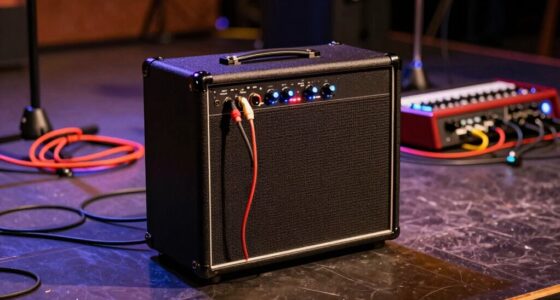

To get the best sound for singer-songwriters in small venues, focus on balancing your amplifier’s EQ settings—treble, mid, and bass—to suit the environment. Keep the volume enough to fill the space without feedback, and use effects sparingly to add depth. Choose a lightweight, battery-powered amp with multiple inputs and intuitive controls for quick adjustments. Mastering these basics will help you achieve clear, warm tone in any setting, and exploring further will fine-tune your sound skills.

Get audio and creator gear delivered free with Prime
- Fast, free delivery on millions of items
- Prime Video, Amazon Music and more included
- Member-only deals all year
Key Takeaways
- Focus on balancing EQ controls—treble, mid, bass—to shape a clear, natural tone suitable for small venues.
- Choose lightweight, portable amps with multiple inputs and rechargeable batteries for versatile, on-the-go performances.
- Adjust amplifier settings based on venue size and environment to optimize sound clarity and projection.
- Regularly check and secure connections to maintain signal quality and prevent noise or feedback issues.
- Prioritize warmth and clarity over excessive volume or effects for an authentic acoustic sound.
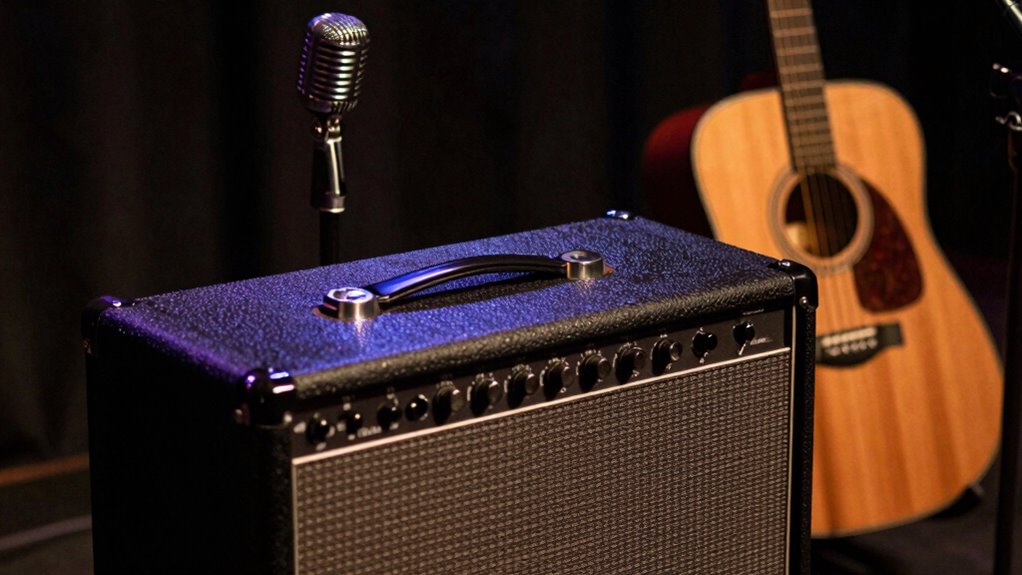
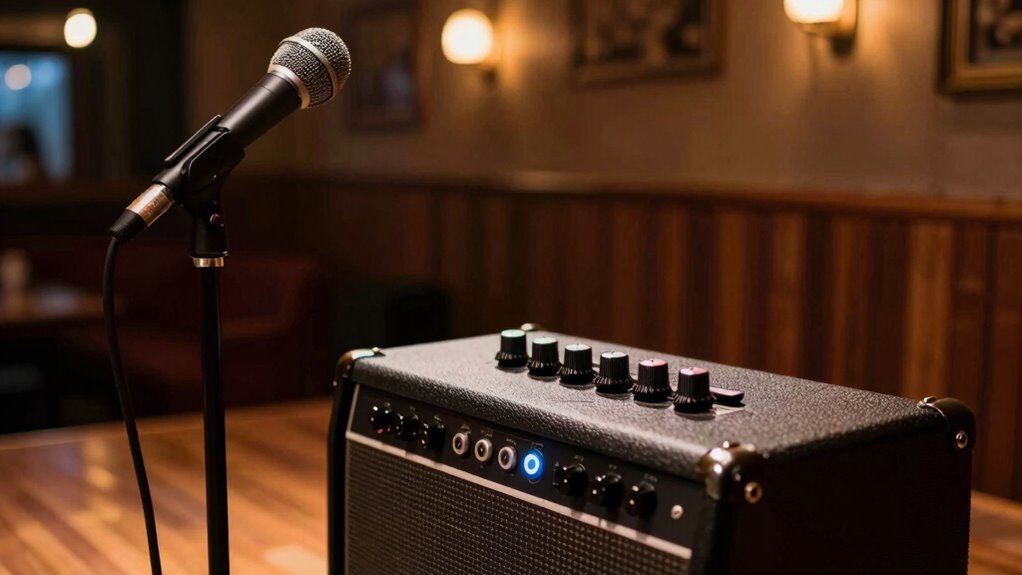
Ever wondered how to make your acoustic guitar sound its best in any setting? It all starts with understanding your amplifier setup. Your guitar amplifier settings are vital because they shape your tone and help project your sound clearly, whether you’re playing solo at a small venue or practicing at home. When adjusting your amp, focus on balancing the EQ controls—treble, mid, and bass—so your sound isn’t too harsh or too dull. For most singer-songwriters, a little boost in the mid-range can help your voice and guitar blend smoothly. Keep the volume at a level that’s loud enough to fill the space without causing feedback or distortion. If your amp has effects like reverb or chorus, experiment with them to add depth without overwhelming your natural tone. Remember, the goal is clarity and warmth, not overpowering volume or overly processed sound.
If you’re gigging or practicing in different locations, portable amplifier options become essential. These amps are designed to be lightweight, easy to carry, and versatile enough to adapt to various environments. Many portable amps feature built-in rechargeable batteries, so you don’t have to worry about finding power outlets on the go. They often come with multiple input channels, allowing you to connect your guitar, microphone, or even a small backing track. When selecting a portable amplifier, consider its wattage—something around 20 to 50 watts usually provides enough volume for small venues or outdoor jam sessions. Also, look for models with a good balance of tone controls and effects; this way, you can tailor your sound on the fly. Additionally, understanding the role of amplifier settings can help you optimize your sound in different scenarios. A good grasp of biodiversity influences ecosystems and the environment can inspire you to explore sustainable practices for your musical equipment and practice space, promoting more eco-friendly choices.
Once you’ve chosen your amp and dialed in your settings, practice adjusting them as you move from different venues. Small rooms may need less treble, while outdoor gigs might require more bass to cut through ambient noise. Portable amps with intuitive controls make this process easier because you can quickly tweak your sound without fumbling through complicated menus. It’s also beneficial to familiarize yourself with different amplifier techniques to further refine your tone and performance. Being aware of sound environment conditions can help you adapt your settings more effectively in real time. Don’t forget to check your connections and ensure your cables are secure—poor connections can lead to unwanted noise or signal loss. With the right setup and a good understanding of your amp settings, you’ll find your acoustic guitar sounds warm, clear, and perfectly suited to any small venue or practice space. Mastering these basics gives you the confidence to perform your best, no matter where you play.
acoustic guitar amplifier with rechargeable battery
As an affiliate, we earn on qualifying purchases.
As an affiliate, we earn on qualifying purchases.
Frequently Asked Questions
How Do I Connect My Acoustic Guitar to the Amplifier?
To connect your acoustic guitar to the amplifier, start by plugging a guitar cable into your guitar’s output or input jack. Then, connect the other end of the cable to the amplifier’s input jack. Make certain both connections are secure. Turn on your amplifier and adjust the volume to your preferred level. This simple setup guarantees your guitar sound is properly amplified for playing at small venues or practice sessions.
What Is the Ideal Wattage for Small Venue Amplifiers?
For small venues, you’ll want an amplifier with at least 30 to 50 watts—more power means your sound system setup can cut through the noise like a hot knife through butter. If you aim for crystal-clear acoustic guitar tone and want to avoid distortion or feedback, go for an amp in this range. It’ll give you the perfect balance of volume and clarity, ensuring your music sounds amazing everywhere you perform.
How Do I Prevent Feedback During Performances?
To prevent feedback during performances, focus on feedback control by adjusting your amplifier’s gain and EQ settings. Keep your microphone placement strategic—position it away from the speaker and avoid pointing it directly at the amp. Use a feedback eliminator if available, and always test your setup beforehand. Moving the microphone slightly and lowering the volume can also help reduce feedback issues, ensuring a clearer sound for your audience.
What Types of Microphones Are Best for Acoustic Amps?
Sure, grab that mysterious “best” microphone—probably a condenser or a dynamic—because your acoustic amp loves them. For ideal sound, you’ll want to master microphone placement; position it where your voice shines without inviting feedback. Fancy wireless microphones are great if you’re a runaway star dodging cables, but remember, no tech can beat proper placement. Keep it close, keep it clear, and your sound will shine brighter than your ego.
How Do I Choose the Right Effects for My Sound?
You choose the right effects by considering your desired sound and tone shaping needs. Start with digital effects like reverb, delay, or chorus that enhance your natural tone. Experiment with different settings, listening carefully to how each one influences your sound. Trust your ears, and don’t overload your signal—select effects that complement your playing style and venue, helping you craft a clear, expressive performance.
portable acoustic guitar amp with multiple inputs
As an affiliate, we earn on qualifying purchases.
As an affiliate, we earn on qualifying purchases.
Conclusion
Now that you’ve got the basics down, your acoustic amp becomes more than just a piece of gear—it’s your voice on stage. Think of it as the bridge between your soul and your audience, amplifying every nuance and emotion. With this knowledge, your performances will resonate deeper, turning small venues into intimate conversations. So, embrace your amplifier, and let your music carry your story—because every note deserves to be heard.
small venue acoustic guitar amplifier
As an affiliate, we earn on qualifying purchases.
As an affiliate, we earn on qualifying purchases.
compact acoustic guitar amp with effects
As an affiliate, we earn on qualifying purchases.
As an affiliate, we earn on qualifying purchases.
Halloween Picks
halloween
As an affiliate, we earn on qualifying purchases.