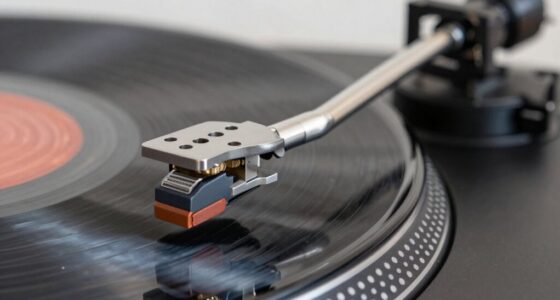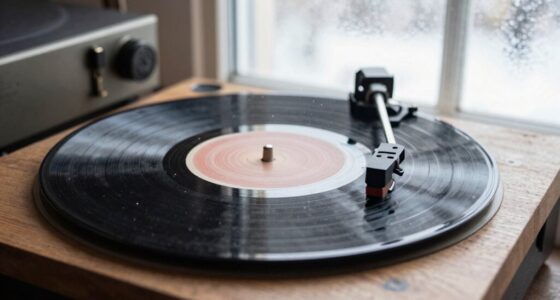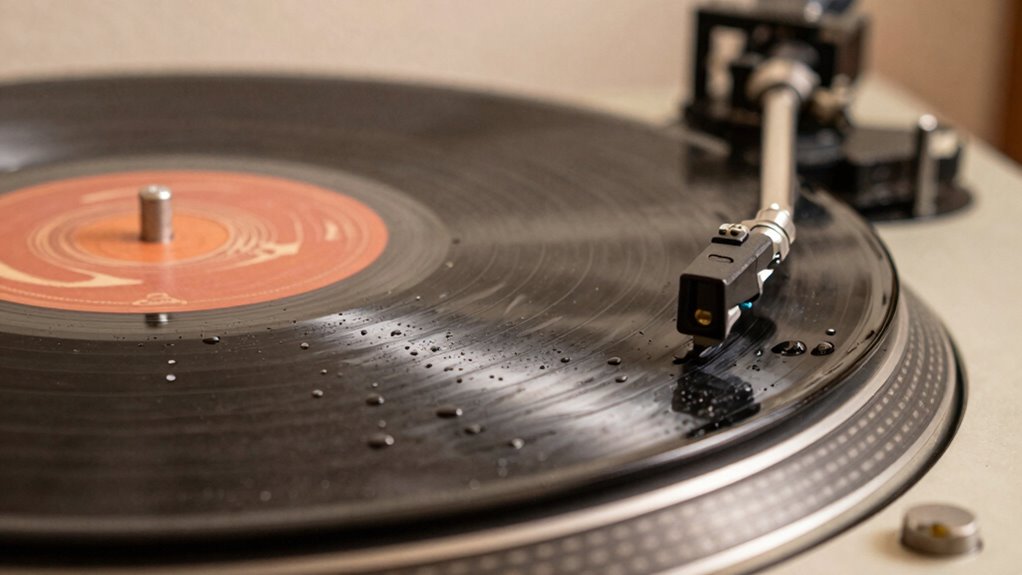

Humidity impacts vinyl records more than most people notice because it directly affects their physical shape and sound quality. Too much moisture causes warping and mold, while too little makes vinyl brittle and prone to cracks. Fluctuating humidity levels can weaken your collection over time. Keeping the environment stable is essential, as it preserves both the record’s longevity and sound. If you want to protect your collection better, you’ll learn more by exploring these factors further.

Get audio and creator gear delivered free with Prime
- Fast, free delivery on millions of items
- Prime Video, Amazon Music and more included
- Member-only deals all year
Key Takeaways
- Humidity causes vinyl to absorb moisture, leading to warping, mold, and surface noise during playback.
- Fluctuating humidity levels can weaken vinyl, making it brittle or causing deformation over time.
- Many overlook humidity’s role, focusing instead on dust or scratches, but moisture damage is more insidious.
- Improper storage in damp or overly dry environments accelerates deterioration unseen by casual collectors.
- Maintaining consistent humidity between 40-50% is crucial for preserving vinyl’s physical and sound integrity.
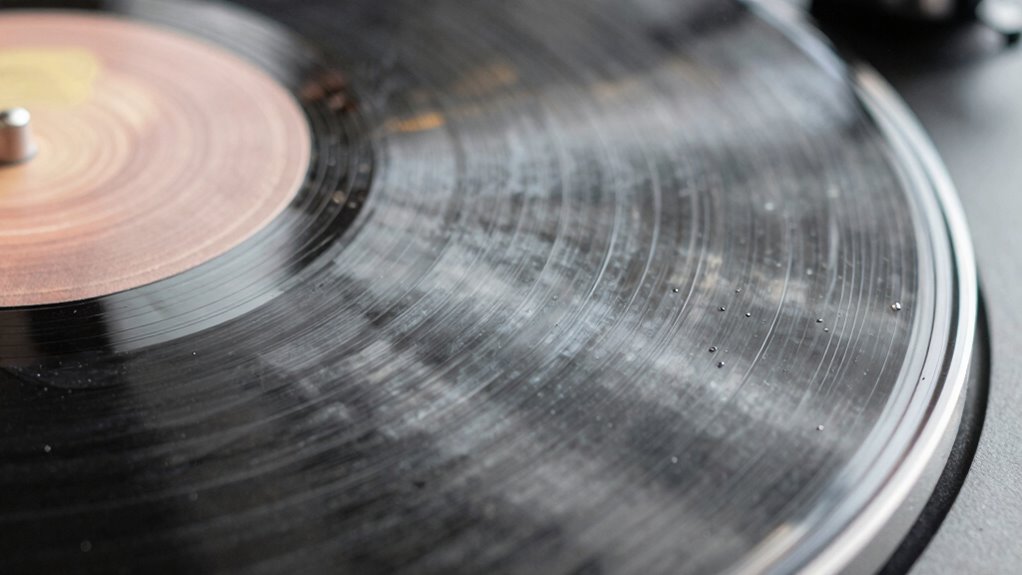
Have you ever noticed how your vinyl records sometimes warp or skip after a humid day? It’s a common frustration, and many people overlook how much climate control and storage conditions influence your records’ quality. Humidity plays a bigger role than you might realize because vinyl is sensitive to moisture levels. When the air is humid, it causes the vinyl to absorb moisture, which can lead to warping or even mold growth over time. Conversely, too dry an environment can make the vinyl brittle, increasing the risk of cracks or breaks. That’s why maintaining a stable environment is essential for preserving your collection’s integrity.
Humidity affects vinyl’s quality by causing warping, mold, or brittleness; keep environment stable to preserve your collection.
Your storage conditions directly impact how well your records hold up over time. If you leave them in a basement or an attic with fluctuating humidity, you’re setting yourself up for trouble. Basements tend to be damper, especially during rainy seasons, which accelerates warping and causes surface noise during playback. Attics can be excessively dry or hot, which also damages vinyl by making it brittle. The key is to find a space with consistent, moderate humidity levels—ideally between 40% and 50%. This range helps prevent the vinyl from expanding or contracting, which leads to warping or skipping. Proper storage conditions also include keeping records upright and in sleeves, away from direct sunlight, which can further damage the material. Additionally, understanding the sensitivity of vinyl to moisture can help you take better precautions to protect your collection.
Climate control becomes your best friend when it comes to protecting your vinyl collection. Investing in a dehumidifier or humidifier can help you maintain a stable environment, especially if you live in an area with extreme humidity fluctuations. Air conditioning or a climate-controlled room keeps the air dry and steady, reducing the risk of warping. Store your records in a cool, dark place where temperature swings are minimal. This isn’t just about comfort—your records’ longevity depends on consistent climate control. If you notice warping or skipping, check your storage conditions first. Sometimes, a simple adjustment to your environment can reverse or prevent further damage. Proper climate control is essential for maintaining the quality of your collection over time.
In the end, understanding how climate control and storage conditions influence your vinyl collection can save you money and frustration. It’s not just about buying good records; it’s about creating the perfect environment to keep them sounding great for years. By paying attention to humidity and ensuring your storage space remains stable, you safeguard your collection from the unseen effects of moisture. Developing a climate-conscious approach can help you maintain their sound quality and lifespan. Your records will thank you, delivering crisp sound and longevity that’s worth the effort.
vinyl record storage humidity control
As an affiliate, we earn on qualifying purchases.
As an affiliate, we earn on qualifying purchases.
Frequently Asked Questions
How Does Humidity Affect Vinyl Record Storage Over Time?
Humidity impacts vinyl record storage over time by causing warping, especially with temperature fluctuations. When humidity levels are high, records can absorb moisture, leading to mold growth and deterioration. Using proper storage containers helps protect your records from humidity damage. Keep your vinyl in a cool, stable environment, and avoid drastic temperature changes to preserve sound quality and prevent warping caused by humidity’s effects.
Can High Humidity Cause Permanent Damage to Vinyl Records?
High humidity can indeed cause permanent damage to vinyl records, contrary to common humidity myths. It may lead to warping, mold growth, and surface degradation, threatening your vinyl preservation efforts. If you ignore humidity levels, you risk irreversible harm to your collection. Stay vigilant—controlled environments are essential for safeguarding your records, and understanding humidity’s true impact helps you avoid costly mistakes that could compromise your treasured vinyl.
What Are the Best Ways to Control Humidity in a Record Collection?
You should use proper storage solutions, like airtight containers or climate-controlled cabinets, to control humidity in your record collection. Avoid humidity myths that suggest records are unaffected by moisture; instead, keep your environment stable. Use a dehumidifier in humid spaces and regularly monitor humidity levels with a hygrometer. These steps help prevent warping, mold, and other damage, ensuring your vinyls stay pristine for years.
Does Humidity Impact the Sound Quality of Vinyl Records?
Humidity effects can profoundly impact the sound quality of your vinyl records. When humidity levels fluctuate, it can cause the vinyl to expand or contract, leading to warping and increased surface noise. High humidity can promote mold growth, which damages records and affects playback. Conversely, low humidity can make the vinyl brittle. Maintaining stable humidity helps preserve sound quality, ensuring your records sound as good as when you first purchased them.
Are Certain Types of Vinyl More Sensitive to Humidity Than Others?
Are you aware that certain vinyl types are more sensitive to humidity? You’ll find that material sensitivity varies, especially with different formulations like polyvinyl chloride or specialty blends. These variations make some records more prone to warping or warping in improper storage environments. To preserve your collection, you should always consider the storage environment and choose records made from materials less affected by humidity, ensuring better sound quality and longevity.
digital hygrometer for vinyl collection
As an affiliate, we earn on qualifying purchases.
As an affiliate, we earn on qualifying purchases.
Conclusion
Remember, a little moisture can go a long way, and ignoring humidity’s impact can lead to costly mistakes. Vinyl records are delicate, and even subtle changes in humidity can cause warping, cracking, or sound issues. Keep an eye on the environment, because as the saying goes, “A stitch in time saves nine.” By staying proactive, you’ll protect your collection and enjoy your music without worry—humidity might be small, but its effects are mighty.
As an affiliate, we earn on qualifying purchases.
climate-controlled vinyl storage cabinet
As an affiliate, we earn on qualifying purchases.
As an affiliate, we earn on qualifying purchases.
Fall Picks
fall essentials
As an affiliate, we earn on qualifying purchases.