


Call-and-response solos are a powerful way to turn improvisation into a musical dialogue. You create a conversation by playing a phrase (the call) and then responding to it with a complementary or contrasting line. This technique keeps your performance lively, engaging your audience, and fostering spontaneous interaction. Rhythm patterns set the groove, while listening and quick thinking ensure each exchange feels natural and dynamic. Keep exploring, and you’ll discover how this simple trick transforms your improvisations into enthralling musical moments.
Key Takeaways
- Call-and-response creates a dynamic musical dialogue that engages both performers and the audience.
- Rhythm patterns establish a steady groove, guiding responses and maintaining conversational flow.
- Improvisation techniques like motif development and rhythmic variation foster spontaneity and coherence.
- Practicing responsive listening and internalizing rhythmic language enhances the natural flow of solos.
- The interactive exchange transforms solos into memorable, lively musical moments, making improvisation truly musical.
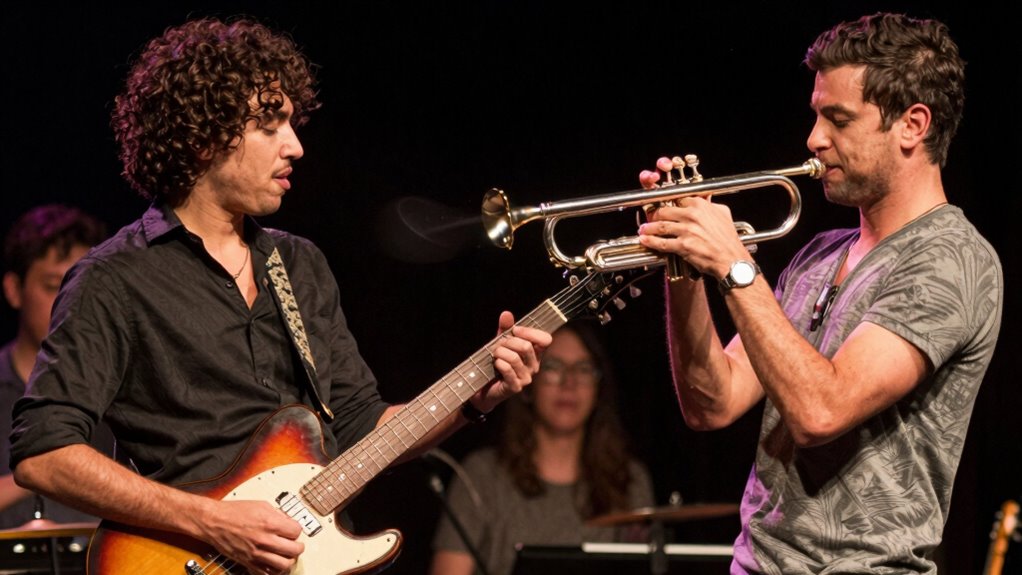
Call-and-response solos are a dynamic musical technique that creates an engaging dialogue between performers. When you use this approach, you’re fundamentally crafting a musical conversation, where one musician plays a phrase, and another responds in kind. This back-and-forth not only keeps the audience captivated but also adds a layer of spontaneity and interaction that elevates improvisation to a new level. To master call-and-response solos, you need to understand how rhythm patterns and improvisation techniques intertwine, shaping the overall flow of the performance.
Rhythm patterns are the backbone of effective call-and-response solos. They set the groove and give each response a foundation to build on. You should experiment with syncopation, accents, and varying note durations to make each exchange feel fresh and unpredictable. For example, one player might establish a steady, repeating rhythm pattern that acts as a call, prompting a responsive phrase that either complements or contrasts it. By playing with different rhythmic motifs, you create a sense of anticipation and surprise, which keeps your improvisation lively and engaging.
Improvisation techniques are critical when executing call-and-response solos. You want to develop the ability to think quickly and adapt your phrases on the spot. This means listening carefully to your partner’s response and tailoring your next move accordingly. Techniques like motif development, where you take a small musical idea and expand or modify it, help create coherence within your improvisation. Additionally, using call motifs that you can vary rhythmically or melodically allows you to maintain a conversational flow while adding complexity. The key is to be flexible—sometimes you want to mirror your partner’s rhythm or phrasing, and other times you might intentionally introduce contrast to create tension.
Practicing these solos involves more than just playing along; it’s about internalizing the rhythmic language and honing your ability to respond instinctively. You can start by isolating common rhythm patterns and improvisation techniques, then gradually increasing the complexity as you gain confidence. Listening to master musicians who excel in call-and-response improvisation can also teach you how to balance spontaneity with musical coherence. Mastering the use of rhythm and improvisation techniques can help you respond more effectively and create more engaging solos. Ultimately, the secret is to stay attentive and responsive, making each solo feel like a meaningful conversation rather than a series of disconnected licks.
Incorporating rhythm patterns and improvisation techniques into your call-and-response solos transforms your playing into a compelling, interactive experience. When done well, it invites your audience into a musical dialogue that feels fresh and authentic every time. With practice, you’ll develop an intuitive sense for timing, phrasing, and response, turning simple exchanges into memorable musical moments.

The Book of Call & Response: Revised Edition (First Steps in Music series)
As an affiliate, we earn on qualifying purchases.
As an affiliate, we earn on qualifying purchases.
Frequently Asked Questions
How Did Call-And-Response Originate in Musical History?
You might not realize it, but call-and-response has deep musical origins in African traditions, where it served as a way to communicate and preserve cultural stories. This structure spread through enslaved communities to American folk, gospel, and jazz, becoming culturally significant as a communal musical practice. Its roots emphasize participation, dialogue, and shared cultural identity, shaping how improvisation feels interactive and lively across many musical genres today.
Which Genres Most Commonly Use Call-And-Response Improvisation?
Ever wonder where call-and-response improvisation most often appears? You’ll find it mainly in African American jazz, blues, and gospel, rooted in deep cultural traditions. These genres embrace improvisation techniques that foster interaction and spontaneity, engaging both performers and audience. This musical dialogue creates a vibrant, communal atmosphere, making call-and-response a powerful tool that connects performers to cultural roots and enriches the improvisational experience.
Can Beginners Effectively Incorporate Call-And-Response Solos?
Yes, you can effectively incorporate call-and-response solos as a beginner. Focus on interactive learning and start with simple patterns to build confidence. Practice basic call-and-response techniques slowly, listening carefully to your own playing and others’. This approach helps you develop musical intuition and improvisation skills gradually. As you progress, experiment with more complex responses, making your solos more dynamic and engaging while enjoying the learning process.
What Are Common Challenges When Performing Call-And-Response Solos?
You might face challenges like timing issues, making it hard to stay in sync with your partner, and improvisation confidence, which can waver during performance. These problems can cause awkward pauses or mismatched responses. To overcome them, practice with a metronome, focus on listening carefully, and build your confidence gradually. With patience, you’ll improve your ability to react quickly and stay in rhythm during call-and-response solos.
How Does Call-And-Response Influence Audience Engagement During Live Performances?
Ever wondered how call-and-response boosts audience engagement? It creates a dynamic musical interaction that invites listeners to participate actively, making them feel part of the performance. By involving the crowd in the improvisation, you foster a sense of connection and excitement. This interaction keeps the energy high, encourages applause, and makes your live show memorable. So, using call-and-response turns passive listeners into active participants, elevating the entire experience.

Patterns For Improvisation
As an affiliate, we earn on qualifying purchases.
As an affiliate, we earn on qualifying purchases.
Conclusion
Now that you understand call-and-response solos, you hold the brush to paint your own musical canvas. This conversational approach transforms solos into a vibrant dialogue, turning mere notes into a lively conversation that breathes life into your improvisation. Think of it as a dance of voices—each phrase a step, each response a leap—creating a symphony where your spirit and sound intertwine. Embrace this trick, and watch your solos come alive with the rhythm of connection.

Magic Motives: A Method for Developing Jazz Vocabulary, Book & Online Audio
As an affiliate, we earn on qualifying purchases.
As an affiliate, we earn on qualifying purchases.

A Guide to Jazz Improvisation Key of Bb
Bb Instruments
As an affiliate, we earn on qualifying purchases.
As an affiliate, we earn on qualifying purchases.


