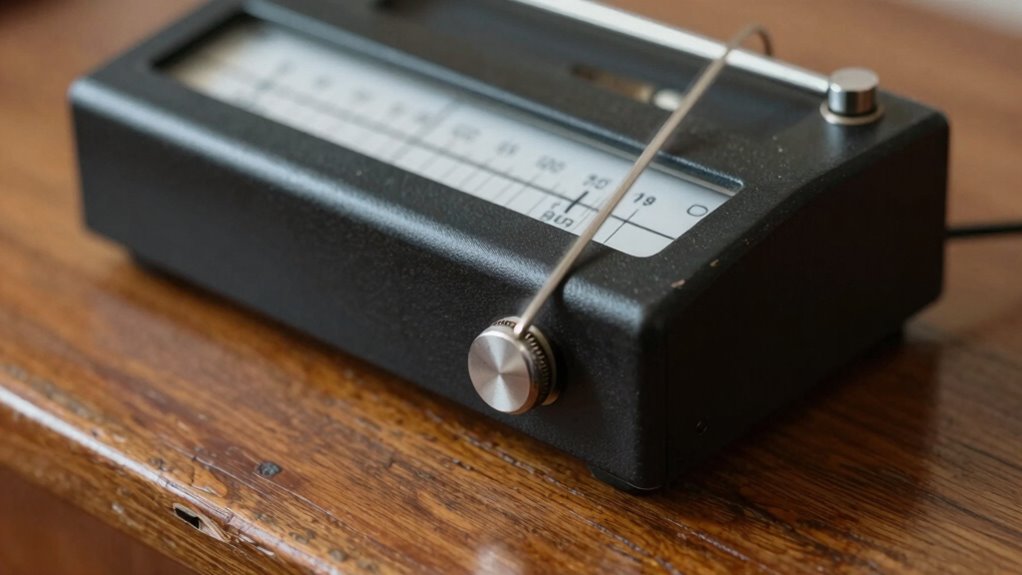
Tempo drift happens when your band speeds up or slows down over time, often due to human slip-ups, faulty equipment, or not using consistent cues. To fix this, regularly calibrate your metronome, use click tracks or visual signals, and practice playing together frequently. Ensuring everyone stays attentive and disciplined helps maintain steady timing. Want to discover more effective strategies to keep your tempo locked? Keep going for expert tips to improve your performance consistency.

Get audio and creator gear delivered free — and shop member deals
- Fast, free delivery on millions of items
- Access to Prime Big Deal Days deals on October 6–7
- Prime Video, Amazon Music and more included
Key Takeaways
- Regularly calibrate and maintain metronomes and click tracks to ensure accurate tempo references.
- Use visual or auditory cues like a conductor or synchronized devices to keep all members aligned.
- Practice with a click track and record rehearsals to identify and correct timing inconsistencies.
- Foster attentive listening and discipline among band members to actively detect and adjust tempo deviations.
- Break down complex passages and gradually increase tempo to develop reliable internal timing.
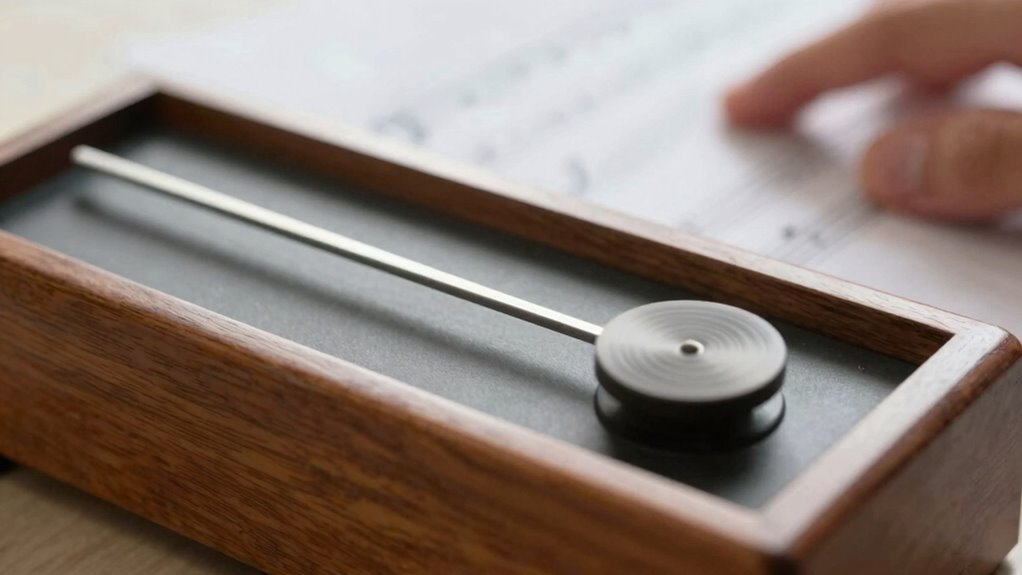
If you notice your music or audio recordings falling out of sync over time, you’re likely dealing with a tempo drift issue. This problem often manifests when musicians in a band gradually speed up or slow down during a performance or recording session, making it difficult to maintain tight synchronization. The root causes can be technical, like faulty equipment, or human, such as inconsistent tempo control. To address this, understanding how to properly calibrate your metronome and maintain band synchronization is essential. Metronome calibration ensures that everyone is using a reliable, accurate timing device, which forms the foundation for staying in tempo. If your metronome isn’t properly calibrated, even slight inaccuracies can lead to drift, especially during longer sessions. Regularly check and calibrate your metronome to guarantee it reflects the correct tempo, and encourage all band members to do the same. This helps create a common rhythmic reference point, reducing the chances of unintentional speeding up or slowing down. Additionally, proper equipment maintenance can prevent inaccuracies caused by faulty devices, ensuring consistent timing during practice and performance. Band synchronization goes beyond just using a metronome; it involves actively listening and adjusting to stay together. When musicians rely solely on visual cues or internal timing, small lapses can accumulate, causing tempo drift. To combat this, establish consistent cues, whether through a conductor, a click track, or visual signals, and practice playing together frequently. Recording rehearsals can reveal how well your band maintains synchronization and highlight areas where tempo drift occurs. When you identify these issues, work on aligning everyone’s internal rhythm through focused practice. Break down complex passages, slow down the tempo, and gradually work back up to the desired speed while maintaining tight coordination. This process trains your internal sense of timing, making it easier to stay in sync during live performances or recordings. Additionally, consider technological solutions like digital metronomes or click tracks that can be synchronized across all devices. These tools help reinforce consistent tempo, especially during long sessions or complex compositions. Using metronome calibration tools and ensuring all equipment is synchronized prevents subtle timing discrepancies from creeping in. Remember, band synchronization is a collective effort—each member’s attentiveness and discipline play essential roles. By regularly calibrating your metronome, practicing synchronization techniques, and fostering a culture of precision, you’ll markedly reduce the chances of tempo drift. This not only improves the overall sound quality but also boosts your confidence when performing live or recording, knowing that everyone is lockstep in time. Maintaining precise timing is a continuous process, but with these strategies, you’ll keep your band in perfect rhythm and eliminate that frustrating tempo drift that can undermine your performances.
digital metronome with calibration
As an affiliate, we earn on qualifying purchases.
As an affiliate, we earn on qualifying purchases.
Frequently Asked Questions
Can Tempo Drift Be Completely Eliminated?
Tempo drift can’t be completely eliminated, but you can minimize it by regularly calibrating your metronome and ensuring your studio acoustics are optimized. Proper calibration keeps your metronome accurate, while good acoustics reduce sound reflections that can influence your timing. Consistent practice with these adjustments helps maintain steady tempo, so while some drift is inevitable, you can considerably reduce it and keep your performance tight.
What Are the Best Tools for Detecting Tempo Drift?
You can detect tempo drift effectively with tools that focus on metronome accuracy and audio analysis. Metronome apps with real-time feedback help you stay steady, while audio analysis tools like Ableton Live or Logic Pro analyze recordings to pinpoint tempo inconsistencies. These tools give you precise insights, making it easier to identify when your tempo speeds up and take corrective action, ensuring your performance stays consistent.
How Does Temperature Affect Tempo Stability?
Temperature fluctuations can markedly impact your tempo stability by affecting instrument tuning. As temperatures change, your instrument’s wood and metal expand or contract, causing pitch and tuning inconsistencies. These subtle shifts can lead to tempo drift during your performance. To maintain steady tempo, keep your instruments at a consistent temperature, regularly check tuning, and use electronic tuners or metronomes to correct any drift caused by temperature effects.
Is Tempo Drift More Common in Live Recordings?
Think of live performances as a roller coaster—unpredictable and full of surprises. Tempo drift is more common in live recordings because factors like performer stamina, audience energy, and stage conditions cause subtle speed changes. Unlike studio recordings, where you can correct or control tempo precisely, live shows capture genuine moments, making tempo fluctuations more noticeable. So, if you notice a live song speeding up unexpectedly, it’s a natural part of the performance’s energy.
Can Software Corrections Permanently Fix Tempo Drift?
Yes, software corrections can permanently fix tempo drift if you properly calibrate your hardware and use reliable editing tools. By ensuring your hardware is calibrated for rhythmic consistency, you minimize the chances of drift occurring. When you apply software corrections, such as time-stretching or tempo adjustments, you reinforce a steady tempo, making your recordings more consistent and professional over time. Just remember, proper hardware calibration is key to long-term accuracy.
As an affiliate, we earn on qualifying purchases.
Conclusion
Now that you understand why bands drift and how to fix it, you hold the power to keep your music steady. Think of your tempo as a delicate thread—tug it too hard, and it frays; nurture it, and it weaves a perfect tapestry. By maintaining your equipment and practicing mindful timing, you prevent your rhythm from wandering off into the sunset. Stay vigilant, and let your music shine with unwavering clarity, a lighthouse guiding listeners through the storm.
As an affiliate, we earn on qualifying purchases.
As an affiliate, we earn on qualifying purchases.
Fall Picks
fall essentials
As an affiliate, we earn on qualifying purchases.