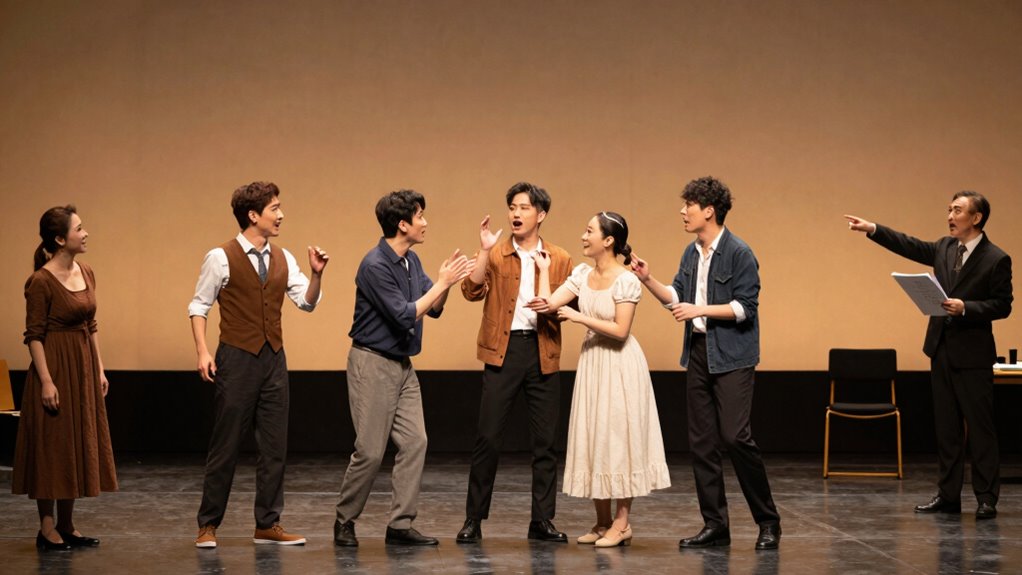
To stop the awkward ‘fade out,’ focus on guiding actors through clear, intentional scene endings. Use dialogue cues and body language to signal closure, emphasizing reflective questions or final gestures that mark the scene’s conclusion. Establish routines like group reflections or specific gestures to create consistency and familiarity. Reinforce emotional closure by celebrating progress and setting positive expectations. If you keep exploring, you’ll discover even more techniques to craft smooth, confident endings that leave a lasting impact.
Key Takeaways
- Plan and rehearse a definitive closing line or gesture to signal scene completion clearly.
- Use natural dialogue cues and body language to transition smoothly into scene endings.
- Incorporate routine rituals, like group reflections or specific gestures, to establish consistent scene closures.
- Encourage actors to acknowledge progress and achievements, fostering emotional closure and confidence.
- Avoid abrupt fade-outs by intentionally directing scene endings with purposeful, confident cues.

Ending a rehearsal can often feel awkward, but with intentional strategies, you can make the process smoother and more confident. One of the key elements to think about is how you handle dialogue shifts as you wind down. Instead of abruptly cutting off scenes or conversations, focus on guiding your actors through natural pauses that signal a conclusion. Practice smooth dialogue shifts by emphasizing a closing line or a final gesture that indicates the scene’s end, helping everyone feel a sense of completion. This not only maintains the flow but also prevents the scene from feeling suddenly halted, reducing awkwardness.
Creating emotional closure is equally important. As you prepare to end a rehearsal, encourage your cast to reflect on what they’ve achieved and how their characters’ arcs are coming together. This helps actors internalize a sense of progress and satisfaction, which makes ending sessions feel less abrupt. You might ask questions like, “What did you learn today?” or “What moment felt meaningful for your character?” These prompts foster a sense of completion, helping everyone leave with a shared understanding that the work isn’t just stopping but has reached a temporary pause. Emotional closure ensures that actors aren’t left hanging, which can lead to lingering awkwardness or confusion about next steps.
Encourage reflection to foster a sense of progress and clear next steps at rehearsal end.
To make endings more intentional, think about establishing a routine. For example, always conclude rehearsals with a brief group reflection or a specific gesture that signals the session’s end. This consistent ritual reinforces a sense of closure and reduces the chance of awkward goodbyes or rushed exits. Additionally, plan your final moments to include a quick review of what was accomplished and what the focus will be for the next session. This clear communication helps everyone leave feeling grounded, knowing what to expect and what’s been achieved.
Another helpful approach is to incorporate positive body language** and tone cues that signal the conclusion. When combined with thoughtful dialogue shifts and emotional closure, these strategies create a natural, confident ending that leaves everyone feeling satisfied and motivated for the next rehearsal. By intentionally managing these elements, you can transform ending moments from awkward to purposeful**, setting a positive tone for your entire production.

Bjorem Speech® Story Cue Card Deck: Narrative and Literacy Boosters
Support Story Grammar comprehension and expression
As an affiliate, we earn on qualifying purchases.
As an affiliate, we earn on qualifying purchases.
Frequently Asked Questions
How Early Should I Plan My Show’s Ending During Rehearsals?
You should plan your show’s ending early in rehearsals, ideally once you’ve solidified the main scenes. Timing considerations are vital—know when your emotional payoff hits strongest. This allows you to craft a conclusion that feels natural and impactful. By establishing the ending early, you give yourself time to refine pacing and delivery, ensuring the finale resonates deeply with your audience and avoids that awkward fade-out.
What Cues Signal a Strong, Natural Ending?
You’ll know you have a strong, natural ending when you notice emotion cues like a final sigh or a heartfelt glance, combined with clear physical gestures such as a pause or a deliberate step back. These cues signal the conclusion’s authenticity, helping you avoid a fade-out. Trust your instincts and rehearse these moments, so your ending feels genuine and impactful, leaving the audience satisfied.
How Do I Handle Unexpected Technical Issues at the End?
When unexpected technical issues occur at the end, stay calm and quickly troubleshoot by checking connections or settings. Use your backup plans—like a secondary microphone or pre-recorded audio—to keep the flow smooth. Communicate clearly with your team, so everyone’s aware and ready to adapt. Practicing technical troubleshooting beforehand helps you handle surprises confidently, ensuring your ending remains natural and professional despite any glitches.
What Are Common Mistakes to Avoid in Ending Rehearsals?
Don’t fall into the trap of overused clichés or abrupt conclusions—they can make your ending feel like a letdown. Avoid rushing or stopping suddenly, which leaves the audience hanging. Instead, plan a smooth, intentional finish that ties everything together. Practice ending with purpose, ensuring it feels natural and resonant. Remember, a well-crafted conclusion is like a bow on a present, wrapping everything up neatly and beautifully.
How Can I Make the Ending More Memorable for the Audience?
To make your ending memorable, aim for a dramatic closure that leaves a strong impression. Use a powerful line or a visual gesture to evoke emotion and create a sense of finality. Focus on ensuring your audience takeaway is clear and impactful, reinforcing your message. Practice delivering this moment confidently, so it resonates and sticks with your viewers long after the curtain falls.
rehearsal reflection gesture props
As an affiliate, we earn on qualifying purchases.
As an affiliate, we earn on qualifying purchases.
Conclusion
Remember, a strong ending isn’t just about stopping; it’s about landing with confidence. Like a wave crashing on the shore, your finale should leave a lasting impression, not fade away quietly. Practice your ending until it feels natural, and don’t be afraid to experiment until you find what works best. When you finish with purpose, you’ll avoid the awkward fade-out and make your rehearsal truly memorable. Keep pushing forward, and your endings will become your strongest moments.
acting rehearsal routine kits
As an affiliate, we earn on qualifying purchases.
As an affiliate, we earn on qualifying purchases.

Mind Brain Emotion 52 Essential Coping Skills Cards – Self Care Exercises for Stress and Social Anxiety Relief – Resilience, Emotional Agility, Confidence Therapy Games for Teens, Adults
Build skills, reduce stress: Powerful CBT, meditation, and somatic exercises to become organized, focused, confident. Overcome anxiety, anger,…
As an affiliate, we earn on qualifying purchases.
As an affiliate, we earn on qualifying purchases.