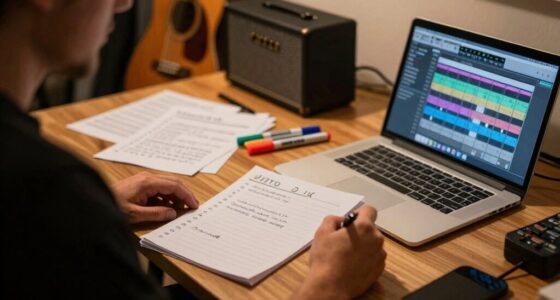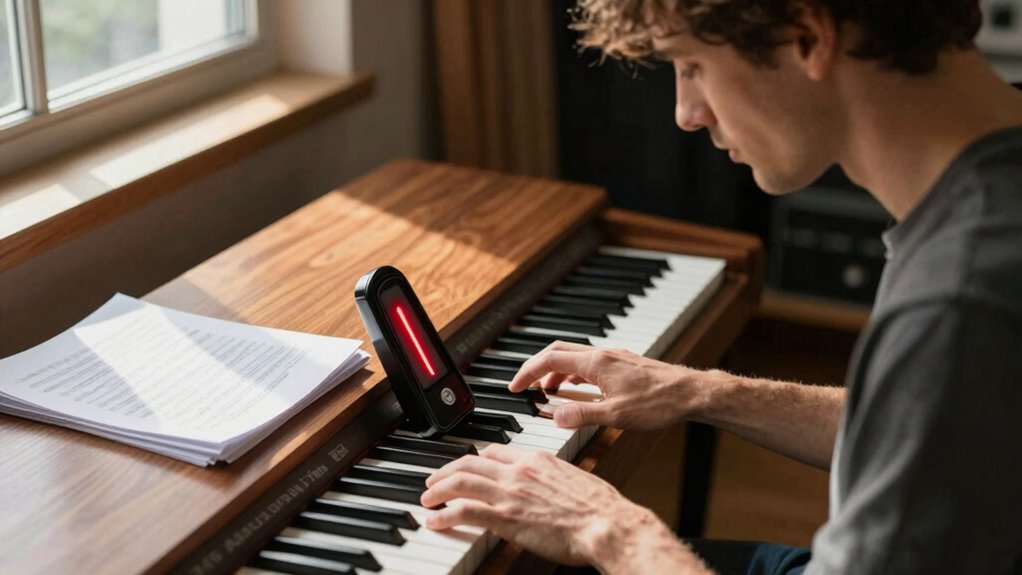

To practice with a metronome without hating your life, start slow and focus on accuracy rather than speed. Break your exercises into manageable parts, and set the metronome at a comfortable tempo. Use subdivisions to master complex rhythms and remember to treat the metronome as a helpful coach, not an enemy. Keep it fun by varying patterns and celebrating small progress—if you keep exploring, you’ll discover how to make practice both effective and enjoyable.

Get audio and creator gear delivered free with Prime
- Fast, free delivery on millions of items
- Prime Video, Amazon Music and more included
- Member-only deals all year
Key Takeaways
- Start slow, focus on accuracy, and gradually increase tempo to prevent frustration.
- Break practice into manageable segments to keep engagement high and avoid overwhelm.
- Use the metronome as a helpful guide, not a source of stress or punishment.
- Vary rhythmic patterns and incorporate subdivision counting to make practice more interesting.
- Celebrate small progress to stay motivated and view the metronome as a personal coaching tool.
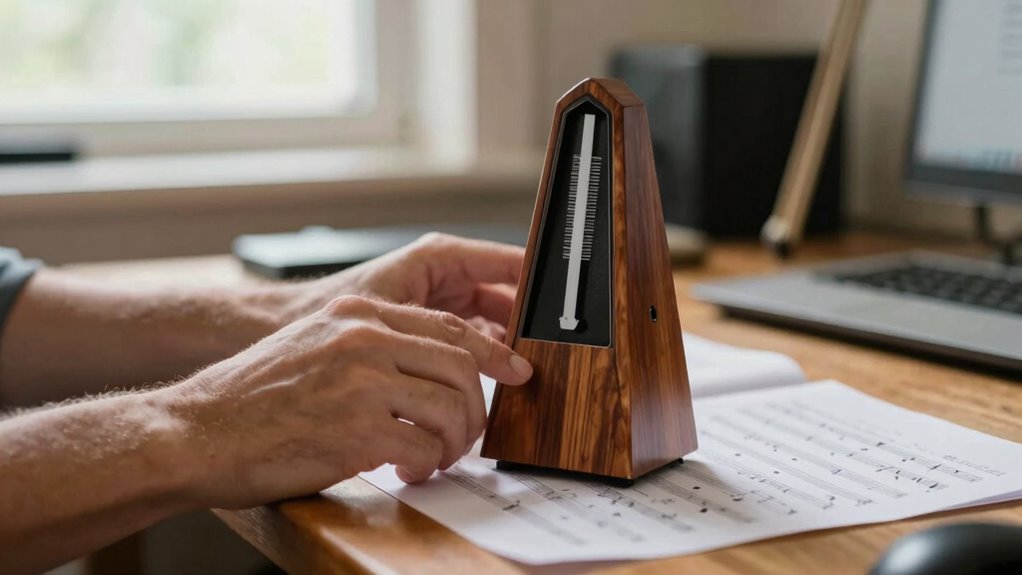
Using a metronome is an effective way to develop steady timing and improve your rhythm. When you practice with one, you’re sharpening your metronome rhythmic precision and ensuring your tempo remains consistent. This consistency is vital for musicians who want to build a solid foundation, making it easier to stay in sync with other players and maintain accuracy during performances. The key is to see the metronome not as a punishment but as a tool that guides your progress. Instead of viewing it as an annoyance, think of it as a personal coach that keeps you honest about your timing.
Start by setting the metronome to a comfortable tempo, one where you can play or sing without strain. It’s tempting to push for faster speeds right away, but that often leads to frustration and sloppy rhythm. Focus on playing cleanly at a slower tempo, paying close attention to the click, and matching your movements precisely to each beat. Over time, this attention to detail enhances your metronome rhythmic precision, making your timing more accurate. As you grow more confident, gradually increase the tempo in small increments—say, 2 to 3 beats per minute. This gradual approach helps you maintain tempo consistency without feeling overwhelmed.
To make your practice more engaging, break down your exercises into manageable segments. For example, if you’re working on a complex passage, start by practicing it slowly with the metronome, then speed up as your confidence builds. Use the metronome to count out subdivisions—like eighth notes or triplets—so you internalize the rhythm at a granular level. This technique improves your internal sense of timing and helps you stay precise, even when the metronome stops. Incorporating accurate tempo into your practice routines ensures steady progress. Additionally, challenge yourself with varied rhythmic patterns to keep your skills sharp and your mind engaged, preventing the process from becoming monotonous.
As an affiliate, we earn on qualifying purchases.
Frequently Asked Questions
Can I Use a Metronome for Non-Musical Activities?
Yes, you can use a metronome for non-musical activities like timing games and physical exercises. It helps you stay on beat, improve coordination, and develop a sense of rhythm. Using a metronome during these activities makes them more structured and enjoyable. Whether you’re running, stretching, or playing a game, the steady beat keeps you focused and consistent, making your practice sessions more effective and fun.
What’s the Best Way to Start Practicing With a Metronome?
To start practicing with a metronome, set it to a comfortable tempo and focus on maintaining timing consistency. Begin with simple exercises, like playing scales or rhythms, and gradually increase the speed as you improve. Use beginner tips like counting aloud or tapping your foot to stay in sync. Consistent practice helps build your sense of timing and makes metronome use feel more natural and effective.
How Do I Choose the Right Metronome Settings?
Choosing the right metronome settings is like tuning a musical instrument—you want it just right. Start with the default tempo, then make small adjustments based on your comfort level; faster tempos can be challenging but improve your timing. Focus on proper metronome calibration to guarantee accuracy, and don’t hesitate to tweak tempo adjustments as you progress. This way, your practice stays effective and enjoyable.
Can Using a Metronome Improve My Overall Rhythm?
Yes, using a metronome can substantially improve your overall rhythm by enhancing your timing accuracy and tempo consistency. When you practice with a metronome regularly, you train your brain and muscles to stay in sync with a steady beat, making your playing more precise. Over time, this consistency translates into better musical performance, helping you feel more confident and controlled in any piece you play.
How Long Should I Practice With a Metronome Each Day?
You should aim for about 15-30 minutes of practice with a metronome daily. Consistency is key, so set a goal that fits your schedule and stick to it. Starting small helps build a habit without burning out. Remember, slow and steady wins the race, so focus on quality over quantity. As you progress, gradually increase your practice time to stay challenged but motivated.
metronome with subdivision features
As an affiliate, we earn on qualifying purchases.
As an affiliate, we earn on qualifying purchases.
Conclusion
Now, imagine the metronome as your steady companion, guiding your fingers like a gentle heartbeat. Embrace the rhythm, let it anchor you in the moment, and watch your confidence grow with each click. When practice feels like a dance with time itself, you’ll find joy in the process. Keep your focus, breathe with the beat, and soon, the music will flow effortlessly—turning frustration into harmony.
practice metronome for rhythm training
As an affiliate, we earn on qualifying purchases.
As an affiliate, we earn on qualifying purchases.
As an affiliate, we earn on qualifying purchases.
Halloween Picks
halloween
As an affiliate, we earn on qualifying purchases.