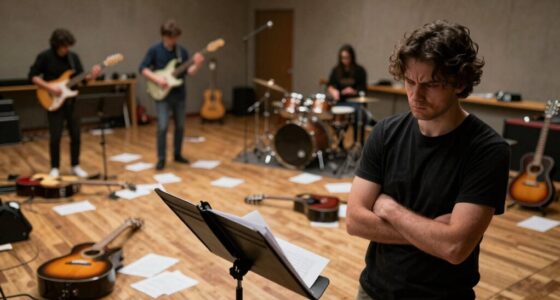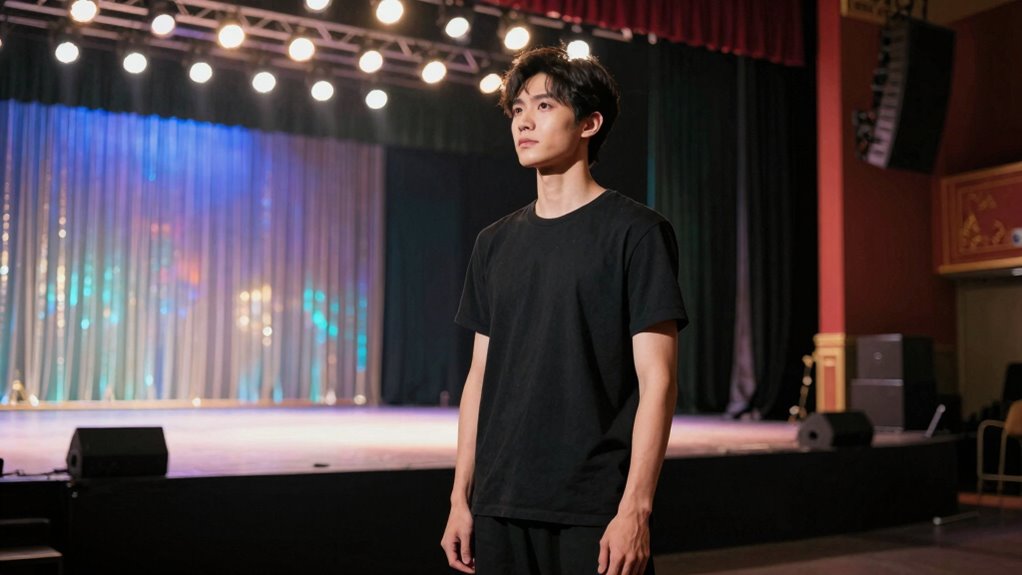

To build better stage awareness before you hit the stage, start by mentally visualizing the space and practicing different postures and gestures to boost confidence. Focus on your breathing and use mindfulness techniques to stay calm and centered. Consider your audience and rehearse how you’ll engage with them, adjusting your tone and body language accordingly. Developing a strong presence begins with preparation—continue exploring ways to sharpen your awareness and make your performances truly impactful.
Key Takeaways
- Visualize the stage layout and your positioning to create mental familiarity and reduce anxiety.
- Practice different postures and gestures to develop natural body language and confidence.
- Rehearse audience scenarios mentally to prepare for engagement and reactions.
- Use breathing and mindfulness techniques to maintain emotional balance and focus.
- Record or mirror practice sessions to observe and improve your physical presence.
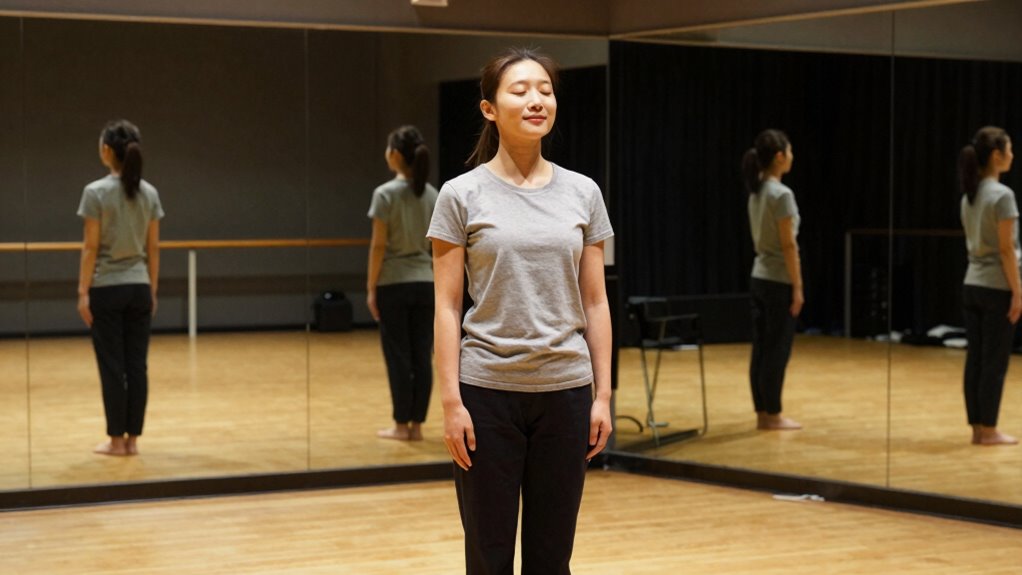
Have you ever stepped onto a stage feeling unsure of your surroundings or unsure how to connect with your audience? If so, you’re not alone. Building stage awareness starts long before your first step onto the spotlight. It’s about cultivating a mindset that centers on your physical presence and understanding how to foster audience engagement even before speaking a word. When you focus on these elements beforehand, you gain confidence and control, which makes your performance more authentic and compelling.
Building stage awareness begins before you step into the spotlight, fostering confidence and authentic connection through mindset and physical presence.
Your physical presence is your most immediate tool for creating a connection. Before you step onto the stage, take time to visualize your space. Walk through it mentally, noting the size, the layout, and where you’ll be standing. This helps you feel more familiar with the environment, reducing anxiety and making your movements more purposeful. Practice standing in different positions, experimenting with posture and gestures that feel natural but also project confidence. When your body feels grounded, your presence becomes more commanding, and that impacts how your audience perceives you. Remember, your physicality signals your attitude—whether you’re open, confident, or hesitant. Building awareness of these signals helps you control your energy and presence. Engaging in body language awareness can further enhance how effectively you communicate nonverbally. Additionally, paying attention to your breathing patterns can help you stay calm and composed during your performance. Developing a mindfulness practice can also contribute to maintaining focus and emotional balance on stage. Incorporating visualization techniques can help reinforce your mental preparedness and reduce nerves as well.
Audience engagement doesn’t happen by chance; it’s something you actively prepare for. Before your performance, think about who your audience is and what they might want or need from your presentation. Imagine their reactions, their questions, and their engagement levels. This mental rehearsal sharpens your focus and helps you tailor your delivery to better connect with them. When you’re aware of your audience’s potential responses, you can adjust your tone, pace, or gestures to keep them involved. The more you understand your audience, the more you’ll be able to foster genuine engagement, making your performance more memorable.
Practicing visualizations and physical exercises builds your stage awareness even before you face the lights. Spend time imagining yourself on stage, feeling comfortable and in control. Use mirror exercises or record yourself to observe how your physical presence projects. This awareness of your body and surroundings creates a solid foundation that translates seamlessly when you’re actually on stage. Developing stage awareness helps you stay grounded and confident, regardless of unexpected situations or distractions. The key is to be mindful of your nonverbal cues, which can greatly influence how your message is received. The goal is to develop a strong sense of presence and connection, so your audience feels you’re speaking directly to them, not just performing. By preparing your mind and body beforehand, you build the confidence that turns uncertain beginnings into powerful, engaging performances.
As an affiliate, we earn on qualifying purchases.
Frequently Asked Questions
How Long Should I Practice Stage Awareness Before Performing?
You should practice stage awareness until it feels natural, which typically takes consistent effort over several weeks or months. During this time, focus on improving audience engagement and vocal projection, as these skills help you connect confidently with your audience. Regular rehearsals, recording yourself, and performing in front of friends can boost your awareness. The more you practice, the more comfortable you’ll become, ensuring your performance is authentic and engaging.
Can Stage Awareness Improve With Age or Experience?
Like fine wine, stage awareness improves with age and experience. Aging benefits your confidence and understanding of the stage, helping you stay present and adaptable. With each performance, your experience growth deepens your awareness, making you more intuitive and comfortable. Over time, you learn to read the room, manage nerves, and connect authentically — transforming nervous energy into compelling presence. So, yes, your stage awareness continues to evolve positively with age.
What Are Common Mistakes to Avoid When Developing Stage Awareness?
Avoid common mistakes like neglecting audience connection and vocal projection. Don’t focus solely on your words; engage your audience with eye contact and expressive gestures. Overloading your speech or mumbling can weaken your voice. Remember, effective stage awareness requires balancing body language, voice control, and interaction. Practice these aspects consistently to build confidence, ensuring you connect deeply and project your voice clearly during every performance.
How Does Stage Awareness Differ Across Performance Types?
You’ll find that stage awareness shifts with each performance type—comedy, speech, or musical. In comedy, you focus on audience engagement and timing, while in a dramatic play, emotional connection takes precedence. Musical performances demand awareness of movement and sound dynamics. Your ability to adapt your awareness to each style enhances your connection, allowing you to resonate deeply with your audience and create a memorable experience.
Are There Specific Exercises to Enhance Spatial Awareness on Stage?
Yes, you can enhance your spatial perception and movement mindfulness through specific exercises. Practice slow, deliberate movements while focusing on your body’s position in space, like walking while counting steps or balancing on one foot. Use mirror work to observe your spatial awareness actively. Engage in improvisation exercises that require you to navigate the stage intentionally. These activities sharpen your spatial perception, boost movement mindfulness, and make your stage presence more confident and natural.
public speaking visualization tools
As an affiliate, we earn on qualifying purchases.
As an affiliate, we earn on qualifying purchases.
Conclusion
By cultivating your stage awareness before stepping into the spotlight, you set yourself up for success. Remember, over 70% of performers say that mental preparation boosts their confidence and presence. Visualize your audience, breathe deeply, and stay present. When you build this awareness early, you turn nerves into energy and hesitation into engagement. The more you practice, the more natural it feels—so start now, and watch your stage presence soar when it’s time to perform.
mindfulness breathing exercises for performers
As an affiliate, we earn on qualifying purchases.
As an affiliate, we earn on qualifying purchases.
body language coaching for speakers
As an affiliate, we earn on qualifying purchases.
As an affiliate, we earn on qualifying purchases.