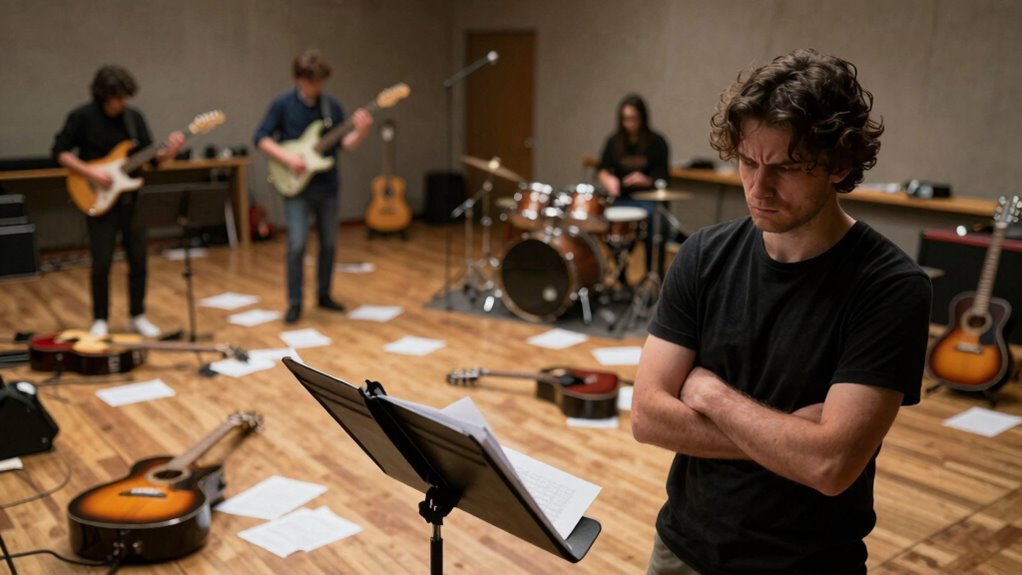

Rehearsals often feel unproductive because your goals are unclear, and you might be wasting time on aimless playing or poor equipment setup. Performance anxiety can also hold you back, making it harder to focus and build confidence. To fix this, plan specific objectives, break down tasks into manageable parts, and create a supportive environment. If you stay focused and prepared, you’ll see progress, and there’s more helpful advice to keep your sessions productive.

Get audio and creator gear delivered free with Prime
- Fast, free delivery on millions of items
- Prime Video, Amazon Music and more included
- Member-only deals all year
Key Takeaways
- Lack of clear goals leads to aimless practicing; setting specific, manageable objectives boosts productivity.
- Poor equipment setup wastes time; preparing gear beforehand ensures smooth rehearsal flow.
- Performance anxiety hampers focus; creating a supportive environment builds confidence gradually.
- Unplanned rehearsals cause distraction; scheduling agendas keeps sessions targeted and efficient.
- Negative mindset reduces motivation; celebrating small wins and maintaining positivity enhance progress.
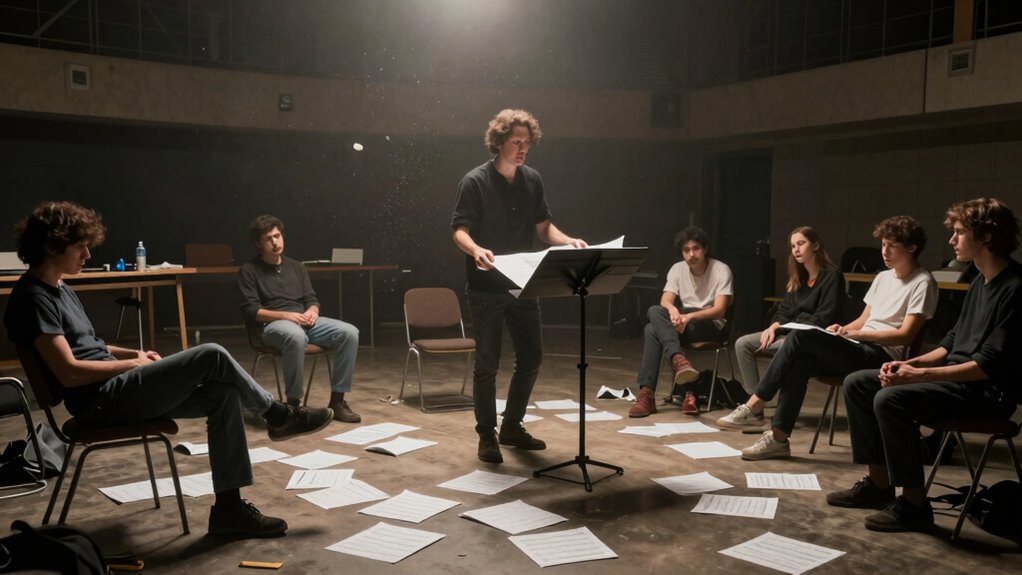
Rehearsals often feel unproductive when expectations aren’t clearly defined or when time isn’t used efficiently. If you’ve ever left a rehearsal feeling frustrated or like you didn’t accomplish much, it’s likely because these issues are at play. One common culprit is performance anxiety, which can make you feel tense and distracted, hindering your focus and progress. When anxiety takes over, even the best practices can seem like a waste of time. The key is to create a supportive environment where you can gradually build confidence, rather than forcing perfection from the start. Break down your rehearsal goals into small, manageable tasks so you can track your progress and stay motivated. This way, you’ll feel more in control and less overwhelmed, helping to reduce performance anxiety. Additionally, understanding the importance of a luxury lifestyle can motivate you to approach rehearsals with a positive and confident mindset, knowing that your dedication can lead to exceptional results.
Clarify goals and break tasks into small steps to build confidence and reduce performance anxiety.
Another frequent reason for unproductive rehearsals is poor equipment setup. If your instruments, microphones, or sound systems aren’t ready or properly arranged, you waste valuable time troubleshooting instead of practicing. It’s a simple fix—allocate a few minutes at the beginning of each rehearsal specifically for equipment setup. Double-check everything beforehand, ensuring cables are connected, batteries are charged, and settings are optimized. When your equipment is ready to go, your focus stays on the music rather than technical issues. Proper equipment management can significantly boost your rehearsal efficiency by preventing avoidable delays. Making a checklist for your gear can help streamline this process and ensure nothing is overlooked. This small step can greatly enhance your productivity and confidence, allowing for smoother rehearsals.
To maximize your time, plan your rehearsal agenda in advance. Identify specific areas or pieces that need attention, and stick to that plan. This prevents aimless playing or wandering from task to task. Keep your rehearsals focused and intentional, so every minute counts. If you notice yourself drifting into distractions, gently steer back to your objectives. Consistency is also vital—regular, shorter rehearsals often outperform infrequent, lengthy sessions because they keep you fresh and engaged. Incorporating focused practice techniques can help you make the most of each session and see steady progress over time.
Lastly, maintain a positive mindset. Celebrate small wins, and don’t be too hard on yourself when things don’t go perfectly. Remember, rehearsals are about growth, not perfection. By setting clear expectations, managing performance anxiety, ensuring equipment is set up properly, and staying focused, you can turn unproductive sessions into valuable progress. It’s all about working smarter, not harder, and creating an environment where you feel prepared, confident, and ready to perform.
As an affiliate, we earn on qualifying purchases.
Frequently Asked Questions
How Can I Motivate My Team During Rehearsals?
To motivate your team during rehearsals, boost team morale by celebrating small wins and encouraging open communication. Foster creative engagement by involving everyone in decision-making and adding fun elements, like quick challenges or rewards. Keep the atmosphere positive, show genuine appreciation, and remind them of the shared goal. When your team feels valued and inspired, they’ll stay motivated and committed, making rehearsals more productive and enjoyable for everyone involved.
What Are Common Mistakes That Lead to Unproductive Rehearsals?
Timing issues and lack of preparation often cause unproductive rehearsals. For example, if your team arrives unready or rushes through scenes, progress stalls. A common mistake is skipping warm-ups or not reviewing previous notes, which hampers flow. You can fix this by setting clear agendas, emphasizing punctuality, and ensuring everyone reviews materials beforehand. These steps keep rehearsals focused, efficient, and productive, saving everyone time and energy.
How Long Should Effective Rehearsals Last?
Effective rehearsals should last around 1 to 2 hours, depending on your group’s needs. Focus on time management by setting clear goals for each session, and stick to a structured rehearsal plan. Keep breaks short to maintain energy and concentration. A well-organized rehearsal structure guarantees you cover necessary material efficiently, preventing fatigue and frustration. Adjust the length as needed, but always prioritize quality over quantity for the best results.
What Tools or Technology Can Improve Rehearsal Efficiency?
You can turn rehearsals into smooth, lightning-fast sessions by using digital scheduling tools and feedback apps. Imagine eliminating endless confusion with perfectly timed schedules that sync everyone’s availability instantly. Feedback apps let you capture quick notes and improvements, so you’re not wasting time repeating the same mistakes. These tools streamline communication and keep everyone on the same page, making rehearsals feel less like chaos and more like a well-oiled machine.
How Do I Handle Conflicts During Rehearsals?
When conflicts arise during rehearsals, you should focus on conflict resolution by addressing issues calmly and openly. Use clear communication strategies, like active listening and asking clarifying questions, to understand different perspectives. Stay respectful and keep the conversation focused on solutions rather than blame. By fostering a collaborative environment and encouraging honest dialogue, you’ll resolve conflicts efficiently, helping your rehearsal stay productive and moving forward smoothly.
As an affiliate, we earn on qualifying purchases.
Conclusion
By implementing these simple changes, you’ll transform your rehearsals from feeling like endless, futile drills into powerful, energizing sessions. Remember, a well-structured rehearsal can turn your performance into a blazing star in the night sky, enchanting every eye and ear. Don’t let unproductive practices dim your shine—take control, stay focused, and watch your confidence soar. With just a little effort, you’ll make every rehearsal count, igniting your passion and releasing your true potential.
instrument tuning and maintenance tools
As an affiliate, we earn on qualifying purchases.
As an affiliate, we earn on qualifying purchases.
As an affiliate, we earn on qualifying purchases.
Halloween Picks
halloween
As an affiliate, we earn on qualifying purchases.