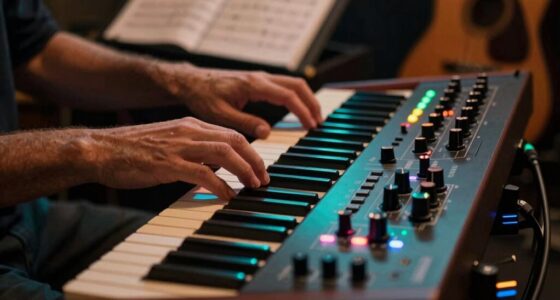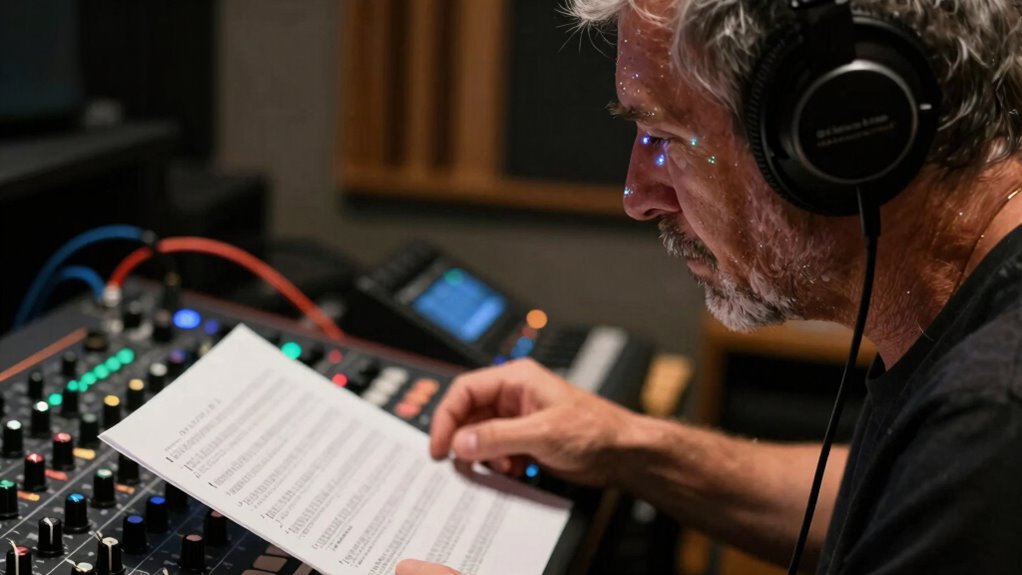

To hear the whole band clearly, focus on active listening and develop your ear training. Practice recognizing individual pitches, chords, and rhythmic patterns by isolating instruments or sections in recordings. Pay attention to different parts separately, like guitar, bass, drums, and vocals, then gradually combine them in your mind. Consistently engaging with these techniques will sharpen your skills, helping you perceive the full texture of a band—keep going, and you’ll discover even more ways to improve your listening.
Key Takeaways
- Practice active listening by focusing on individual instruments separately to understand their roles within the full band.
- Use ear training exercises to improve pitch, interval, and chord recognition for better overall perception.
- Isolate and analyze different band sections, such as guitar, bass, drums, and vocals, during repeated listens.
- Incorporate ear training apps and deliberate listening routines into daily practice to develop holistic listening skills.
- Engage fully with recordings and live performances, pausing to analyze interactions and how instruments contribute to the whole.

Have you ever wondered how top musicians develop such keen listening skills? It all begins with honing your ear training and practicing active listening. Ear training is the foundation that helps you distinguish pitches, intervals, chords, and rhythms, making it easier to pick out individual elements within a full band. When you train your ear, you’re fundamentally teaching your brain to recognize and process musical details more efficiently. This process isn’t just about memorizing scales or intervals; it’s about developing a refined sense of hearing that allows you to pick up on subtle nuances in any performance. Additionally, consistent practice with Free Floating techniques can significantly enhance your ability to hear and interpret complex musical arrangements. Active listening is equally crucial. Unlike passive hearing, active listening requires your full attention, engaging both your mind and ears. Instead of letting the music wash over you, focus intentionally on different parts of the band—guitar lines, bass rhythms, drum patterns, and vocal melodies. As you do this, you begin to hear how each instrument interacts with the others, creating a cohesive whole. This skill enables you to identify how the band’s parts fit together, improving your ability to play in sync or improvise with a full ensemble. The more you practice active listening during rehearsals, recordings, or live shows, the better you’ll become at hearing the whole band rather than just your instrument or a single track.
Develop your ear to distinguish musical details and experience performances more deeply.
To develop these skills, start by isolating instruments or sections when listening to recordings. Close your eyes and try to focus entirely on one element at a time—like the bass line or the rhythmic percussion—until you can accurately describe what’s happening. Use ear training apps or exercises to sharpen your pitch recognition and interval awareness. Over time, you’ll notice that your ability to pick out individual parts improves, even amidst complex arrangements. Incorporate active listening into your daily practice; pause recordings to analyze what each instrument is doing, or listen to a song repeatedly, each time focusing on a different element. This deliberate approach trains your brain to process the full spectrum of sounds, making it easier to hear the whole band during live performances or recordings.
Ultimately, developing sharp listening skills isn’t a one-time effort; it’s a continuous process. The more you practice ear training and active listening, the more naturally you’ll be able to hear and understand the entire band’s performance. This heightened awareness not only elevates your musicality but also makes you a more collaborative and intuitive musician. By sharpening these skills, you’ll move beyond simply hearing music—you’ll start truly understanding and experiencing it at a deeper level.

Piano Ear Training
Ear trainer to improve aural skills. Play the piano by ear.
As an affiliate, we earn on qualifying purchases.
As an affiliate, we earn on qualifying purchases.
Frequently Asked Questions
How Can I Develop Better Pitch Recognition?
To develop better pitch recognition, focus on practicing interval recognition daily. Sing or use apps to identify different intervals accurately, which sharpens your ear. Work on chord identification by listening to various progressions and trying to determine the chords played. Consistent practice with these skills will improve your ability to hear pitches in context, making it easier to tune your ear to the entire band’s sound.
What Exercises Improve a Musician’s Aural Skills?
To improve your aural skills, focus on exercises that enhance musical memory and rhythm perception. Practice transcribing melodies by ear, which sharpens your ability to recall sounds. Use rhythm clapping exercises to develop a strong sense of timing. Additionally, try identifying chord progressions and intervals without looking at sheet music. Regularly engaging in these activities strengthens your overall listening skills and helps you hear the whole band more clearly.
How Do I Identify Individual Instruments in a Mix?
To identify individual instruments in a mix, focus on instrument separation and use frequency analysis. Listen carefully for distinct tonal qualities and spatial cues. Use your ears to detect unique frequency ranges—like the bass’s low end or the cymbals’ high frequencies—and isolate sounds accordingly. Practice regularly by analyzing various recordings, honing your ability to distinguish instruments based on their frequency profiles and how they sit in the stereo field.
What Role Does Ear Training Play in Ensemble Performance?
Ear training enhances your ensemble performance by sharpening harmonic awareness and developing dynamic listening skills. As you train, you learn to distinguish chord progressions and subtle shifts in tone, helping you stay in sync with the band. This active listening allows you to react promptly, blending your sound seamlessly with others. Ultimately, ear training makes you more attuned to the group’s overall harmony and dynamics, improving your contribution and the collective performance.
How Can I Listen Critically Without Losing Emotional Connection?
You can listen critically without losing emotional connection by balancing analytical listening with intuitive perception. Think of it as killing two birds with one stone—stay present and attuned to the music’s emotional core while analyzing details. Focus on emotional listening first, then gradually shift to critical listening. This approach helps you understand the music deeply, ensuring you remain connected while honing your ability to hear the whole band accurately.
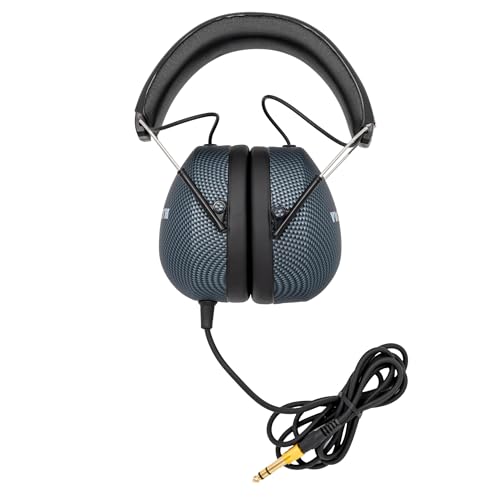
Vic Firth SIH3 Stereo Isolation Headphones, 25 Decibels
Reduce outside noise levels by 25 decibels
As an affiliate, we earn on qualifying purchases.
As an affiliate, we earn on qualifying purchases.
Conclusion
By sharpening your listening skills, you’ll effortlessly hear the entire band and improve your playing. Some might think it’s hard to focus on everything at once, but with practice, it becomes second nature. Remember, listening isn’t just passive—it’s an active tool to elevate your musicianship. So keep honing those skills, and soon, you’ll effortlessly catch every instrument’s part, making you a more connected and versatile musician.

Music Software Bundle for Recording, Editing, Beat Making & Production – DAW, VST Audio Plugins, Sounds for Mac & Windows PC
No Demos, No Subscriptions, it's All Yours for Life. Music Creator has all the tools you need to…
As an affiliate, we earn on qualifying purchases.
As an affiliate, we earn on qualifying purchases.
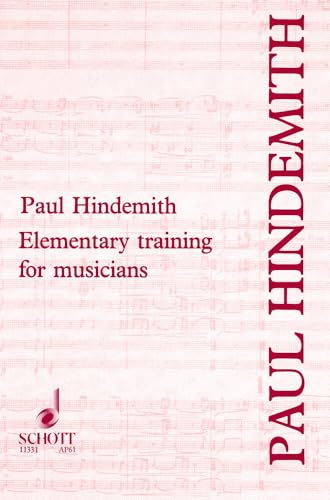
Elementary Training for Musicians
Essential Reading for Student and Professional Musicians
As an affiliate, we earn on qualifying purchases.
As an affiliate, we earn on qualifying purchases.