
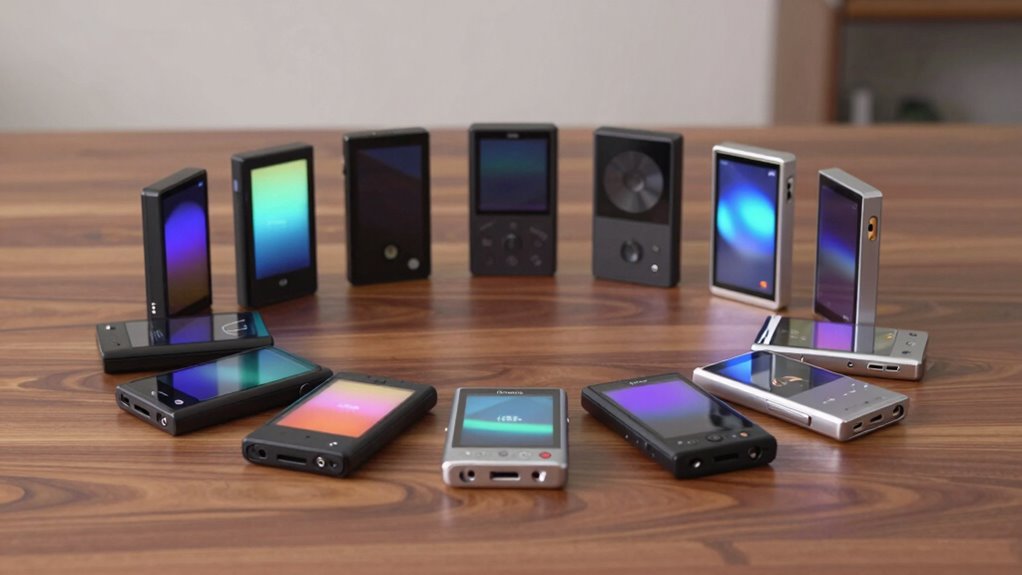

For a portable hi-res music player under $1,000, I’d start with the Shanling M1 Plus as the best overall fit: its compact design, modern connectivity, and broad format support suit listeners who want a dedicated DAP without a large device. The Sony NW-A306 stands out for buyers who value a familiar Walkman interface, while the HiBy R1 makes streaming and expandable storage central to its appeal. The tradeoffs are usually streaming convenience versus a focused music interface, plus battery life, output needs, and storage flexibility. The lineup also includes basic, budget-oriented players and a kid-friendly Android option, so not every model is aimed at the same listener. Read on for the full comparison and guidance on which features matter most for your headphones and listening habits.

Get audio and creator gear delivered free with Prime
- Fast, free delivery on millions of items
- Prime Video, Amazon Music and more included
- Member-only deals all year
Complete the kit


Key Takeaways
- The Shanling M1 Plus appears in three color listings, not three distinct DAP designs, so compare the shared feature set rather than treating those entries as separate performance tiers.
- The Sony NW-A306 prioritizes a familiar Walkman experience, while the HiBy R1 listings emphasize streaming services and large expandable storage; the better fit depends on whether you value interface familiarity or library flexibility.
- The lineup spans dedicated music players and Android-style devices. The Innioasis G5’s app access and parental controls make it a different kind of pick from a focused DAP such as the Shanling.
- Storage claims vary widely: the HIFI WALKER H2 supports expansion up to 512GB, while the HiBy R1 listings support up to 2TB, which matters most for large offline libraries.
- Headline audio formats do not settle the choice. Interface, wireless features, headphone output, and day-to-day usability can matter more than maximum resolution support.


| portable hi res music player dap under 1000 | Battery life | Connectivity | DAC | Weight |
|---|---|---|---|---|
| HIFI WALKER H2 HiFi MP3 Player | 8–10 hours | Bluetooth 5.2, USB | ESS ES9018K2M | — |
| Hmusic P68 HiFi MP3 Player | About 10 hours | Aux, Bluetooth | AKM4377 | 60g |
| HIDIZS AP80 Pro MAX MP3 Player | Up to 30 hours | Bluetooth 5.1, Wi-Fi | — | 81g |
| Shanling M1 Plus Pure Music Pl | Up to 12.5 hours, single-ended | Bluetooth 5.2, Wi-Fi, DLNA, AirPlay | ES9069Q | — |
| Sony NW-A306 Walkman 32GB Hi-R | Up to 36 hours | Wi-Fi, Bluetooth, USB Type-C | — | 113g |
| Surfans F20 Pro Hi-Res Music P | — | — | Dual ESS9018 | — |
| SHANLING M1 Plus Pure Music Pl | — | — | ES9069Q | — |
| SHANLING M1 Plus Pure Music Pl | Up to 12.5 hours single-ended; 10 hours balanced | — | ES9069Q | — |
| HiBy Music R1 Bluetooth MP3 Pl | Up to 15 hours | Bluetooth, USB, Wi-Fi | — | 0.07kg |
| 160GB Innioasis G5 MP3 Player | Up to 25 hours | Bluetooth, Wi-Fi, USB-C, 3.5mm audio jack | — | 140g |
| HiBy Music R1 Bluetooth MP3 Pl | Up to 15 hours | Wi-Fi and Bluetooth | — | 0.07 kg |
More Details on Our Top Picks
HIFI WALKER H2 HiFi MP3 Player with Bluetooth, Lossless DSD DAC FLAC, 128GB Storage, Supports Up to 512GB
The HIFI WALKER H2 makes the most sense for listeners who want a dedicated player for files, not a small streaming device. Its 128GB onboard storage, microSD expansion up to 512GB, and broad format support leave room for a substantial library, while the ESS ES9018K2M DAC and aptX Bluetooth give wired and wireless listeners options. Compared with the HIDIZS AP80 Pro MAX, it has a smaller display and lacks Wi-Fi, so it is less suited to streaming or frequent library browsing. The tradeoff is a simpler, compact setup with a zinc alloy shell rather than a more connected interface. Its roughly 8–10-hour battery life is modest, and the 2-inch screen can make navigation less comfortable. I’d choose it for file-based listening, not as a streaming-first DAP.
Pros:- 128GB built-in storage with microSD expansion up to 512GB
- Supports a wide range of formats, including DSD, FLAC, WAV, and AIFF
- Bluetooth 5.2 with aptX for compatible wireless headphones
- Zinc alloy shell in a compact design
Cons:- 8–10 hours of stated battery life is limited for long listening days
- The 2-inch display gives less room for browsing than the Sony NW-A306
- No Wi-Fi streaming is listed
Best for: Listeners who keep a sizable offline collection and want expandable storage, wired playback, and Bluetooth in a compact player.
Not ideal for: Streaming-focused listeners or people who browse large libraries often; it has no listed Wi-Fi and its 2-inch screen is small.
- DAC:ESS ES9018K2M
- Built-in storage:128GB
- Expandable storage:Up to 512GB via microSD
- Display:2-inch HD
- Connectivity:Bluetooth 5.2, USB
- Battery life:8–10 hours
- Supported formats:MP3, AAC, FLAC, WAV, WMA, OGG, APE, DFF, DSD, AIFF
- Shell:Zinc alloy
Our verdict“Choose the H2 if you want a compact, expandable player for offline files and can live without Wi-Fi or a larger screen.”
Hmusic P68 HiFi MP3 Player, Lossless Hi-Res Audio DSD FLAC DAP Music Player
At 60g, the Hmusic P68 is the lightest clearly specified option here, making it appealing for walks, commutes, and travel when a phone-sized player feels like extra baggage. It pairs an AKM4377 DAC with support for DSD, FLAC, and other common formats, and its 128GB storage can grow to 512GB with a microSD card. Compared with the HIFI WALKER H2, the P68 is lighter and has an OLED display, but its listed format set is narrower and its connectivity is described only as Aux and Bluetooth. The roughly 10-hour battery life is adequate for shorter outings, not especially generous for multi-day use. There’s no Wi-Fi, and you’ll need your own headphones or speakers. I’d pick it for portable local listening rather than streaming or feature-rich control.
Pros:- Lightweight 60g design is easy to carry
- 128GB storage expands up to 512GB
- OLED display
- Supports DSD, FLAC, APE, WAV, M4A, and MP3
Cons:- Around 10 hours of battery life may require frequent charging for heavy use
- No Wi-Fi connectivity is listed
- Requires separate earphones or speakers
Best for: Commuters and walkers who prioritize low carrying weight and want expandable storage for locally stored music.
Not ideal for: Listeners who want Wi-Fi streaming, a long-lasting battery, or clearly specified advanced wireless codecs.
- DAC:AKM4377
- Storage:128GB, expandable up to 512GB
- Battery life:About 10 hours
- Display:OLED
- Weight:60g
- Connectivity:Aux, Bluetooth
- Supported formats:DSD, FLAC, APE, WAV, M4A, MP3
- Color:Silver Grey
Our verdict“Pick the P68 if low weight matters more than Wi-Fi, extensive connectivity details, or all-day battery endurance.”
HIDIZS AP80 Pro MAX MP3 Player with Bluetooth and Wi-Fi
The HIDIZS AP80 Pro MAX is the specification-led choice for listeners who want high-resolution playback and more ways to shape or source their sound. Its dual ESS ES9219C DACs, HiByOS customization, and support for DSD256 and PCM up to 384kHz/32bit make it more flexible on paper than the Hmusic P68, while Wi-Fi and Bluetooth 5.1 add connectivity the P68 lacks. The 2.95-inch display remains compact, and storage depends on adding a microSD card, though expansion is listed up to 2TB. At 81g, it stays pocketable; the stated 30-hour battery life also stands apart from the shorter endurance figures of the H2 and P68. The compromise is a small interface for menu-heavy use and a format-focused feature set that may be more than casual listeners need.
Pros:- Dual ESS ES9219C DACs and support for DSD256 and PCM 384kHz/32bit
- HiByOS offers sound customization including digital filters and MSEB
- Wi-Fi and Bluetooth 5.1 broaden playback and connection options
- Supports microSD expansion up to 2TB
Cons:- Storage is listed as microSD expansion rather than built-in capacity
- The 2.95-inch screen can feel cramped for extensive menu browsing
- Its high-resolution feature set may be unnecessary for listeners with basic needs
Best for: Enthusiasts who want broad hi-res format support, sound customization, Wi-Fi, and very large microSD library capacity in a small player.
Not ideal for: Casual listeners seeking a simple interface or anyone who wants substantial onboard storage without buying a microSD card.
- DACs:Dual ESS ES9219C
- Processor:X1600E
- Storage expansion:Up to 2TB via microSD
- Display:2.95 inches
- Connectivity:Bluetooth 5.1, Wi-Fi
- Battery life:Up to 30 hours
- Weight:81g
- Supported formats:FLAC, WAV, ALAC, DSD, PCM, MQA
Our verdict“Choose the AP80 Pro MAX if format flexibility, sound controls, and Wi-Fi matter more than a larger screen or built-in storage.”
Shanling M1 Plus Pure Music Player, Portable Hi-Res MP3 Player, Bluetooth 5.2, ES9069Q DAC, 768kHz/32bit, DSD512, 3.2-inch Touch Screen, Gray
The Shanling M1 Plus suits buyers who want a more connected, capable listening hub than the file-focused HIFI WALKER H2. Its ES9069Q DAC, stated DSD512 and 768kHz/32bit support, and balanced output rated at 661mW into 32Ω give it a stronger feature case for demanding wired headphones. A 3.2-inch touchscreen, Wi-Fi, DLNA, AirPlay, and Tidal support also make it more adaptable for streaming and home-network playback than the H2. The cost of that flexibility is a potentially busier interface, and the provided storage details do not specify capacity. Battery life is listed at up to 12.5 hours on single-ended output, shorter than the Sony NW-A306’s stated 36 hours. I’d favor this Shanling when output options and network features matter more than endurance or a clearly stated storage plan.
Pros:- ES9069Q DAC with stated DSD512 and 768kHz/32bit playback support
- Balanced output rated at 661mW into 32Ω
- Wi-Fi, DLNA, AirPlay, and Tidal support
- 3.2-inch touchscreen and Bluetooth 5.2
Cons:- 12.5-hour battery figure is shorter than the Sony NW-A306’s stated 36 hours
- Storage capacity and expansion details are not provided
- The feature-rich interface may take more effort to learn
Best for: Listeners who use wired headphones, want balanced output and network playback, and value a touchscreen for controlling a feature-rich DAP.
Not ideal for: Buyers who prioritize long battery life, simple menus, or clearly documented built-in and expandable storage.
- DAC:ES9069Q
- Supported playback:Up to 768kHz/32bit and DSD512
- Screen:3.2-inch touchscreen
- Connectivity:Bluetooth 5.2, Wi-Fi, DLNA, AirPlay
- Battery capacity:2100mAh
- Battery life:Up to 12.5 hours, single-ended
- Output power:661mW@32Ω balanced; 195mW@32Ω single-ended
- Supported formats:MP3, AAC, FLAC, WAV, PCM, DSD
Our verdict“Choose the M1 Plus if balanced wired output and network playback are priorities and its unspecified storage details are acceptable.”
Sony NW-A306 Walkman 32GB Hi-Res Portable Digital Music Player, Black
The Sony NW-A306 stands out for buyers who want a portable hi-res player that can also handle streaming and long listening stretches. Its 36-hour stated battery life is far ahead of the HIFI WALKER H2 and Hmusic P68 figures, while built-in Wi-Fi supports streaming and downloads without relying on a phone. The 3.6-inch display is larger than the H2’s 2-inch screen, and its aluminum chassis keeps the player relatively compact at 113g. The main compromise is 32GB of onboard storage, much less than the H2 or P68 provide before expansion; the supplied details don’t specify an expansion limit. It supports a wide range of formats, including DSD up to 11.2MHz, but buyers focused on high-powered wired output may prefer the Shanling M1 Plus, whose output figures are explicitly listed.
Pros:- 36-hour stated battery life
- Wi-Fi supports streaming and downloads
- 3.6-inch display is larger than the H2’s
- Supports a wide range of formats, including DSD, FLAC, AIFF, and WAV
Cons:- 32GB onboard storage is limited for a large offline hi-res library
- No output power figures are provided for comparison with the Shanling M1 Plus
- No waterproofing or rugged construction is specified
Best for: Listeners who stream over Wi-Fi, value long battery life, and want a compact player for a mix of downloaded and local music.
Not ideal for: Owners of large offline libraries who want ample built-in storage, or headphone users seeking explicitly specified high output power.
- Storage:32GB
- Battery life:Up to 36 hours
- Weight:113g
- Dimensions:0.47 × 2.23 × 3.88 inches
- Display:3.6 inches
- Connectivity:Wi-Fi, Bluetooth, USB Type-C
- Supported formats:AAC, AIFF, APE, Apple Lossless, DSD, DXD, FLAC, MP3, OGG, WAV, WMA
- Chassis:Aluminum
Our verdict“Pick the NW-A306 if Wi-Fi access and long battery life matter more than generous built-in storage or documented output power.”
Surfans F20 Pro Hi-Res Music Player with Dual ESS9018 DAC, DSD512, WiFi & Bluetooth LDAC, Expandable 1TB, Touchscreen, Portable MP3 DAP (Gray)
The Surfans F20 Pro makes sense for listeners who want a dedicated player with both 4.4mm balanced and 3.5mm outputs, plus Wi-Fi and Bluetooth LDAC for mixing wired listening with wireless use. Its dual ESS9018 DACs and DSD512 support position it as a feature-rich alternative to the more compact HiBy R1, which offers longer stated battery life and more microSD expansion but less emphasis on output choice. The Surfans has 32GB built-in storage and supports expansion to 1TB, enough for a sizable offline collection without immediately adding a card. The tradeoffs are its small 2.73-inch screen, unspecified battery life, and potentially involved controls. I would choose it for headphone versatility, not for the clearest battery-life or interface information.
Pros:- 4.4mm balanced and 3.5mm single-ended outputs accommodate different wired headphones.
- Dual ESS9018 DACs and DSD512 support suit a high-resolution local library.
- Wi-Fi, Bluetooth LDAC, and streaming app support add listening flexibility.
- 32GB internal memory with microSD expansion up to 1TB.
Cons:- Battery life is not specified, making travel endurance hard to judge.
- The 2.73-inch screen leaves less room for browsing and touch controls than the SHANLING M1 Plus.
- The feature set may take more effort to operate than a simpler music player.
Best for: Listeners who own both balanced and standard wired headphones and want one compact player for local files, streaming, and Bluetooth listening.
Not ideal for: Buyers who need confirmed all-day battery performance, a larger screen, or a straightforward player with clearly documented operation.
- DAC:Dual ESS9018
- Supported audio:DSD512; FLAC, WAV, WMA, M4A, MP3, MP2, AAC
- Internal storage:32GB
- Expandable storage:Up to 1TB via microSD
- Outputs:3.5mm single-ended; 4.4mm balanced
- Wireless connectivity:Wi-Fi; Bluetooth with LDAC
- Screen:2.73-inch touchscreen
- Dimensions:4.01 × 0.62 × 2.33 inches
Our verdict“Choose the Surfans F20 Pro if you want balanced and standard headphone outputs in one player; skip it if battery certainty and a roomier interface matter more.”
SHANLING M1 Plus Pure Music Player, Portable Hi-Res MP3 Player, Bluetooth 5.2, ES9069Q DAC, 768kHz/32bit, DSD512, 3.2-inch Touch Screen, Supports LDAC/WiFi/Airplay/Tidal (Silver)
The SHANLING M1 Plus is the strongest fit here for buyers who want a small dedicated player with high balanced output power and broad wireless options. Its stated 661mW balanced output gives it an advantage over the HiBy R1, whose appeal leans more toward lightweight streaming and long playback than driving demanding wired headphones. The ES9069Q DAC, DSD512 support, Bluetooth 5.2, Wi-Fi, AirPlay, and Tidal make the M1 Plus capable both at a desk and on the move. Its 3.2-inch touchscreen is also larger than the Surfans F20 Pro’s, though this remains a compact device rather than a spacious browsing screen. Battery life is specified at 12.5 hours single-ended, but storage details are missing here, so I would check card support before building a large offline library.
Pros:- ES9069Q DAC with support for DSD512 and up to 768kHz/32-bit playback.
- Balanced output is rated at 661mW at 32 ohms.
- Bluetooth 5.2, Wi-Fi, LDAC, AirPlay, DLNA, and Tidal support.
- Up to 12.5 hours of single-ended playback with fast charging.
Cons:- Storage capacity details are not provided in the supplied specifications.
- The 3.2-inch screen is small for extended browsing or library management.
- No leather case is included, leaving protection to the buyer.
Best for: Portable-listening enthusiasts who want a compact player with strong balanced output, wireless streaming, and a stated battery-life figure.
Not ideal for: Buyers who need confirmed large-capacity storage details, a large screen for browsing, or a protective case included in the package.
- DAC:ES9069Q
- Supported audio:DSD512; up to 768kHz/32-bit; FLAC, WAV, AAC, MP3
- Balanced output power:661mW at 32 ohms
- Battery:2100mAh; up to 12.5 hours single-ended
- Screen:3.2-inch touchscreen
- Wireless connectivity:Bluetooth 5.2, Wi-Fi, LDAC, DLNA, AirPlay
- Streaming:Tidal support
- Color:Silver
Our verdict“Pick the M1 Plus if compact size and powerful balanced headphone output matter more than a large display or clearly documented storage capacity.”
SHANLING M1 Plus Pure Music Player – Portable Hi‑Res MP3 Player with Bluetooth 5.2, ES9069Q DAC, 768kHz/32bit, DSD512, 661 mW@32Ω Output, LDAC/WiFi/DLNA/AirPlay/Tidal (Black)
This black M1 Plus is the clearest choice in this group for a listener who wants a microSD library that can grow to 2TB without stepping up to a larger player. Like the silver SHANLING M1 Plus, it combines an ES9069Q DAC, a 3.2-inch touchscreen, and 661mW balanced output; the useful distinction in the supplied product details is its explicit storage ceiling and more complete output and battery figures. That makes it easier to plan around than the silver listing, which leaves storage capacity unspecified. Compared with the HiBy R1, the M1 Plus offers much stronger documented balanced output, while the R1 is lighter and lists longer playback. Its compact body may be fiddly to handle, and there is no built-in storage or included protective case. I would pick it for a high-capacity card-based library and wired headphones.
Pros:- Supports microSD cards up to 2TB for extensive offline libraries.
- Balanced 4.4mm output is rated at 661mW at 32 ohms.
- Supports DSD512, PCM up to 768kHz/32-bit, and a broad range of formats.
- Bluetooth 5.2 with LDAC and aptX HD, plus Wi-Fi streaming features.
Cons:- No internal storage is specified; music capacity depends on a separately supplied microSD card.
- Battery life falls to 10 hours in balanced mode, below the HiBy R1’s stated 15 hours.
- Small dimensions can make touchscreen handling less comfortable, and no protective case is included.
Best for: Listeners with large lossless collections who want microSD expansion and enough balanced output for more demanding wired headphones.
Not ideal for: Buyers who prefer built-in storage, a larger handheld interface, or longer stated battery life for extended trips.
- DAC:ES9069Q
- Supported audio:DSD512; PCM up to 768kHz/32-bit; FLAC, WAV, ALAC, APE, OGG, and more
- Storage:Up to 2TB via microSD
- Single-ended output:195mW at 32 ohms; 3.5mm
- Balanced output:661mW at 32 ohms; 4.4mm
- Battery life:Up to 12.5 hours single-ended; 10 hours balanced
- Wireless connectivity:Bluetooth 5.2 with LDAC and aptX HD; Wi-Fi with DLNA and AirPlay
- Screen:3.2-inch LCD touchscreen
- Color:Black
Our verdict“Choose this M1 Plus for a compact, high-output player built around a large microSD collection, not for maximum battery life or built-in storage.”
HiBy Music R1 Bluetooth MP3 Player with Touchscreen, Hi-Res Audio & Wireless Dual Certified, Supports Tidal & Qobuz Streaming, LDAC, Expandable Storage up to 2TB, 15-Hour Playtime
The HiBy R1 is the most portable-feeling option on this list by listed weight, at just 0.07kg, and pairs that small form with a claimed 15-hour battery life. It suits listeners who want local files and access to Tidal or Qobuz without carrying a larger player. Its microSD support reaches 2TB, matching the black SHANLING M1 Plus for library capacity, while the M1 Plus is the more persuasive pick for demanding wired headphones because it specifies 661mW balanced output. The R1’s supplied details focus instead on wireless use, streaming, and a lightweight build. There is an important limitation for subscribers: the listing says offline streaming downloads are not supported, so streaming depends on an internet connection. The 3-inch touchscreen also keeps library browsing compact rather than roomy.
Pros:- Listed weight of 0.07kg makes it easy to carry.
- Up to 15 hours of stated playback.
- MicroSD expansion supports up to 2TB.
- Tidal and Qobuz support alongside Bluetooth and Wi-Fi.
Cons:- Offline streaming and downloaded service playlists are not supported.
- The 3-inch touchscreen gives less room for browsing than a phone-sized display.
- Output power details are not provided, making headphone matching less certain than with the SHANLING M1 Plus.
Best for: Commuters who want a lightweight player for local files, wireless listening, and online Tidal or Qobuz access.
Not ideal for: Subscribers who need downloaded streaming playlists for offline travel, or wired-headphone owners seeking documented high balanced output.
- Weight:0.07kg
- Screen:3 inches
- Supported audio:DSD256; PCM up to 384kHz/32-bit; DSF, DFF, WAV, FLAC, AIFF, and more
- Battery life:Up to 15 hours
- Expandable storage:Up to 2TB via microSD
- Connectivity:Bluetooth, USB, Wi-Fi
- Streaming services:Tidal and Qobuz
- Color:White
Our verdict“The HiBy R1 suits lightweight, connected listening, but choose the SHANLING M1 Plus instead if driving wired headphones is your main priority.”
160GB Innioasis G5 MP3 Player with Bluetooth and WiFi, 4″ Touch Screen, Parental Controls, Supports Spotify, Pandora, Play Store, Kids Mode (Red)
The Innioasis G5 fills a different role from the dedicated Hi-Res players here: it is the family-friendly, app-oriented option, with a 4-inch touchscreen, parental controls, and support for Spotify, Pandora, Kindle, and other apps. Its 160GB of listed storage plus microSD expansion gives it more ready-to-use capacity than the Surfans F20 Pro’s 32GB internal memory, while a claimed 25-hour battery life exceeds the stated figures for the HiBy R1 and SHANLING M1 Plus. But this roundup is about portable hi-res DAPs, and the G5’s supplied specifications do not identify a DAC, balanced output, or a high-resolution playback ceiling. I would choose it for a child or family member who values apps, capacity, and controls over audiophile-specific hardware. Buyers focused on headphone drive and documented hi-res performance should look to the SHANLING models instead.
Pros:- 160GB listed storage, with support for SD cards up to 2TB.
- 4-inch touchscreen is larger than the screens on the dedicated SHANLING and HiBy players.
- Parental controls and Kids Mode suit family use.
- Up to 25 hours of stated battery life.
Cons:- Supplied specifications do not identify a DAC or a high-resolution playback ceiling.
- No balanced headphone output is listed, unlike both SHANLING M1 Plus models.
- Streaming apps require Wi-Fi, and its app-focused interface is less tailored to dedicated music playback.
Best for: Families buying a music-and-app player for a child, especially when parental controls, local storage, and long listed battery life matter.
Not ideal for: Audiophile listeners who need a specified DAC, balanced headphone output, or clearly documented high-resolution playback capabilities.
- Internal storage:160GB
- Expandable storage:SD cards up to 2TB
- Screen:4-inch HD touchscreen
- Connectivity:Bluetooth, Wi-Fi, USB-C, 3.5mm audio jack
- Supported media:MP3, FLAC, APE, OGG, M4A, AAC, WMA, MP2, WAV
- Battery life:Up to 25 hours
- Weight:140g
- Family features:Parental controls and Kids Mode
Our verdict“Pick the G5 for a child-friendly player with storage, apps, and controls; choose a SHANLING M1 Plus for a more clearly specified hi-res listening setup.”
HiBy Music R1 Bluetooth MP3 Player with Touchscreen, Hi-Res Audio & Wireless Dual Certification, Supports Tidal & Qobuz Streaming, LDAC, Expandable Storage up to 2TB, 15-Hour Playtime
The HiBy R1 suits listeners who want a small dedicated player for both personal files and Wi-Fi streaming. Its support for Tidal and Qobuz sets it apart from simpler file-focused options like the HIFI WALKER H2, while microSD expansion up to 2TB leaves room for a substantial offline music library. Hi-res support includes DSD256 and PCM up to 384kHz/32-bit, and Bluetooth codecs such as LDAC and aptX give wireless headphone users more options.
The tradeoff is that streaming convenience does not include offline Tidal or Qobuz playback, so it is less suited to commutes without reliable connectivity. Its 3-inch touchscreen also offers less room for browsing than the larger display on the Innioasis G5. I would choose the R1 for a compact music-first device, not for app-heavy browsing or a large-screen experience.
Pros:- Supports Tidal and Qobuz streaming over Wi-Fi
- Expandable microSD storage supports cards up to 2TB
- LDAC and aptX add wireless listening options
- Rated for up to 15 hours of playback
Cons:- Tidal and Qobuz streaming is not available offline
- Expanded storage requires a separately purchased microSD card
- The 3-inch display may feel cramped for browsing
Best for: Listeners who want a compact hi-res player for Tidal or Qobuz streaming, Bluetooth headphones, and a large microSD-based music library.
Not ideal for: Commuters who need offline downloads from Tidal or Qobuz, or buyers who prefer a larger screen for browsing and managing music.
- Display:3-inch touchscreen
- Supported audio:DSD256; PCM up to 384kHz/32-bit
- Audio formats:DSF, DFF, WAV, FLAC, APE, AIFF, MP3, AAC, WMA, OGG, OPUS, CUE
- Bluetooth codecs:LDAC, aptX, AAC, SBC
- Connectivity:Wi-Fi and Bluetooth
- Expandable storage:microSD up to 2TB
- Battery life:Up to 15 hours
- Weight:0.07 kg
Our verdict“Choose the R1 if you want streaming, hi-res file playback, and extensive expandable storage in a compact player, but skip it if offline streaming or a larger screen is a priority.”

How We Picked
I compared the 11 listings around the needs behind this search: portable playback, hi-res and lossless format support, usable storage, wired and wireless listening options, and ease of everyday operation. I also looked at the role each device seems built to fill, from a straightforward local-file player to a streaming-focused DAP or an Android player with family features. Those differences matter because a spec sheet alone cannot tell a buyer whether a player will fit a pocket, work smoothly with a large library, or suit their headphones.
The ranking favors versatility and a clear use case over the biggest resolution number. Models with more clearly stated connectivity and library options rank ahead of basic players when they offer a wider range of listening paths; simpler options remain relevant for buyers who want fewer distractions. The three Shanling M1 Plus entries and two HiBy R1 entries appear to be repeated model listings with cosmetic or wording differences, so I treat each family as a shared platform rather than implying meaningful performance differences without evidence. I do not assume sound quality or battery performance beyond the listed specifications.
| portable hi res music player dap under 1000 | DAC |
|---|---|
| HIFI WALKER H2 HiFi MP3 Player | ESS ES9018K2M |
| Hmusic P68 HiFi MP3 Player | AKM4377 |
| HIDIZS AP80 Pro MAX MP3 Player | — |
| Shanling M1 Plus Pure Music Pl | ES9069Q |
| Sony NW-A306 Walkman 32GB Hi-R | — |
| Surfans F20 Pro Hi-Res Music P | Dual ESS9018 |
| SHANLING M1 Plus Pure Music Pl | ES9069Q |
| SHANLING M1 Plus Pure Music Pl | ES9069Q |
| HiBy Music R1 Bluetooth MP3 Pl | — |
| 160GB Innioasis G5 MP3 Player | — |
| HiBy Music R1 Bluetooth MP3 Pl | — |
Factors to Consider When Choosing Portable Hi Res Music Player Dap Under 1000
A DAP is easiest to choose when you start with how you listen, not with the largest number on the box. These broader checks can help separate a capable portable player from one that will frustrate you after setup.
Match the Player to Your Headphones
Before buying, check whether your headphones are easy to drive and what connections they use. A player’s advertised output figure can be useful, but it does not tell the whole story without knowing the headphone’s impedance and sensitivity. Buyers with efficient earbuds may not need a high-powered device, while demanding over-ear headphones can call for more headroom. Do not pay for maximum output solely because the number looks impressive if your headphones will never use it. Also check the available output connections and whether you need a balanced cable. This can prevent spending on a feature that does not improve your actual setup.
Decide How Much Streaming You Really Need
Some listeners want a dedicated offline library; others expect a DAP to behave like a small streaming device. Wi-Fi, app support, and services such as Tidal or Qobuz can make access easier, but streaming also adds setup, software, and battery demands. If your collection is mostly local files, a simpler player may be quicker to operate and less distracting. If you use several services, confirm the apps you need are supported rather than assuming that Wi-Fi means every service will work. A phone can remain the easiest streaming source, with the DAP reserved for local playback. Choose based on your routine, not on the mere presence of wireless features.
Plan Storage Around Your Library
Hi-res files can occupy more space than compressed streaming downloads, so estimate your library before choosing a storage ceiling. A microSD slot can extend capacity, but card support limits and library indexing behavior affect how convenient a large collection feels. The listed HIFI WALKER H2 supports expansion up to 512GB, while the HiBy R1 listings specify up to 2TB; that difference matters more to collectors than to listeners carrying a rotating selection. Avoid filling a card to its limit if you want room for new albums or offline playlists. Also check whether internal storage is enough for apps and system files when the device supports streaming. A large capacity claim is useful only if file management stays manageable.
Treat Resolution Numbers as One Part of the Picture
Support for DSD or high sample-rate PCM tells you which files a player can decode, not whether those files will sound better in your particular setup. The recording, headphones, mastering, and output stage all contribute to what you hear. Many buyers will get more practical benefit from a stable interface, reliable file browsing, and suitable headphone output than from support for an extreme format they do not own. Check whether your preferred file types are listed and whether the player handles your library without a conversion step. Wireless listening can also involve codec and source limitations, even when the player advertises hi-res support. Focus on compatibility with your files and listening chain first.
Weigh Portability Against Screen and App Convenience
A smaller DAP is easier to carry and operate one-handed, but a larger touch screen can make searching, streaming, and managing playlists less fiddly. Decide whether the player will live in a pocket, a bag, or mostly at home before prioritizing screen size. A touchscreen and app store can add convenience while bringing more software complexity than a dedicated interface. Android-style features are helpful for users who want multiple apps, yet they may be unnecessary for someone who presses play and leaves the device alone. Check the control layout and screen approach against how often you browse while listening. A portable player should be comfortable to use, not only easy to carry.
Set Realistic Expectations for Battery and Wireless Use
Battery life changes with volume, screen use, Wi-Fi, Bluetooth, and file type, so a single advertised runtime rarely matches every routine. If you listen mostly with wired headphones and the screen off, your use may differ sharply from frequent streaming and browsing. Buyers who rely on wireless headphones should check which codecs are supported by both the DAP and their headphones; a codec listed on one side does not guarantee it on the other. Bluetooth adds convenience but can make a dedicated player less distinct from a phone for some listeners. For travel, think about charging access and whether you can keep a second device powered. Treat runtime claims as a starting point, not a guarantee for every listening pattern.
Frequently Asked Questions
Is a dedicated DAP still useful if I already have a good smartphone?
It can be, especially if you want a separate offline music library, expandable storage, or a device reserved for listening. A phone may remain more convenient for streaming and messaging, while a DAP can keep music browsing separate from notifications. The value depends on whether the player offers a feature your phone does not, such as the connections or storage approach you need. If you mainly stream through wireless earbuds, a DAP may add little to your routine. Compare the device’s output and format support with your actual headphones and files before choosing. A dedicated player is most persuasive when it solves a specific limitation rather than duplicating your phone.
Should I choose the Shanling M1 Plus or the Sony NW-A306?
Choose between them by prioritizing the experience you want, rather than treating one as a universal upgrade. The Shanling M1 Plus listings emphasize a compact dedicated player with broad format and wireless features, while the Sony NW-A306 offers the familiar Walkman identity and interface. Check the exact streaming and file-management needs you have, along with headphone connections and control preferences. The Shanling appears in several color listings here, but those entries should not be read as separate model generations. If a familiar Sony interface matters most, the Walkman is the more natural candidate; if the feature mix and compact dedicated-player approach appeal more, start with Shanling.
Do I need a player that supports DSD512 or 768kHz audio?
Most buyers do not need those maximum format figures unless their library includes files at those specifications. Format support mainly tells you what the player can decode; it does not guarantee an audible benefit from every file. Your headphones, recording quality, and the player’s output suitability also shape the result. If your collection is mostly standard lossless files or streaming, ease of use and storage may matter more. Check compatibility with the formats you own before paying extra for a headline capability. Choose high-resolution support as a useful compatibility feature, not as a sound-quality promise.
Are the repeated Shanling M1 Plus and HiBy R1 listings different models?
The supplied product names point to repeated listings of the same model families, with color or wording differences rather than clearly identified hardware changes. The Shanling entries name gray, silver, and black versions; the HiBy entries describe the same R1 features with slightly different phrasing. I would compare the exact seller listing, included accessories, and stated specifications before ordering, rather than assuming one color has a different audio platform. If a listing adds a feature that another omits, verify that detail against the specific unit description. The roundup treats these as repeated model families, not distinct performance rankings.
Is the Innioasis G5 a sensible choice for an adult hi-res music library?
It may suit an adult who wants a touchscreen, app access, Wi-Fi, and parental controls, but its feature mix is more general-purpose than that of a dedicated music-first DAP. The G5’s larger screen and app-oriented approach can help with streaming or shared family use, while adding software features some listeners would rather avoid. Compare its file support, storage setup, and headphone options with your actual library and listening gear before choosing it for hi-res playback. The HIFI WALKER H2, for example, presents a more straightforward local-player profile, while the G5 is the more app-centered option. Pick the G5 for its broader device role, not simply because it can play music.
Conclusion
For most buyers seeking one portable player for a mix of files and wireless features, I’d begin with the Shanling M1 Plus as the best overall fit in this lineup. The HIFI WALKER H2 is the best value-style choice for listeners who want a straightforward local music player and expandable storage without needing a more app-centered device. For beginners who prefer a familiar Walkman identity, the Sony NW-A306 is the clearest starting point. The Innioasis G5 is the best match for families or users who specifically want apps and parental controls, while the HiBy R1 suits listeners who prize streaming and a high storage ceiling. No distinct premium model is established by the provided listings, so I would not label one the best premium pick on specifications alone; compare the exact feature and output needs of your setup before paying for capabilities you may not use.