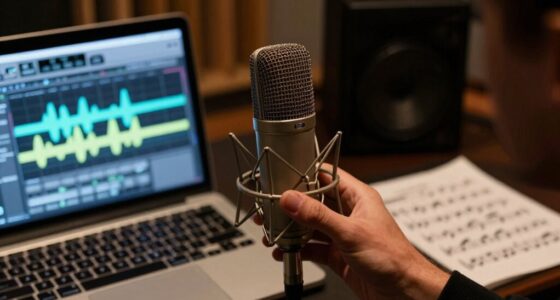
To rehearse smarter using the ‘record and review’ method, record your practice sessions to gain an objective look at your performance. Analyze your timing, execution, and areas needing improvement, and track your progress over time. This approach helps you identify mistakes, refine your skills, and develop better pacing. By routinely reviewing your recordings, you’ll find your rehearsals become more focused and productive—keep exploring how this technique can transform your practice sessions.
Key Takeaways
- Record rehearsals to objectively evaluate performance, timing, and areas for improvement.
- Review recordings regularly to identify pacing issues, mistakes, and progress over time.
- Use recordings for honest self-assessment, focusing on specific skills like clarity or body language.
- Create a feedback loop by comparing multiple recordings to track growth and refine techniques.
- Leverage technology for easy storage, sharing, and collaborative review to enhance rehearsal efficiency.
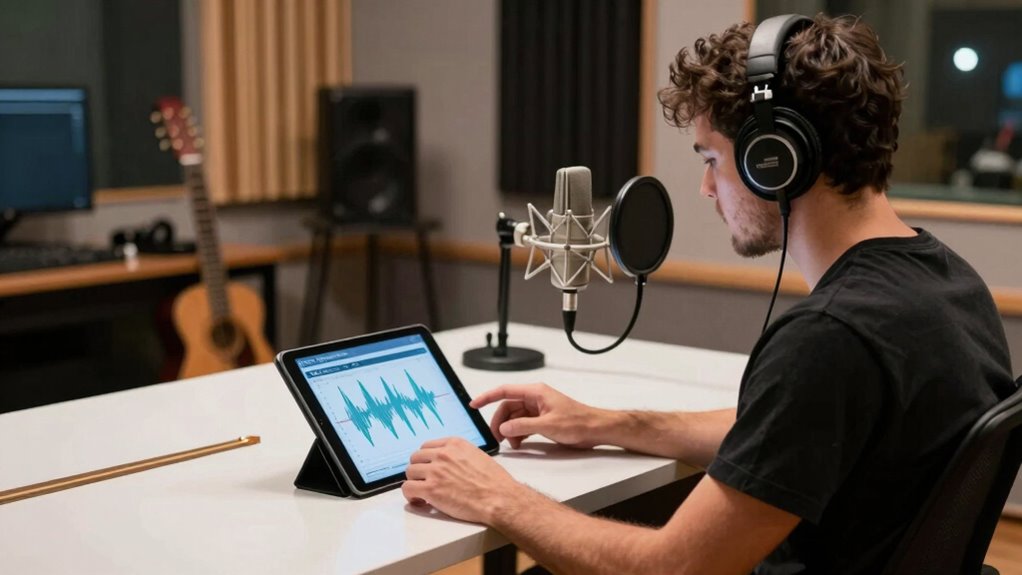
Rehearsing effectively is essential for mastering any skill, but many people overlook the power of recording and reviewing their practice sessions. When you record your rehearsals, you gain a valuable tool for obtaining objective performance feedback that can help you identify strengths and pinpoint areas needing improvement. Instead of relying solely on memory or subjective impressions, you see your performance from an outside perspective, making it easier to spot subtle errors or habits that might go unnoticed during practice. This process allows you to track your progress over time, giving you concrete evidence of improvement or revealing persistent issues to address.
Recording your rehearsals provides objective feedback, highlights strengths and weaknesses, and tracks your progress over time.
Incorporating recording into your rehearsal routine also helps you manage rehearsal timing more effectively. When you review your recordings, you can analyze how well you’re sticking to your planned schedule or timing constraints. For example, if you’re practicing a speech or a musical piece, you can check whether your pacing aligns with your goals. Are you rushing through parts or lingering too long on others? By listening to the recordings, you get immediate insight into whether your rehearsal timing needs adjustment. This awareness helps you develop better time management skills, ensuring that your practice sessions are both efficient and productive.
Performance feedback is a pivotal element in refining your skills, and recording makes this feedback more accessible and actionable. Instead of waiting for a mentor or coach to observe your practice, you can evaluate your performance anytime, anywhere. This self-assessment encourages honesty and objectivity, which are indispensable for growth. As you review your recordings, focus on specific aspects such as clarity, intonation, body language, or transitions, depending on your skill area. This targeted feedback enables you to set precise goals for your next rehearsal, making your practice sessions more focused and effective.
Furthermore, recording your rehearsals creates a feedback loop that accelerates learning. You can compare different recordings to see how your performance evolves, helping you recognize patterns and measure progress. When you notice recurring mistakes or timing issues, you can develop strategies to address them directly. Over time, this process builds confidence because you see tangible evidence of improvement, motivating you to keep practicing with purpose.
Additionally, leveraging innovative cloud solutions can facilitate seamless storage and sharing of your recordings, making the review process more flexible and collaborative. In short, recording and reviewing your rehearsals transform a passive activity into an active learning process. It enhances your ability to interpret performance feedback, optimize rehearsal timing, and track your growth. By making recording an integral part of your practice, you empower yourself to rehearse smarter, not just harder, leading to faster mastery of your skills.

Digital Voice Recorder 16GB Voice Recorder with Playback for Lectures – USB Rechargeable Dictaphone Upgraded Small Tape Recorder Device
【Simple Operation】- switch on your voice recorder, one button for recording. press the "REC", start the recording, press…
As an affiliate, we earn on qualifying purchases.
As an affiliate, we earn on qualifying purchases.
Frequently Asked Questions
How Often Should I Review My Recordings During Rehearsals?
You should review your recordings after each practice session to build consistency and track your progress. This allows you to apply self-critique techniques effectively, identifying areas for improvement. Regular review helps you stay focused and motivated, ensuring you don’t develop bad habits. By maintaining a consistent schedule, you’ll better understand your strengths and weaknesses, making your rehearsals more efficient and productive over time.
What Equipment Is Best for Recording Rehearsals Effectively?
You should choose a microphone with high-quality audio capture, like a condenser or dynamic mic, to guarantee clear recordings. Use versatile recording formats such as WAV for quality and MP3 for convenience. Invest in a good audio interface or recorder that’s compatible with your setup. Good equipment makes reviewing your rehearsals easier, helping you identify areas for improvement and track progress more effectively.
How Can I Stay Motivated to Review Recordings Regularly?
You stay motivated by visualizing your progress and setting clear goals. Use visualization techniques to imagine how reviewing recordings improves your performance, making it more rewarding. Find accountability partners who share your rehearsal goals; they’ll motivate you to stay consistent. Remind yourself that regular review leads to growth, and sharing your achievements keeps you inspired. This combination of visualization and accountability makes reviewing recordings an engaging, rewarding part of your routine.
Should I Focus on Specific Sections or the Entire Performance When Reviewing?
You should focus on section focus for specific areas needing improvement, but also review the overall performance to see how the parts fit together. By balancing both, you identify precise issues and understand the bigger picture. This approach helps you refine details while maintaining overall coherence. Regularly alternating between sections and the full performance keeps your practice balanced, ensuring continuous progress and confidence during your rehearsals.
How Do I Objectively Evaluate My Progress Through Recordings?
Imagine your growth as a journey, not a race. When you evaluate recordings, focus on self-critique and your emotional response to gauge progress. Listen actively, noting improvements and areas needing work, like a detective uncovering clues. Avoid harsh judgments; instead, observe objectively. Trust your feelings, but balance them with facts. By blending honest self-critique with your emotional reactions, you’ll see clear, meaningful progress over time.
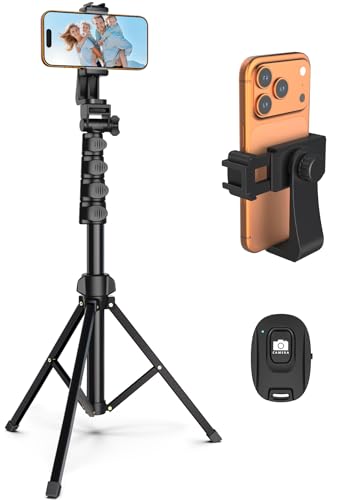
Liphisy 64” Tripod for Cell Phone & Camera, Phone Tripod with Remote and Phone Holder, Sturdy & Stable Height Adjustable Multi-Angle Shot Selfie Stick Tripod for Video Recording
【Sturdy and Stable】: Made of premium aluminum alloy and stainless steel, Liphisy phone tripod with remote keeps your…
As an affiliate, we earn on qualifying purchases.
As an affiliate, we earn on qualifying purchases.
Conclusion
By incorporating the record and review method, you can dramatically improve your rehearsals. Studies show that reviewing your recordings boosts retention by up to 60%. So, next time you practice, record your session and watch it later. You’ll spot areas for improvement and build confidence faster. Rehearsing smarter isn’t just about more practice—it’s about smarter practice. Give this method a try, and watch your skills soar with every review!

Acting for the Camera: Back to One: Back to One
As an affiliate, we earn on qualifying purchases.
As an affiliate, we earn on qualifying purchases.

Music Software Bundle for Recording, Editing, Beat Making & Production – DAW, VST Audio Plugins, Sounds for Mac & Windows PC
No Demos, No Subscriptions, it's All Yours for Life. Music Creator has all the tools you need to…
As an affiliate, we earn on qualifying purchases.
As an affiliate, we earn on qualifying purchases.