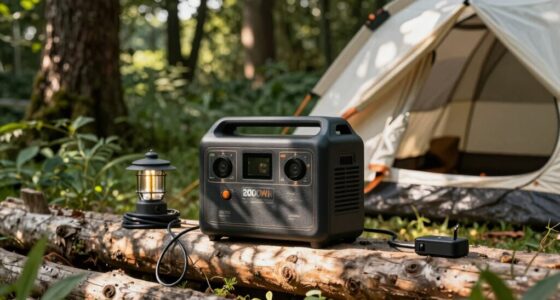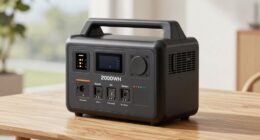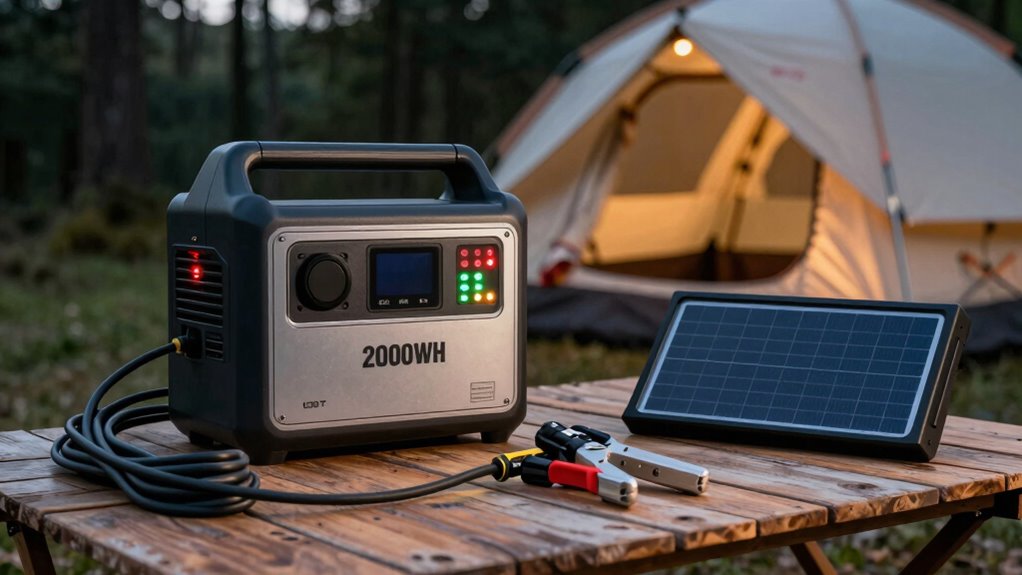
When setting up your 2000Wh portable power station for off-grid camping, avoid common mistakes like skipping safety checks, overloading outlets, or using damaged cables. Make sure to fully read and follow manufacturer instructions, keep the battery in a cool, dry place, and use proper chargers. Don’t ignore regular maintenance or leave the battery drained for long periods. Following these tips helps assure safe, reliable power—keep going to discover more essential setup advice.
Key Takeaways
- Read and follow manufacturer instructions thoroughly before initial setup and first use.
- Use recommended chargers, cables, and surge protectors to prevent damage and ensure safety.
- Avoid overcharging beyond 100% and fully discharging; maintain 20-80% charge for longevity.
- Store the power station in a cool, dry place with a partial charge, and check battery condition regularly.
- Inspect cables and connectors for damage, and keep the battery away from extreme temperatures and moisture.
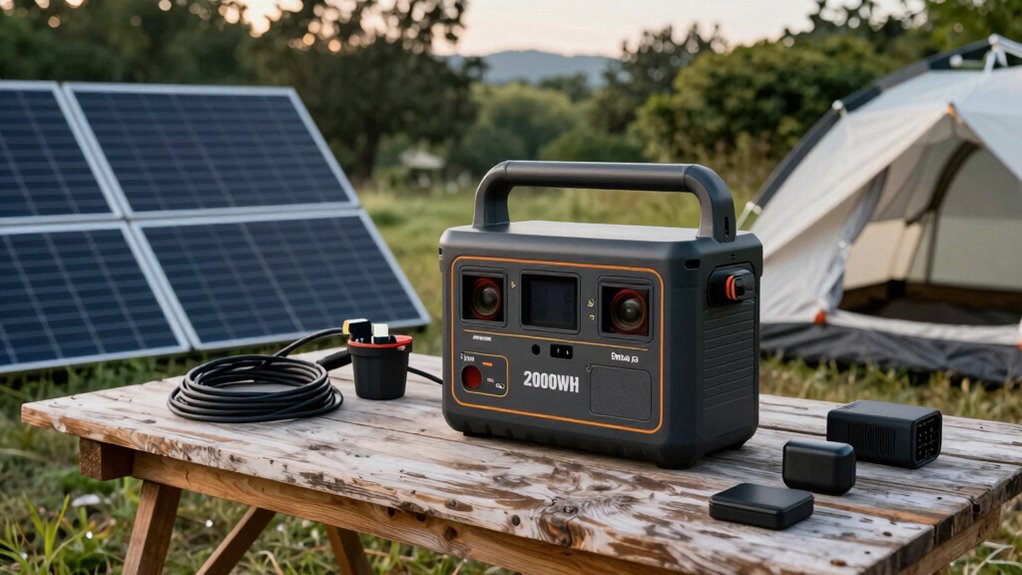
Setting up your portable power station efficiently guarantees you’re ready for any situation, whether camping, emergency backup, or outdoor work. The first step is understanding battery safety and following proper charging tips, which are vital for both performance and safety. Before you start, always read the manufacturer’s instructions thoroughly. This helps you understand the specific requirements and limitations of your 2000WH power station. When handling the battery, avoid exposing it to extreme temperatures or moisture, as these conditions can compromise safety and reduce lifespan. Use only the recommended chargers and cables, and ensure they are in good condition—damaged cords or connectors can cause short circuits or fires.
Proper setup and safety tips ensure your 2000WH power station runs reliably and safely in any situation.
When it comes to charging tips, never overcharge your power station. Many units have built-in protections that automatically shut off when fully charged, but it’s best to unplug once you reach 100%. Keeping the battery topped off is fine, but leaving it plugged in continuously can sometimes lead to overheating or wear over time. If your station has a display, monitor the charging process regularly, and avoid charging in direct sunlight or hot environments, which can increase the risk of thermal runaway. For safety, always use a surge protector if available, especially when connecting to a wall outlet. This prevents voltage spikes that could damage the battery or internal components.
Another important aspect of battery safety involves managing discharge cycles. Don’t drain the battery completely before recharging; instead, aim to keep the charge level between 20% and 80%. This practice prolongs the overall lifespan of your battery and minimizes the risk of deep discharge damage. When storing your power station for extended periods, ensure the battery is partially charged—around 50%—and keep it in a cool, dry place. Regularly check the battery’s condition if stored for long durations, and recharge as needed to avoid capacity loss. Additionally, understanding battery management is essential for maintaining optimal performance and safety.
Lastly, always keep your power station out of reach of children and pets, and avoid using damaged or swollen batteries. Properly maintaining your device with these safety and charging tips ensures it remains reliable and safe for all your off-grid adventures. By paying attention to these details, you reduce the risk of accidents, maximize battery life, and guarantee your setup is both efficient and safe.
Frequently Asked Questions
How Long Does a Fully Charged Power Station Last During Extended Trips?
A fully charged power station can last several days during extended trips, depending on your power consumption. If you keep your devices minimal and avoid high-drain appliances, the battery life prolongs longer. On average, a 2000WH station might run basic electronics for 3-5 days. To maximize its lifespan, monitor your power consumption, and use energy-efficient devices whenever possible. Proper management ensures your power station stays reliable throughout your trip.
Can I Connect Multiple Devices Simultaneously Without Overloading?
Yes, you can connect multiple devices at once, but watch out for device overload. Distribute power wisely to prevent overloading your power station. Use dedicated outlets or power strips designed for high capacity, and don’t exceed the station’s total wattage limit. Regularly monitor your device connections to guarantee proper power distribution, preventing any damage or interruptions during your off-grid trip.
What Safety Precautions Should I Take When Handling the Power Station?
When handling your power station, prioritize battery safety by avoiding punctures or exposure to extreme heat. Always follow handling precautions like wearing gloves and keeping the device on a stable surface. Don’t overload the station, and disconnect devices before moving it. Keep vents clear, and never attempt repairs yourself. These safety steps help prevent accidents, protect your equipment, and ensure safe, reliable use during your off-grid adventures.
Is It Compatible With Solar Panels for Renewable Charging?
Think of your power station as a vintage radio, ready to tune into new signals. Yes, it’s compatible with solar panels, making renewable energy integration seamless. Just confirm the solar panel’s wattage matches your station’s input capacity to avoid overloads. Check the specifications for solar panel compatibility, so you can harness the sun’s power efficiently off-grid, reducing reliance on generators or batteries.
How Do I Troubleshoot Common Issues With the Power Station?
If you encounter issues, start troubleshooting by checking the battery health to verify it’s not degraded, which can cause power problems. Inspect all ports for dust, damage, or loose connections, as port issues often disrupt charging or output. Try resetting the power station, and test with different devices or cables. Keep an eye on indicator lights for error signals, and consult the manual if problems persist.
Conclusion
Now that you’ve got your 2000Wh portable power station set up, you’re ready to enjoy off-grid camping without losing power—think of it as your modern-day campfire, lighting up the night. Just remember to double-check connections and keep it in a cool, dry spot, like a trusty knight’s shield. Avoid those common mistakes, and you’ll be powering your adventure like a tech-savvy pioneer. Happy camping and stay powered!