To choose the right portable evaporative cooler for tent camping without overbuying, focus on your camp’s duration and power sources. Look for models with long battery life to avoid frequent recharging, and pick one that’s quiet enough to not disturb your sleep. Consider size and weight for easy transport, and verify it’s water-efficient if you’ll be in dry climates. By matching features to your needs, you’ll stay comfortable without overspending—learn more to find the perfect fit.
Key Takeaways
- Match cooler size and capacity to your camping duration and space needs to avoid unnecessary bulk or insufficient cooling.
- Prioritize low-noise models to ensure restful sleep and minimal disturbance in shared tents.
- Choose units with long battery life or reliable power options suitable for extended outdoor use.
- Consider water efficiency features like adjustable fans and thermostats to maximize cooling with minimal water use.
- Balance portability features—weight and size—with cooling performance to prevent overbuying for your specific outdoor setup.
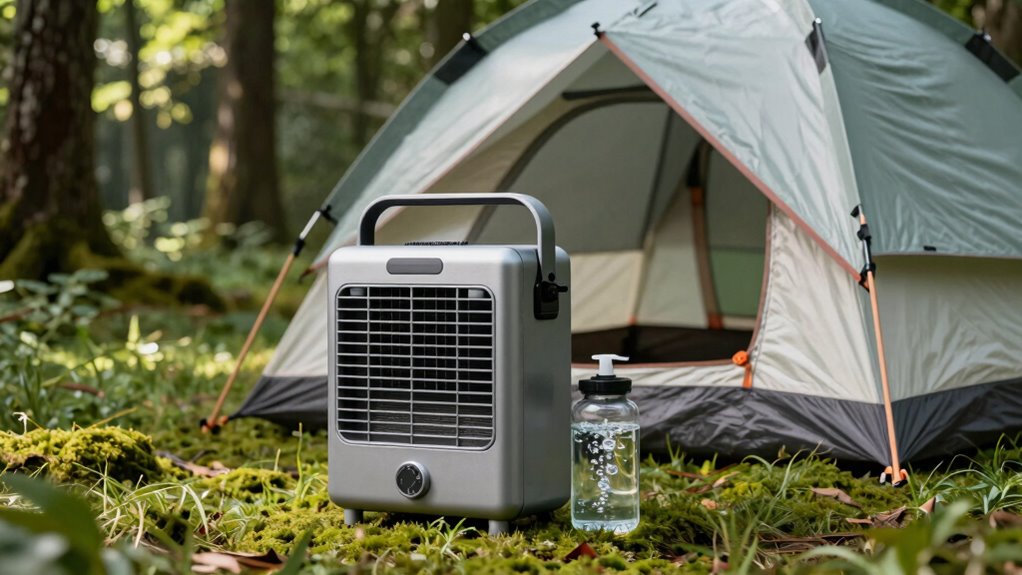
Are you looking for an energy-efficient way to beat the heat without breaking the bank? When choosing a portable evaporative cooler for tent camping, it’s essential to consider how well it balances performance with practicality. One of the first things to look at is battery life. Since you’ll likely be away from power sources, you want a cooler with a long-lasting battery that can run throughout the night or during extended outdoor activities. A model with a robust battery ensures you won’t wake up in the middle of the night to a dead device or have to constantly recharge it, which can be inconvenient in remote campsites. Keep in mind that battery capacity varies; some coolers offer rechargeables with several hours of operation, while others might need more frequent charging. Choose one that aligns with your planned camping duration and your access to power.
Next, pay attention to noise levels. If you’re sharing a tent with others or value a quiet night’s sleep, a cooler with low noise output is vital. Some models operate almost silently, making them ideal for restful nights, while louder units can disrupt your sleep or disturb your fellow campers. Reading reviews or testing the noise levels before purchasing can help you find a unit that won’t interfere with the peaceful ambiance you’re seeking. Remember, a quieter cooler often means less vibration and fewer mechanical noises, which makes for a more comfortable camping experience.
Beyond battery life and noise levels, think about size and weight. Since portability is your goal, you want a cooler that’s lightweight enough to carry easily but still large enough to meet your cooling needs. A compact design might save space in your gear, but it could mean less water capacity or shorter run time. Conversely, a larger unit might provide longer cooling periods but could be cumbersome to transport. Balance these factors based on your pack capacity and how far you plan to carry the cooler from your vehicle or camp site.
Finally, consider the water consumption and cooling efficiency. Evaporative coolers work best in dry climates, so pick a model with efficient water use to maximize runtime without constant refilling. Look for features like adjustable fan speeds and thermostats, which give you control over comfort levels and energy consumption. Additionally, understanding the contrast ratio can help you select a cooler that performs well under different lighting conditions. By carefully weighing these factors—battery life, noise levels, size, and water efficiency—you’ll select a portable evaporative cooler that keeps you cool without overbuying or adding unnecessary weight to your camping gear.
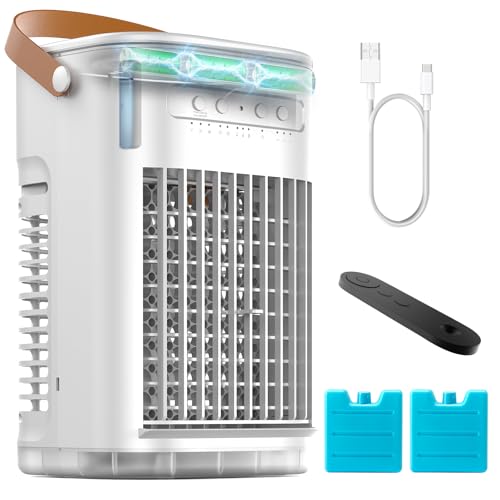
Mini Air Conditioner, Rechargeable Built-in Battery, Portable Evaporative Air Cooler w/Remote, 7H Auto-off, Water Tank & 2 Ice Packs & 2 Sprays, Personal Cooling Fan For DesktopRoom/Outdoor, White
🧊[𝗠𝘂𝗹𝘁𝗶-𝗙𝘂𝗻𝗰𝘁𝗶𝗼𝗻 𝗗𝗲𝘀𝗸𝘁𝗼𝗽 𝗖𝗼𝗼𝗹𝗲𝗿] The mini evaporative air cooler integrates all the functions you want. It combines the sensations…
As an affiliate, we earn on qualifying purchases.
As an affiliate, we earn on qualifying purchases.
Frequently Asked Questions
How Long Does the Cooler Typically Run on a Full Water Tank?
On a full water tank, your cooler usually runs between 6 to 12 hours, depending on its water capacity and cooling settings. If you have a larger water capacity, expect longer cooling durations. To avoid running out of water during your camping trip, consider coolers with adjustable settings and plan for refills. Always check the manufacturer’s specifications for accurate cooling duration based on your cooler’s water capacity.
Can the Cooler Operate Effectively in High Humidity Environments?
Like trying to cool a desert breeze in a rainforest, high humidity can hinder your cooler’s performance. In such environments, evaporative coolers struggle to work effectively because they rely on dry air to create cooling. If you camp where humidity levels are high, consider alternative cooling options or look for models with higher airflow or built-in dehumidifying features. This way, you guarantee your tent stays comfortable, no matter the weather.
Is the Cooler Safe to Use Around Children and Pets?
Yes, portable evaporative coolers are generally safe around children and pets if you follow safety guidelines. Focus on child safety and pet protection by keeping the cooler out of reach, ensuring it’s stable, and avoiding water spills that could cause slips. Always supervise use, and unplug the cooler when not in use. Proper placement and maintenance help prevent accidents, making your camping experience safer for everyone.
What Maintenance Is Required to Keep the Cooler Functioning Properly?
To keep your cooler functioning properly, you need to regularly clean the filters to prevent mold and guarantee efficient airflow. Additionally, water replenishment is essential—check the water level daily and refill as needed to maintain cooling performance. Make sure to drain and dry the unit if not in use for an extended period, which helps prevent mold growth and keeps your cooler in top shape for your camping trips.
How Lightweight and Portable Are These Coolers for Backpacking Trips?
These coolers are lightweight, easily fitting into your backpack, and designed for portability. They typically weigh less than traditional air conditioners, offering a weight comparison that makes them ideal for backpacking trips. Their portability features include compact size, shoulder straps, and built-in handles, making them simple to carry over long distances. You’ll find them practical for outdoor adventures, giving you cool comfort without weighing you down or taking up too much space.
Mini Air Conditioner, Rechargeable Built-in Battery, Portable Evaporative Air Cooler w/Remote, 7H Auto-off, Water Tank & 2 Ice Packs & 2 Sprays, Personal Cooling Fan For DesktopRoom/Outdoor, White
🧊[𝗠𝘂𝗹𝘁𝗶-𝗙𝘂𝗻𝗰𝘁𝗶𝗼𝗻 𝗗𝗲𝘀𝗸𝘁𝗼𝗽 𝗖𝗼𝗼𝗹𝗲𝗿] The mini evaporative air cooler integrates all the functions you want. It combines the sensations…
As an affiliate, we earn on qualifying purchases.
As an affiliate, we earn on qualifying purchases.
Conclusion
So, as luck would have it, picking the perfect portable evaporative cooler isn’t just about specs—it’s about finding what fits your camping style perfectly. When you choose wisely, you might find yourself enjoying cooler nights and unexpected comfort, even when the weather surprises you. Sometimes, the best camping adventures happen when you’re prepared for anything, and a well-chosen cooler could be your unexpected best friend in those hot, humid moments. Happy camping!

Arctic Air Pure Chill 2.0 Evaporative Air Cooler by Ontel – Powerful, Quiet, Lightweight and Portable Space Cooler with Hydro-Chill Technology For Bedroom, Office, Living Room & More,Blue
Personal Air Cooler for Indoor & Outdoor Spaces: Switch to an eco-friendly solution with Ontel Arctic Air Pure…
As an affiliate, we earn on qualifying purchases.
As an affiliate, we earn on qualifying purchases.

AKIRES 2100CFM Swamp Cooler, Evaporative Air Cooler for 645Sq.ft of Space, Air Cooler with 7.0-Gal Water Tank, 120°Oscillation,4 Ice Packs,12H Timer, Cooling Fans for Outdoor,Indoor Use(34IN)
❄️【Powerful Airflow & Wide Coverage】The 2026 new upgraded swamp cooler gives you unexpected coolness and comfort. With 2100…
As an affiliate, we earn on qualifying purchases.
As an affiliate, we earn on qualifying purchases.