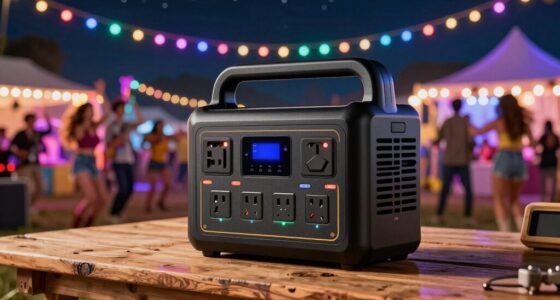


Understanding portable battery generator specs helps you pick the right power source. Watts show the device’s output at any moment, while watt-hours reveal how much energy it stores for longer use. Surge power is the maximum it can provide briefly to start appliances, and recharge time affects how quickly it’s ready again. Knowing these details guarantees you get a generator that meets your needs, and if you keep exploring, you’ll find even more helpful info.

Get audio and creator gear delivered free — and shop member deals
- Fast, free delivery on millions of items
- Access to Prime Big Deal Days deals on October 6–7
- Prime Video, Amazon Music and more included
Key Takeaways
- Watts measure the real-time power output needed to run devices, while watt-hours indicate total energy capacity for longer operation.
- Surge power reflects the maximum startup burst a generator can provide, essential for high-initial-demand appliances.
- Recharge time shows how quickly the generator’s battery can be restored, affecting availability for repeated use.
- Battery chemistry, like lithium-ion or lead-acid, influences weight, efficiency, lifespan, and suitability for different uses.
- Understanding both watt and watt-hour ratings, along with surge power and recharge time, ensures proper device compatibility and reliable performance.
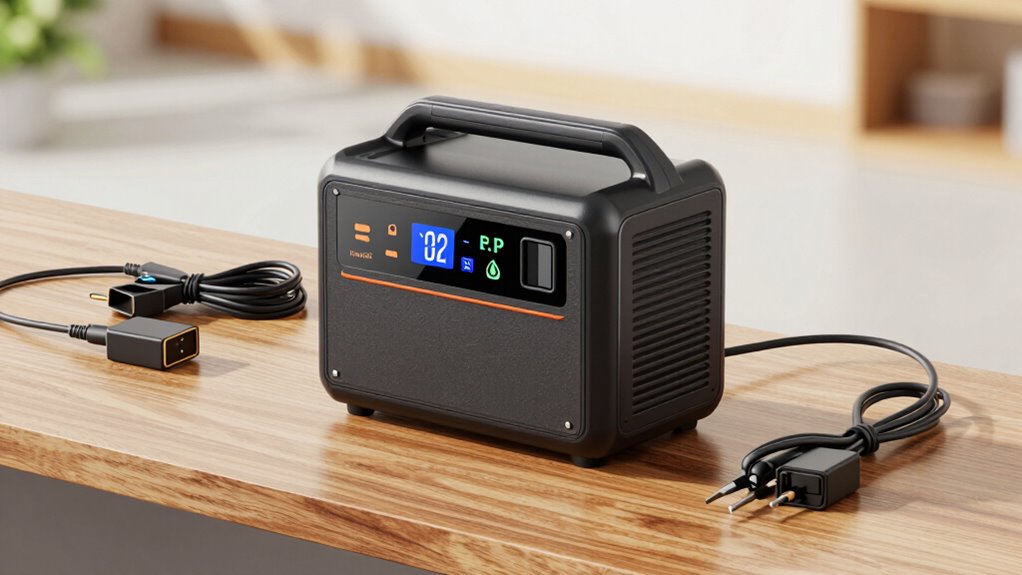
When choosing a portable battery generator, understanding its key specifications is essential to guarantee it meets your power needs. One of the first things to consider is the difference between watts and watt-hours, as these metrics directly impact how you’ll use your device. Watts measure the rate of power output at a given moment, indicating how much energy a device can supply simultaneously. Watt-hours, on the other hand, represent the total amount of energy the generator can store and deliver over time. For instance, a generator with a high watt-hour rating can power devices longer, even if its continuous watt output is moderate. Knowing both helps you select a unit that aligns with your usage patterns, whether for quick charges or extended power supply. Additionally, understanding the relationship between these two metrics can help you estimate how long your devices will run based on the generator’s capacity.
Understanding watts versus watt-hours is key to choosing the right portable generator for your needs.
Surge power is another fundamental specification to pay attention to. It describes the maximum power a generator can deliver for a brief moment, typically during startup of appliances like refrigerators or power tools. If your devices have high surge requirements, ensure the generator’s surge power exceeds these initial demands. Ignoring this could mean your appliances won’t start or may shut down unexpectedly. Understanding surge power ensures you choose a generator capable of handling your most demanding devices without issues.
Recharge time is equally important, especially if you plan to use your generator frequently or in remote areas. It indicates how long it takes to fully restore the battery’s capacity after use. This can vary widely based on the charging method—solar panels, AC outlets, or car chargers—and the generator’s battery chemistry. For example, lithium-ion batteries are popular for their fast recharge times, light weight, and durability. Some models support rapid charging, greatly reducing downtime, which is especially beneficial during outdoor adventures or emergency situations.
Speaking of battery chemistry, it’s critical to consider when selecting a portable generator. Different chemistries offer various benefits and trade-offs. Lithium-ion batteries are common because they’re lightweight, efficient, and have a long lifespan, making them ideal for portable applications. They also tend to be compatible with solar charging, enhancing their versatility for off-grid use. On the flip side, lead-acid batteries are heavier and bulkier but often more affordable upfront. When evaluating different models, check the battery chemistry to anticipate how the generator will perform over time, how well it integrates with solar compatibility, and how durable it will be under frequent use. Moreover, the choice of chemistry can influence the overall battery lifespan and maintenance requirements of your portable power source.
portable battery generator with high surge power
As an affiliate, we earn on qualifying purchases.
As an affiliate, we earn on qualifying purchases.
Frequently Asked Questions
How Long Do Portable Battery Generators Typically Last on a Full Charge?
On a full charge, portable battery generators typically last between 6 to 12 hours, depending on their battery capacity and the devices you’re powering. You’ll get more runtime if the generator has a higher watt-hour rating. Keep in mind, the battery’s lifespan also depends on its charge cycle; frequent recharges can reduce its overall longevity. So, choose a generator with a suitable capacity for your power needs.
Can Portable Batteries Be Used for High-Power Appliances Like Refrigerators?
You can use portable batteries for high-power appliances like refrigerators, but watch out for high power limitations. Your battery’s capacity considerations are key—if it doesn’t have enough watt-hours, it won’t run your fridge for long. Make sure the generator’s surge power can handle the startup load of the appliance, and check if the continuous wattage meets your fridge’s needs to avoid overloads or insufficient power.
Are Portable Battery Generators Safe to Use Indoors?
Yes, portable battery generators are generally safe to use indoors if you follow proper indoor safety guidelines. Make certain proper ventilation to prevent battery heating, which can cause overheating risks. Keep the generator on a stable, dry surface and avoid blocking ventilation openings. Always read the manufacturer’s instructions, and don’t overload the device. By taking these precautions, you can safely power your indoor appliances without concerns about battery heating or safety hazards.
How Do Temperature Changes Affect Battery Performance and Recharge Time?
You might not realize, but temperature changes can reduce your battery’s efficiency by up to 50%. When temperatures drop or rise, thermal efficiency drops, slowing recharge times and diminishing performance. Proper temperature management is key; keeping your generator within recommended ranges ensures peak performance. Extreme cold can cause sluggish recharging, while heat accelerates battery degradation. So, by controlling temperature, you maximize your battery’s lifespan and maintain reliable power when you need it most.
What Maintenance Is Required to Prolong the Lifespan of a Portable Battery Generator?
To prolong your portable battery generator’s lifespan, regularly perform battery calibration by fully charging and discharging it monthly. Follow proper storage guidelines—keep it in a cool, dry place and avoid extreme temperatures. Also, avoid deep discharges and overcharging. These practices help maintain peak performance, prevent capacity loss, and ensure your generator stays reliable when you need it most. Consistent maintenance keeps your device ready for any situation.
compact lithium-ion portable power station
As an affiliate, we earn on qualifying purchases.
As an affiliate, we earn on qualifying purchases.
Conclusion
Understanding battery generator specs helps you choose the right power source for your needs. Did you know that some portable units can deliver surge power of over 2,000 watts, enough to run your home appliances during outages? With a clear grasp of watts, watt-hours, and recharge times, you’ll be better prepared for outdoor adventures or emergencies. Ultimately, selecting the right specs guarantees you stay powered up when it matters most, making your life easier and more reliable.
solar rechargeable portable generator
As an affiliate, we earn on qualifying purchases.
As an affiliate, we earn on qualifying purchases.
high capacity watt-hour portable generator
As an affiliate, we earn on qualifying purchases.
As an affiliate, we earn on qualifying purchases.
Halloween Picks
halloween
As an affiliate, we earn on qualifying purchases.