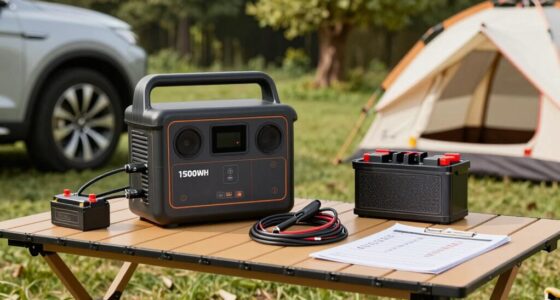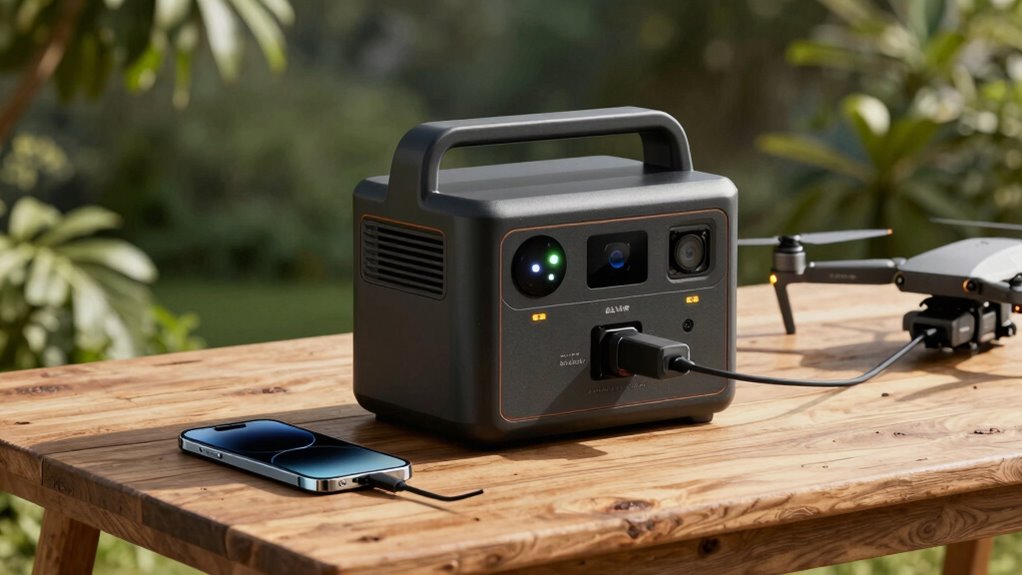
To choose the right portable power station with fast charging, first determine your actual power needs—whether it’s for small gadgets or larger appliances—and match capacity accordingly, avoiding overbuying. Look for units that offer quick recharge times, ideally supporting rapid charging methods like USB-C Power Delivery or fast AC charging. Consider portability, the number of ports, and features that suit your intended use. Keep these factors balanced for efficient, cost-effective power solutions; more details will help you make an informed choice.
Key Takeaways
- Match capacity to your device needs and expected usage duration to avoid overpaying for unnecessary power.
- Prioritize units with fast charging capabilities to reduce downtime during recharge cycles.
- Evaluate port options and power output stability to ensure compatibility with sensitive or multiple devices.
- Consider portability factors like weight and size to balance convenience with power capacity.
- Assess your typical use case—whether for short trips or emergency backup—to select the optimal balance of capacity and charging speed.
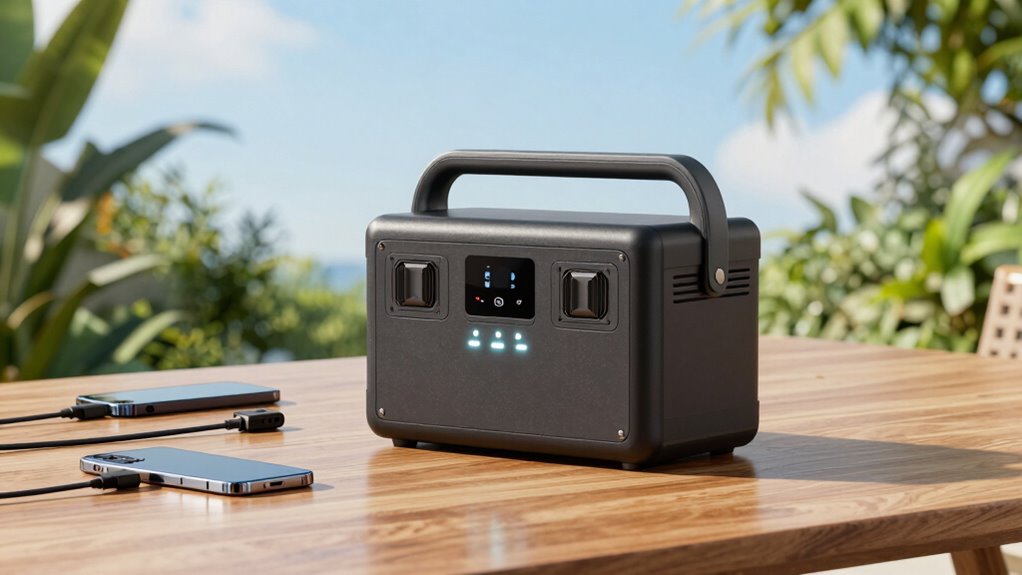
A portable power station can be a lifesaver when you need reliable energy on the go, whether you’re camping, facing a power outage, or working remotely. When choosing one, two key factors to consider are battery capacity and charging speed. These features determine how well the device will meet your needs without overbuying or ending up with unnecessary extras.
Battery capacity, measured in watt-hours (Wh), directly influences how long your power station can run your devices. If you plan to power small gadgets like smartphones and tablets, a lower capacity—say around 200 to 300 Wh—may suffice. However, if you’re looking to run larger appliances or need longer-lasting power, you’ll want a higher capacity, perhaps 500 Wh or more. Think about your typical usage: do you need enough juice for a weekend camping trip or just a few hours of backup during a blackout? This helps you avoid overspending on a model with excessive capacity that you’ll rarely use, or worse, underestimating and running out of power when it matters most.
Choose a battery capacity that matches your needs to avoid overspending or running out of power.
Charging speed is equally essential, especially if you rely on your power station frequently. Fast charging allows you to replenish the battery quickly, reducing downtime and ensuring you’re ready for your next adventure or emergency. Look for models that support rapid charging via AC outlets or USB-C Power Delivery. Some power stations can be charged to 80% in under an hour, which is a huge advantage if you’re pressed for time. If you’re often on the move, quick recharge times mean you can spend less time plugged in and more time enjoying your activities or managing emergencies.
Balancing battery capacity and charging speed is fundamental. A larger capacity unit might take longer to recharge fully, but if it supports fast charging, that process becomes more manageable. Conversely, a smaller capacity power station might recharge quickly but could require more frequent recharging cycles. Consider your typical usage pattern and how much downtime you can tolerate. Additionally, note that some Home Theatre Projectors require consistent power sources, so choosing a power station with stable output options can help protect your equipment.
Finally, don’t forget to check the power station’s overall features—ports, weight, and portability—so it aligns with your specific needs. By paying attention to both battery capacity and charging speed, you’ll choose a device that offers reliable power without unnecessary expense or complexity. This way, you’re better equipped to handle whatever situation arises, with a portable power station that’s just right for you.
Frequently Asked Questions
How Do I Determine the Right Capacity for My Needs?
To determine the right capacity for your needs, first assess your devices’ energy requirements and note their battery capacity in watt-hours (Wh). Add up the total energy consumption of all devices you plan to power. Choose a portable power station with a battery capacity that exceeds this total, ensuring you have enough power for your usage duration. This approach helps prevent overbuying while meeting your energy needs efficiently.
What Safety Features Should I Look for in a Power Station?
You should look for safety features like advanced battery management systems, which prevent overheating and overcharging, ensuring reliable operation. Surge protection is also vital to safeguard your devices from power spikes. These features help maintain the power station’s longevity and your safety, so prioritize models that include extensive battery management and surge protection to get peace of mind during use.
Can I Use a Portable Power Station While Charging?
Yes, you can use a portable power station while it’s charging, especially if it supports pass-through charging. Using solar panels to recharge the station during use helps extend battery lifespan and keeps your devices powered longer. Just make certain your power station’s specifications support simultaneous charging and usage. This way, you maximize convenience without risking damage, making it ideal for outdoor adventures or emergency situations.
Are There Compatibility Issues With Different Devices?
You might worry about device compatibility issues, but most modern portable power stations are designed to support various charging standards, minimizing problems. You can confidently connect your devices knowing they’ll work seamlessly, thanks to universal outlets and fast charging ports. Just check the device compatibility and verify the station offers the right outputs. This way, you won’t face compatibility issues, and your gadgets stay charged efficiently wherever you go.
How Long Does It Take to Fully Charge a Power Station?
You can expect a portable power station to fully charge in 2 to 8 hours, depending on its battery capacity and charging method. Fast chargers can considerably reduce this time. Keep in mind, frequent charging cycles and effective battery management help maintain ideal performance over time. To avoid overbuying, choose a station with a charging time that matches your usage needs, ensuring you get the most out of your investment.
Conclusion
By balancing budget, basics, and battery life, you’ll breeze through the buy and bring home the best. Don’t doubt your decision—dive into details, determine your needs, and decide with confidence. With the right portable power station, you’ll stay powered, prepared, and protected wherever life takes you. Empower yourself with the perfect choice, and enjoy endless energy on every adventure. Remember, smart selections lead to seamless, stress-free experiences—so choose wisely and charge confidently!