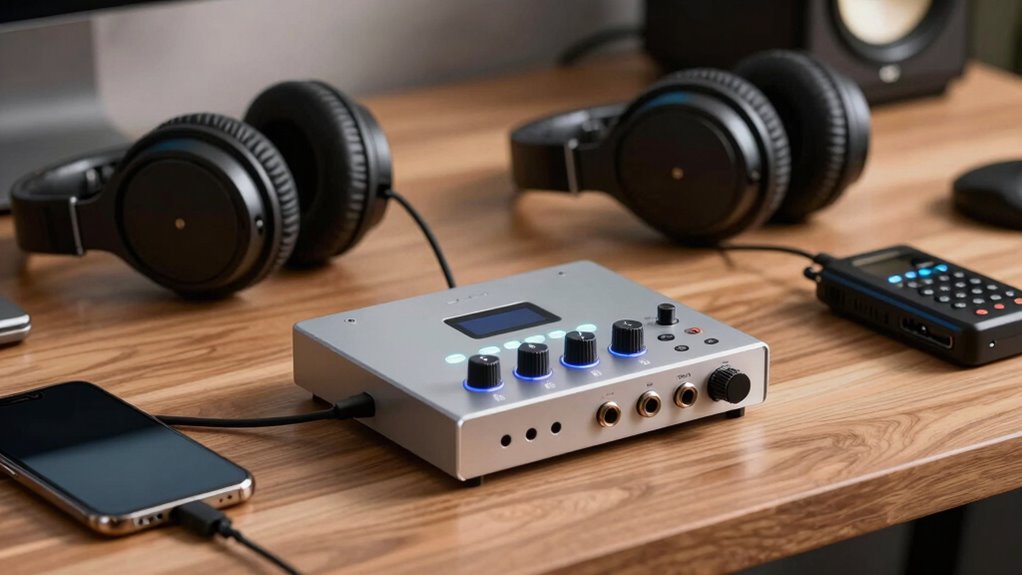

Choosing the right portable audio interface for mobile recording can significantly impact your sound quality and workflow. The Focusrite Scarlett Solo 3rd Gen stands out as the best overall for its ease of use and reliable performance. For those seeking versatility, the Fender AudioBox GO offers excellent options for guitarists and vocalists, while the Shure MVX2U Gen 2 provides a compact, high-quality XLR-to-USB-C connection. Each of these options balances portability with sound fidelity but involves tradeoffs like price, connectivity, or ease of use. Keep reading for a detailed breakdown of the best portable audio interfaces for your mobile recording needs.

Get audio and creator gear delivered free with Prime
- Fast, free delivery on millions of items
- Prime Video, Amazon Music and more included
- Member-only deals all year
Complete the kit


Key Takeaways
- The best portable audio interfaces balance sound quality, portability, and ease of use without overcomplicating setup.
- USB-C connectivity has become standard, ensuring compatibility with the latest mobile devices and laptops.
- Built-in phantom power is a key feature for recording microphones that require it, but adds cost and complexity.
- Budget options often compromise on audio fidelity or build quality, so investing in a reputable brand pays off for critical recordings.
- Size and weight are crucial for mobile creators; smaller, lighter models tend to be more convenient but may have fewer features.
| Cubilux CB5 USB Audio Interface for Recording, Streaming, Podcasting |  | Best Overall for Versatile Mobile Recording | Number of Inputs: 2 stereo microphone jacks, 1 line-in | Number of Outputs: 1 line-out jack, 1 headphone jack | Supported Sample Rate: 96 KHz | VIEW ON AMAZON | See Our Full Breakdown |
| Synido A20 Portable USB-C Audio Interface for Guitar & DJ Recording |  | Best for Single-Instrument Versatility and Live Streaming | Compatible Devices: Guitar, Headphone, PC, Smartphone, Tablet | Connectivity Technology: USB | Number of Channels: 2 | VIEW ON AMAZON | See Our Full Breakdown |
| IK Multimedia iRig 2 Portable Guitar Audio Interface |  | Best for Guitarists and Easy Mobile Setup | Input: Instrument input | Output: 1/8″ TRRS, 1/4″ amplifier | Compatibility: iPhone, iPad, Mac | VIEW ON AMAZON | See Our Full Breakdown |
| Portable Audio Interface, Stereo 24Bit/192kHz USB-C and iPhone Interface |  | Best for High-Resolution Stereo Streaming and Recording | Bit Depth: 24-bit | Sample Rate: 192kHz | Connectivity: USB-C, iPhone | VIEW ON AMAZON | See Our Full Breakdown |
| M-Audio M-Track Solo USB Audio Interface |  | Best for Budget-Conscious Podcasters and Singers | Audio Resolution: 48kHz | Inputs: 1 combo XLR/Line with phantom power, 1 Line/Instrument | Outputs: Stereo RCA, 1/8″ headphone output | VIEW ON AMAZON | See Our Full Breakdown |
| BOMGE Mini 2 Channel USB Audio Interface for Recording, Streaming, and Podcasting |  | Best for On-the-Go Creators Needing High-Quality Audio | Connectivity Technology: USB | Number of Channels: 2 | Frequency Response: 48 Hz | VIEW ON AMAZON | See Our Full Breakdown |
| M-AUDIO M-Track Duo USB Audio Interface |  | Best for Versatile Recording with Zero-Latency Monitoring | Audio Resolution: 48kHz | Inputs: 2 combo XLR/Line/Instrument with phantom power | Outputs: 1/4″ headphone, stereo 1/4″ outputs | VIEW ON AMAZON | See Our Full Breakdown |
| Jolgoo 2×2 USB Audio Interface, 24-Bit/192kHz Phantom Power Recording Card |  | Best for High-Fidelity Professional-Grade Recording | Audio Resolution: 24-Bit/192kHz | Inputs: XLR/Line Combo | Phantom Power: +48V | VIEW ON AMAZON | See Our Full Breakdown |
| Focusrite Scarlett Solo 3rd Gen USB-C Audio Interface |  | Best for Studio-Quality Sound in a Compact Form | Connectivity: USB-C | Bit Depth: 24-bit | Sample Rate: 192kHz | VIEW ON AMAZON | See Our Full Breakdown |
| XTUGA USB Audio Interface for PC, 2-Channel Recording Studio Sound Card with XLR and 3.5mm Microphone Jack, Low Latency, Plug & Play |  | Best for Beginners and Home Recordists on a Budget | Resolution: 16-bit/48kHz | Inputs: XLR and 3.5mm microphone jack | Phantom Power: 48V | VIEW ON AMAZON | See Our Full Breakdown |
| Fender AudioBox GO USB Audio Interface for Guitarists, Vocalists, and Producers |  | Best for Guitarists and Vocalists Seeking Portability and Ease of Use | Connectivity: USB-C | Audio Quality: 24-bit/96 kHz | Inputs: XLR combo with phantom power, TS instrument input | VIEW ON AMAZON | See Our Full Breakdown |
| Shure MVX2U Gen 2 XLR-to-USB-C Audio Interface |  | Best for Content Creators and Streamers Who Need Professional-Quality Sound and Flexibility | Connectivity: XLR to USB-C | Gain: +60 dB | Phantom Power: 48V | VIEW ON AMAZON | See Our Full Breakdown |
| portable audio interface for mobile recording | Inputs |
|---|---|
| Cubilux CB5 USB Audio Interfac | — |
| Synido A20 Portable USB-C Audi | — |
| IK Multimedia iRig 2 Portable | — |
| Portable Audio Interface | — |
| M-Audio M-Track Solo USB Audio | 1 combo XLR/Line with phantom power, 1 Line/Instrument |
| BOMGE Mini 2 Channel USB Audio | — |
| M-AUDIO M-Track Duo USB Audio | 2 combo XLR/Line/Instrument with phantom power |
| Jolgoo 2×2 USB Audio Interface | XLR/Line Combo |
| Focusrite Scarlett Solo 3rd Ge | 2 high-headroom instrument inputs |
| XTUGA USB Audio Interface for | XLR and 3.5mm microphone jack |
| Fender AudioBox GO USB Audio I | XLR combo with phantom power, TS instrument input |
| Shure MVX2U Gen 2 XLR-to-USB-C | — |
More Details on Our Top Picks
Cubilux CB5 USB Audio Interface for Recording, Streaming, Podcasting
The Cubilux CB5 stands out for its multi-connection options, including two stereo microphone jacks and a line-in, making it more adaptable than the IK iRig 2, which is limited to guitar input. Its support for multi-track recording at 96 KHz/24-bit ensures professional sound quality on the go. The portability and USB-powered design eliminate the need for external power sources, ideal for mobile setups. However, the inability to use line-out and headphone output simultaneously can be restrictive during live sessions. While it lacks bundled software, its straightforward plug-and-play approach suits users seeking a reliable, all-in-one mobile interface.
Pros:- Multiple input options for microphones, instruments, and headphones
- Supports multi-track recording with professional sound quality
- Portable, USB-powered, and easy to set up
Cons:- Line-out and headphone output cannot be used at the same time
- Limited to USB connection without additional features
- No bundled software or accessories
Best for: Content creators, podcasters, or musicians needing flexible input options and multi-track recording capabilities on the move.
Not ideal for: Users who require simultaneous monitoring and output options or who need bundled software for editing and processing.
- Number of Inputs:2 stereo microphone jacks, 1 line-in
- Number of Outputs:1 line-out jack, 1 headphone jack
- Supported Sample Rate:96 KHz
- Bit Depth:24-bit
- Maximum Drive for Monitors:up to 250 Ohm
- Power:USB powered
Our verdict“This interface is best suited for mobile creators who need flexible connections and multi-track recording without extra bulk.”
Synido A20 Portable USB-C Audio Interface for Guitar & DJ Recording
Compared with the Cubilux CB5, the Synido A20 is more streamlined, focusing on guitar and DJ setups with its single stereo input and wireless switch for versatile live use. Its 24-bit/96kHz resolution guarantees clear audio, but its limited two-channel capacity makes multi-track recording less feasible. The compact design and built-in wireless switch make it highly portable for mobile musicians or DJs who need quick setup and wireless control. However, it relies on compatible devices supporting USB-C audio, which may exclude some older gadgets. This pick makes sense for guitarists or mobile DJs who prioritize simplicity, high-quality audio, and flexibility in live environments.
Pros:- High-fidelity 24-bit/96kHz audio quality
- Compact, portable design with built-in wire storage
- Supports live streaming with USB-C and wireless switch
Cons:- Limited to 2 channels, restricting multi-tracking
- Requires compatible USB-C devices; no support for older ports
- No bundled software or extra features
Best for: Guitarists, mobile DJs, or solo performers seeking a portable, high-fidelity interface with wireless control.
Not ideal for: Producers or multi-instrument recording artists needing multi-channel or complex routing options.
- Compatible Devices:Guitar, Headphone, PC, Smartphone, Tablet
- Connectivity Technology:USB
- Number of Channels:2
- Maximum Sample Rate:96 KHz
- Weight:0.01 kg
Our verdict“Ideal for guitarists or solo performers wanting portable, high-quality audio with quick setup and wireless convenience.”
IK Multimedia iRig 2 Portable Guitar Audio Interface
The iRig 2 is a straightforward choice for guitarists, especially those who want a simple, plug-and-play device compatible with iOS and Mac, similar to the IK Focusrite Scarlett Solo. Its adjustable gain and switch for processed or clean signals cater well to practice and live playing. Unlike the Cubilux CB5, it’s limited to guitar and bass, and requires an adapter for newer iOS devices, which can be inconvenient. It doesn’t support multi-track recording or multiple inputs, making it less suitable for broader studio work. This device shines for musicians who prioritize quick, reliable guitar recording on mobile devices without the need for additional features or complex setups.
Pros:- Plug-and-play with iOS devices
- Adjustable gain and signal switch for versatile use
- Compatible with guitar effects apps like AmpliTube
Cons:- Requires additional adapter for newer iOS devices
- Limited to guitar and bass instruments
- No built-in effects or processing
Best for: Guitarists or bass players needing a portable, easy-to-use interface for practice or performance on iOS devices.
Not ideal for: Multitrack recording artists or those needing compatibility with non-Apple devices, due to its limited input options and adapter requirements.
- Input:Instrument input
- Output:1/8″ TRRS, 1/4″ amplifier
- Compatibility:iPhone, iPad, Mac
- Switch:Processed or clean signal
Our verdict“Best suited for guitarists seeking a simple, portable interface for mobile practice or live use, with minimal setup hassle.”
Portable Audio Interface, Stereo 24Bit/192kHz USB-C and iPhone Interface
This interface offers significantly higher resolution at 192kHz compared to the Cubilux and Synido models, making it ideal for audiophiles and detailed stereo recording. Its dual volume controls and ability to charge during live streams give it an edge for extended sessions, similar to the M-Audio M-Track Solo’s versatility but with higher fidelity. The limited to stereo output means it’s less suitable for multi-channel or multi-instrument setups, and it requires compatible USB-C or iPhone ports. It’s perfect for recording electronic instruments or broadcasting high-quality stereo streams but less so for multi-instrument or multi-input needs.
Pros:- High-fidelity stereo sound at 192kHz
- Supports charging during live streams
- Low latency and stable signal transmission
Cons:- Limited to stereo output, not multi-channel
- Requires compatible devices with USB-C or iPhone ports
- No included software or extra features
Best for: Musicians or broadcasters focused on high-quality stereo recordings and streaming in portable settings.
Not ideal for: Producers needing multi-channel or multi-instrument recording workflows, or users without compatible USB-C/iPhone ports.
- Bit Depth:24-bit
- Sample Rate:192kHz
- Connectivity:USB-C, iPhone
- Power:Charging while live streaming
Our verdict“A top choice for high-resolution stereo recording and streaming on portable devices with high audio fidelity needs.”
M-Audio M-Track Solo USB Audio Interface
Compared to the Cubilux CB5, the M-Audio M-Track Solo offers a more basic setup focused on single-channel recording with 48kHz resolution. Its combo XLR/Line input with phantom power makes it suitable for vocalists and podcasters, especially for those on a tighter budget. While it lacks multi-channel capabilities like the Cubilux, this simplicity can be a strength for solo creators who prioritize ease of use and affordability. The included software options add value, but the lower resolution might be a limiting factor for professionals aiming for studio-grade quality. Its compact, USB-powered design makes it a reliable choice for on-the-go recording, especially for voice or single-instrument recordings.
Pros:- Portable and easy to use with USB power
- High-quality preamp with phantom power for vocals
- Includes useful recording software
Cons:- Limited to 48kHz resolution, less ideal for professional recording
- Only two channels, not suitable for multi-instrument setups
- No built-in MIDI or advanced features
Best for: Podcasters, solo musicians, or content creators seeking affordable, portable recording with decent quality.
Not ideal for: Multi-instrument or multi-track recording artists needing higher resolution or multiple inputs.
- Audio Resolution:48kHz
- Inputs:1 combo XLR/Line with phantom power, 1 Line/Instrument
- Outputs:Stereo RCA, 1/8″ headphone output
- Power:USB powered
- Included Software:MPC Beats, ProTools First | M-Audio Edition
Our verdict“A solid, affordable option for solo creators and podcasters requiring portable, straightforward recording equipment.”
BOMGE Mini 2 Channel USB Audio Interface for Recording, Streaming, and Podcasting
The BOMGE Mini 2 Channel USB Audio Interface stands out for its high-resolution 48 kHz recordings, making it a solid choice for mobile podcasters and musicians who prioritize clarity. Compared with the Focusrite Scarlett Solo, it offers similar audio quality but with more input/output flexibility thanks to its multiple output options. Its lightweight, plug-and-play design makes it ideal for quick setups and remote recording sessions. However, its limitation to two channels means it’s less suitable for complex recording needs, and the lack of onboard effects requires external software. This pick makes the most sense for solo content creators who need reliable, portable audio without extra fuss or bulky gear.
Pros:- High-quality 48 kHz audio resolution delivers clear, detailed recordings
- Multiple output options including XLR, RCA, and TRS for versatile connectivity
- Lightweight, compact design perfect for mobile use
Cons:- Limited to 2 channels, restricting multi-mic or instrument recording
- No built-in effects or onboard mixing capabilities
Best for: Solo podcasters and musicians who need portable, high-quality recordings on the move
Not ideal for: Producers or bands requiring multi-mic setups or advanced mixing features
- Connectivity Technology:USB
- Number of Channels:2
- Frequency Response:48 Hz
- Supported Devices:PC, iPhone
- Supported Software:Ableton, GarageBand, Pro Tools First
- Phantom Power:48V
Our verdict“This interface suits mobile content creators who value simplicity and quality in a compact form factor.”
M-AUDIO M-Track Duo USB Audio Interface
The M-Audio M-Track Duo offers a balanced mix of portability and functionality, with two combo XLR/Line/Instrument inputs and zero-latency monitoring, making it ideal for podcasters and musicians who need quick setup and reliable performance. Compared to the Jolgoo 2×2, the M-Track Duo includes straightforward controls and a dedicated software bundle (MPC Beats), which streamlines the workflow for beginners. Its versatility in supporting both microphones and instruments makes it a flexible option for home studios and mobile recordings. However, its two-input limit constrains larger setups, and it lacks advanced features like onboard effects or additional connectivity options. This model makes the most sense for users who want ease of use combined with decent software support at an affordable price point.
Pros:- Zero-latency monitoring for real-time audio feedback
- Versatile inputs suitable for microphones and instruments
- Includes production software for immediate creative use
Cons:- Limited to 2 inputs, not ideal for complex multi-mic setups
- No bundled microphones or extra accessories included
Best for: Beginners and hobbyists seeking an easy-to-use, portable interface for small recording projects
Not ideal for: Professional producers or multi-mic recording sessions requiring more inputs or integrated effects
- Audio Resolution:48kHz
- Inputs:2 combo XLR/Line/Instrument with phantom power
- Outputs:1/4″ headphone, stereo 1/4″ outputs
- Monitoring:USB/Direct switch
- Included Software:MPC Beats
Our verdict“This interface caters to entry-level users who prioritize simplicity, portability, and decent software support.”
Jolgoo 2×2 USB Audio Interface, 24-Bit/192kHz Phantom Power Recording Card
The Jolgoo 2×2 USB Audio Interface excels in delivering top-tier sound quality with 24-bit/192kHz resolution, making it suitable for serious home recordists and professional podcasters. Its rugged metal housing offers durability, and the zero-latency direct monitoring supports seamless tracking. Compared with the XTUGA 2×2, Jolgoo provides similar high-resolution audio but with a more straightforward setup, though it lacks bundled software and requires external power sources. Its dual inputs cover most basic recording needs but limit larger multi-mic configurations. This device makes sense for users who prioritize fidelity and build quality over expanded features or software bundles, especially in mobile or semi-permanent setups.
Pros:- High-fidelity 24-bit/192kHz audio quality for detailed recordings
- Zero-latency direct monitoring for real-time playback
- Durable metal construction for rugged use
Cons:- Limited to 2 inputs, restricting multi-mic or multi-instrument recording
- No included software or additional bundle
Best for: Home studio owners and podcasters who demand professional sound quality in a portable package
Not ideal for: Mobile musicians needing lightweight gear or users requiring more than two channels
- Audio Resolution:24-Bit/192kHz
- Inputs:XLR/Line Combo
- Phantom Power:+48V
- Connectivity:USB-C, USB-A
- Build:Rugged metal housing
Our verdict“Ideal for professionals or enthusiasts who want premium sound quality in a sturdy, portable device.”
Focusrite Scarlett Solo 3rd Gen USB-C Audio Interface
The Focusrite Scarlett Solo 3rd Gen is a compact yet powerful interface, featuring high-quality pre-amps and Air mode for added clarity, making it perfect for musicians and podcasters who need professional-grade audio in a portable size. Compared with the BOMGE Mini, the Scarlett Solo offers superior pre-amp quality and high-resolution support at 24-bit/192kHz, along with a broader software bundle. Its limited number of inputs suits solo artists or single-mic setups but falls short for larger multi-mic projects. The USB-C connection ensures compatibility with modern devices, yet some users may need adapters for older ports. This model is best for those who want studio-quality sound in a small, reliable package for recording on the move.
Pros:- High-quality pre-amps with Air mode for enhanced clarity
- Supports 24-bit/192kHz professional recording standards
- Includes comprehensive software bundle for production
Cons:- Limited to 2 inputs, restricting multi-mic or multi-instrument setups
- Requires USB-C port, possibly needing adapters
Best for: Solo artists and podcasters requiring high-quality audio with professional pre-amps
Not ideal for: Bands or producers needing multiple inputs or complex routing options
- Connectivity:USB-C
- Bit Depth:24-bit
- Sample Rate:192kHz
- Inputs:2 high-headroom instrument inputs
- Outputs:2 balanced outputs
- Included Software:Pro Tools Intro+, Ableton Live Lite
Our verdict“This interface is best for solo performers and content creators aiming for studio-quality audio in a small, portable device.”
XTUGA USB Audio Interface for PC, 2-Channel Recording Studio Sound Card with XLR and 3.5mm Microphone Jack, Low Latency, Plug & Play
The XTUGA Q-12 offers a straightforward, budget-friendly solution for entry-level users, with 16-bit/48kHz sound quality suitable for casual recording, streaming, and practice. Its plug-and-play design makes setup effortless, and phantom power supports condenser mics. Compared with the M-Audio M-Track Duo, the XTUGA provides similar basic features but with a slightly more rugged build. Its limit to 16-bit resolution might fall short for those seeking professional-grade fidelity, and the absence of bundled software or advanced controls makes it less appealing for serious studio work. This product is best for beginners or casual users who prioritize affordability and simplicity over top-tier audio fidelity or expanded features.
Pros:- Simple, plug-and-play operation suitable for beginners
- Supports phantom power for condenser microphones
- Solid build quality for basic home and mobile use
Cons:- Limited to 16-bit/48kHz, which may not satisfy professional standards
- Lacks bundled software or advanced features
Best for: Beginners, students, or hobbyists new to recording who want an easy, affordable interface
Not ideal for: Advanced users or professionals needing higher resolution or software integration
- Resolution:16-bit/48kHz
- Inputs:XLR and 3.5mm microphone jack
- Phantom Power:48V
- Power:USB powered
- Build:Durable plastic housing
Our verdict“This interface is best for newcomers seeking an uncomplicated, budget-friendly option for casual recording and streaming.”
Fender AudioBox GO USB Audio Interface for Guitarists, Vocalists, and Producers
The Fender AudioBox GO stands out as an excellent choice for musicians and vocalists who need a compact and straightforward interface for mobile recording. Its 24-bit/96 kHz audio quality ensures clear, professional sound, comparable to the M-Audio M-Track Solo but with a more streamlined design. The inclusion of a XLR combo input with phantom power makes it versatile for microphones and instruments alike, though it only offers 2 inputs and outputs, which limits larger setups. Unlike the Shure MVX2U, which emphasizes digital processing and auto gain, the AudioBox GO prioritizes simplicity and ease of use, making it less suitable for complex studio workflows. Its bus-powered design enhances portability, but registration for full features could be a hurdle for some users. Overall, this pick makes the most sense for mobile musicians who value quick setup and decent audio quality over expandability.
Pros:- Compact, lightweight, and highly portable
- High-quality 24-bit/96 kHz audio conversion
- Includes Fender Amp & FX pack for versatile tones
- Easy to set up with plug-and-play simplicity
Cons:- Limited to 2 inputs and outputs, restricting multi-mic or multi-instrument use
- Full feature set requires registration, adding a step for new users
Best for: Guitarists, vocalists, and producers who need a portable, plug-and-play interface with good sound quality.
Not ideal for: Users requiring multiple inputs and in-depth control, or those working in advanced studio environments.
- Connectivity:USB-C
- Audio Quality:24-bit/96 kHz
- Inputs:XLR combo with phantom power, TS instrument input
- Outputs:2 balanced ¼-inch TRS
- Power:Bus-powered
- Compatibility:PC/Mac, Fender Studio apps
Our verdict“This interface is best suited for mobile musicians and vocalists who prioritize portability and straightforward operation over extensive connectivity.”
Shure MVX2U Gen 2 XLR-to-USB-C Audio Interface
Best for Content Creators and Streamers Who Need Professional-Quality Sound and Flexibility
View on AmazonThe Shure MVX2U Gen 2 is tailored for users who demand high-quality audio and extensive control, especially when working across multiple devices like desktops, tablets, and smartphones. Its onboard digital audio processing and features such as auto gain control and a real-time denoiser make it a strong choice compared with the simpler Fender AudioBox GO, which lacks advanced processing. However, it is limited to XLR microphones and requires a USB-C port, which could necessitate adapters for some setups. Its 48V phantom power and gain range of +60 dB provide flexibility for condenser mics, but the interface doesn’t support instrument inputs directly. Compared to other compact interfaces, its robust digital features and device compatibility make it ideal for streamers and podcasters who need consistent, professional sound in mobile settings, though its dependency on USB-C can be a drawback for users with older hardware. This makes it a solid choice for those prioritizing sound quality and digital features over raw input count.
Pros:- High-quality onboard digital audio processing
- Automatic gain adjustment for consistent levels
- Compatible with various devices and MOTIV apps for customization
- Provides phantom power for condenser microphones
Cons:- Requires USB-C port, potentially needing adapters for some devices
- Limited to XLR microphones, not supporting other mic types
Best for: Content creators, streamers, and podcasters who need high-quality, customizable audio with multi-device support.
Not ideal for: Musicians or producers who require multiple simultaneous inputs for instruments and vocals, or users with older devices lacking USB-C.
- Connectivity:XLR to USB-C
- Gain:+60 dB
- Phantom Power:48V
- Audio Processing:Auto Level Mode, Real-Time Denoiser, Digital Popper Stopper
- Compatibility:Desktop, tablet, smartphone
- App Support:MOTIV Mix, MOTIV Audio, MOTIV Video
Our verdict“This interface targets creators who need flexible, high-quality sound processing across multiple devices, with some hardware compatibility considerations.”

How We Picked
These products were evaluated based on their performance, usability, build quality, and value for mobile recording. Priority was given to models that offer reliable connection options, ease of setup, and consistent audio quality in portable form factors. We also considered compatibility with smartphones, tablets, and laptops, as well as features like phantom power and multi-channel support. The ranking reflects a balance between affordability and professional features, ensuring options suit different budgets and experience levels.Factors to Consider When Choosing Portable Audio Interface For Mobile Recording
When selecting a portable audio interface for mobile recording, it’s important to consider several key factors that impact both your workflow and sound quality. Understanding these will help you avoid common pitfalls like choosing incompatible connectors or sacrificing audio fidelity for portability. The right choice depends on your specific needs—whether you’re recording vocals, instruments, or streaming live content—and your budget. Let’s explore the main considerations to keep in mind.Connectivity Options and Compatibility
Look for interfaces that support your device’s connection type, whether USB-C, Lightning, or traditional USB. Compatibility with your smartphone, tablet, or laptop ensures seamless recording without adapters or additional hardware. Some models offer multi-platform support, which can save money and reduce setup hassle. Avoid interfaces with proprietary connectors unless they offer significant advantages, as they limit flexibility and portability.
Audio Quality and Channels
Prioritize interfaces with high-resolution audio support, ideally 24-bit/192kHz, for professional sound clarity. Consider how many inputs and outputs you need—single-channel interfaces are great for solo recording, while multi-channel models support more complex setups. Keep in mind that more channels often mean higher costs and larger size, so choose based on your typical recording scenarios.
Portability and Size
Portability is about more than just size; weight, durability, and ease of transport matter equally. Compact designs with rugged casing are better suited for field recording or travel. Beware of overly small models that might lack sufficient input options or become difficult to operate on the move. Balance your need for portability with your recording requirements.
Power Options and Phantom Power
Many portable interfaces are bus-powered via USB-C or Lightning, eliminating the need for external power supplies. However, if you plan to record with condenser microphones, phantom power is essential. Check whether the device supplies phantom power and if it does so reliably without noise. An interface that requires external power might be less convenient for mobile use, but can offer more features.
Build Quality and Reliability
Durability matters when recording on the go. Look for metal chassis and robust connectors that can withstand frequent transport. Reliable drivers and firmware updates also contribute to stability, minimizing the risk of glitches during critical recordings. It’s worth investing in a trusted brand to ensure consistent performance over time.
Frequently Asked Questions
Can I use a portable audio interface with my smartphone?
Yes, many portable audio interfaces are designed to work directly with smartphones, especially those with USB-C or Lightning compatibility. Check the device specifications to ensure it supports your phone’s operating system and connection port. Using an appropriate adapter might be necessary if the interface and phone connectors differ. This flexibility allows you to record high-quality audio directly onto your mobile device without cumbersome equipment.
Is phantom power necessary for mobile recording?
Phantom power is required if you plan to record with condenser microphones, which are common in studio setups. Many portable interfaces include phantom power, but not all, so verify this feature if you need to record vocals or acoustic instruments. For dynamic microphones, phantom power isn’t needed, allowing for simpler and more economical setups. Remember that phantom power can sometimes introduce noise if not well-designed.
How important is build quality for mobile recording?
Build quality directly impacts durability and reliability in mobile environments. A rugged, metal chassis can withstand bumps and rough handling, minimizing the risk of damage. Reliable connectors and stable drivers ensure consistent audio quality and reduce glitches during recording sessions. Investing in a well-built interface often pays off by preventing costly repairs or data loss during field use.
Should I prioritize more inputs or portability?
This depends on your typical recording setup. If you mainly record solo vocals or instruments, a single-input interface might suffice and offer a more compact form factor. However, if you plan to record multiple sources simultaneously, investing in a multi-channel interface might mean sacrificing some portability. Balance your current needs with future expansion, choosing a device that can grow with your projects.
What is the best budget option for mobile recording?
Budget-friendly interfaces like the M-Audio M-Track Solo or the IK Multimedia iRig 2 provide decent audio quality at lower costs. They often lack advanced features but handle basic recording tasks effectively. Be aware that lower-priced models may have limited build quality or connectivity options, so consider these tradeoffs carefully. For critical recordings, investing a bit more in a reputable brand can improve your experience and results.
Conclusion
For those new to mobile recording, the Focusrite Scarlett Solo 3rd Gen offers a straightforward setup with excellent sound quality and reliability, making it the best overall pick. Creators on a tighter budget should consider the M-Audio M-Track Solo for value without sacrificing too much quality. Guitarists and vocalists seeking portability will find the Fender AudioBox GO especially suited to their needs. Professionals or those requiring multi-channel recording might prefer more advanced, higher-priced options like the Jolgoo 2×2 USB Audio Interface for expanded flexibility. Your choice should hinge on your specific recording environment, device compatibility, and budget constraints.
As an affiliate, we earn on qualifying purchases.Fall Picks
fall essentials